The artificial intelligence revolution is no longer merely a software phenomenon or a Silicon Valley narrative; it has materialized into an unyielding, physical juggernaut that is rapidly testing the limits of global engineering. Nvidia, the undisputed titan of the AI hardware market, continues to post numbers that defy traditional economic logic. In its latest financial report, the company announced a jaw-dropping 117% year-over-year surge in data center revenue, reaching an astronomical $89 billion. Total quarterly revenue hit $96.2 billion—a 106% annual leap—propelling industry analysts to openly admit they are running out of adjectives to describe the company’s trajectory.
Yet, this unprecedented market demand has triggered a high-stakes bottleneck. The defining crisis of the AI era is no longer about whether enterprises want compute power; it is about whether humanity can build, power, and cool the facilities required to house it. While cloud giants like Amazon Web Services (AWS) commit to deploying millions of advanced GPUs, and chipmakers engineer revolutionary hardware like Nvidia’s Vera CPU and Rubin architecture, the physical world is lagging behind.
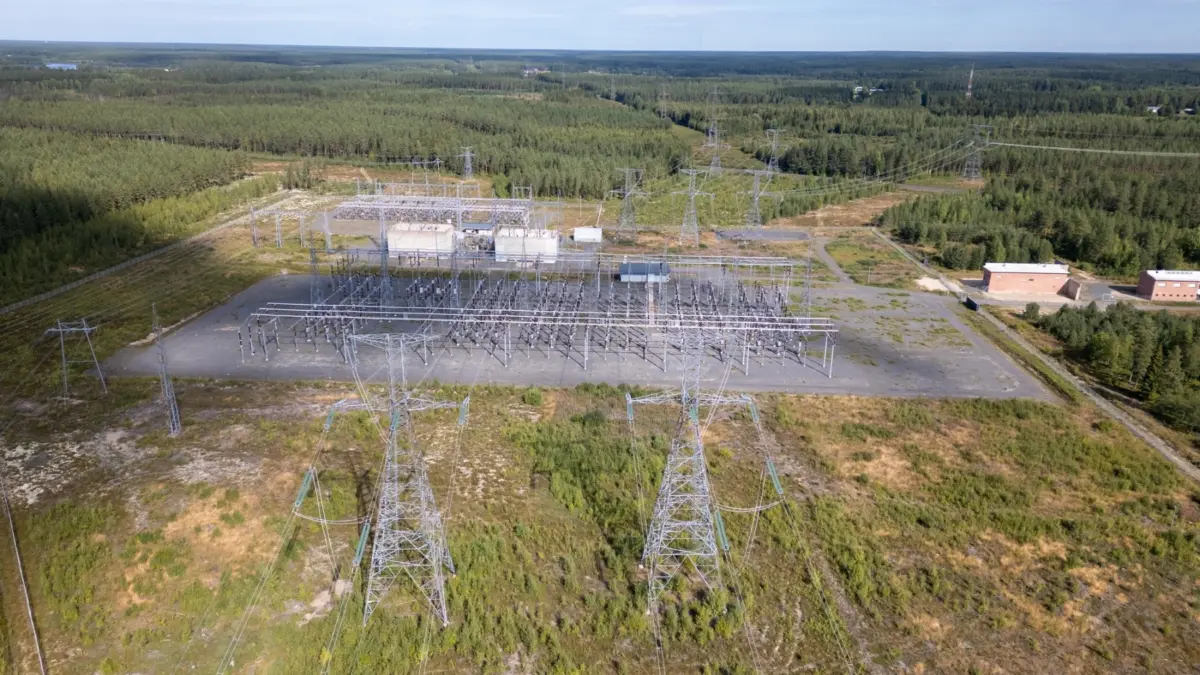
Energy grids, transmission lines, and substation construction are operating on multi-year development timelines, whereas technology deployment cycles move in months. This divergence has created a dangerous chasm between announced computing capacity and executable electrical infrastructure. As Nvidia pushes deeper into physical data center backing—such as its financial guarantees for SB Energy’s massive Ohio campus—the industry finds itself at a crossroads. The future of AI is constrained not by algorithmic brilliance or semiconductor yields, but by the raw, unyielding physics of electrical power.
Detailed Chronology
To understand how the AI infrastructure market reached this breathless pace, it is necessary to examine the cascading events, strategic announcements, and monumental capital allocations that have defined the sector over recent quarters.
Mid-2025 Financial Milestone: Nvidia reports a monumental quarter ending July 26, logging $96.2 billion in total revenue. Its core engine, the data center segment, skyrockets 18% sequentially to $89 billion, signaling that demand for accelerated computing shows no signs of plateauing.
The AWS Expansion Commitment: Amazon Web Services alters the procurement landscape by announcing its intention to deploy an additional 2 million Nvidia GPUs—spanning Blackwell Ultra, Rubin, and Rubin Ultra architectures—across its global footprint throughout 2027 and 2028. This follows a previous commitment of 1 million GPUs starting in 2026, driven by customer demand that vastly outpaced earlier models.
The Rise of Custom Compute and Vera: Nvidia introduces and begins shipping its custom Vera CPU. Designed specifically to orchestrate agentic AI workloads, Oracle Cloud Infrastructure (OCI) announces plans to deploy hundreds of thousands of Vera CPUs beginning in 2026, making it the first hyperscaler to adopt the architecture at scale.
Strategic Infrastructure Backing: Nvidia expands its mandate beyond silicon manufacturing by providing crucial credit support for land, power, and shell construction at SB Energy’s Ports-Pike Technology Campus in Ohio. The project is mapped for a staggering 8 IT gigawatts of capacity dedicated to OpenAI, with Nvidia initially backing 4.25 GW.
Current Fiscal Outlook: Nvidia projects total revenue for the subsequent quarter to reach $108 billion (excluding mainland China data center compute revenue) and targets a 70% growth rate for fiscal 2028, though executives readily admit that these projections remain fundamentally supply-constrained.
Supporting Context & Metrics: The Anatomy of a Boom
The sheer velocity of Nvidia’s financial ascent masks a complex underlying ecosystem. A granular look at the revenue streams reveals how the AI infrastructure market is fundamentally mutating. During the second quarter, hyperscale customers accounted for $48.7 billion in data center revenue, reflecting a robust 102% year-over-year growth rate. However, the AI Clouds, Industrial & Enterprise (ACIE) segment grew even faster, jumping 138% annually to $40.3 billion.
This dual-engine growth highlights a structural shift in the market. While hyperscalers continue to build colossal, centralized data center campuses, a vast, distributed network of regional cloud providers, sovereign AI initiatives, and traditional enterprises are entering the fray.
This democratization of AI creates profound implications for utility planners. As industry analyst Steven Dickens notes, the market is locked in a "rampant buildout phase" encompassing everything from big-name cloud providers to neoclouds and regional enterprises. Unlike hyperscale campuses—which concentrate colossal energy loads into single, highly optimized geographic zones—enterprise and regional deployments disperse power demand across hundreds of disparate utility territories.
Consequently, electrical grids are forced to grapple with a dual threat: managing massive 1-gigawatt-plus campuses while simultaneously fielding a fragmented swarm of smaller, highly competitive AI loads popping up at unpredictable nodes across the transmission grid.
Official Statements and Industry Perspectives
The dissonance between digital ambition and physical reality has forced industry leaders to reevaluate how they measure capacity.
Steven Dickens, CEO and principal analyst at HyperFrame Research, captured the sentiment of the investment and analyst community when evaluating Nvidia’s earnings:
“I’m running out of hyperbole and adjectives.”
Echoing this astonishment, Nvidia CEO Jensen Huang pointed to a reality where market expansion continually defies projections:
“Demand is running ahead of every forecast.”
However, behind the celebratory earnings calls lies a sobering warning from infrastructure veterans. Neil Osnato, founder of Persistence Analytics Group, emphasizes the dangerous disconnect between hardware orders and operational energy. According to Osnato, the industry must fundamentally change how it communicates capacity, urging stakeholders to draw sharp distinctions between announced compute capacity, executable data center capacity, and dependable electrical load.
“The physical buildout now has to keep pace with a technology deployment curve that can move much faster than generation, transmission, and interconnection infrastructure,” Osnato stated.
“They are related, but they are not the same thing. The limiting factor is increasingly shifting from access to compute hardware toward access to executable electrical infrastructure.”
Osnato cautions that ordering millions of GPUs does not automatically translate into a neat, predictable megawatt figure. The true power draw depends on a dizzying array of variables: the specific GPU mix, utilization rates, advanced cooling architectures (such as direct-to-chip liquid cooling), power density targets, regional geographies, and the readiness of supporting substation equipment.
Future Outlook: Bridging the Power Gap
As the industry looks toward the horizon of 2027 and 2028, the roadmap for AI expansion hinges on solving the "executable electrical infrastructure" crisis. Cloud titans, silicon designers, and energy developers are no longer operating in silos; their fates are inextricably linked.
Nvidia’s proactive financial backing of SB Energy’s Ohio campus—securing thousands of megawatts for OpenAI—illustrates a new corporate paradigm. Chipmakers can no longer simply ship boxes of advanced accelerators to loading docks and hope the power is there. They must actively participate in securing land, negotiating power purchase agreements (PPAs), and backing the heavy civil engineering required to bring multi-gigawatt facilities online.
Simultaneously, the introduction of Nvidia’s Vera CPU—featuring 88 custom cores, 1.2 TB/s of memory bandwidth, and a 1.8x performance boost for agentic AI workloads—demonstrates that software efficiency and hardware orchestration will continue to evolve at breakneck speeds. Systems like the Vera Rubin NVL72 are packing unprecedented computational density into standard data center footprints, intensifying thermal and electrical pressures per square foot.
Ultimately, the coming years will serve as a definitive stress test for global energy markets. As utilities and grid operators struggle to modernize transmission lines and interconnect new generation sources, the bottleneck will remain clear. Strong chip sales are definitive proof of computational demand, but as Neil Osnato astutely warns, they are “not, by itself, proof that every megawatt being planned around that demand will arrive on schedule or persist for the life of the infrastructure built to serve it.”
For the AI boom to sustain its parabolic trajectory, the worlds of microelectronics and heavy electrical engineering must find a way to march in lockstep before the physical limits of the grid finally push back.