Executive Overview
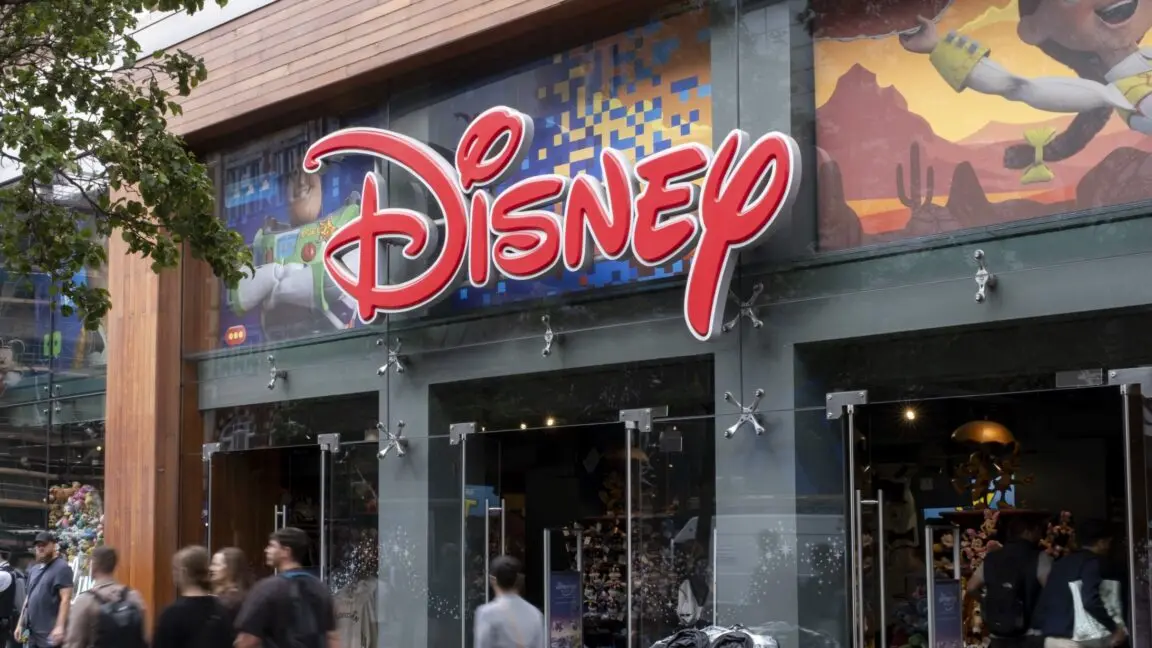
The high-stakes legal collision between The Walt Disney Company and the Federal Communications Commission (FCC) has escalated into a defining constitutional showdown over freedom of the press, administrative overreach, and corporate accountability. In a filing submitted to the U.S. District Court for the District of Columbia, the FCC urged the judiciary to dismiss Disney’s ongoing lawsuit. The agency defended its controversial, expedited review of eight ABC-owned broadcast stations—a proceeding that threatens the network with the nonrenewal of its licenses.
At the center of the controversy is FCC Chairman Brendan Carr, who has faced intense scrutiny over allegations that the commission is waging a calculated "campaign of censorship" to punish ABC for content that draws the ire of President Donald Trump. While the regulatory body insists that Carr remains "open-minded" and that no final decisions have been made regarding the future of the stations, the ripple effects of the dispute are already altering the landscape of broadcast journalism.
Compplicating matters further, a coalition of media watchdog organizations and everyday viewers has moved to intervene in the federal lawsuit. These groups argue that Disney’s ultimate corporate objective—protecting its lucrative broadcast licenses—may lead to a closed-door settlement with the federal government that compromises public interest programming. As Disney fights to maintain editorial independence while managing fiduciary obligations to its shareholders, the boundaries of free speech and regulatory power are being severely tested.
Detailed Chronology of a Regulatory Clash
The roots of the current standoff trace back to a compounding series of political flashpoints and regulatory interventions directed at ABC and its corporate parent, Disney.
- Late 2024: Tensions between the incoming administration and Disney surfaced following public friction over media coverage. Notably, ABC agreed to a $15 million settlement in December 2024 to resolve a defamation lawsuit filed by Donald Trump over statements made by anchor George Stephanopoulos.
- Mid-2025 to Early 2026: FCC Chairman Brendan Carr publicly criticized ABC programming, taking aim at jokes made by late-night host Jimmy Kimmel and political commentary featured on the daytime talk show The View. These public rebukes were quickly followed by formal agency actions. The FCC initiated a separate proceeding to evaluate whether The View qualifies for the "bona fide news" exemption under the Communications Act’s equal-time rule—a move that could severely restrict how the program handles political guests.
- August 18, 2026: Pushed to the brink by what it termed a retaliatory campaign designed to chill critical reporting, Disney filed a landmark federal lawsuit against the FCC and its leadership. The complaint alleged that the agency was weaponizing its licensing powers to punish protected speech.
- Late August 2026: President Trump escalated his rhetoric against network media outlets by publicly demanding that the FCC penalize an NBC journalist over remarks concerning his election endorsements. Meanwhile, the legal pressure on Disney began manifesting internally. Facing the specter of license nonrenewal, ABC altered its booking practices, notably halting interviews with political candidates on The View to avoid drawing further regulatory scrutiny.
- Yesterday: The FCC formally pushed back against Disney’s legal offensive by filing a motion to dismiss the lawsuit in federal court, defending its early license reviews and demanding that the court throw out Disney’s request for a preliminary injunction. Concurrently, watchdog groups and ABC viewers filed motions to intervene, signaling deep distrust in Disney’s willingness to fight the FCC to the bitter end.
Supporting Context & Metrics: The Mechanics of the Dispute
To understand why this legal battle carries existential weight for both parties, one must examine the mechanics of FCC broadcast licensing and the specific legal arguments deployed by each side.
The Statutory Framework and Public Interest Obligations
Under the Communications Act of 1934, television and radio broadcasters operate on public airwaves. In exchange for free access to this valuable spectrum, Congress mandated that stations must operate in the "public interest." Broadcasters must periodically apply for license renewals every eight years, a process that historically involves routine administrative reviews rather than politically charged inquisitions.
However, the FCC’s current maneuver involves ordering an early license review for the eight major-market television stations owned and operated by ABC. The agency justifies this action by pointing to what it describes as "deficient and nonresponsive" answers provided by Disney regarding investigative inquiries into the company’s Diversity, Equity, and Inclusion (DEI) policies and "allegations of unlawful discrimination."
Disney’s Arguments: The Shadow of Censorship
Disney’s legal team contends that the DEI justification is a pretextual smokescreen designed to mask a retaliatory crusade against ABC’s news division and entertainment programming. According to the lawsuit, the threat of losing eight major-market broadcast licenses acts as a "corporate death sentence" that hangs over every editorial decision made by the network.
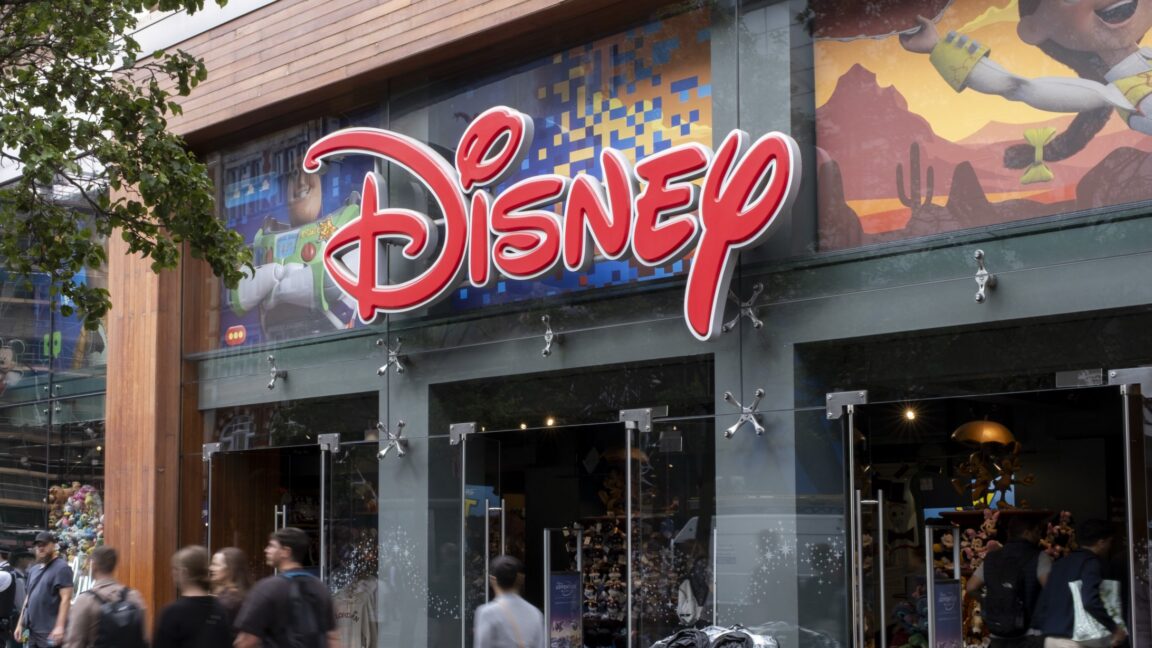
Disney argues that the ongoing proceeding forces producers, editors, and executives to second-guess their news coverage, particularly during a high-stakes election cycle. The company asserts that this constant regulatory intimidation inflicts irreparable harm on its First Amendment rights—harm that cannot be undone retroactively, even if Disney were to eventually prevail in court after years of costly litigation.
The FCC’s Defense: Jurisdiction and Due Process
In its motion to dismiss, the FCC countered that the federal district court lacks proper jurisdiction over the matter, arguing that challenges to FCC orders must be funneled through specialized circuit courts of appeals rather than district courts.
Furthermore, the agency argued that granting Disney a preliminary injunction would short-circuit administrative due process. The commission claimed that stopping the review before analyzing the evidentiary record would "hobble the Commission’s efforts to investigate and resolve serious allegations" and prevent the agency from ensuring that Disney stations serve their statutory duties.
Official Statements and Stakeholder Perspectives
The rhetoric surrounding the litigation highlights a fundamental divergence between corporate self-preservation and the defense of the public’s right to unhindered information.
The FCC’s Position on "Open-Mindedness"
Seeking to project institutional fairness, the FCC’s court filing emphasized that Chairman Carr and the agency remain impartial arbiters. The commission wrote:
"The Commission’s Chairman has repeatedly emphasized that, although the allegations against Disney are serious, he and the agency remain ‘open-minded,’ have ‘not made a decision,’ and are ‘going to follow the facts and the law wherever they [lead].’ And the renewal process in progress does not abridge or otherwise affect Plaintiffs’ rights."
The agency reassured the court that even if the review were to culminate in a formal hearing or a denial of the applications, the stations’ licenses would remain operational throughout the exhaustive appeals process, allowing Disney years of uninterrupted judicial review.
Watchdogs and Viewers Sound the Alarm
This administrative reassurance has done little to comfort independent media watchdogs. Organizations such as Frequency Forward and the Media Action Center, alongside 18 individual ABC viewers, filed a joint motion to intervene in the lawsuit. They voiced profound anxiety that Disney, driven by its bottom line, might cut a backroom deal with the federal government.

Art Belendiuk, legal counsel for the intervening groups, pulled no punches in a statement provided to the press:
"The FCC’s pressure campaign against Disney has already forced the company to compromise its reporting and programming… While Disney can argue that our interests are aligned, that may not always be true. Disney has a legal and fiduciary obligation to its shareholders, and its corporate interest is in preserving its licenses. My clients are fighting in the public interest to protect and preserve the integrity of the First Amendment. The American people deserve a seat at the table…"
Disney’s Rejection of Outside Intervention
Disney forcefully opposed the watchdog groups’ motion to intervene. In a filing submitted yesterday, the media conglomerate argued that the proposed intervenors "lack a legally protected interest because the harm they invoke is harm to Plaintiffs, not to themselves."
Disney insisted that it has "every incentive to protect their own right to be free of unlawful retaliation" and will vigorously contest the government’s speech-suppressing tactics. Rather than granting them formal party status in the litigation, Disney suggested that the watchdogs and viewers should confine their input to filing amicus curiae (friend-of-the-court) briefs at later stages of the proceedings.
Future Outlook: What Lies Ahead
As the litigation proceeds in the U.S. District Court for the District of Columbia, several pivotal legal and practical hurdles remain on the horizon.
- The Judge’s Decision on Intervention: The presiding judge must first rule on whether Frequency Forward, the Media Action Center, and the individual viewers will be permitted as formal intervenors. Should the judge allow them into the case, it could introduce unpredictable dynamics, as third-party watchdogs may aggressively push for public disclosures and transparency that Disney and the FCC might prefer to negotiate behind closed doors.
- Jurisdiction and Preliminary Injunction: The court must evaluate the threshold jurisdictional question raised by the FCC—specifically, whether district courts have the authority to halt ongoing agency licensing reviews. If the court agrees with the FCC, Disney’s lawsuit could be dismissed or transferred, stripping the network of its immediate bid for a preliminary injunction.
- The Chilling Effect on Newsrooms: Regardless of how the procedural motions are resolved, the immediate practical impact of the standoff is already visible. With The View shelving political candidate interviews and network executives weighing the electoral fallout of every editorial choice, the case serves as a live test of how regulatory pressure can alter media behavior without a single formal act of censorship ever being codified into law.
For now, the legal battle lines are drawn. As the Trump administration continues to challenge the boundaries of federal media oversight, the outcome of this dispute will set a profound precedent for the independence of American broadcast journalism for years to come.