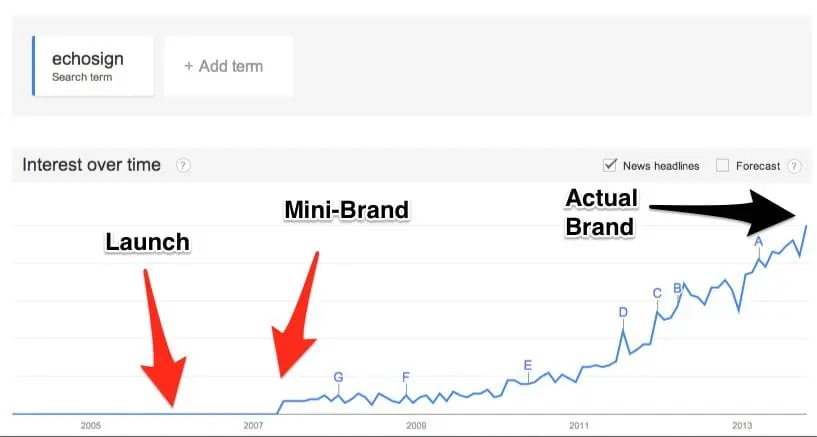
Executive Overview
For founders navigating the treacherous waters of early-stage B2B software and enterprise sales, the first 12 to 18 months are defined by a familiar, grinding paradox. Surviving this crucible requires performing what often feels like the impossible: convincing skeptical, risk-averse organizations to purchase yet another web service, application, or digital tool when they seemingly need nothing new at all.
Yet, when a startup manages to defy the overwhelming odds and secure its first handful of paying customers—whether that number is ten, twenty, or one hundred—a new psychological and strategic crisis emerges. The raw numbers rarely add up to immediate scale. From a founder’s perspective peering out from the trenches, the trajectory toward becoming a major industry player can look impossibly distant, linear, and painfully slow.
According to SaaS industry veteran and SaaStr founder Jason Lemkin, many early-stage entrepreneurs labor under the misconception that brand identity is a luxury reserved exclusively for mature corporations with multi-million-dollar marketing budgets. However, empirical market observations suggest otherwise. Long before a company enters the public consciousness or achieves household-name status alongside giants like Salesforce or Google, a critical phenomenon occurs. Somewhere around the milestone of $2 million to $3 million in Annual Recurring Revenue (ARR), a subtle yet potent market shift takes place.
This article explores the anatomy of the "Mini-Brand"—a foundational phase in the lifecycle of B2B startups where targeted reputation, organic word-of-mouth, and niche resonance converge. By examining the operational hurdles of early enterprise sales, the psychological shift from outbound grinding to inbound pull, and the compounding nature of software businesses, we unpack why recognizing and leaning into this early momentum is the ultimate differentiator between scaling success and premature stagnation.
Detailed Chronology: The Evolution from Zero to the Mini-Brand
To truly understand the genesis of the Mini-Brand, one must trace the evolutionary stages every B2B software startup is forced to endure. The path is rarely a straight line; rather, it is a sequence of distinct phases, each marked by unique psychological and commercial hurdles.
Phase 1: The Improbable Genesis (Months 1–6)
The lifecycle begins with absolute zero. In the nascent stages, the startup possesses an idea, a prototype, or an early MVP, but zero market trust. Founders rely entirely on raw hustle, personal networks, cold emails, and aggressive outbound pitching to secure their inaugural design partners or pilot customers.
During this phase, every single deal is a grueling, hand-to-hand combat scenario. Buyers ask: Why should we trust an unproven entity? What happens if your company goes under in six months? Overcoming these objections requires immense founder-led sales resilience. When a startup finally closes its first 5 to 10 paying customers, it is an extraordinary victory—bordering on the miraculous given the crowded landscape of enterprise software.
Phase 2: The Valley of Despair and the Scaling Conundrum (Months 6–18)
Once the initial adrenaline rush of early wins fades, founders enter a psychological trough often referred to as the scaling conundrum. The startup has paying clients, but the growth curve looks flat. The math is sobering: if it took six months to acquire ten customers, the linear extrapolation to one thousand customers feels mathematically improbable or structurally exhausting.
Founders often panic during this window. They throw capital at bloated paid acquisition channels, constantly rewrite their value propositions, or prematurely scale sales teams before the product-market fit is ironed out. They assume that because they do not have a recognizable brand, marketing is broken, leading them to chase vanity metrics rather than doubling down on the customers who actually love them.
Phase 3: The Inflection Point—Emergence of the Mini-Brand ($2M–$3M ARR)
Without warning, a subtle shift occurs. Around the $2 million to $3 million ARR threshold, the startup ceases to be an entirely unknown quantity within its hyper-specific niche.
A Mini-Brand is born not through Super Bowl commercials or massive PR campaigns, but through organic saturation within a defined vertical or buyer persona. Customers within the specific market segment where the product consistently wins start talking to one another. Colleagues switch jobs and bring the tool with them. Industry peers mention the software in Slack communities, private forums, or casual hallway conversations at conferences.
At this juncture, the startup experiences its first taste of inbound momentum. Instead of every single lead being dragged across the finish line via outbound grinding, a fraction of prospective buyers—whether it is 1, 3, or 5 leads a week—begin actively seeking out the company to learn more.
Supporting Context & Metrics: Decoding the Economics of Niche Resonance
To contextualize the Mini-Brand phenomenon, it is vital to examine the mechanics of B2B buying behavior and the compounding nature of Software-as-a-Service (SaaS) models.

The Psychology of Enterprise Risk Aversion
Enterprise buyers operate under a strict, unspoken professional mandate: No one ever got fired for buying the boring, proven, well-known product from a massive corporation. Large vendors like Microsoft, Oracle, or Salesforce win enterprise deals not merely because their software is always superior, but because their brand mitigates professional risk for the buyer. Choosing a startup inherently carries career risk.
The Mini-Brand acts as an antidote to this risk within a targeted sub-market. When an enterprise buyer hears about a startup from three different trusted peers in their industry, the perceived risk plummets. The startup transitions from an unknown gamble to a "proven secret" within that specific niche.
The Compounding Power of SaaS
SaaS is fundamentally a compounding business model. Retention, net negative churn, expansion revenue, and word-of-mouth recommendations compound over time in a way that linear thinkers underestimate.
[Outbound Grind] ---> [First 10 Customers] ---> [Niche Word-of-Mouth] ---> [Mini-Brand ($2M-$3M ARR)] ---> [Inbound Tailwinds & Scale]As Jason Lemkin noted in his industry reflections, sales and SaaS are universally hard, but there is an explicit moment in time when brand identity kicks in. When that happens, it ceases to act as an isolated marketing tactic and becomes a holistic tailwind. Sales cycles shorten, win rates improve, marketing conversion rates rise, and prospective channel or integration partners become infinitely more willing to answer your calls.
Official Statements and Industry Insights
The philosophy surrounding early-stage brand development challenges conventional wisdom, which typically dictates that startups should ignore branding entirely until they achieve product-market scale. Industry leaders argue the opposite: brand equity begins accumulating on day one through customer interactions.
In public commentary on the subject, Jason Lemkin emphasizes the inevitability of the early brand footprint:
"You think brand doesn’t matter in the early days. But it turns out, you’ll have a ‘mini-brand’ far earlier than you might think. Often by just $2-$3m ARR. Customers in your niche, in the part of the market where you do win, will start to hear about you. Double down…"
Expanding on the operational reality of navigating this transition, Lemkin adds:
"Sales is always hard. SaaS is always hard. But there is a moment in time when your brand kicks in. When it gives you a real tailwind in sales, in marketing, in partnerships. Really lean in when you see it, feel it, and know it."
This perspective reframes branding for early-stage founders. It is not about billboard campaigns or expensive brand agencies; it is about absolute operational excellence for your earliest champions, ensuring that the initial handful of users become vocal advocates within their professional networks.
Future Outlook: Navigating Beyond the Mini-Brand
As the B2B software landscape becomes increasingly crowded with AI-generated applications, point solutions, and digital noise, capturing attention is harder than ever. Yet, the foundational truths of enterprise buying behavior remain immutable: humans buy from companies they trust, and trust is built through peer validation.
For startups currently trapped in the 12-to-18-month valley of despair, the path forward requires tactical discipline:
- Obsess Over Current Customers: Treat your first ten paying accounts like enterprise partners. Their success is your primary marketing engine.
- Identify Your Winning Niche: Do not try to be everything to everyone. Dominate a narrow vertical where your product solves an acute, painful problem better than anyone else.
- Recognize the Inflection: Watch closely for the signs of organic pull—when inbound inquiries begin trickling in from people you haven’t personally prospected.
- Lean In: When the Mini-Brand tailwind begins to manifest, double down on content, community engagement, and customer success in that specific vertical.
By staying in the game, protecting product innovation, and nurturing early customer relationships long before scale seems mathematically possible, founders can cross the chasm from an exhausting outbound grind to the self-sustaining momentum of a true enterprise brand.