Executive Overview
For decades, the uninterruptible power supply (UPS) has served as an indomitable pillar of the data center power train. Tasked with delivering vital power conditioning and emergency resiliency, the traditional centralized UPS has long stood as the ultimate line of defense protecting sensitive IT loads from grid anomalies. However, this foundational infrastructure element is now facing its most significant existential and architectural challenge to date.
The rapid proliferation of artificial intelligence (AI), combined with a shifting energy landscape defined by renewable integration and microgrid expansion, is fundamentally altering the data center power ecosystem. At the load end of the power chain, AI-driven densification has triggered unprecedented power swings and extreme thermal demands, rewriting the operational profiles of modern facilities. On the grid side, data centers are no longer passive consumers; they are massive demand nodes interacting dynamically with volatile power sources.
Compounding these external pressures are inherent vulnerabilities within legacy hardware. According to the Uptime Institute’s Annual Outage Analysis, power-related anomalies account for more than one in five IT service outages, with traditional UPS failures representing the leading cause at 39%. Simultaneously, emerging architectures pioneered by hyperscale cloud operators—ranging from Open Compute Project (OCP) direct current (DC) designs to high-voltage 800 V DC sidecar power cabinets and battery energy storage systems (BESS)—are challenging the necessity of centralized UPS configurations.
This in-depth investigation explores how AI workloads, alternative energy storage architectures, solid-state transformers, and evolving engineering paradigms are transforming the role of the UPS, questioning whether it will adapt as an integrated energy hub or be systematically phased out in the next generation of mission-critical facilities.
Detailed Chronology of Power Architecture Evolution
To understand the current disruption facing the UPS industry, it is essential to trace the historical progression of data center power system design and the catalysts that have accelerated recent shifts.
The Legacy Era: Centralized Resiliency (Pre-2015)
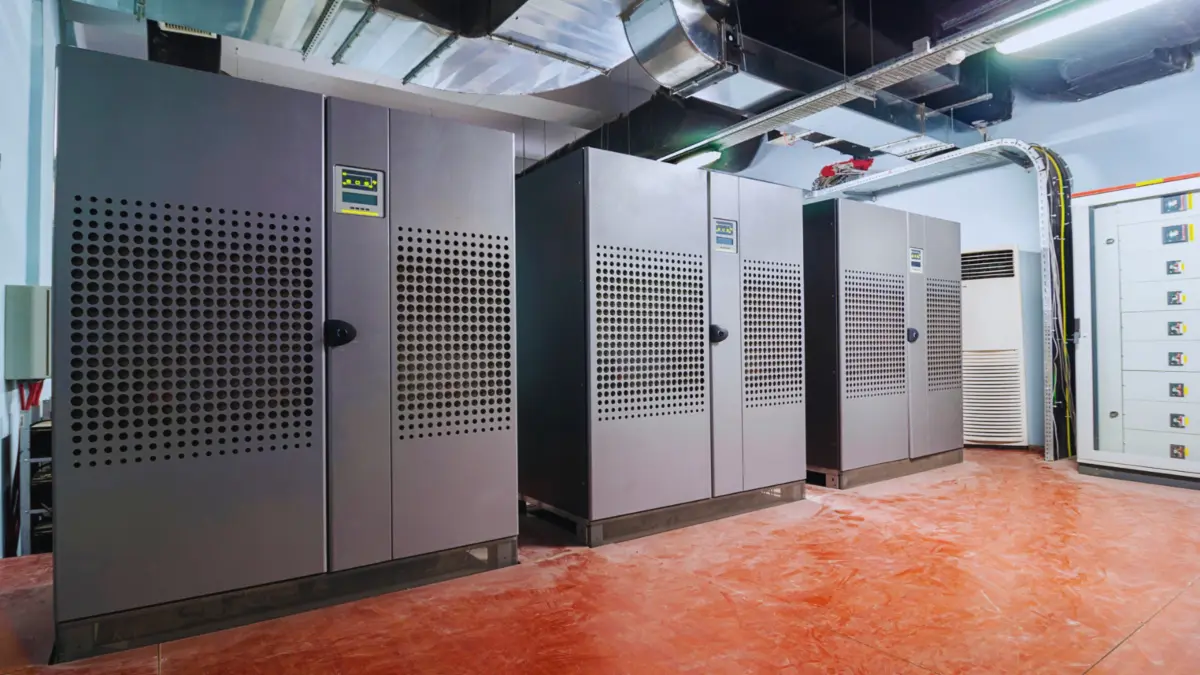
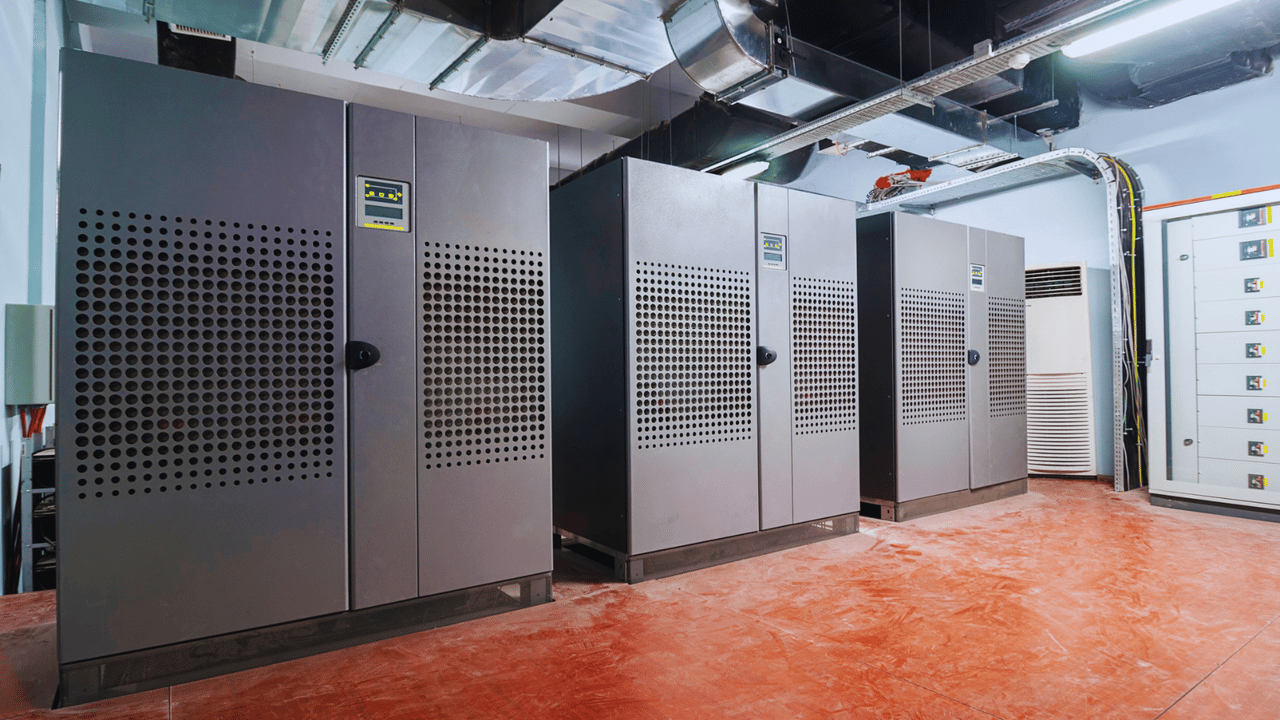
For years, enterprise and colocation data centers relied almost exclusively on large, centralized, double-conversion AC UPS systems. These massive units—often occupying dedicated electrical rooms—were designed to isolate the IT load entirely from the utility grid. During normal operations, they conditioned incoming alternating current (AC) power, and during an outage, massive valve-regulated lead-acid (VRLA) or early lithium-ion battery strings provided critical bridge power until diesel generators could spin up and assume the load. This model prioritized absolute uptime and isolation, treating the data center as a steady, predictable load.
The Hyperscale Disruption and DC Adoption (2015–2023)
As hyperscale cloud providers scaled operations to support massive web services and early machine learning models, traditional centralized power distribution began to show signs of strain regarding efficiency and footprint. Inspired by the Open Compute Project (OCP), hyperscalers began experimenting with distributed and rack-level power architectures. By moving backup power closer to the compute node via Battery Backup Units (BBUs) and embracing direct current (DC) distribution, these operators minimized conversion losses. This shift proved that centralized AC UPS systems were not the only viable path to achieving fault tolerance.
The AI Factory Boom and High-Voltage DC Shifts (2023–Present)
The commercial explosion of generative AI and Large Language Model (LLM) training fundamentally broke traditional power assumptions. Modern AI clusters demand unprecedented rack densities, frequently exceeding 100 kW to over 300 kW per rack. To manage these loads efficiently, data center designers are increasingly turning to high-voltage direct current (HVDC) architectures—such as 800 V DC systems—and sidecar power cabinets. These advanced configurations distribute power conversion stages and bypass traditional centralized UPS topologies entirely, pushing the industry toward decentralized resiliency frameworks.
Supporting Context & Metrics
The ongoing debate surrounding the UPS is underscored by hard data concerning reliability, failure points, and the sheer volatility of modern workloads.
Reliability Realities and Outage Statistics
While the UPS is installed specifically to prevent downtime, empirical research indicates it remains a frequent point of failure. Findings from the Uptime Institute’s Annual Outage Analysis highlight that power-related disruptions account for over 20% of all reported IT service outages over a rolling three-year window.
Within these power-related incidents, the root causes are distributed as follows:
- UPS Failures: 39% (Leading cause of power-related outages)
- Transfer Switch Failures: 34%
- Generator Failures: 28%
These metrics emphasize a paradox: the equipment deployed to ensure business continuity can simultaneously act as a single point of failure if not engineered, maintained, and integrated correctly. Furthermore, Uptime Institute Intelligence has highlighted a gradual increase in major data center fires linked to lithium-ion batteries within UPS systems. While industry experts note that this trend is partly attributable to the sheer velocity of global data center construction rather than an inherent, unmanageable flaw in lithium-ion chemistry, it has nonetheless forced engineers to re-evaluate thermal management and containment strategies.
The AI Load Profile: Dynamic Swings and Harmonics
Traditional IT loads were characterized by steady, predictable power draws. In contrast, AI workloads introduce radical cyclicity. Large training clusters can experience load swings measuring tens of megawatts within a matter of seconds.
Speaking at the Data Center Event in Budapest, Luka Grahek, international specification engineer at Socomec, detailed the multi-layered stress this places on power infrastructure:
"From the grid side, the UPS needs to manage deep swells, interruptions, transient flickers, harmonics, and interharmonics. This is what we already know from the past. But what is coming from the load is now becoming more critical because we have these peak demands and in really short bursts."
Grahek emphasized that the extreme cyclicity and elevated harmonic distortion generated by high-density AI accelerators represent challenges that legacy UPS architectures were never originally designed to accommodate.
Official Statements and Industry Insights
Industry leaders, researchers, and component manufacturers offer diverse perspectives on how power trains are adapting to the demands of next-generation computing.
Flipping the Power Paradigm
Alex Cordovil, research director at the Dell’Oro Group, points out that the operational mandate of the UPS has fundamentally reversed. Rather than shielding fragile IT gear from an unstable utility grid, modern high-density loads require power infrastructure to protect the grid from the erratic consumption patterns of AI clusters.
"It’s now less about protecting the IT load from the grid and more about protecting the grid from the IT load," Cordovil explained. Despite continuous predictions of the UPS’s obsolescence, he remains pragmatic about its adaptability: "The UPS has been given a death sentence a few times, and every time it has come back in a new form."
Battery Energy Storage Systems (BESS) as Parallel Resiliency
As data center operators seek out alternative topologies to reduce electrical footprint and construction complexity, Battery Energy Storage Systems (BESS) are emerging as powerful parallel resiliency paths. While not drop-in replacements for every legacy application, utility-scale BESS solutions are increasingly integrated directly into data center campuses.
In 2025, BESS provider FlexGen Power Systems and electrical contractor Rosendin announced a strategic partnership to develop utility-scale BESS designed to support large-scale facilities without traditional centralized UPS systems.
Pasi Taimela, Chief Innovation Officer at FlexGen, noted:
"As data centers scale to meet exponential demand from AI and hyperscale computing, we need to rethink how we deliver power resilience across the modern data center campus."
According to the partnership, configuring BESS units as interactive UPS alternatives can drastically streamline electrical distribution, lower capital expenditure, and enhance overall operational efficiency.
Solid-State and Hybrid Transformers
Looking toward the latter half of the decade, advanced transformer technologies are projected to exert downward pressure on traditional UPS demand. According to recent Dell’Oro Group updates, solid-state transformers (SSTs)—championed by innovators like DGMatrix—are projected to meaningfully impact UPS market demand beginning around 2029, particularly within large AI factories that have already bypassed conventional UPS designs.
Matthew Williams, founder and CEO of hybrid transformer specialist Ionate, highlighted that a growing number of forward-thinking operators are actively redesigning their reference architectures:
"We’re speaking with customers—quite a few that are looking at how they can change their reference design to maybe not need a UPS. Using a combination of different technologies, batteries, and something like our [hybrid intelligent transformer], that leads to a better overall system efficiency."
Ionate’s Hybrid Intelligent Transformer (HIT) bridges traditional magnetic transformer designs with the software-defined flexibility of solid-state electronics. By delegating power conditioning tasks directly to the transformer and reserving battery assets exclusively for true backup scenarios, operators can avoid oversizing battery banks for tasks they are ill-suited to handle.
Future Outlook: What Changes and What Stays?
As the data center industry navigates the convergence of the AI revolution, strict sustainability mandates, and grid capacity constraints, the role of the uninterruptible power supply will inevitably transform.
The Decline of Centralization
For greenfield AI factories and hyper-dense hyperscale campuses, the days of massive, centralized AC UPS rooms are numbered. They are increasingly supplanted by decentralized, rack-level battery backup units (BBUs), high-voltage DC distribution buses, sidecar power cabinets, and integrated BESS installations. These distributed topologies reduce internal conversion stages, save critical floor space, and curtail energy losses—vital metrics when dealing with megawatt-scale facilities.
The Evolution of the UPS Role
However, the underlying engineering functions that the UPS was built to perform—voltage conditioning, harmonic mitigation, transient suppression, and source arbitration—are more critical now than ever before. Whether labeled a "UPS," an "energy hub," or integrated into a software-defined hybrid transformer, the technology responsible for arbitrating power quality will remain indispensable.
Furthermore, a vast installed base of legacy enterprise, government, and colocation facilities running traditional, non-AI enterprise workloads will continue to rely on conventional UPS topologies for years to come.
Summary
Ultimately, the data center power train is entering an era of unprecedented hybridization. While the traditional, monolithic centralized UPS may see its market share contract in the face of AI densification and advanced BESS architectures, the core engineering imperative it represents will endure. The hardware is changing, the voltages are rising, and the architectures are decentralizing, but the absolute mandate for uninterrupted digital infrastructure remains absolute.