The explosive growth of artificial intelligence has collided with an immovable physical barrier: local communities do not want the massive data centers required to power it. As hyperscale campuses demand unprecedented amounts of electricity and water, public backlash has transformed from localized murmurs into a coordinated, multi-front political resistance. State moratoriums, organized neighborhood campaigns, and plunging poll numbers for pro-infrastructure politicians have stalled billions of dollars in planned capital expenditure.
At the same time, the industry’s hunger for compute power continues its relentless climb. Faced with intense community opposition to ever-larger centralized facilities, technologists and entrepreneurs are searching for alternatives. One of the most radical ideas gaining traction is to decentralize the AI compute load entirely—spreading workloads across thousands, or potentially millions, of residential homes.
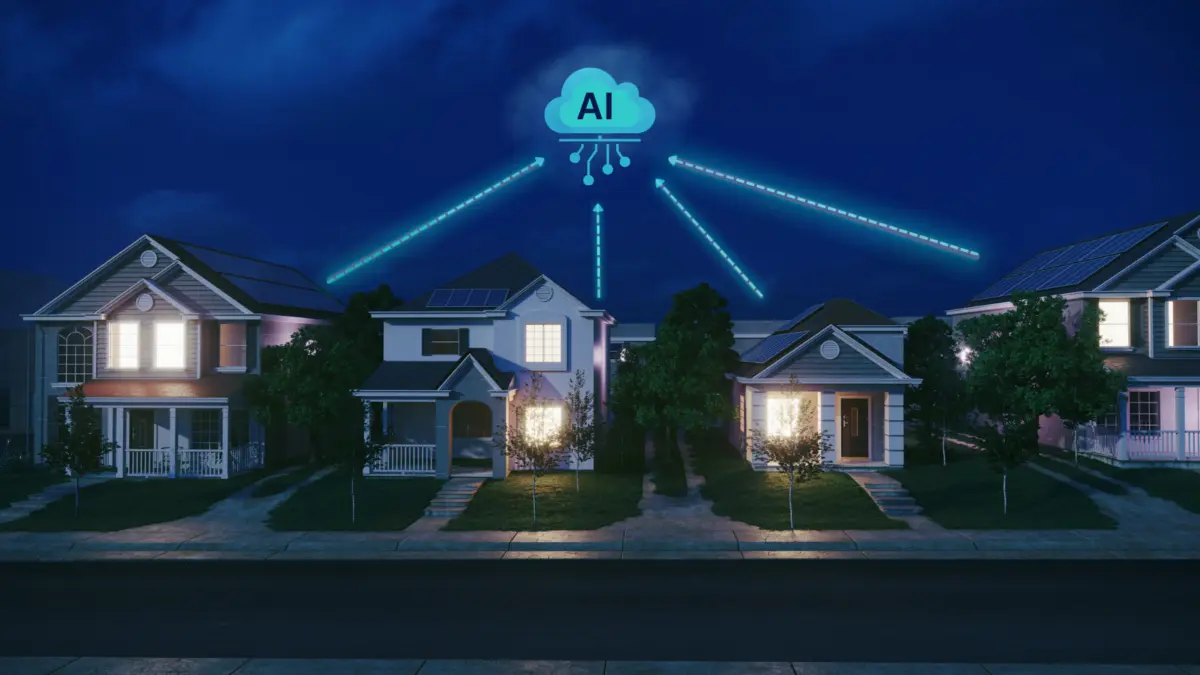
Often dubbed "Solar 2.0," this emerging model pools household computers, specialized graphics processing units (GPUs), local storage, and excess renewable energy into distributed networks. Startups like Nanocenter.ai, alongside major energy and hardware players, are building appliances designed for domestic installation—turning homeowners into passive "hosts" who can earn revenue while offsetting the strain on local power grids.
However, transforming residential properties into micro-data centers is fraught with technical, operational, and security hurdles. While experts agree that home-based compute cannot replace hyperscale campuses for heavy model training, a growing chorus of engineers suggests it could carve out a vital niche in the modern infrastructure stack. This article examines the forces driving the home-based AI movement, the structural hurdles it faces, and whether distributed residential nodes can truly bridge the gap between community resistance and insatiable AI demand.
Detailed Chronology of the Siting Crisis and the Rise of Residential Compute
To understand why the industry is looking toward residential basements and garages, it is necessary to chart the rapid escalation of public resistance to traditional data center development over the course of 2026.
Early 2026 (The Backlash Solidifies): Public opposition to mega-campuses reaches a boiling point. Polling data from Gallup reveals that 71% of Americans oppose the construction of an AI data center in their immediate area, while research from the Annenberg Public Policy Center notes that national disapproval rates surge from 49% in February to 61% by mid-spring. Concerns rapidly coalesce around skyrocketing utility bills, water depletion, continuous noise pollution, and the minimal number of permanent jobs these facilities ultimately generate.
April to June 2026 (Political Fallout and Market Realignment): Local pushback begins translating directly into legislative action. State and local governments across the United States consider sweeping moratoriums on zoning permits for data centers. In local midterms, voters increasingly cast ballots against incumbent politicians who support large-scale industrial builds. Billions of dollars in planned infrastructure investments are delayed or blocked outright.
June 2026 (The Birth of the "Nanocenter" Model): Sensing an existential bottleneck for the AI boom, startups pivot toward decentralization. Nanocenter.ai launches in June 2026, offering a garage-mounted hardware appliance roughly the size of a home battery. Packed with Nvidia RTX 6000-class GPUs, the system utilizes residential electrical setups to handle overflow compute tasks, promising homeowners up to $2,000 a month in passive income.
Mid-2026 (Expanding Industry Pilots): Major energy and smart-home players enter the fray. SPAN experiments with its XFRA distributed data center solution, while residential solar giant Sunrun announces a pilot program designed to combine residential AI compute workloads with homes already equipped with rooftop solar panels and battery storage systems. These early tests confirm that the movement is shifting quickly from theoretical blog posts to physical deployments in suburban garages.
Supporting Context & Metrics: The Scale of the Opposition
The friction between AI developers and local municipalities is rooted in tangible resource consumption. Modern AI data centers are industrial leviathans. A single next-generation campus can consume as much electricity as a medium-sized city, straining regional grids and driving up residential utility costs. Furthermore, the massive cooling requirements of high-density GPU clusters draw heavily on local water supplies, triggering severe environmental anxiety in drought-prone regions.
Public polling highlights the depth of this discontent:
Gallup (March 2026): 71% of Americans express opposition to local data center development.
Reuters/Ipsos (June 2026): Local opposition stands at 57%, contrasted against a meager 14% public support rating.
Annenberg Public Policy Center (Summer 2026): Disapproval rates climb significantly higher, moving from 49% up to 61% over a four-month evaluation window.
Pew Research: Identifies that public anxieties are heavily concentrated around natural resource depletion (electricity and water), inflated household utility bills, acoustic disturbances, and land use conflicts relative to the low job-creation metrics of automated facilities.
Proponents of residential edge computing argue that distributing smaller nodes across thousands of neighborhoods fundamentally changes the equation. By decentralizing power draw and utilizing existing residential electrical capacities paired with local solar generation, the industry hopes to sidestep the massive land-use battles and zoning moratoriums that currently plague mega-campuses.
Official Statements and Expert Perspectives
As the industry grapples with the architectural feasibility of home-hosted nodes, leading engineers and system architects have weighed in on what it truly takes to make the model work.
Naman Ahuja, a Meta software engineer specializing in AI infrastructure, distributed systems, capacity management, and hardware enablement (speaking independently and not on behalf of his employer), framed the concept through the lens of modern software orchestration:
"I would think of it less as a traditional data center spread across thousands of homes and more as a large fleet of edge compute nodes… The interesting part isn’t putting a GPU in someone’s house. The hard part is building software that can make thousands of machines, spread across different homes with different power and network conditions, behave like reliable infrastructure."
Ahuja points out that a home-based architecture exhibits characteristics that are the absolute inverse of a hyperscale facility: unpredictable internet speeds, fluctuating power availability, and nodes that can drop offline without warning.
"In practice, the scheduler may eventually need to ask not just, ‘Where is a GPU free?’ but also, ‘Where is power available right now, what does it cost, and can this workload be moved somewhere else if conditions change?’" Ahuja explains.
Aaron Peterson, founder and CEO of Nanocenter.ai, emphasizes the changing role of the everyday consumer within this ecosystem:
"Homeowners aren’t operators; they’re hosts."
Peterson describes the model as "Solar 2.0," pointing out that units mounted on garage walls require no new land, consume zero water from municipal reservoirs, and bypass the localized grid congestion that triggers public backlash.
Meanwhile, Jose Prabhu Michael Singarayan, AI Data Architect at Quantum Integrators and Senior Member of the IEEE, highlights the immense orchestration and security challenges inherent in distributed networks:
"In a distributed AI environment, orchestration, and not raw compute, is what transforms thousands of independent machines into a usable infrastructure platform."
Singarayan notes that networking must become dynamically adaptive to handle varying residential broadband connections, dynamic IP address shifts, and complex latency profiles across thousands of disparate endpoints.
Architectural Challenges: Hyperscale vs. Home Nodes
To evaluate whether home-based data centers are technically viable, one must contrast their physical and software architecture against traditional hyperscale facilities.
1. Hardware and Networking
Hyperscale data centers efficiently consolidate thousands of specialized GPUs inside professionally managed facilities connected by high-speed, ultra-low-latency fiber-optic networks. Conversely, home nodes rely on residential broadband connections. While fine for asynchronous tasks, home internet simply lacks the massive, deterministic bandwidth required for large-scale AI model training, where thousands of processors must communicate constantly in real time.
2. Power and Environmental Variability
In a centralized data center, power delivery is carefully engineered, redundant, and stable. In a residential setting, power availability is a moving target.
A home’s electrical draw fluctuates wildly based on human behavior: running the air conditioner, charging an electric vehicle, cooking dinner, or operating appliances.
Consequently, distributed AI nodes must operate as flexible loads, with schedulers continuously factoring in real-time power availability, utility pricing tiers, and thermal constraints.
3. Maintenance and Logistics
When a hardware component fails in a hyperscale facility, an on-site technician replaces the faulty unit within minutes. When thousands of machines are distributed across thousands of separate homes, every hardware failure transforms into a complex logistics problem. Automated remote recovery, self-diagnosing telemetry, and robust over-the-air management layers become absolute prerequisites.
4. Security and Compliance
Security remains arguably the steepest hill for residential networks to climb. Every individual compute node must establish cryptographic proof of its hardware identity, authenticate securely, and maintain encrypted data streams both in transit and at rest. Techniques like secure boot, cryptographically signed software updates, and remote attestation are mandatory. Even with these controls in place, home-based nodes are unlikely to satisfy the stringent compliance requirements demanded by regulated, classified, or highly confidential enterprise workloads.
The Upstream Control Plane: How the Ecosystem Operates
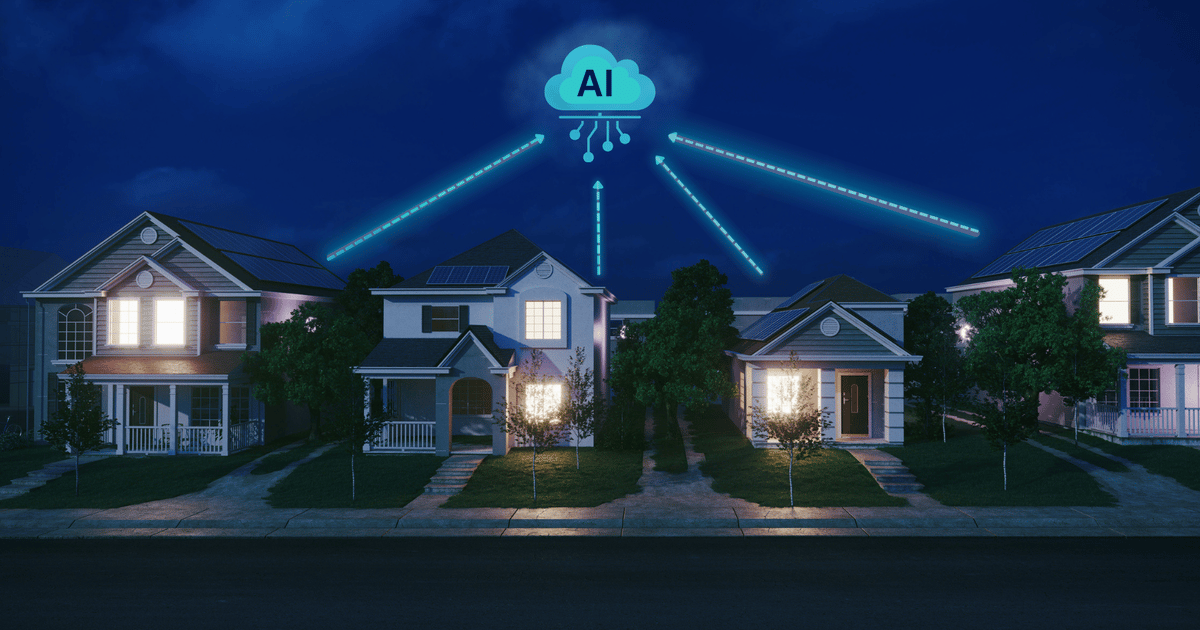
Despite decentralizing the physical hardware, home-based computing models cannot function without a centralized backbone. This is managed via an upstream control plane—a central facility or cloud orchestration layer that coordinates the decentralized fleet.
The division of labor functions as follows:
The Upstream Data Center (The Brain): Handles user authentication, workload distribution, model deployment, telemetry monitoring, software updates, automated billing, capacity forecasting, and policy enforcement. It acts as the central conductor, ensuring that the disparate edge devices cohere into a unified network.
The Residential Node (The Muscle): The physical appliance installed in the home (such as a garage-mounted unit housing Nvidia RTX 6000-class GPUs) supplies the raw computing capacity. It executes assigned sub-tasks, processes data packets locally, and reports its operational status back to the upstream controller.
This hybrid approach allows the industry to distribute physical hardware footprints and electrical loads across thousands of residential neighborhoods without entirely sacrificing operational oversight.
Future Outlook: Where Residential Nodes Fit in the Stack
Will home-based computing fizzle out before it achieves mainstream adoption, or will it successfully carve out a permanent home in the modern tech stack?
Industry experts suggest that the future is not an "either/or" proposition between mega-campuses and residential garages. Instead, the industry is moving toward a highly stratified, tiered infrastructure stack:
Hyperscale Campuses: Will continue to handle massive model training workloads, mission-critical enterprise applications, and highly sensitive, regulated data that require ultra-fast internal networking and maximum physical security.
Regional and Edge Data Centers: Will manage latency-sensitive inference workloads and localized regional demands.
Distributed Residential Nodes: Will absorb flexible, background, and asynchronous workloads—such as batch processing, data preparation, model evaluation, embeddings, and certain inference tasks that can tolerate intermittent connectivity, latency, and geographic dispersion.
By turning everyday homeowners into active participants in the digital economy—and transforming idle residential hardware into revenue-generating compute nodes—the distributed model offers a compelling psychological and physical release valve for an industry squeezed by community resistance. While residential nodes will never completely replace the hyperscale data center core, they may well evolve into the shock absorbers of the AI boom, keeping the wheels of innovation turning while local communities catch their breath.