Executive Overview
In the sprawling ecosystem of modern hyperscale computing, the fundamental limit on cloud reliability is no longer a lack of monitoring tools—it is an overwhelming excess of raw data. As public cloud platforms scale to global proportions, the sheer volume of telemetry generated per second has outpaced human cognitive capacity. Operators navigating dozens of disparate dashboards during a system anomaly face a critical intelligence gap: the time required to correlate isolated signals into a coherent diagnosis often exceeds the time it takes for a service degradation to impact end users.
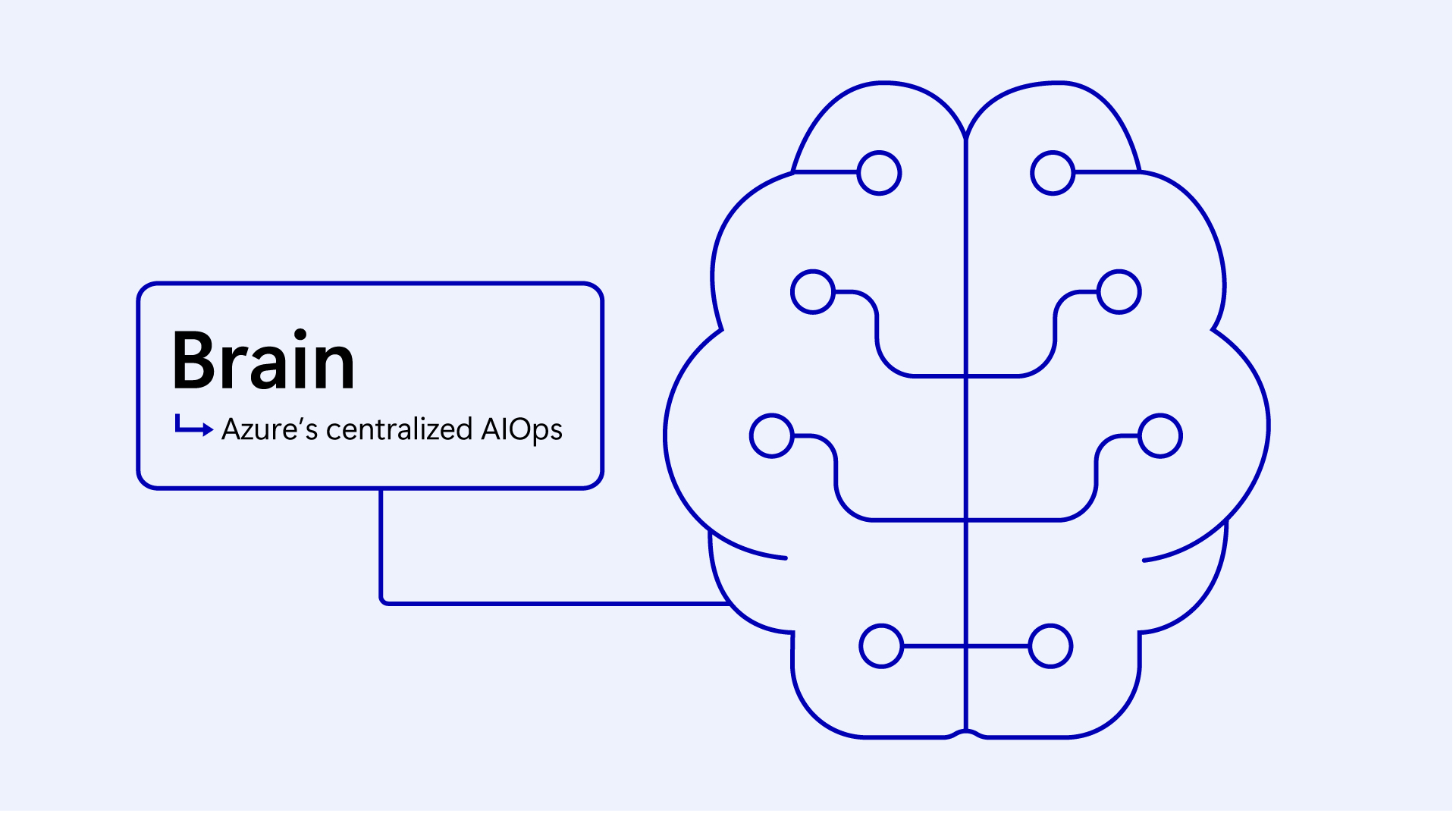
To solve this systemic challenge, Microsoft Azure has developed Brain, a centralized, AIOps-powered reliability intelligence system that operates as an intelligent layer above the Azure Resource Graph (ARG). Functioning as a real-time "digital twin" of Azure’s global infrastructure, Brain continuously ingests, fuses, and analyzes platform telemetry, machine learning models, topological service dependencies, and customer-workload impacts into a single, continuously updated model of platform health.
+-----------------------------------------------------------------------------------+
|                                   BRAIN ENGINE                                    |
|  +---------------------+   +--------------------------+   +--------------------+  |
|  | Platform Telemetry  |   | Topological Dependencies |   |  Customer Impact   |  |
|  | (Metrics, Logs)     |   | (Azure Resource Graph)   |   |  (Tenant Context)  |  |
|  +----------+----------+   +------------+-------------+   +---------+----------+  |
|             |                           |                           |             |
|             +-------------------+-------+-------+-------------------+             |
|                                 |               |                                 |
|                                 v               v                                 |
|                      +------------------------------------+                       |
|                      |   AI/ML Reasoning & Graph Models   |                       |
|                      +------------------+-----------------+                       |
+-----------------------------------------|-----------------------------------------+
                                          |
                                          v
+-----------------------------------------------------------------------------------+
|                             UNIFIED OUTPUT STATE                                  |
|            [ Health State  |  Severity  |  Impact  |  Reasoning ]                 |
+-----------------------------------------+-----------------------------------------+
                                          |
    +-------------------------------------+----------------------------------+
    |                                     |                                  |
    v                                     v                                  v
+-----------------------+     +-----------------------+     +-----------------------+
| Deployment Safeguards |     | Incident Orchestration|     | Customer Notifications|
| (Auto-Pause Rollouts) |     | (Automated Triage)    |     | (Scoped Targeted TTN) |
+-----------------------+     +-----------------------+     +-----------------------+
Rather than serving as another passive monitoring tool, Brain turns real-time operational insights into direct, automated reliability interventions. The system already powers resource-health evaluations, automated deployment pauses, rapid incident routing, and precise outage communications. Furthermore, Brain establishes the essential architectural prerequisite for the emerging era of agentic AI: a single, audited, and mathematically consistent source of truth without which autonomous software agents cannot safely manage mission-critical infrastructure.
Detailed Chronology
The Evolution of Cloud Reliability Paradigms
Understanding the operational shift driven by Brain requires examining the transition from legacy, human-centric triage workflows to real-time digital-twin governance.
[ Legacy Operational Model ]
  Rollout Initiated ---> Signal Anomaly ---> Manual Dashboard Correlation ---> Disjointed Alerting ---> Customer Reports Issue

[ Brain-Driven Operational Model ]
  Rollout Initiated ---> Real-Time Topological Reasoning ---> Automated Deployment Pause ---> Unified Root-Cause Incident
Phase 1: The Legacy Operational Dilemma (The Reconstruction Era)
Historically, resolving a cloud degradation was an exercise in manual forensic reconstruction:
- Change Deployment: A service team initiates a code or configuration update across multiple deployment units.
- Telemetry Drift: Latency or error rates subtly shift in a specific region, crossing static heuristic thresholds.
- Fragmented Alerting: Multiple telemetry systems fire isolated alerts across independent dashboards—network engineering sees packet drops, database teams see connection timeouts, and compute teams see CPU spikes.
- Cognitive Triaging: On-call engineers convene on incident bridges, manually piecing together dependency chains and deployment logs to determine whether the issue stems from an internal platform fault or an external workload anomaly.
- Delayed Customer Notification: The customer experiences application errors, conducts internal debugging, and opens a support ticket before the cloud provider can definitively confirm platform-level impact.
Phase 2: Architectural Convergence (Building the Digital Twin)
To eliminate the friction of manual reconstruction, Microsoft integrated the structural resource modeling of the Azure Resource Graph (ARG) with real-time stream processing and predictive machine learning models. This unified framework synthesizes static physical topologies, dynamic software relationships, and operational telemetry into a single, cohesive engine.
Phase 3: The Brain-Driven Operational Model (The Consumption Era)
With Brain actively operating in production, operational workflows shift from reactive manual investigation to automated, system-wide alignment:
- Intent-Aware Telemetry Ingestion: Brain registers active deployment pipelines, service topologies, and runtime health indicators simultaneously.
- Contextual Correlation: When error-rate anomalies emerge, Brain evaluates the signal against the service dependency graph, historical baselines, and active rollout intents.
- Autonomous Safeguarding: Brain identifies that an active code deployment is causing downstream degradation. It automatically signals the deployment engine to pause the rollout, preventing the issue from spreading to additional regions.
- Single-Determination Routing: Brain outputs a unified incident object—complete with impact scope, root cause, and severity—bypassing duplicate alerts and automatically assigning the issue to the precise service team responsible.
- Targeted Customer Communication: Concurrently, Brain identifies the exact customer tenants linked to the degraded resources and dispatches precise, plain-Language status notifications directly to affected clients.
Supporting Context & Architectural Metrics
The Scale of Azure’s Global Infrastructure
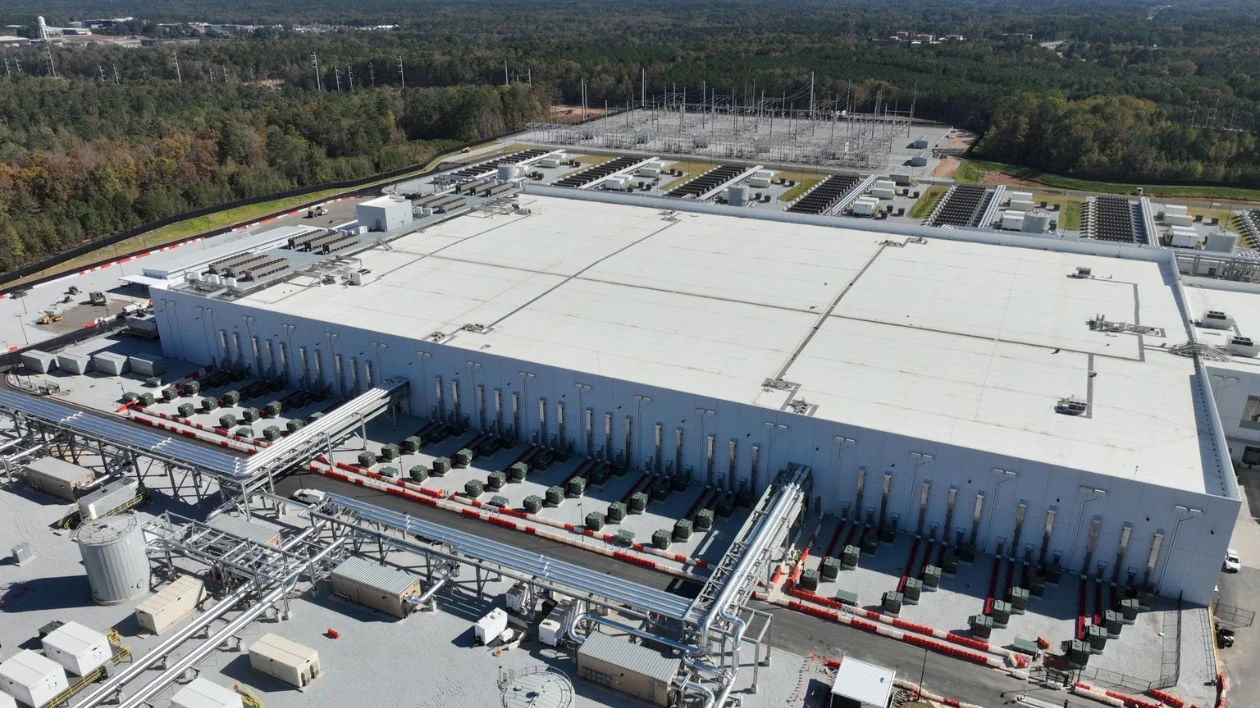
Operating an intelligence layer over a global cloud platform requires processing telemetry from a physical footprint that ranks among the largest in human history.
| Infrastructure Dimension | Operational Scale |
|---|---|
| Azure Regions | 80+ global regions |
| Datacenter Buildings | 500+ physical datacenters |
| Global Fiber Optic Network | 800,000+ kilometers (terrestrial and subsea) |
| Monitored Services | Hundreds of first-party and platform services |
| Customer Workloads | Millions of concurrent active enterprise resources |
                              GLOBAL AZURE FOOTPRINT
                   80+ Regions | 500+ Datacenters | 800,000+ km Fiber
                                       |
                                       v
                               TELEMETRY STREAMS
               (Metrics, Logs, Topology, Deployments, Customer Context)
                                       |
                                       v
                           AZURE RESOURCE GRAPH (ARG)
                            (Structural Baseline Layer)
                                       |
                                       v
                           BRAIN AIOPS ENGINE
                        (Real-Time Health Reasoning)
At this scale, a single platform degradation can trigger millions of telemetry signals per second. Traditional threshold-based monitoring inevitably causes "alert fatigue" or fails to catch quiet degradations—subtle software bugs that corrupt state or degrade performance without triggering binary up/down thresholds.
The Four Core Outputs of the Brain Engine
Brain processes raw telemetry streams through machine learning models and topological maps, normalizing all platform insights into four standard outputs:
+-----------------------------------------------------------------------+
|                         UNIFIED OUTPUT SCHEME                         |
+-------------------+---------------------------------------------------+
| Output Parameter  | Operational Definition                            |
+-------------------+---------------------------------------------------+
| 1. Health State   | Categorical health determination (e.g., Healthy,  |
|                   | Degraded, Unavailable).                           |
+-------------------+---------------------------------------------------+
| 2. Severity       | Calculated business and operational severity      |
|                   | rating.                                           |
+-------------------+---------------------------------------------------+
| 3. Impact Scope   | Precise mapping of impacted resources, deployment |
|                   | units, regions, and customer tenants.             |
+-------------------+---------------------------------------------------+
| 4. Reasoning      | Natural-language and programmatic explanation of  |
|                   | the factors driving the health determination.     |
+-------------------+---------------------------------------------------+
By enforcing this standardized vocabulary across all downstream operational systems, Azure eliminates semantic discrepancies between infrastructure teams, service developers, and customer communication channels.
Production Impact Metrics
The operational deployment of Brain across Azure’s core infrastructure has delivered measurable improvements in incident response precision and speed:
- Detection Precision: Services integrated with Brain’s resource-health evaluation engine demonstrate significantly higher precision in identifying true, service-impacting degradations while minimizing false positives.
- Notification Acceleration: In the past year, a substantial majority of outages in Brain-integrated services were communicated to affected customers automatically, driving a material reduction in Time-to-Notification (TTN) compared to legacy manual workflows.
- Blast-Radius Mitigation: Automated deployment safeguards driven by Brain systematically halt problematic software rollouts during initial regional rings, preventing potential outages from reaching broader production environments.
Official Statements
Perspective from Azure Engineering and Microsoft Research
"The gap between what we measure and what we know is the limiting factor on cloud reliability today. It is not a tooling problem. We have plenty of tools. It is a comprehension problem. The amount of signal a hyperscale cloud produces has outgrown the human ability to read it."
This insight frames the architectural philosophy behind Brain. Rather than presenting engineers with additional dashboards, the platform shifts the primary operational paradigm from human data aggregation to automated software synthesis.
"When Brain says a service is degrading, that statement is not a threshold being crossed. It is a determination made by reasoning across topology, runtime state, current intent, historical patterns, and customer-side evidence simultaneously. It is the intelligence system speaking, not a metric firing."
Furthermore, Microsoft’s engineering leadership highlights the critical relationship between cloud digital twins and the broader industry drive toward agentic AI:
"Agents need something to be agentic about. Build the agents first, on top of fragmented data, and you get a federation of confident systems that disagree with each other in production. Build the model first, and the agents become composable: they reason from the same picture, and the picture is one you can audit."
Future Outlook
Agentic AI and the Next Era of Cloud Operations
The technology landscape is increasingly focused on agentic AI—autonomous systems capable of making decisions and executing multi-step workflows without human intervention. However, deploying autonomous software agents into hyperscale cloud management introduces non-trivial risks if those agents rely on fragmented, contradictory data sources.
FRAGMENTED DATA MODEL (High Risk)
  Agent A (Logs)   ---> [ Conflicting Action ] ---
  Agent B (Metrics) ---> [ Conflicting Action ] ---> Production Instability
  Agent C (Alerts) ---> [ Conflicting Action ] ---/

UNIFIED DIGITAL TWIN MODEL (Brain Architecture)
  Unified Digital Twin ---> Single Auditable Truth ---> Composable Agent Actions
Brain provides the architectural foundation necessary for safe agentic operations. By consolidating global platform context into an auditable representation, autonomous operational agents can reason over a single source of truth. Future developments in the Brain platform will focus on expanding these agentic capabilities:
- Self-Healing Remediation: Expanding agentic execution loops that allow Brain to execute safe, context-aware mitigations—such as rerouting network traffic, rebalancing compute resources, or rolling back specific micro-service updates—seconds after a degradation is detected.
- Dynamic Baseline Modeling: Replacing static SLAs and fixed thresholds with adaptive, ML-driven definitions of service health that continuously account for workload context, customer usage patterns, and regional variance.
- Advanced Predictive Safeguards: Leveraging deep sequence models to identify potential infrastructure failures before they manifest in customer-visible telemetry, enabling preventive workload migration.
Rethinking Industry Vocabulary
As Microsoft expands the Brain series, the core focus moves toward redefining fundamental operational concepts. Future entries in this technical series will address the core standards used to assess system performance:
- Defining what constitutes "health" in complex, multi-tenant cloud architectures.
- Harmonizing definitions when underlying infrastructure degrades without causing immediate customer-visible impact.
- Replacing outdated, decade-old monitoring paradigms with semantic cloud health frameworks designed for the age of AI.
Through the continuous evolution of Brain, Azure is reshaping how global cloud infrastructure is operated—establishing a operational model designed to maintain platform reliability at hyperscale.