Executive Overview
The global explosion of artificial intelligence (AI), machine learning (ML), and high-performance computing (HPC) has triggered an unprecedented demand for data center capacity. Yet, the traditional playbook for meeting this demand—breaking ground on new facilities—is running into formidable brick walls. Across major global markets, data center developers face severe siting hurdles, prolonged approval and permitting timelines, and critical electrical grid constraints that can stall projects for years.
For many facility operators, the faster, more economical, and strategically sound path to scaling compute capacity is no longer out, but in. By increasing the density of existing facilities, operators can bypass many of the roadblocks associated with greenfield construction. However, data center densification is far from a simple plug-and-play upgrade. It requires a meticulous balancing act of mechanical engineering, electrical architecture, structural load management, and regulatory compliance.
This comprehensive report examines the mechanics of data center density, explores why densification has become the defining operational strategy of the AI era, details the practical methods for safely executing facility upgrades, and evaluates the critical operational, cooling, and regulatory constraints that management teams must navigate along the way.
Detailed Chronology: The Evolution Toward High-Density Infrastructure
To understand how the data center industry arrived at its current obsession with densification, it is helpful to trace the chronological evolution of server architecture, power densities, and real estate strategy over the past two decades.
Phase 1: The Traditional CPU Era (Pre-2015)
For years, data centers were architected around standard, low-density rack configurations. A typical enterprise rack consumed between 3 kilowatts (kW) and 5 kW of power, housing traditional, general-purpose x86 CPU servers. Cooling these systems was a relatively straightforward affair, reliant primarily on raised-floor raised-air-plenum designs using Computer Room Air Conditioner (CRAC) or Computer Room Air Handler (CRAH) units. Power distribution was managed via standard overhead or under-floor power distribution units (PDUs), and space constraints were dictated more by square footage than by thermal or electrical limits.
Phase 2: The Cloud and Hyperscale Expansion (2015–2020)
The proliferation of cloud computing and massive hyperscale deployments shifted the industry’s focus toward efficiency, virtualization, and scale-out architectures. Rack densities slowly crept upward, averaging 7 kW to 10 kW per rack. Operators began experimenting with hot-aisle/cold-aisle containment to optimize airflow. However, the physical footprint of data centers continued to expand rapidly, with massive campuses rising in traditional hubs like Northern Virginia, Dublin, and Singapore. During this era, land acquisition and securing multi-megawatt grid connections were relatively frictionless compared to today’s standards.
Phase 3: The AI Turning Point and Grid Saturation (2021–Present)
The public debut and rapid commercialization of generative AI models fundamentally disrupted the data center paradigm. GPU-accelerated servers—designed to train and run massive large language models (LLMs)—routinely demand anywhere from 30 kW to over 100 kW per rack. At the same time, electrical grids in prime markets reached a saturation point. Utilities began implementing multi-year moratoriums on new power hookups, and local communities increasingly pushed back against the noise, water consumption, and visual footprint of massive new server farms.
Faced with grid bottlenecks and community opposition, operators could no longer rely solely on greenfield builds. The industry entered the "Densification Era," focusing aggressively on retrofitting legacy halls, upgrading power distribution, and deploying advanced cooling technologies to squeeze maximum compute out of every square foot of existing real estate.
Supporting Context & Metrics: Defining Data Center Density
Data center density describes how much compute workload a facility can support within a given physical and electrical footprint. To manage this effectively, engineers and facility managers evaluate density through two complementary lenses:
- Power Density (Kilowatts per Rack): This metric measures the electrical load allocated to a single equipment rack or cabinet. While legacy enterprise environments hovered at 3 to 5 kW per rack, modern AI clusters routinely require 40 kW, 60 kW, or even 100+ kW per rack.
- Floor Density (Kilowatts per Square Foot/Meter): This metric evaluates the total thermal and electrical capacity delivered across a specific section of the data hall floor plate. High floor density means an operator can pack more computational muscle into a tighter physical footprint, reducing the need for costly expansions of the building shell.
The Realities of AI Rack Limits
The mismatch between legacy facility designs and modern AI hardware has created severe operational friction. According to industry analyses on AI rack limits, many existing data centers possess available square footage, but that space is fundamentally unusable for high-density AI deployments.
Why? Because a standard raised-floor data hall cannot simply absorb a cluster of 50-kW GPU racks without major structural and mechanical overhauls. Floors may lack the weight capacity to support heavier high-density cabinets, electrical busways may trip under sudden load spikes, and traditional air-handling units cannot move enough volume of air to prevent thermal throttling or catastrophic hardware failure.
The Case for Densification in the AI Era
The financial, logistical, and environmental arguments for densification are compelling, particularly as capital expenditures (CapEx) for greenfield builds skyrocket.
1. Speed-to-Market
Building a new data center from scratch—from initial land acquisition and zoning approvals to environmental impact assessments, construction, and utility substation buildouts—frequently takes three to five years. In contrast, retrofitting an existing facility to handle higher densities can often be executed in a fraction of that time, allowing operators to capture surging AI enterprise demand rapidly.
2. Mitigating Regulatory and Permitting Risks
Permitting timelines have stretched significantly as local governments scrutinize the resource consumption of data centers. By focusing on densification within existing facilities, operators largely sidestep new zoning hearings, environmental reviews, and the lengthy queues for new electrical interconnect agreements with local utilities.
3. Avoiding Community Opposition
"NIMBYism" (Not In My Back Yard) targeting data center developments has reached a fever pitch. Protests over noise pollution, strain on municipal water supplies, and grid reliability have derailed numerous projects globally. Densification utilizes pre-approved, existing industrial real estate, bypassing local opposition that frequently stalls new construction.
4. Maximizing Asset Value and Infrastructure ROI
Rather than abandoning legacy spaces that lack the power profiles for hyperscale workloads, densification breathes new life into older facilities. Upgrading existing real estate maximizes the return on investment (ROI) for pre-existing fiber interconnects, security systems, and structural shells.
How to Increase Rack and Floor Density: Tactical Execution
Transforming a legacy data center into a high-density powerhouse requires a combination of architectural adjustments, electrical modifications, and advanced cooling deployments. Industry operators are leveraging several core strategies:
Upgrading Power Distribution Architecture
Legacy power distribution units (PDUs) and branch circuits are frequently inadequate for high-density AI nodes. Operators are modernizing infrastructure by deploying high-capacity overhead busways and intelligent remote power panels (RPPs) that can safely distribute higher amperages (such as 3-phase, 415V power) directly to individual racks without causing phase imbalances.
Implementing Tall, Uniform Cabinets
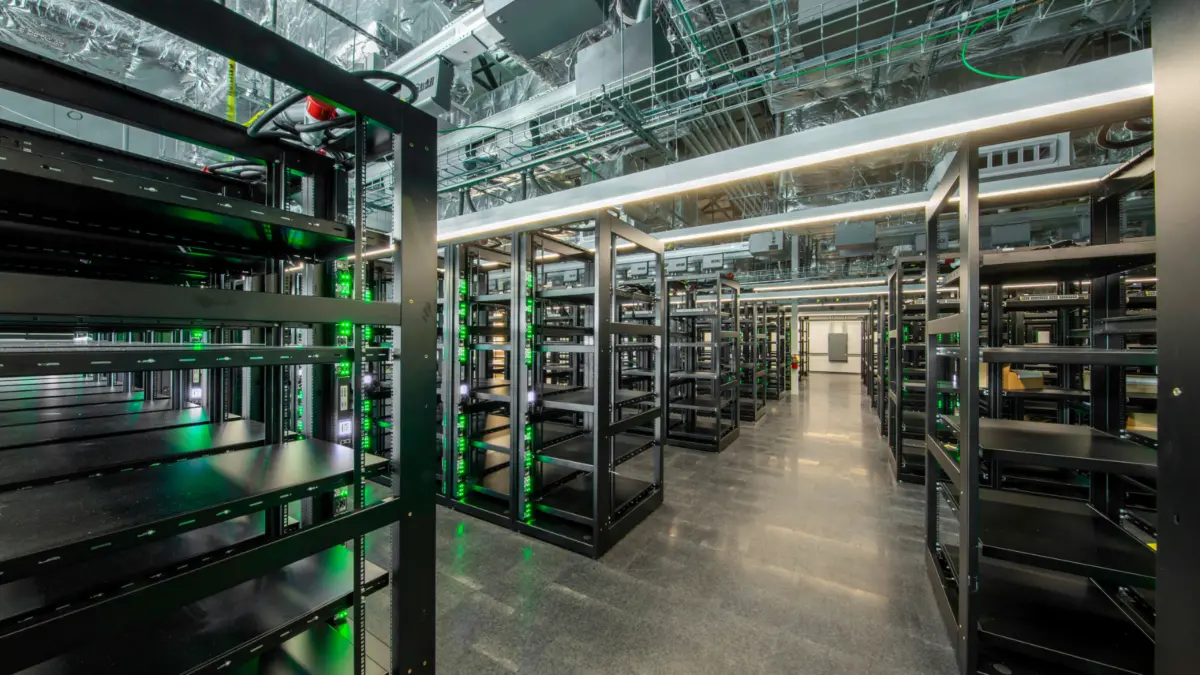
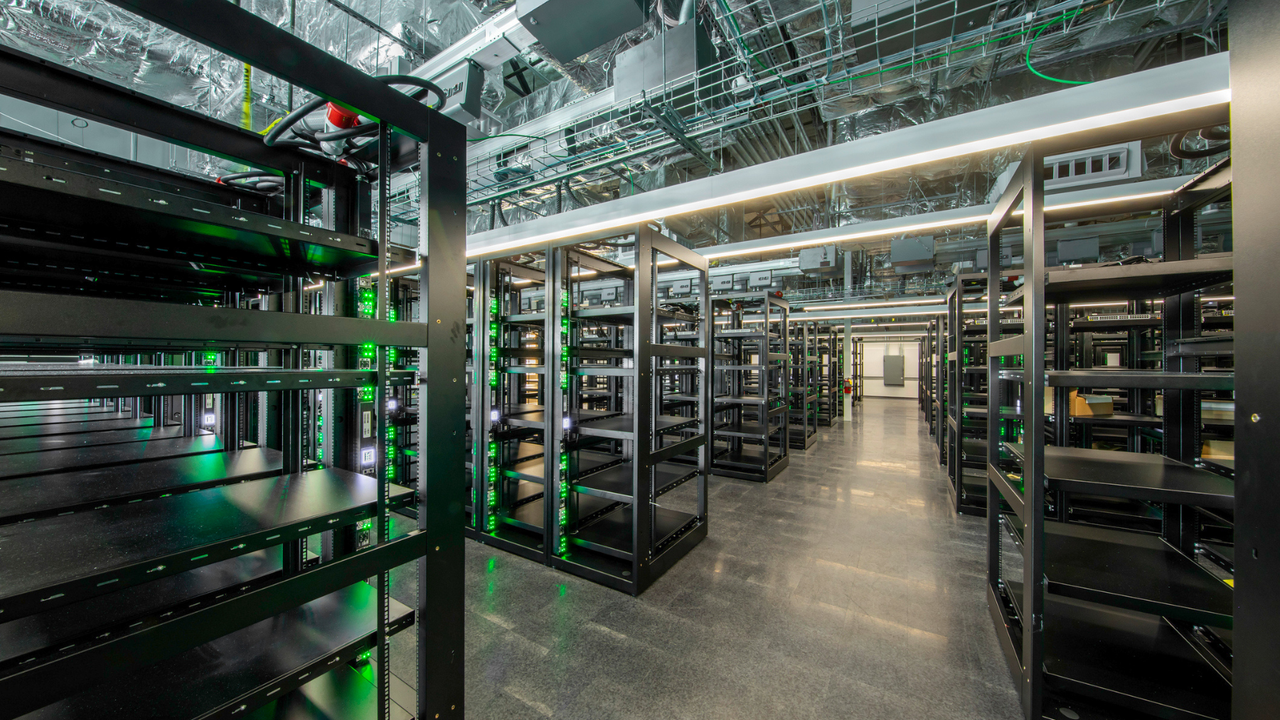
Space optimization begins with the physical enclosure. Taller, standardized server cabinets (such as 52U or taller racks) increase per-rack capacity vertically. Uniform cabinet layouts streamline cable management and simplify power and cooling distribution, unlocking hidden capacity without expanding the building footprint.
Transitioning from Air to Liquid Cooling
Air cooling hits a hard physical ceiling at approximately 20 kW to 30 kW per rack; beyond that threshold, fans must spin at deafening speeds, consuming excessive auxiliary energy (parasitic load) while failing to cool dense GPU clusters effectively. To achieve true high-density operations, operators are retrofitting facilities with liquid cooling solutions.
This includes:
- Direct-to-Chip (Cold Plate) Cooling: Pumping dielectric fluid or water-glycol mixtures directly through copper blocks mounted onto high-wattage CPUs and GPUs.
- Immersion Cooling: Submerging entire servers into baths of thermally conductive, electrically insulating dielectric liquid, entirely eliminating the need for traditional heatsinks and fans.
Constraints to Manage: Power, Cooling, Serviceability, and Permits
While densification offers a clear path to expanded capacity, it is fraught with engineering and operational challenges. Facility teams must carefully manage four critical constraint categories:
1. Electrical Capacity and Grid Limits
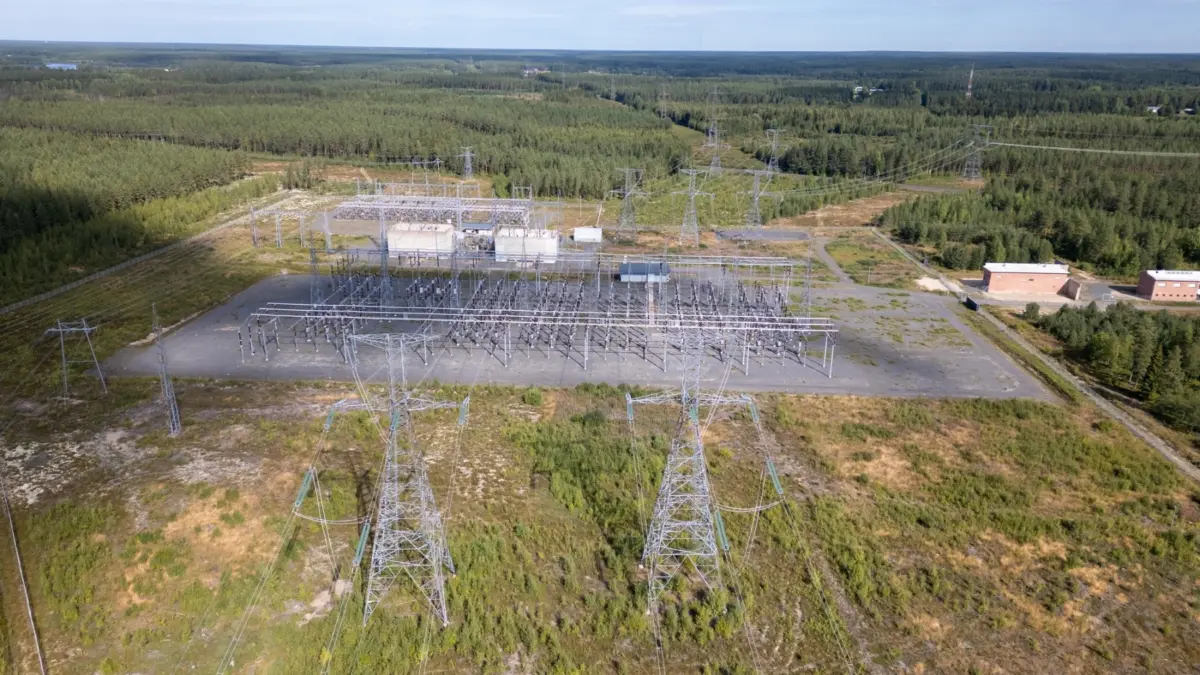
Even if an operator successfully retrofits a data hall for high density, the facility is still bounded by its total utility feed. If a substation can only deliver 10 megawatts (MW) to a building, densifying racks simply means the operator must pack fewer total racks into the facility to stay within that 10-MW ceiling. True densification requires securing utility cooperation for localized power upgrades or integrating on-site power generation and energy storage systems (BESS).
2. Thermal Management and Heat Rejection
Packing more compute into smaller spaces concentrates massive amounts of heat. Operators must ensure their mechanical infrastructure—chillers, cooling towers, and heat exchangers—can reject this concentrated thermal load. In retrofits, finding physical space to route large-diameter liquid cooling piping or install additional heat rejection units outside the building can present severe architectural hurdles.
3. Structural Load-Bearing Limits
Modern high-density AI server racks are exceptionally heavy. Fully loaded GPU clusters, combined with heavy battery backups and liquid cooling manifolds, can easily exceed the structural load-bearing capacity of standard raised floors (which were historically engineered for 250 to 300 pounds per square foot). Reinforcing subfloors or transitioning to slab-on-grade designs in an active, operational data center is a complex, high-risk engineering challenge.
4. Serviceability and Maintenance
As density increases, the physical space around equipment shrinks. Technicians working on ultra-dense racks face ergonomic and safety challenges. Maintaining cables, hot-swapping power supplies, or replacing dense GPU blade configurations requires specialized tooling and rigorous safety protocols to prevent accidental downtime in mission-critical environments.
Future Outlook: The Strategic Mandate of Densification
The era of cheap land, abundant grid power, and low-density server deployments has officially drawn to a close. As the appetite for generative AI, simulation modeling, and enterprise machine learning continues to outpace global electrical infrastructure development, data center densification will transition from a clever alternative strategy to an absolute operational imperative.
Moving forward, the most successful data center operators will be those who master the delicate science of retrofitting legacy spaces. By combining advanced liquid cooling architectures, intelligent power distribution, and structural reinforcement, the industry will successfully unlock massive pools of compute capacity hidden within existing real estate footprints.
Ultimately, densification does more than just solve immediate power and siting bottlenecks—it redefines the efficiency, sustainability, and economic viability of the modern data center, ensuring the digital infrastructure of tomorrow can rise to meet the computational demands of the future without breaking ground on new facilities.