Executive Overview
The fundamental premise of software engineering—that human developers write, review, and maintain lines of source code—is facing an existential reckoning. Speaking before a packed auditorium of approximately 500 software engineers and industry leaders at the swampUP 2026 conference, JFrog CEO Shlomi Ben Haim delivered a provocative yet pragmatic thesis: in the rapidly approaching age of artificial intelligence, human-readable source code will cease to matter.
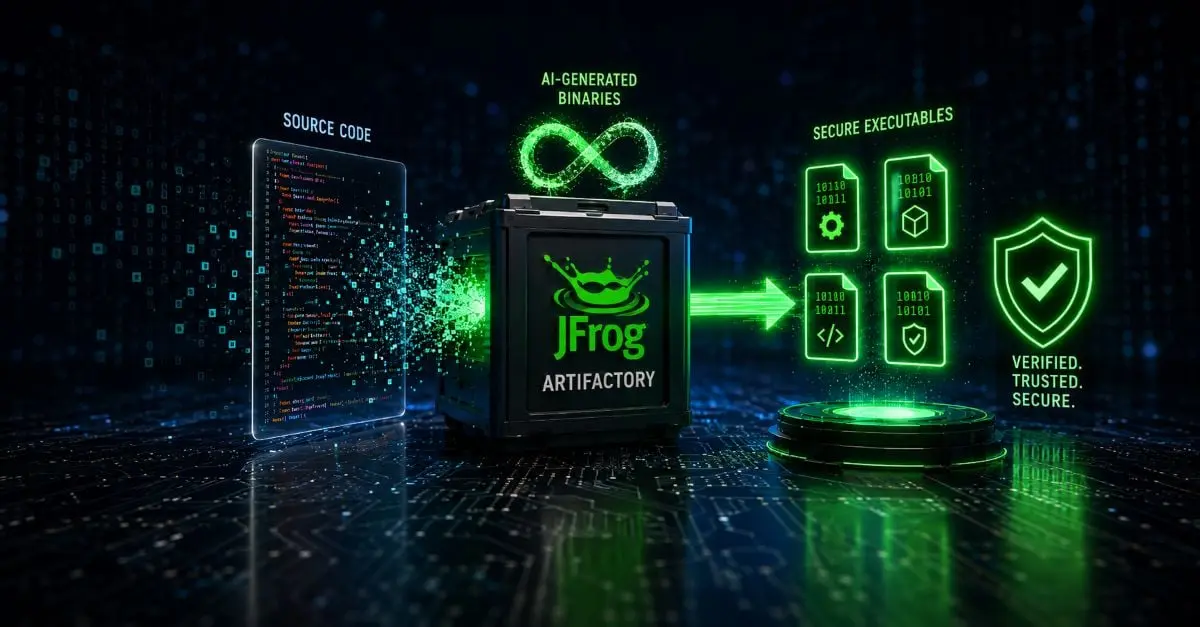
For decades, the software development lifecycle (SDLC) has relied on source code as the primary artifact of human intent and security oversight. Source code was the legible manuscript that developers debugged, peer-reviewed, and put through rigorous static application security testing (SAST) pipelines. However, as generative AI models and autonomous coding agents take over the heavy lifting of software creation, they are increasingly generating executable binaries directly. This bypasses the traditional human-in-the-loop review phases altogether.
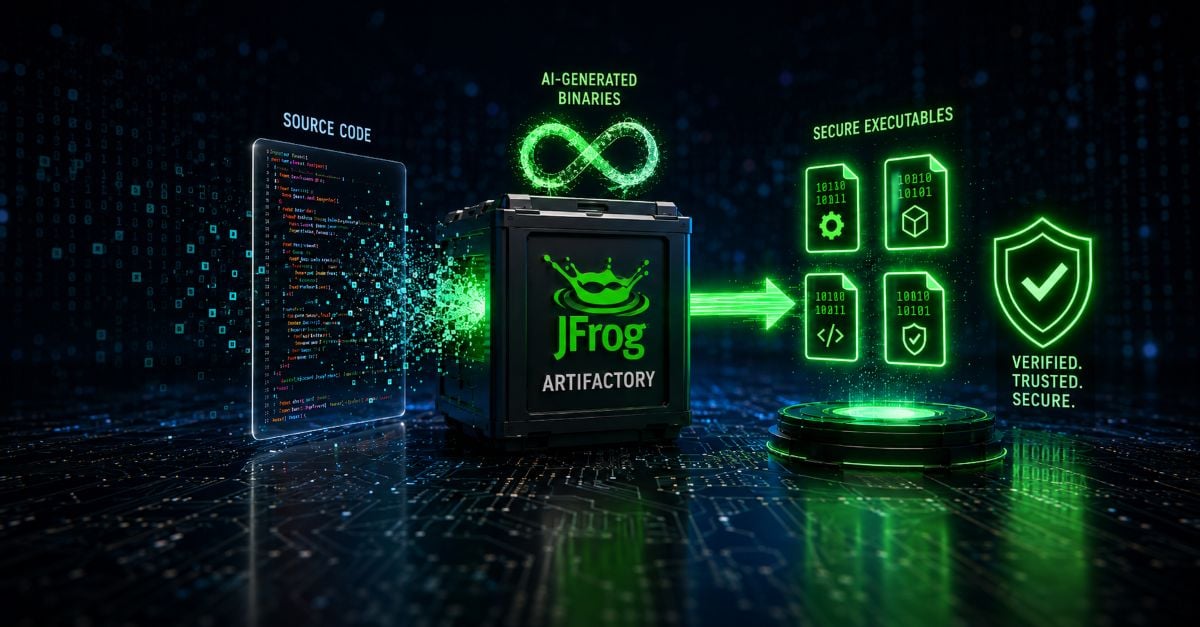
This paradigm shift is sending shockwaves through the cybersecurity and DevOps landscapes. As AI-generated code floods development pipelines—often yielding scripts and logic structures that are convoluted, opaque, or entirely unreadable by human developers—traditional DevSecOps workflows are buckling under the weight. Ben Haim argues that the traditional focus on scanning lines of source code is rapidly becoming obsolete. Instead, the epicenter of software supply chain security is shifting downward, toward the immediate scanning, validation, and verification of application binaries stored in registries like JFrog Artifactory.
This comprehensive report examines the staggering implications of Ben Haim’s declarations at swampUP 2026. We will explore how the proliferation of autonomous AI agents will reshape the enterprise software ecosystem by 2030, why the security paradigm must transition from source-level analysis to binary-level enforcement, and what the future holds for DevSecOps professionals navigating this uncharted frontier.
Detailed Chronology: The Evolution from Human-Crafted Code to Autonomous Binaries
To understand the magnitude of the transition announced at swampUP 2026, it is vital to trace the historical evolution of software engineering and security operations over the past half-century.
Phase 1: The Craftsmanship Era (1970s–2010s)
For decades, software development was bottlenecked by human cognitive capacity and typing speed. Developers wrote every function, loop, and conditional statement by hand. Because humans wrote the code, humans had to read it. Code reviews, pull requests, and peer mentorship became the bedrock of software quality assurance. Security practices naturally aligned with this human-readable paradigm, spawning Static Application Security Testing (SAST) tools designed to parse human grammar, syntax, and logic flows.
Phase 2: The Acceleration & DevOps Boom (2010s–2023)
The advent of cloud computing, agile methodologies, and Continuous Integration/Continuous Deployment (CI/CD) pipelines accelerated the pace of software delivery. Open-source libraries proliferated, introducing the modern Software Bill of Materials (SBOM) challenge. DevSecOps emerged as a discipline dedicated to "shifting left"—pushing security checks earlier into the development process to catch vulnerabilities before code merged into production repositories. Despite these efficiency gains, human-crafted source code remained the baseline metric for quality and security.
Phase 3: The Generative AI Disruption (2023–2025)
The introduction of advanced Large Language Models (LLMs) fundamentally altered developer productivity. Code assistants like GitHub Copilot, Cursor, and custom enterprise models began generating up to 40% to 50% of production code in many organizations. While developers still reviewed much of this output, the sheer volume of code began to outpace human review capacities. Vulnerabilities, technical debt, and bloated codebases grew exponentially.
Phase 4: The Agentic Future & Binary Supremacy (2026 and Beyond)
As outlined at swampUP 2026, the industry has now entered the era of autonomous software generation. AI tools are no longer merely assisting developers with auto-complete prompts; they are operating as autonomous agents capable of ideating, writing, compiling, and deploying complete executable binaries without human intervention.
In this new reality, source code is frequently treated as an ephemeral byproduct—a temporary log file generated by an AI agent that humans rarely read, let alone audit line-by-line. Consequently, security strategies that rely on human code reviews or traditional source-level SAST tools are losing relevance. The defensive perimeter has shifted decisively to the binary artifact.
Supporting Context & Metrics: The Scale of the Agentic Explosion
The urgency behind JFrog’s strategic pivot is underscored by staggering projections regarding autonomous digital labor over the next several years. During his keynote, Shlomi Ben Haim highlighted metrics that illustrate an exponential scaling of software creation that human institutions can no longer manage manually.
The 2030 Projections: Billions of Agents, Trillions of Actions
By the year 2030, industry analysts and enterprise forecasts project that the digital landscape will be populated by 2.5 billion active AI agents. These agents will not be passive assistants waiting for human prompts; they will operate continuously across distributed networks, executing routine tasks, optimizing infrastructure, and—most importantly—writing, compiling, and deploying custom software applications on the fly.
Ben Haim noted that these 2.5 billion agents are expected to complete an astronomical 459 trillion actions annually. To contextualize this figure:
- The Human Limitation: The global population of professional software developers is estimated at roughly 28 to 30 million. Even if every developer worked 24 hours a day, 365 days a year, reviewing code at peak efficiency, they could not audit a fraction of a percent of the output generated by billions of autonomous agents.
- The DevSecOps Bottleneck: Traditional DevSecOps workflows—which rely heavily on human-centric code reviews, manual exception approvals, and source-code vulnerability ticketing systems—will experience catastrophic operational gridlock. Attempting to secure the software supply chain by inspecting the source code generated by AI agents is, in Ben Haim’s words, a strategy that "simply will not scale."
The Vulnerability Tsunami
Compounding the challenge of volume is the velocity of vulnerability introduction. As developers of varying skill levels—ranging from seasoned enterprise architects to citizen developers utilizing natural language prompts—deploy custom AI agents, the rate of code generation increases exponentially.
Unfortunately, AI models are not infallible; they frequently hallucinate, introduce insecure coding patterns, or inherit vulnerabilities from poisoned training datasets and open-source dependencies. As a result, the volume of vulnerabilities in both legacy and newly minted applications is surging. While this trend introduces severe organizational risk, it has simultaneously forced an overdue sense of urgency into enterprise application security discussions, compelling leadership teams to abandon outdated compliance checkboxes in favor of real, active defense mechanisms.
Official Statements and Industry Insights
The declarations made at swampUP 2026 resonate deeply with broader shifts occurring across the enterprise software and cybersecurity sectors. Industry leaders are increasingly recognizing that the traditional tools of the trade are ill-equipped for an AI-native world.
"In the age of artificial intelligence, no one will soon care much about source code anymore. AI tools are now creating executable binaries directly without relying on source code that historically existed to provide a method for humans to review code."
— Shlomi Ben Haim, CEO, JFrog
Ben Haim’s commentary highlights a profound philosophical evolution. Source code was never the ultimate goal of software engineering; executable functionality was. Source code was merely a human-readable proxy—a necessary compromise made because carbon-based life forms cannot directly program in binary machine code or efficiently review millions of compiled bits. Once silicon-based agents master the creation of executables, the human-readable intermediary loses its functional necessity.
The Shift to Binary-Centric Security
In an era where application code is frequently generated on demand by AI and is often unreadable or entirely opaque to human application developers, the focal point for securing software supply chains must adapt. Ben Haim emphasized that organizations can no longer afford to obsess over "how many lines of source there are."
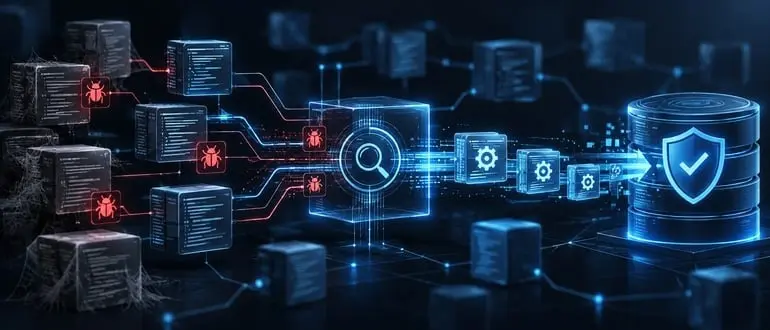
Instead, the security spotlight is shifting to application binaries stored in centralized registries and artifact repositories (such as JFrog Artifactory). By focusing security telemetry, vulnerability scanning, and provenance tracking directly on the executable artifact rather than the upstream source code, security teams can evaluate the exact software package that will be executed in production.
Furthermore, as AI agents become deeply embedded into DevOps workflows, the time and computational effort required to update, patch, and replace insecure software packages are shrinking dramatically. If a binary is flagged as vulnerable, an automated AI agent can be dispatched to regenerate, recompile, and re-verify the executable within seconds—rendering tedious manual patching cycles obsolete.
Future Outlook: Self-Healing Applications and the Evolution of DevSecOps
What does the future hold for software supply chain security as we approach 2030 and beyond? While the exact roadmap remains fluid and agentic engineering is still an evolving discipline, several clear trajectories are emerging.
1. The Rise of Self-Healing Applications
The ultimate architectural destination for modern software development is the creation of applications that are inherently self-healing. In this future paradigm:
- Each executable binary will be engineered to validate its own integrity cryptographically.
- Runtime environments will continuously verify that the running code matches verified cryptographic signatures and hasn’t been tampered with or poisoned by malicious actors.
- This validation will occur autonomously, requiring zero manual oversight or human intervention from security teams.
2. Securing Prompts and Specification Frameworks
As the focus shifts away from source code, a new attack surface will emerge upstream: prompts and specification frameworks. Securing the natural language instructions, governance guardrails, and architectural specifications provided to AI agents will become critical. If an attacker can inject malicious logic into an agent’s guiding prompt or specification file, the resulting binary will inherit those flaws. Consequently, securing the "prompt supply chain" will likely become a major sub-discipline of cybersecurity.
3. The Transformation of the DevSecOps Role
The role of DevSecOps professionals will inevitably undergo a massive transformation. Rather than spending hours reviewing pull requests, auditing SAST scan reports, or chasing developers to fix low-priority source code vulnerabilities, DevSecOps engineers will evolve into AI and Agent Governance Architects. Their primary responsibilities will include:
- Designing and overseeing the guardrails that govern autonomous AI coding agents.
- Configuring automated binary registries to perform continuous, real-time cryptographic verification and vulnerability remediation.
- Establishing organizational policies for acceptable AI agent behavior, output verification, and runtime monitoring.
Conclusion
The proclamations at swampUP 2026 mark a watershed moment in the history of software engineering. The era of hand-crafting, manually reviewing, and meticulously auditing human-readable source code is drawing to a close. As 2.5 billion autonomous AI agents prepare to execute hundreds of trillions of actions by the end of the decade, the volume and velocity of software creation will render traditional DevSecOps practices obsolete.
By pivoting the security focus from ephemeral source code to concrete, verifiable application binaries, the enterprise software ecosystem can successfully meet the challenges of the AI revolution. While the transition will require a fundamental overhaul of industry best practices and a reimagining of the DevSecOps profession, it also promises a future where applications are faster to build, easier to patch, and ultimately self-healing. The death of source code is not the end of software security—it is the birth of automated, binary-native resilience.