For decades, the foundation of enterprise cybersecurity rested upon a predictable lifecycle: a software vulnerability would be publicly disclosed, enterprise security teams would evaluate their organizational exposure, patches would be regression-tested in staging environments, and system administrators would schedule maintenance windows to deploy fixes into production. This traditional cadence operated under the fundamental assumption that defensive operations could reliably keep pace with threat actors.
That operational reality no longer exists. Today’s global enterprises run on complex, multi-cloud architectures comprising thousands of interconnected workloads, microservices, and legacy platforms. Critical business applications—powering real-time transactions, customer-facing portals, and core operational pipelines—cannot be taken offline on short notice without causing severe financial and operational disruption. Simultaneously, the speed at which software vulnerabilities are discovered, publicly analyzed, and weaponized has accelerated exponentially.
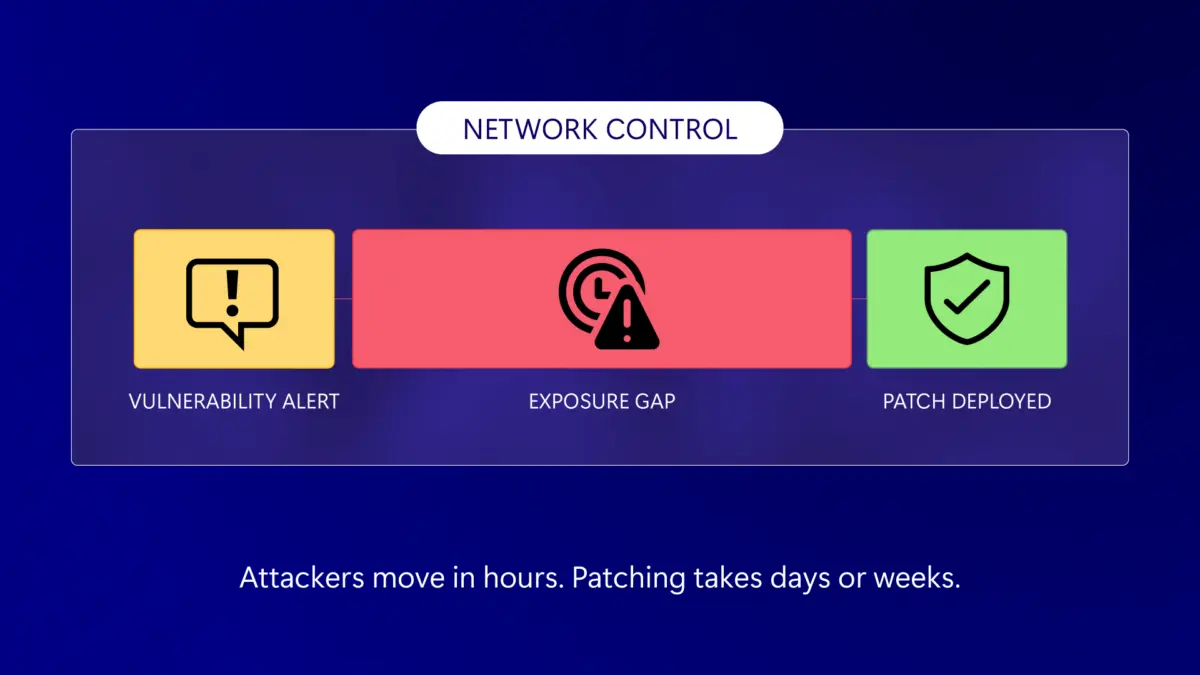
Driven by automated threat infrastructure and advanced artificial intelligence, adversaries now scan the global internet and deploy functional exploits within hours of a public advisory. This dynamic has resulted in a dangerous structural imbalance: enterprise patch cycles still require days, weeks, or even months, while offensive campaigns unfold at machine speed.
To prevent catastrophic breaches during this exposed window, the cybersecurity industry is undergoing a critical paradigm shift. Security leaders are moving beyond reactive patch management and passive visibility, turning toward proactive, network-enforced adaptive defenses that can autonomously contain threats before permanent code updates are ever deployed.
Detailed Chronology: The Evolution of the Vulnerability Lifecycle
To understand the current crisis facing Security Operations Centers (SOCs), it is essential to examine how the timeline between software vulnerability disclosure and active exploitation has compressed over time.
+-----------------------------------------------------------------------------------+
|                            TRADITIONAL PATCH LIFECYCLE                            |
| Day 1: Disclosure  -->  Days 2-7: Assessment  -->  Days 8-30: Patch Deployment   |
| (Defenders held a comfortable time buffer before weaponization)                  |
+-----------------------------------------------------------------------------------+
                                         |
                                         v
+-----------------------------------------------------------------------------------+
|                              MODERN THREAT TIMELINE                               |
| Hour 0: Disclosure  -->  Hours 1-4: Automated Exploit  -->  Hours 4+: Global Scans|
|                              Gap: Enterprise Patching                             |
|                              Takes Days or Weeks                                  |
+-----------------------------------------------------------------------------------+
The Historical Baseline (1990s–2010s)
During the early decades of enterprise computing, software systems were largely monolithic and hosted within defined corporate perimeters. When a vendor released a security patch—often aggregated into monthly release cycles—defenders typically enjoyed a comfortable grace period. Threat actors required specialized manual reverse-engineering skills to analyze patch binaries, construct reliable exploit payloads, and identify target targets. Enterprise patch SLAs of 30 to 60 days were standard and generally sufficient to mitigate risk.
The Cloud Era and Surface Area Expansion (2010s–2020)
As organizations migrated workloads to public cloud providers, adopted hybrid environments, and deployed containerized microservices, the attack surface expanded exponentially. Software supply chains became intricate webs of open-source dependencies, third-party APIs, and commercial frameworks. While devops paradigms accelerated deployment velocities, vulnerability management grew vastly more complex. Identifying every instance of a vulnerable library across vast multi-cloud estates transformed into a monumental inventory challenge.
The AI-Accelerated Present (2020–Present)
Today, the timeline between public advisory and real-world exploitation has effectively collapsed to near-zero. The integration of artificial intelligence into both defensive and offensive security tooling has radically transformed the economics of cybercrime:
Automated Binary Diffing: Threat actors utilize AI-assisted analysis to instantly compare original and patched software binaries, isolating the exact code modifications made to fix a flaw and reversing them into functional zero-day or one-day exploits.
Instantaneous Proof-of-Concept (PoC) Distribution: Code repositories and security forums now host public PoCs within hours of CVE (Common Vulnerabilities and Exposures) publications.
Autonomous Reconnaissance: Botnets leveraging automated LLM-driven scripts scan global IPv4 and IPv6 address spaces continuously, looking for vulnerable software signatures the moment an exploit strategy becomes viable.
This shift leaves enterprise defenders stranded in a high-risk window: a vulnerability announced in the morning is routinely targeted by automated scanning scripts before the close of business the same day.
Supporting Context & Metrics: Operational Bottlenecks and Network Enforcement
The widening gap between threat velocity and defensive remediation is not caused by operational negligence. Rather, it is the direct consequence of necessary engineering safeguards required to manage modern enterprise systems.
Enterprise Patching Realities
+-----------------------------------------------------------------------------------+
|                        THE REMEDIATION BOTTLENECK                                 |
+-----------------------------------------------------------------------------------+
| 1. Business Continuity: Zero downtime tolerances for core revenue systems.        |
| 2. Dependency Risk: Software updates run the risk of breaking complex APIs.       |
| 3. Regulatory Governance: Strict change-management approvals (PCI-DSS, HIPAA).   |
| 4. Operational Friction: Heterogeneous environments require extensive testing.   |
+-----------------------------------------------------------------------------------+
When a critical vulnerability is disclosed, enterprise teams are bound by operational constraints that prevent instant patching:
Business Continuity Constraints: Mission-critical systems supporting 24/7 financial transactions, manufacturing operations, or healthcare services cannot be rebooted or updated outside tightly controlled, infrequent change windows.
Complex Software Dependencies: Updating a single core component or library can trigger cascading failures across proprietary enterprise software, requiring exhaustive regression and performance testing before deployment.
Regulatory Governance & Compliance: Highly regulated sectors (such as defense, banking, and public utilities) must navigate strict compliance frameworks that mandate formal risk assessments, documentation, and multi-stage managerial approvals prior to introducing code changes.
Heterogeneous Infrastructure Sprawl: Large enterprises routinely manage a mixture of on-premise bare-metal servers, virtualized private clouds, multi-cloud platforms (Azure, AWS, GCP), edge devices, and legacy operational technology (OT)—each requiring distinct deployment mechanisms.
The Asymmetry Asymmetry
Cybersecurity fundamentally suffers from an operational asymmetry: defenders must discover, track, and remediate 100% of vulnerabilities across millions of digital assets, while an adversary needs to identify only a single unpatched, internet-exposed entry point to breach an environment.
Because modifying host applications directly is inherently slow and high-risk, organizations are increasingly turning to the network layer as the fastest and most reliable control plane. Operating externally to the workload, intelligent network controls provide protection without requiring application downtime, code modifications, or host-level agent deployments.
Precision Protocol Manipulation: A Case Study
Consider a high-severity Denial-of-Service (DoS) or Remote Code Execution (RCE) flaw found within the HTTP/2 protocol implementation of a popular web server. Traditional emergency mitigation dictated disabling HTTP/2 globally across the network edge—a blunt measure that often caused server degradation and broke modern web application dependencies.
In contrast, a modern context-aware network fabric enforces targeted, behavioral constraints:
Targeted Rate-Limiting: Restricting specific HTTP/2 frame types or concurrent stream creation limits associated with the exploit mechanism.
Traffic Isolation: Dynamically routing unauthenticated or suspicious traffic flows into isolated, inspectable micro-segments.
Virtual Patching via Deep Packet Inspection (DPI): Intercepting, analyzing, and stripping known exploit payloads at the network perimeter before the malformed request reaches the vulnerable workload.
By placing programmable enforcement points directly within the communication path, enterprises achieve real-time threat neutralization while application teams safely validate permanent patches in parallel.
Official Statements & Industry Perspectives
Industry leaders and security strategists emphasize that traditional vulnerability management paradigms must evolve to address the realities of AI-accelerated threats.
"The assumption that enterprises can patch their way out of modern threat environments is operational fiction," notes a senior security research report on cloud infrastructure protection. "When weaponization occurs in hours, visibility alone becomes a metric of frustration—knowing you are vulnerable without the ability to block the attack vector immediately serves little practical purpose."
Microsoft’s ongoing investments in adaptive cloud security architectures reflect this strategic pivot. By integrating network-level virtual patching, real-time threat intelligence feeds, and automated behavioral analysis directly into platform infrastructure, cloud providers are working to shift the defensive advantage back to enterprise organizations.
"Our objective is to buy enterprise defenders the most valuable commodity in cybersecurity: time," according to insights shared in recent Azure security disclosures. "By deploying intelligent, non-disruptive protective controls at the network perimeter the moment a threat vector is understood, we can shield operational workloads from exposure without forcing immediate application downtime."
Security analysts across the sector concur that the future of defense relies heavily on automated compensating controls. "The primary metric of operational success is no longer just Mean Time to Patch (MTTP)," states a leading cybersecurity analyst firm. "The crucial metric for the modern SOC is Mean Time to Containment (MTTC)—how quickly an organization can isolate a newly disclosed exposure from reaching critical infrastructure."
Future Outlook: The Era of Adaptive, Autonomous Defense
As artificial intelligence continues to lower the barrier for sophisticated exploit development, enterprise security architectures must evolve from static policy engines into autonomous, adaptive security ecosystems.
+-----------------------------------------------------------------------------------+
|                        THE THREE PILLARS OF ADAPTIVE SECURITY                     |
+-----------------------------------------------------------------------------------+
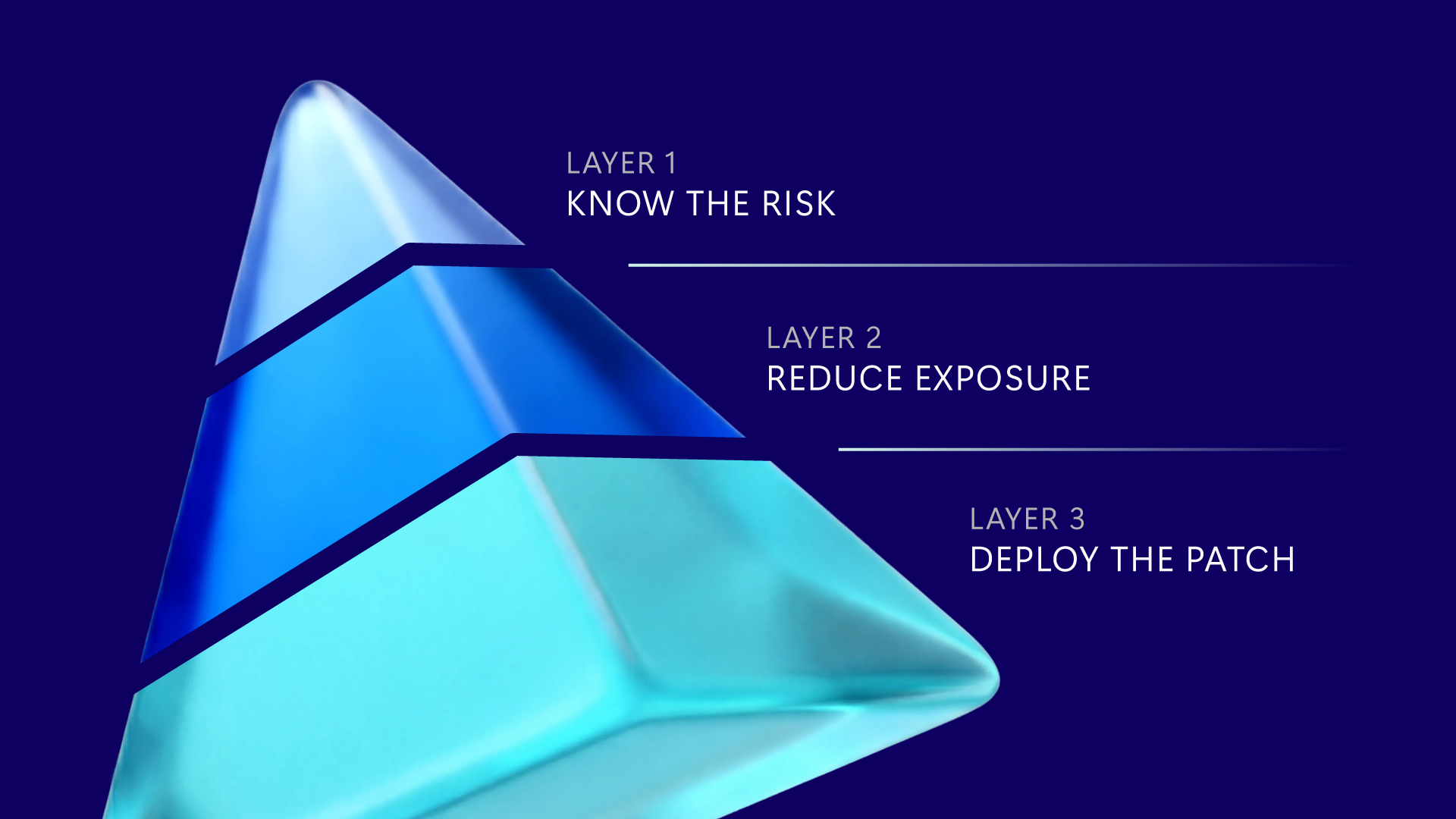
| 1. Machine-Speed Threat Intelligence: Automated analysis of advisories & PoCs.    |
| 2. Contextual Environment Mapping: Real-time correlation with active assets.     |
| 3. Autonomous Network Enforcement: Automated virtual patch generation & delivery. |
+-----------------------------------------------------------------------------------+
The Three Pillars of Adaptive Security Systems
The next generation of enterprise defense rests upon three automated, interconnected capabilities:
Machine-Speed Threat Intelligence Ingestion: Security systems must automatically ingest raw CVE reports, security research disclosures, dark web monitoring feeds, and patch binaries. Advanced AI models analyze these inputs instantly to determine the precise mechanics of an emerging exploit.
Contextual Infrastructure Mapping: Defense platforms must continuously cross-reference threat mechanics with real-world environment telemetry—evaluating live network topologies, active firewall rules, dynamic container configurations, and business criticality ratings to determine true operational risk.
Autonomous Network Enforcement: Upon identifying exposed, high-risk assets, the security framework must autonomously generate and apply context-aware, targeted network protections (virtual patches, microsegmentation policies, and protocol constraints) across the cloud estate without human intervention.
Conclusion
Vulnerabilities are an inevitable reality of complex software engineering. However, enterprise exposure to those vulnerabilities does not have to be an accepted cost of doing business.
The collapse of the traditional patch window demands that organizations move beyond reactive maintenance schedules. By transforming the underlying network into an intelligent, programmable enforcement fabric, enterprises can intercept attacks at the perimeter, preserve operational uptime, and secure their digital estates during the critical hours when every second counts.