Executive Overview
In the rapidly evolving artificial intelligence landscape, enterprise organizations face a critical paradox: while frontier models advance at unprecedented speed, forcing architectural redesigns around every new breakthrough risks crippling developer velocity and inflating technical debt. As foundation models transition from simple generation engines to complex, autonomous enterprise agents, strategic value is shifting away from any single model provider. Instead, long-term success hinges on a flexible, resilient operational infrastructure capable of orchestrating diverse models across multi-tiered enterprise workflows.
To address this challenge, Microsoft has announced a comprehensive expansion of Microsoft Foundry, its model- and harness-agnostic environment designed for building, deploying, and governing production-grade AI agents. Anchored by the immediate availability of frontier offerings—including the full OpenAI GPT-6 family (featuring GPT-6 Sol and GPT-6 Luna) and Anthropic’s Claude Opus 5.5—Microsoft Foundry decouples enterprise tools, governance, and business knowledge from underlying LLM architectures.
This release introduces native, low-latency voice agent capabilities built directly into the Foundry Agent Service, long-running agent resilience with durable state execution, dynamic resource and context management, and a telemetry-driven "hill-climbing" optimization loop. Complemented by granular identity controls from Microsoft Entra and Agent 365, network egress filtering, and a preview of the upcoming Azure API Management AI Gateway tier, Microsoft Foundry offers a clear path toward sustainable, enterprise-wide AI deployment.
Detailed Chronology: The Architectural Evolution of Microsoft Foundry
The trajectory of enterprise AI development has shifted rapidly from basic retrieval-augmented generation (RAG) concepts toward fully autonomous, multi-modal agent ecosystems. Microsoft Foundry’s latest updates represent a deliberate, multi-phase progression designed to turn isolated proofs-of-concept into hardened, scale-ready business applications.
+-----------------------------------------------------------------------------------+
|                        MICROSOFT FOUNDRY EVOLUTIONARY TIMELINE                    |
+-----------------------------------------------------------------------------------+
|  PHASE 1: Foundation Building                                                     |
|  - Model-agnostic infrastructure established                                      |
|  - Integration of foundational enterprise data systems & telemetry frameworks     |
+-----------------------------------------------------------------------------------+
|  PHASE 2: Multi-Model Expansion & Native Voice (Current Release)                  |
|  - Arrival of OpenAI GPT-6 Family (inc. Sol & Luna) & Anthropic Claude Opus 5.5   |
|  - Native Voice Agent Service in Public Preview (80+ languages, 140+ locales)     |
|  - Long-running task resilience & Microsoft Agent Framework upgrades              |
|  - Identity enforcement via Entra / Agent 365 & Network Egress controls           |
+-----------------------------------------------------------------------------------+
|  PHASE 3: Governed Enterprise Integration (October Horizon)                       |
|  - Public preview of Azure API Management AI Gateway tier                         |
|  - Centralized Hub-and-Spoke model governance via Admin Connected Models          |
|  - Automated compliance verification via open-source run-assert-eval skills       |
+-----------------------------------------------------------------------------------+
1. Frontier Model Expansion and Agility
Enterprise developers can no longer rely on a single primary model family for every workload. The cost, latency, and reasoning requirements of complex software coding agents differ significantly from those of real-time customer support or background research tasks. Microsoft Foundry addresses this by making the market’s leading frontier models immediately accessible within a unified platform.
The onboarded OpenAI GPT-6 suite—including specialized variants GPT-6 Sol (optimized for efficient, high-throughput execution) and GPT-6 Luna (engineered for low-latency edge and interactive workflows)—alongside Anthropic’s Claude Opus 5.5, allows teams to dynamically route workloads based on performance requirements without modifying underlying business logic, tools, or memory interfaces.
2. The Native Voice Imperative
Historically, voice-enabled AI was built by stitching together separate Speech-to-Text (STT), text-based orchestration, and Text-to-Speech (TTS) engines. This fragmented approach introduced significant latency, lost emotional nuance, and created operational friction.
With the public preview of voice agents in the Foundry Agent Service, voice operates as a native modality. Developers can deploy both prompt-driven and hosted agents that utilize low-latency audio capabilities—such as GPT Realtime, Azure Realtime, and MAI-Voice—within the same development kits, APIs, and observability pipelines used for text agents.
3. Execution Persistence for Long-Running Enterprise Work
Real-world enterprise tasks rarely conclude within a standard HTTP request timeout. Complex operations—such as regulatory compliance audits, long-form investigative research, and multi-system data reconciliation—require asynchronous, persistent execution.
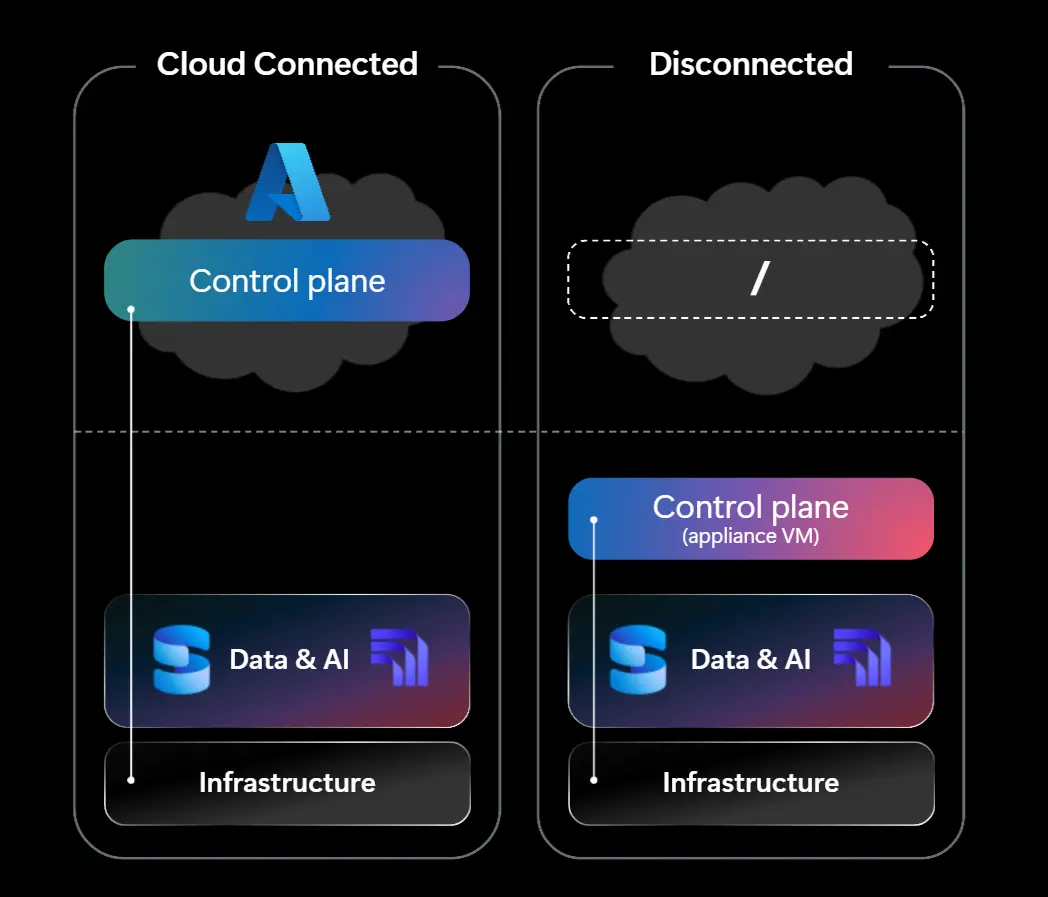
Microsoft’s latest framework updates introduce state persistence for hosted agents, ensuring background workflows can survive unexpected hosting infrastructure failures, process interruptions, or extended waiting periods for human approvals.
Supporting Context & Metrics: Quantifying Business Value and Operational Mechanics
Transitioning AI agents from experimental sandboxes to production enterprise software requires measurable improvements in operational efficiency, resource management, and execution safety.
+-----------------------------------------------------------------------------------+
|                        FASHABLE CASE STUDY IMPACT METRICS                          |
+-----------------------------------------------------------------------------------+
| Metric                               | Traditional Baseline | With Foundry Agents |
+--------------------------------------+----------------------+---------------------+
| Product Development Cycle            | Several Months       | Weeks               |
| Physical Sample Budget Allocation    | 100% Baseline        | 40% (60% Reduction) |
| Workflow Interoperability            | Siloed Systems       | Native API/Voice    |
+--------------------------------------+----------------------+---------------------+
ROI in Practice: The Fashable Benchmark
A compelling demonstration of Microsoft Foundry’s practical value comes from Fashable, an AI company transforming creative workflows for global fashion brands and manufacturers. By integrating Foundry’s multi-model orchestrations, domain knowledge repositories, and enterprise tooling, Fashable enables fashion houses to translate emerging trends and raw visual concepts into digital clothing designs, campaign imagery, and interactive virtual try-on experiences.
By linking these autonomous agent workflows directly to legacy corporate ERP and PLM databases, Fashable drastically accelerated product design cycles:
- Time-to-Market Acceleration: Novel fashion lines moved from concept to production-ready design in weeks rather than months.
- Direct Cost Reduction: A flagship retail partner cut its physical sampling budget by 60%, replacing costly physical iterations with high-fidelity agentic visual generation and virtual try-ons.
Dynamic Context Management and Resource Efficiency
A persistent issue in agent architecture is "context bloat"—the bad practice of overloading an agent’s context window with every potential document, policy manual, and API schema upfront. This approach inflates inference costs, increases latency, and degrades reasoning precision.
Foundry addresses this by introducing Dynamic Context Allocation. Agents retrieve documents, execute specialized tools, and invoke procedural sub-routines on demand as tasks progress. By restricting the context window to only relevant data points at any given step, organizations achieve lower token usage, faster processing times, and more predictable behavior.
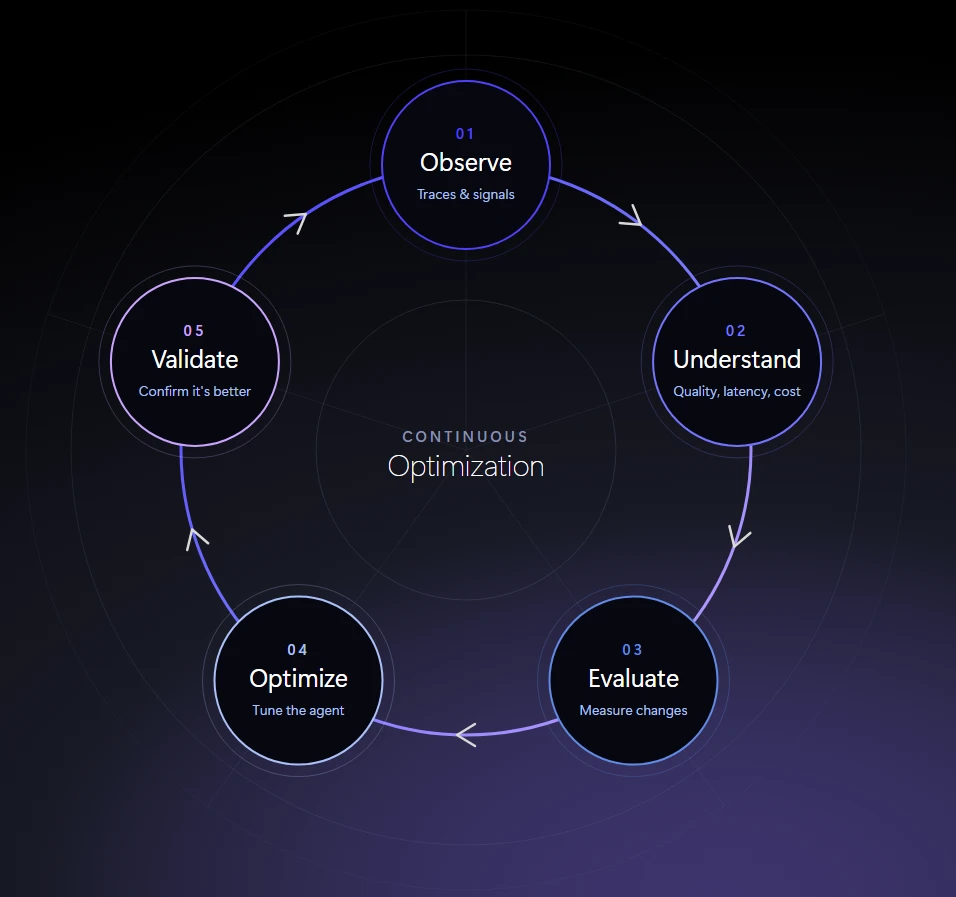
+-----------------------------------------------------------------------------------+
|                      THE FOUNDRY CONTINUOUS IMPROVEMENT LOOP                      |
+-----------------------------------------------------------------------------------+
|                                                                                   |
|     +-------------------+       +--------------------+                            |
|     |   1. OBSERVE      | ----> |   2. UNDERSTAND    |                            |
|     |  Traces & Signals |       | Quality/Cost/Speed |                            |
|     +-------------------+       +--------------------+                            |
|               ^                           |                                       |
|               |                           v                                       |
|     +-------------------+       +--------------------+                            |
|     |   5. VALIDATE     | <---- |    3. EVALUATE     |                            |
|     |  Deploy to Prod   |       | Benchmark Changes  |                            |
|     +-------------------+       +--------------------+                            |
|               ^                           |                                       |
|               +----------- +--------------+                                       |
|                            |                                                      |
|                            v                                                      |
|                   +------------------+                                            |
|                   |   4. OPTIMIZE    |                                            |
|                   | Prompts & Skills |                                            |
|                   +------------------+                                            |
|                                                                                   |
+-----------------------------------------------------------------------------------+
Telemetry-Driven Optimization: The "Hill-Climbing" Engine
Rather than treating agent prompt design as an ad-hoc trial-and-error process, Microsoft Foundry embeds a structured "hill-climbing" framework. Built on full execution traces, this framework drives continuous improvement across five core phases:
- Observe: Capture end-to-end execution traces, tool calls, and model outputs across live production environments.
- Understand: Identify latency bottlenecks, token cost spikes, and low-accuracy responses using automated insight dashboards.
- Evaluate: Benchmark potential updates against recorded historical production traces and curated test suites.
- Optimize: Refine system prompts, adjust skill selections, fine-tune hyper-parameters, or re-route tasks to lower-cost models via automated agent optimizers.
- Validate: Verify that proposed changes produce statistically significant quality gains without introducing unexpected regressions, then safely redeploy to production.
Enterprise Governance, Identity, and Network Security
As autonomous agents gain broader authorization to act on behalf of human users, traditional application-level security models become insufficient. Microsoft Foundry addresses this by enforcing identity, access, and governance controls directly within the execution engine.
- Runtime Identity Alignment: Foundry agents natively support administrative operations from Microsoft Entra and Agent 365. If an agent identity is suspended, deleted, or reassigned within Microsoft Entra, the Foundry runtime immediately stops executing active workflows for that agent, preventing rogue actions.
- Granular Network Egress Controls: Sandboxed hosted agents run under strict network egress policies. IT administrators can define domain allow/deny rules, inspect outbound traffic headers, or re-route destination requests. An built-in Audit Mode allows security teams to simulate and evaluate policy changes in live production traffic via Azure Application Insights prior to hard enforcement.
- Automated Safety & Compliance Verification: To prove compliance with corporate safety guidelines, developers can run the open-source
run-assert-evalSkill. This tool automates a three-step evaluation pipeline:- Simulate Adversarial Attacks: Generate targeted red-team prompts to test system guardrails.
- Evaluate Response Guardrails: Benchmark responses against strict enterprise safety policies.
- Validate Corrective Iterations: Automatically re-test updated prompts and agent skills to confirm security gaps are mitigated without breaking legitimate user workflows.
Official Statements: Industry Leaders on the Agentic Transition
The shift toward model-agnostic, voice-enabled, and continuously optimized agent architectures is reshaping technical strategies across global industries. Executives adopting Microsoft Foundry highlight the business impact of these developments:
"At Fashable, our mission is to make advanced AI accessible to brands and manufacturers of all sizes, regardless of their technical maturity. As we introduce new agentic capabilities, voice becomes an important part of that journey, enabling interactions that feel more natural, conversational, and accessible. People don’t think in prompts, they think in conversations, and using voice agents in Foundry with MAI-Voice helps bridge that gap."
— Orlando Ribas Fernandes, CEO, Fashable
"Agent optimizer in Foundry Agent Service turns evaluation insights into actionable datasets and optimization, reducing the manual effort of finding and fixing performance issues. That systematic loop aligns directly with NTT DATA’s AgentOps with Harness approach—a core element of our Smart AI Agent® concept—together moving agents from proof of concept to trusted production at scale."
— Takashi Okamoto, AI Technology Strategist, Global AI Office, NTT DATA Group Corporation
Future Outlook: The Strategic Horizon of Enterprise Agent Infrastructure
Looking ahead, enterprise AI deployment will continue shifting away from raw model capabilities toward unified orchestration, centralized governance, and operational resilience. Microsoft’s roadmap reflects this evolution, establishing key milestones for enterprise adoption.
+-----------------------------------------------------------------------------------+
|                    HUB-AND-SPOKE GOVERNANCE ARCHITECTURE                          |
+-----------------------------------------------------------------------------------+
|                                                                                   |
|                          +-----------------------+                                |
|                          |   CENTRAL IT / ISMS   |                                |
|                          |  Azure API Management |                                |
|                          |   (AI Gateway Tier)   |                                |
|                          +-----------------------+                                |
|                                      |                                            |
|                  +-------------------+-------------------+                        |
|                  |                                       |                        |
|                  v                                       v                        |
|     +-------------------------+             +-------------------------+           |
|     |   BUSINESS UNIT A       |             |   BUSINESS UNIT B       |           |
|     |  Admin Connected Models |             |  Admin Connected Models |           |
|     |  (Foundry Developer)    |             |  (Foundry Developer)    |           |
|     +-------------------------+             +-------------------------+           |
|                  |                                       |                        |
|                  v                                       v                        |
|     +-------------------------+             +-------------------------+           |
|     |   Production Agents     |             |   Production Agents     |           |
|     |  (GPT-6 / Claude Opus)  |             |  (Azure / MAI Voice)    |           |
|     +-------------------------+             +-------------------------+           |
|                                                                                   |
+-----------------------------------------------------------------------------------+
October Preview: Azure API Management AI Gateway Tier
Starting in October, Microsoft Foundry will expand its enterprise governance capabilities through preview integration with the new AI Gateway tier in Azure API Management.
This release introduces a centralized hub-and-spoke model strategy:
- Centralized Platform Governance (The Hub): Corporate security and IT administrators centrally manage model access, quota allocations, rate limits, and security policies within the AI Gateway. They curate and approve specific foundation models, publishing them down to enterprise development groups as Admin Connected Models.
- Agile Developer Execution (The Spokes): Development teams access these pre-approved, policy-compliant models directly within their native Microsoft Foundry workspace. This allows developers to focus on building prompts, tools, and custom agent skills without waiting for custom infrastructure approvals.
Core Takeaways for Technology Leadership
For Chief Technology Officers, Enterprise Architects, and IT Directors, Microsoft Foundry’s latest developments highlight key strategic imperatives for enterprise AI deployment:
- Design for Model Transience: Avoid tying core business operations to a single model provider API. Build application logic on top of model-agnostic harnesses that support dynamic model selection, seamless upgrades, and cross-provider evaluation.
- Prioritize Runtime Observability Over Static Testing: Pre-deployment benchmarking alone cannot capture the unpredictable nature of real-world agent interactions. Sustainable operational excellence requires continuous tracing, automated performance analysis, and iterative "hill-climbing" optimization loops.
- Unify Governance Across Workloads: Managing agents as true enterprise assets requires centralized control over identity, data access, and network perimeters. Enforcing policy decisions directly within the agent execution runtime—rather than treating governance as an afterthought—is essential to scaling safe, reliable AI across the enterprise.