Executive Overview
In an aggressive escalation of the ongoing war against digital piracy, anti-piracy titan Denuvo—a subsidiary of security giant Irdeto—has taken its crusade to a California federal court. Seeking judicial authorization, the company has formally requested permission to issue sweeping subpoenas to three digital juggernauts: Discord, Valve, and Reddit. The ultimate objective of these legal instruments is to strip away the digital anonymity shielding a notorious game cracker operating under the online pseudonym "voices38."
The lawsuit, launched under the Digital Millennium Copyright Act (DMCA) anti-circumvention provisions, targets voices38 for allegedly bypassing Denuvo’s notoriously stringent Anti-Tamper digital rights management (DRM) software across 26 major gaming titles, including blockbuster releases like Hogwarts Legacy and Black Myth: Wukong. However, because the initial complaint was filed against a John Doe defendant, Denuvo currently lacks the legal names and physical identities of the individual or individuals controlling the handle.
By demanding account registration details, billing addresses, IP connection logs, and cryptocurrency transaction trails from FixedFloat, Denuvo aims to bridge the gap between abstract usernames and real-world individuals. While the digital underground has historically shrugged off legal threats, this high-stakes litigation is already sending shockwaves through the global scene. Prominent cracking collectives have begun disbanding and purging illicit distribution links from public forums. As Judge Haywood S. Gilliam Jr. weighs whether to grant the expedited discovery motion, the outcome of this case could redefine how software protection companies pursue, identify, and prosecute sophisticated crackers in the modern era.
Detailed Chronology: The Escalation of the Denuvo vs. ‘voices38’ Lawsuit
To understand the gravity of Denuvo’s recent court filings, it is vital to trace the timeline of events that brought the anti-tamper developer and the anonymous cracker into direct conflict.
The Initial Salvo
The legal battle began in earnest last month when Denuvo filed a formal DMCA anti-circumvention lawsuit in a United States federal court situated in California. For years, Denuvo’s software has stood as the gold standard for protecting high-profile PC games during their crucial launch windows. However, the emergence of skilled crackers capable of dismantling these barriers has cost publishers millions in projected opening-week revenues.

In its initial complaint, Denuvo targeted the entity known as voices38, accusing them of systematically bypassing anti-tamper protections on an impressive roster of 26 video games. The list features major commercial successes, including Hogwarts Legacy, Black Myth: Wukong, and more recently, titles tied to upcoming releases like Mafia: The Old Country. Yet, at the moment of filing, the legal team faced a significant hurdle: they knew the suspect’s digital footprints—specifically a Discord user ID, a Reddit account, and seven associated Steam profiles—but they did not know the actual human being sitting behind the keyboard.
Hitting a Brick Wall
Recognizing that time is of the essence in digital investigations—where evidence can be deleted, and accounts abandoned with a single keystroke—Denuvo attempted to secure voluntary compliance from the platforms housing the suspect’s digital footprint. According to court declarations, the company reached out directly to Discord, Valve, and Reddit ahead of the formal litigation phase.
The strategy yielded predictable friction. Valve and Reddit swiftly rebuffed the inquiries, citing rigorous corporate privacy policies that strictly prohibit the voluntary disclosure of user data without a binding court order or formal subpoena. Discord, meanwhile, reportedly ignored Denuvo’s outreach entirely. Left with no alternative, Denuvo’s legal representation turned to the federal judiciary, filing an ex parte motion for expedited discovery to force compliance from the tech giants.
Expanding the Net: The FixedFloat Revelation
Denuvo’s investigative efforts did not terminate with social media and gaming profiles. In a newly surfaced declaration submitted by attorney Ryan Morris, it was revealed that Denuvo’s internal forensics team had successfully uncovered a series of cryptocurrency transactions linked to the cracker. These financial transfers reportedly utilized FixedFloat, a popular instant cryptocurrency exchange service.
The blockchain analysis showed activity spanning multiple prominent digital assets, including Bitcoin, Ethereum, and Solana. FixedFloat is heavily favored by privacy-conscious internet users due to its operational model, which heavily promotes "hassle-free" transactions requiring "no registration and unnecessary details." While the legal filings do not explicitly detail how Denuvo’s investigators successfully connected these blockchain wallets to the voices38 persona—nor do they request a direct subpoena for FixedFloat at this juncture—the inclusion of cryptocurrency data signals that the anti-piracy firm is tracking the financial lifelines of the cracking community.
Supporting Context & Metrics: Inside the Subpoenas
The heart of Denuvo’s current legal strategy rests on the specific information requested in the proposed subpoenas directed at Valve, Discord, and Reddit. If approved by Judge Haywood S. Gilliam Jr., these documents will compel the corporations to hand over a wealth of private user data.
The Valve and Steam Subpoena
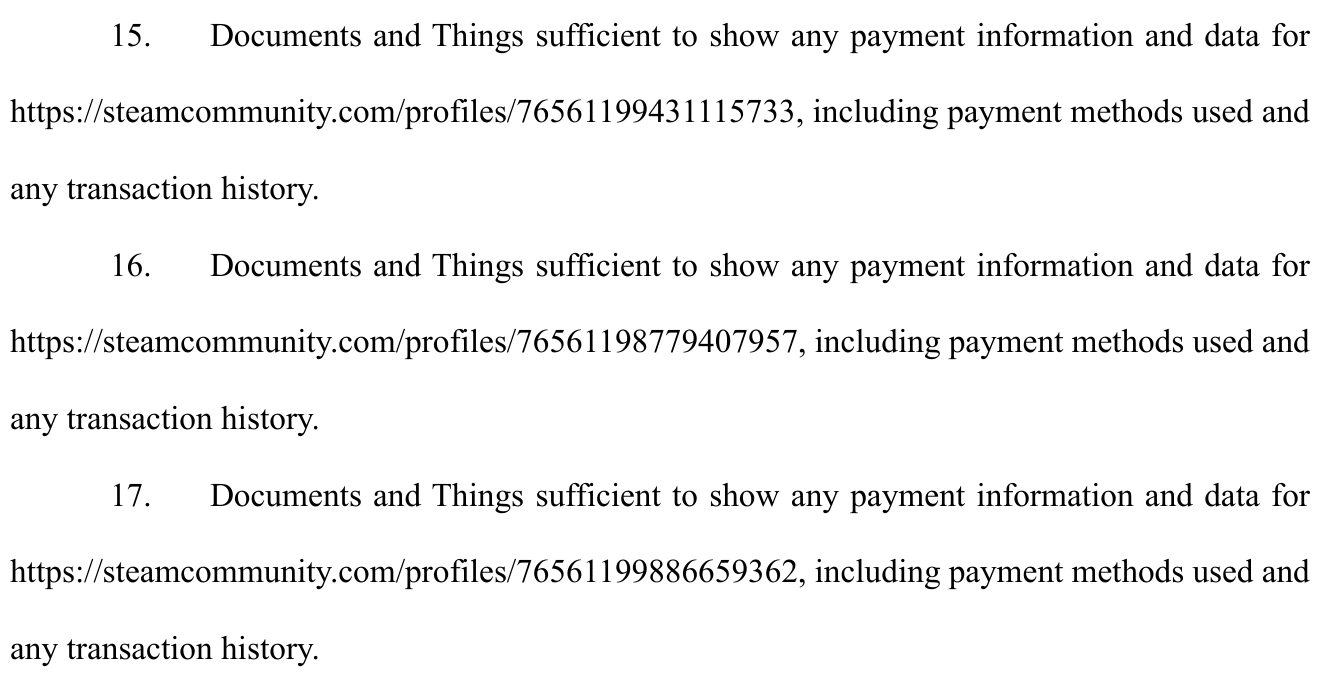
Valve Corporation has been asked to produce exhaustive records for seven distinct Steam user accounts identified in the lawsuit. While these individual profiles show relatively low levels of organic activity, Denuvo’s forensics have apparently linked them directly to the cracking operations orchestrated by voices38.
The targets of the Valve subpoena include:
- Registration Data: Full names, verified email addresses, and billing addresses provided during account creation or game purchases.
- Transaction Histories: Detailed logs of all credit card payments, digital wallet deposits, and game purchases associated with the profiles.
- Connection Metadata: IP addresses, complete with precise timestamps, tracking when the accounts logged into the Steam network.
- Device Identifiers: Hardware fingerprints and device IDs used to access the accounts.
- Linked Accounts: Any secondary accounts, third-party authentication services, or family-sharing links connected to the profiles.
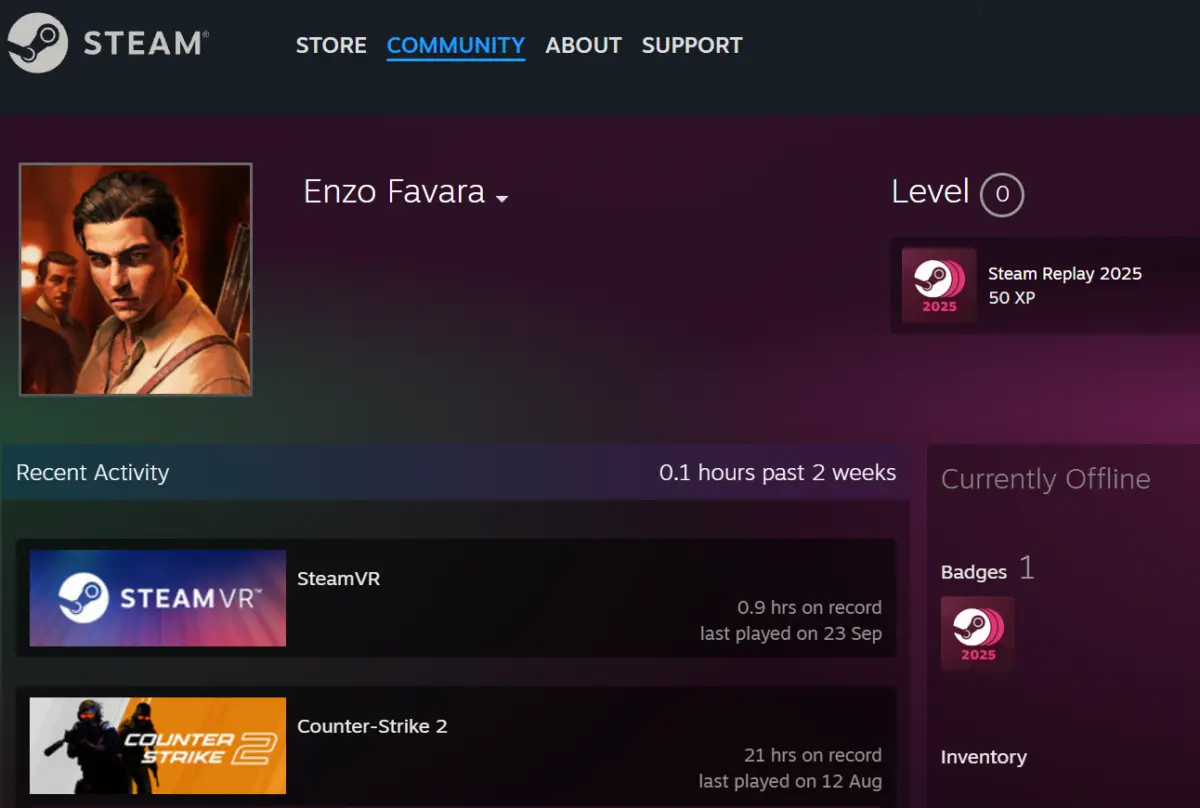
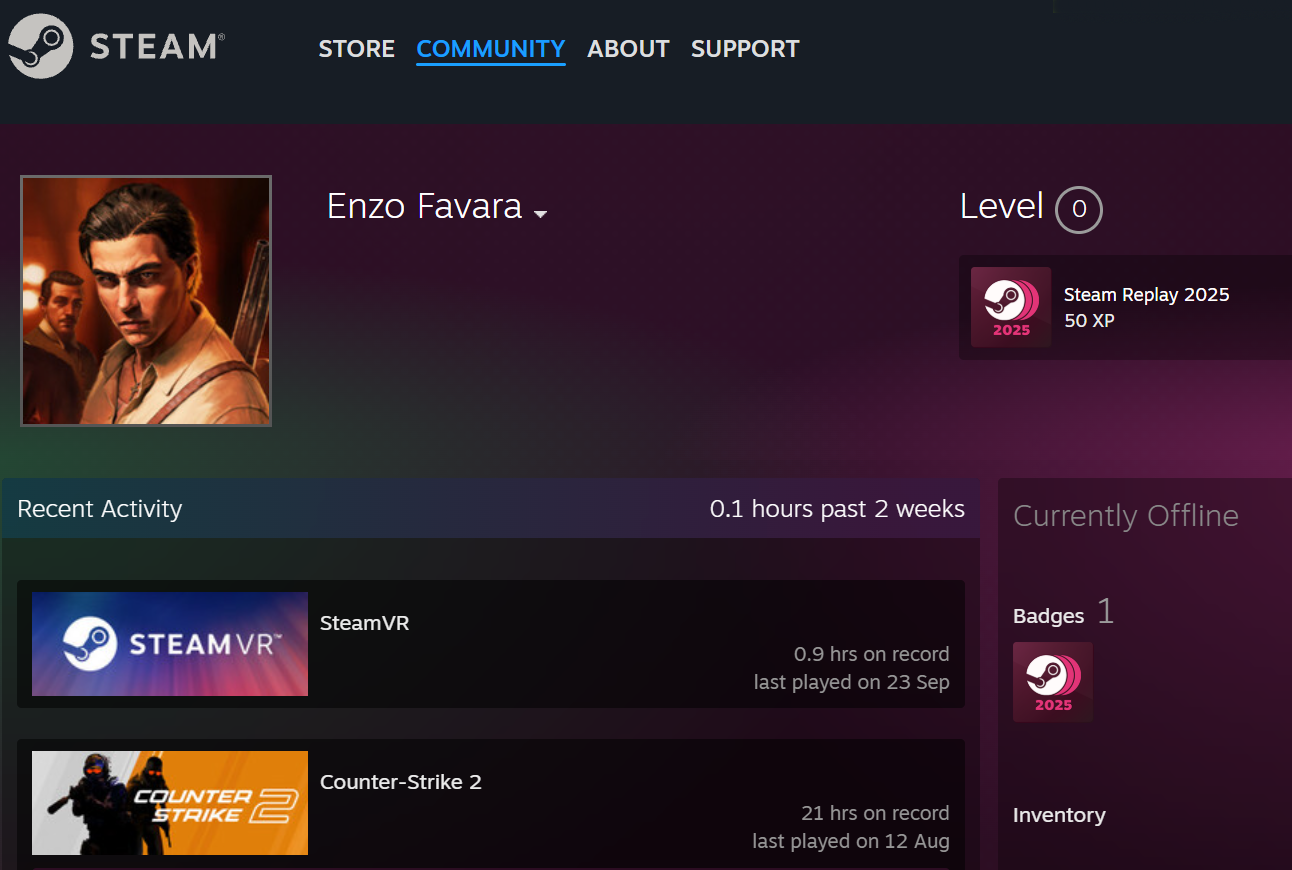
Notably, one of the targeted Steam profiles prominently features the name "Enzo Favara"—the primary protagonist of the highly anticipated title Mafia: The Old Country, which is among the games Denuvo alleges voices38 successfully cracked.
The Discord and Reddit Subpoenas
Beyond Valve, the social and community platforms are slated to surrender deep behavioral and demographic insights:
- Discord, Inc.: Denuvo is demanding the complete server membership list for the suspect’s account, alongside an accounting of any administrative or specialized roles assigned to the user within those communities. This could potentially expose private developer channels, peer-to-peer cracking groups, and distribution networks.
- Reddit, Inc.: The subpoena targets the entirety of the voices38 Reddit footprint. This includes every public post, deleted submission, and direct comment history, as well as a complete index of the subreddits the account holds memberships in.
These metrics are designed to establish a definitive "mosaic" of evidence, proving beyond a reasonable doubt that a single individual—or a coordinated cell—controls all of these disparate digital identities.
Official Statements and Reactions
The cybersecurity and gaming communities have watched these legal developments with bated breath, eliciting a wide range of reactions from industry observers, legal analysts, and the crackers themselves.
The Defendant’s Defiant Stance
When news of the initial DMCA lawsuit broke, the target of the investigation did not appear intimidated. Posting publicly on Reddit under the voices38 moniker, the anonymous entity offered a brief, dismissive public comment to reassure their followers:
"All is fine. Everything will continue as normal."
However, despite this bravado, a noticeable silence has fallen over the account. In the weeks following the filing of the ex parte motion, no new cracking releases or updates have been attributed to voices38. Whether this silence is a strategic cooling-off period, a response to mounting legal pressure, or entirely coincidental remains a subject of intense speculation within piracy forums.
The Chilling Effect on the Wider Scene
While voices38 attempted to project confidence, the broader ecosystem of game cracking has experienced immediate and severe collateral damage. Late last month, reports surfaced that DenuvOwO—a prominent cracking collective that specialized in releasing hypervisor bypasses for dozens of Denuvo-protected titles—had abruptly disbanded.
According to industry reports from Tom’s Hardware, members of DenuvOwO openly cited the Irdeto lawsuit as a primary catalyst for their decision to fold their operations, fearing they could be next in the legal crosshairs. Simultaneously, major piracy hubs and archival communities, such as the notorious CS.Rin forums, moved proactively to purge download links and discussion threads related to DenuvOwO’s bypass tools to insulate themselves from secondary liability.
This rapid capitulation highlights the psychological and operational impact of modern anti-piracy litigation. By targeting high-profile figures with federal lawsuits, companies like Denuvo are successfully inducing a "chilling effect" that fractures cooperative underground networks, even before a single subpoena is formally served.
Future Outlook: Legal Precedents and the Road Ahead
As the legal proceedings shift to the courtroom of U.S. District Judge Haywood S. Gilliam Jr., several critical questions loom over the future of digital rights management enforcement.
The Legal Hurdle: Expedited Discovery
Under standard U.S. federal civil procedure, formal discovery cannot begin until the parties have conferred and the court has issued a scheduling order. However, in cases involving anonymous internet defendants where physical service of process is impossible without third-party intervention, plaintiffs frequently file for ex parte expedited discovery.

Judge Gilliam must now evaluate whether Denuvo has demonstrated "good cause" to bypass the standard timeline. To succeed, Denuvo must prove that the targeted platforms possess identifying information, that the information is reasonably calculated to lead to the discovery of the defendant’s true identity, and that the harm of delayed identification outweighs the privacy interests of the account holders. Given the robust nature of the evidence presented—including cross-platform IDs and cryptocurrency footprints—legal experts view the granting of the subpoenas as a strong possibility, though privacy advocates may raise concerns over the sweeping nature of the requests.
The Cryptocurrency Conundrum
Perhaps the most intriguing loose end in Denuvo’s legal strategy is the inclusion of FixedFloat transaction data. By tracking Bitcoin, Ethereum, and Solana transfers, Denuvo’s legal team has signaled that anonymity via cryptocurrency is no longer an impenetrable shield against corporate investigators.
However, because Denuvo has not yet petitioned the court to subpoena FixedFloat itself, legal analysts are left wondering what role this financial data will play. It is entirely possible that the blockchain analysis served as an internal verification tool to confirm the scale of the operation, or that Denuvo is quietly preparing a secondary wave of subpoenas targeting cryptocurrency exchanges once the primary identities from Valve, Discord, and Reddit are unmasked.
Conclusion: A Turning Tide in Anti-Piracy
The confrontation between Denuvo and voices38 represents a watershed moment for PC gaming security. For years, the cat-and-mouse game between anti-tamper developers and crackers has been confined to technical forums, GitHub repositories, and release groups. By dragging anonymous actors into federal court and leveraging subpoenas against global technology leaders, Denuvo is fundamentally changing the rules of engagement.
Whether the courts ultimately unmask voices38, and whether those individuals face severe statutory damages under the DMCA, the psychological victory for Irdeto is already materializing. With cracking groups disbanding and distribution networks scattering in fear, Denuvo has demonstrated that the long arm of the law can reach deep into the digital underground—proving that online anonymity, while persistent, is rarely absolute.