Executive Overview
Brand protection is no longer a localized administrative duty or a siloed legal afterthought; it has evolved into a critical battleground for enterprise security, risk management, and market reputation. Across modern organizations, different teams view brand protection through fundamentally divergent lenses. A legal department’s primary concern is typically removing counterfeit listings from e-commerce marketplaces or executing trademark enforcement actions. Meanwhile, a corporate security or cybersecurity team must rapidly detect, investigate, and dismantle sophisticated phishing login pages, fraudulent social media profiles, malicious mobile applications, and rogue domains explicitly designed to spoof the corporate entity.
While these operational problems frequently overlap, they do not require identical forensic evidence or matching enforcement workflows. Misaligning the tool with the team can result in prolonged dwell times for threats, redundant investigations, and unmet security outcomes.
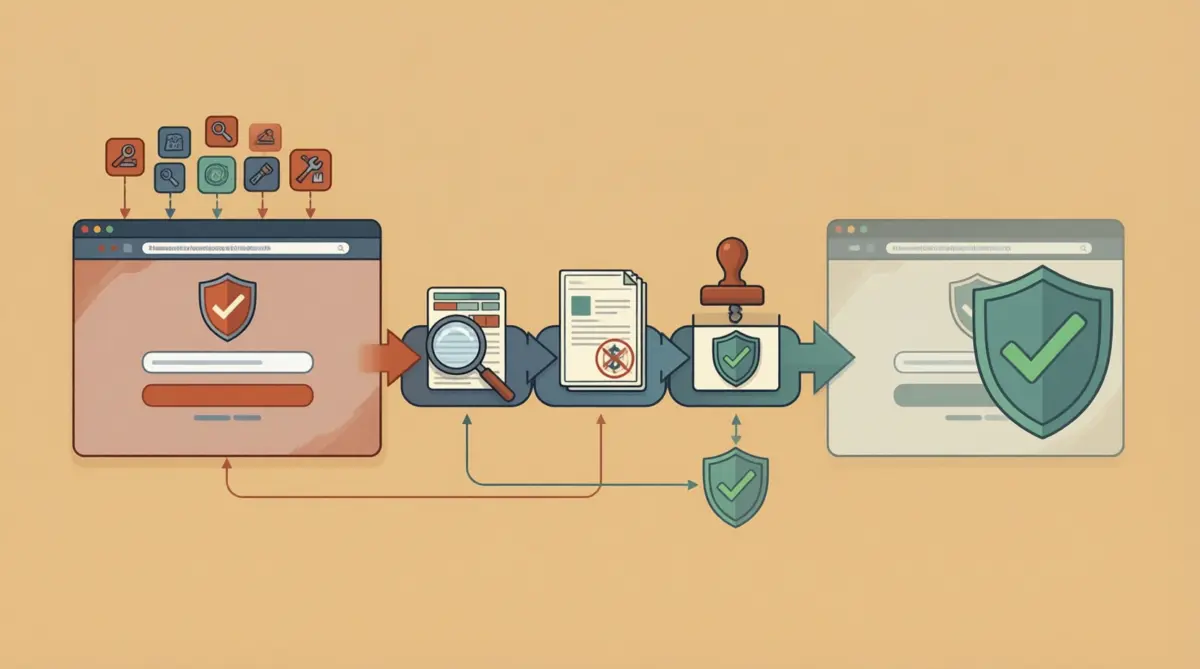
Choosing the optimal brand protection tool requires tracing a phishing or digital impersonation case from its initial detection through rigorous analyst validation, stakeholder approval, and, ultimately, verified removal. Security and risk leaders must carefully compare supported channels, retained forensic evidence, analyst validation mechanisms, regulatory approval requirements, and ultimate enforcement responsibilities.
For enterprise security teams, the definitive deciding factor should be whether a given platform provider fully supports the incident response workflow required by the business, rather than simply counting the sheer volume of suspicious assets it surfaces. This comprehensive analysis evaluates the market landscape—focusing on prominent solutions including Netcraft, Check Point, ZeroFox, Recorded Future, BrandShield, and UpGuard—and provides a structured framework for modern security leaders to evaluate, procure, and deploy brand protection tooling effectively.
Detailed Chronology: The Lifecycle of an Impersonation Case
To accurately assess the capabilities of any brand protection platform, security architects must evaluate how a suspicious asset transitions through its operational lifecycle. The journey from anomaly detection to permanent remediation is fraught with friction points that can undermine the efficacy of an enterprise security program.
1. Detection and Channel Coverage
The lifecycle begins at the perimeter, where automated engines scan diverse digital channels—ranging from registered domains and corporate websites to social media profiles, mobile app stores, paid search advertisements, and online marketplaces. However, mere detection is insufficient. A platform must map coverage directly to the specific assets an organization needs to protect. For each monitored channel, security teams must demand that vendors demonstrate what specific telemetry reaches the primary case record versus what an analyst must manually collect. A naked, suspicious URL devoid of observed contextual behavior forces security analysts to repeat foundational reconnaissance, wasting precious minutes during active campaigns.
2. Evidence Gathering and Data Governance
When an asset is flagged, the platform must preserve the source data and precise observation timestamps. This ensures that downstream reviewers can audit exactly what was visible at the moment the finding was generated. Modern data governance demands that the case evidence schema contain distinct, unalterable fields for:
- The target asset (domain, handle, app package, etc.)
- The affected brand, executive, or customer demographic
- The observed malicious behavior (e.g., credential harvesting, malware delivery)
- Source telemetry and forensic evidence
- Internal review decisions and authorization steps
- Response and enforcement status
- Post-enforcement removal verification checks
Maintaining original evidence integrity is paramount when cases are transferred between tier-1 analysts, incident responders, legal counsel, and external partners. Furthermore, enterprises must maintain a heavily governed, approved inventory of official domains, social media handles, mobile applications, and authorized partners. Without strict data governance linking this approved asset list to the detection engine, legitimate corporate marketing launches or partner campaigns will continually flood the security queue as false positives.
3. AI-Driven Triage and Ambiguous Cases
Many modern platforms tout artificial intelligence and machine learning as the silver bullet for automated threat detection. However, security teams must rigorously test these capabilities using ambiguous edge cases. Vendors should be required to show why a specific asset was flagged, detailing the underlying behavioral observations that support the decision. A similar linguistic structure or matching typography alone must never be treated as definitive proof of credential theft or active malicious intent. Analysts must retain the administrative power to correct, annotate, or whitelist cases before any automated or manual enforcement steps begin.
4. Enforcement, Submission, and the Verification Gap
A persistent vulnerability in many commercial brand protection offerings is the conflation of "takedown submission" with "threat neutralization." Submitting an abuse notification to a third-party hosting provider, domain registrar, or social media platform is merely an administrative action; it does not guarantee that the abusive resource has been pulled offline.
Security leaders must evaluate integration APIs and export pathways to ensure that internal SIEM or SOAR platforms receive granular status updates. If an asset remains reachable on the public internet, the monitoring integration must preserve that finding rather than treating a submitted request as a closed case. Distinct database records must separate the submission timestamp from the verified removal confirmation.
Shortlisted Platform Analysis
Based on documented market positioning and operational architecture, six primary platforms represent the core of the enterprise brand protection and digital risk landscape. Each brings unique strengths to specific organizational requirements.
1. Netcraft: Online Threat Detection and Disruption
Netcraft is a prominent shortlist entry when an enterprise’s core operational mandate is the aggressive detection and disruption of online threats explicitly designed to impersonate the organization. The platform emphasizes end-to-end threat intelligence and reporting workflows, complete with dynamic dashboards that track real-time activity and takedown outcomes.
When evaluating Netcraft, security teams should focus on how the platform manages enforcement friction involving third-party hosting providers, resistant domain registrars, and social media intermediaries. Netcraft’s metrics prioritize functional closure over theoretical speed, making it an ideal fit for security operations centers (SOCs) that require absolute transparency regarding whether a malicious resource is actively unreachable.
2. Check Point: External Risk Integration and Context
Check Point integrates brand abuse monitoring directly into its broader External Risk Management and Threat Intelligence ecosystems. By embedding brand protection alongside exposed credentials, leaked data, and wider external threat signals, Check Point provides invaluable context: a suspicious lookalike domain becomes significantly more dangerous when correlated with an active, broader cyber campaign targeting corporate employees.
Security architects should examine Check Point’s remediation capabilities to confirm supported channels, analyst validation depth, and the exact protocols followed post-approval. Check Point shines when brand protection cannot exist in a vacuum and must feed directly into a unified enterprise threat intelligence strategy.
3. ZeroFox: Comprehensive Digital Risk and Disruption
ZeroFox combines external threat intelligence, digital risk protection (DRP), and active disruption services into a unified framework. Its architecture is explicitly designed to address brand impersonation, customer-facing scams, and executive-level threats across open, deep, and dark web channels.
Organizations selecting ZeroFox must clearly delineate internal responsibilities across security, corporate communications, fraud, and legal departments. Because a broad digital risk platform touches multiple business units, establishing a unified approval matrix before the platform initiates removal requests is essential for maintaining operational momentum.
4. Recorded Future: Intelligence-Driven Digital Risk Protection
Recorded Future’s Digital Risk Protection offering bridges external detections with deep investigation and takedown workflows through a structured detection funnel and operational reporting interface.
This platform represents a natural choice for enterprises where threat intelligence already serves as the operational backbone of security operations. Rather than treating brand protection as a standalone compliance checkbox, Recorded Future contextualizes brand abuse within wider geopolitical, technical, and actor-centric intelligence streams, preserving source context while driving structured remediation.
5. BrandShield: Commercial Scope and Intellectual Property Alignment
BrandShield is engineered for organizations whose brand abuse footprint extends far beyond simple phishing pages into complex commercial ecosystems—including fraudulent e-commerce websites, rogue social media ads, illicit mobile apps, and marketplace counterfeits.
By bridging cybersecurity requirements with intellectual property (IP) protection, BrandShield is exceptionally well-suited for enterprises where security and legal teams share operational oversight. Organizations evaluating BrandShield must explicitly define both technical security use cases and legal IP enforcement workflows to ensure the platform’s monitoring breadth aligns with actual enforcement capabilities.
6. UpGuard Breach Risk: External Attack Surface Consolidation
UpGuard’s Breach Risk platform incorporates brand threat monitoring within a broader external risk perspective that spans data leaks, third-party vendor risk, and traditional attack surface management.
For enterprises seeking to minimize tool sprawl by consolidating external risk operations into a single pane of glass, UpGuard offers a compelling option. Security teams must carefully evaluate which response functions are native to the platform versus those that remain internal responsibilities, ensuring that a shared triage dashboard does not obscure the actual mechanisms required to execute a verified takedown.
Supporting Context & Metrics: Evaluating the Market Reality
Evaluating brand protection tools solely through marketing collateral or vendor-provided claims can be perilous. Security leaders must ground their procurement decisions in operational metrics that reflect real-world challenges.
For instance, industry comparisons—such as Bitsight’s 2026 brand protection and impersonation monitoring benchmarks—frequently cite aggregate platform takedown success rates hovering around 85%. However, security leaders must treat such figures as high-level market indicators rather than guaranteed performance SLAs. An 85% success rate is meaningless if the calculation methodology excludes complex, resilient threat actor infrastructure or obscure regional domain registries.
When conducting a commercial comparison, procurement teams must request detailed pricing scopes broken down by:
- Number of protected brands, domains, and VIP executives
- Geographic regions and linguistic channels monitored
- Volume limits on automated investigations and manual takedown attempts
- Dedicated analyst support hours and escalation SLAs
Furthermore, organizations must calculate the hidden internal labor costs associated with each platform. A low subscription price can quickly become deceptive if the platform places the burden of evidence collection, complex validation, legal negotiation, and registrar follow-up squarely onto the internal security team. Conversely, a mature security team with established incident response playbooks may prefer a lean, highly integrated detection platform over an expensive, opaque managed service.
Official Statements and Industry Perspectives
Market analysts and industry practitioners consistently emphasize that the true measure of a brand protection program is not the volume of alerts generated, but the certainty of remediation.
According to enterprise risk documentation from leading advisory frameworks, "A provider that submits an abuse notification has completed a fundamentally different operational step from one that confirms the abusive resource is permanently offline and unreachable." This operational distinction underscores the primary thesis guiding modern security procurement: detection without verified disruption is merely noise.
Furthermore, data governance authorities stress that as automated AI detection models proliferate, enterprises must implement rigorous human-in-the-loop validation checkpoints. Without auditable oversight, organizations risk inadvertently disrupting legitimate partner networks, authorized marketing campaigns, or wholly legal commentary, thereby introducing operational friction and reputational damage.
Future Outlook: The Next Horizon in Brand Defense
As enterprise digital footprints continue to expand across decentralized web architectures, generative AI-powered phishing tools, and decentralized social channels, the landscape of brand protection will undergo profound transformation over the next three to five years.
- AI-Powered Synthetic Impersonation: Threat actors are increasingly leveraging generative AI to dynamically construct hyper-realistic phishing landing pages, deepfake executive video profiles, and automated social engineering campaigns at scale. Brand protection platforms will be forced to evolve beyond static domain and logo matching toward real-time behavioral and semantic analysis of incoming digital threats.
- Automated Inter-Provider Orchestration: The future of takedown operations lies in standardized, automated API integrations between brand protection platforms, domain registries, cloud hosting providers, and global law enforcement frameworks. Reducing the friction of cross-border enforcement will be critical to shrinking the operational window of threat actors.
- Unified Risk Telemetry: Security leaders will increasingly demand single-pane-of-glass visibility that fuses external brand impersonation telemetry directly with internal XDR (Extended Detection and Response) and SIEM data lakes. This convergence will allow automated SOC workflows to instantly correlate an incoming lookalike domain alert with internal endpoint telemetry, neutralizing compromised user credentials before lateral movement can occur.
Ultimately, the most successful brand protection programs will be those that transcend traditional tooling boundaries—treating detection, rigorous human validation, formal authorization, and verified removal as an unbreakable, auditable continuum. By demanding proof of removal rather than proof of submission, security leaders can transform brand protection from a reactive compliance exercise into an active, strategic defense of enterprise value.