





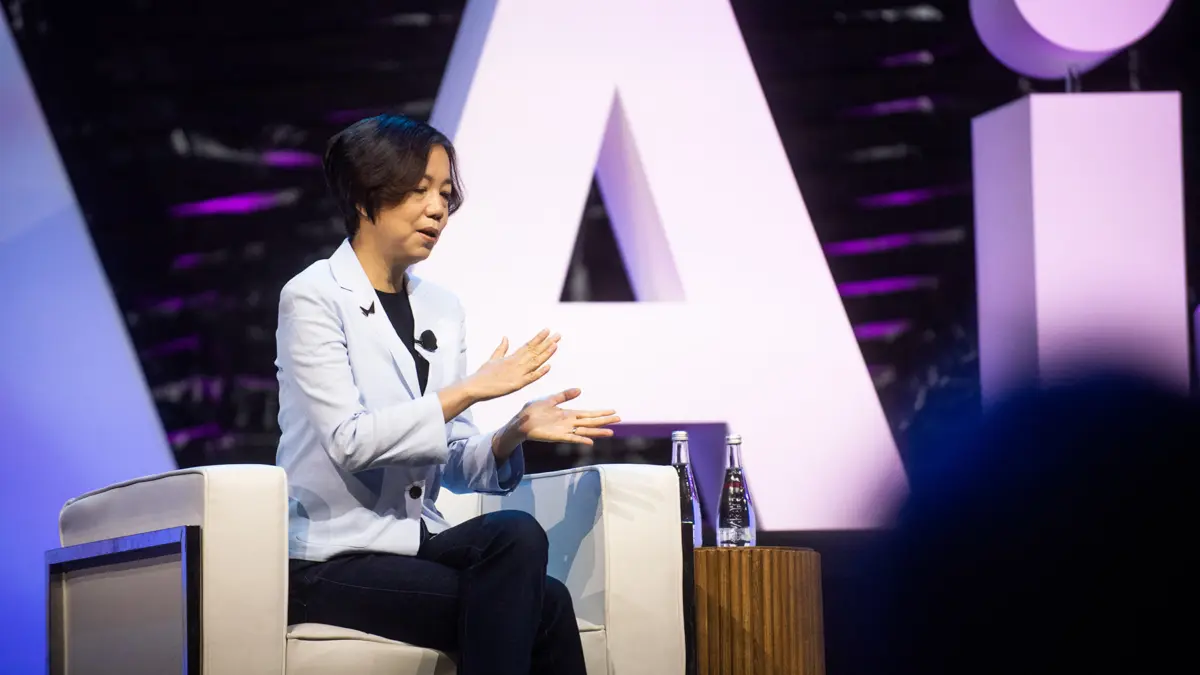
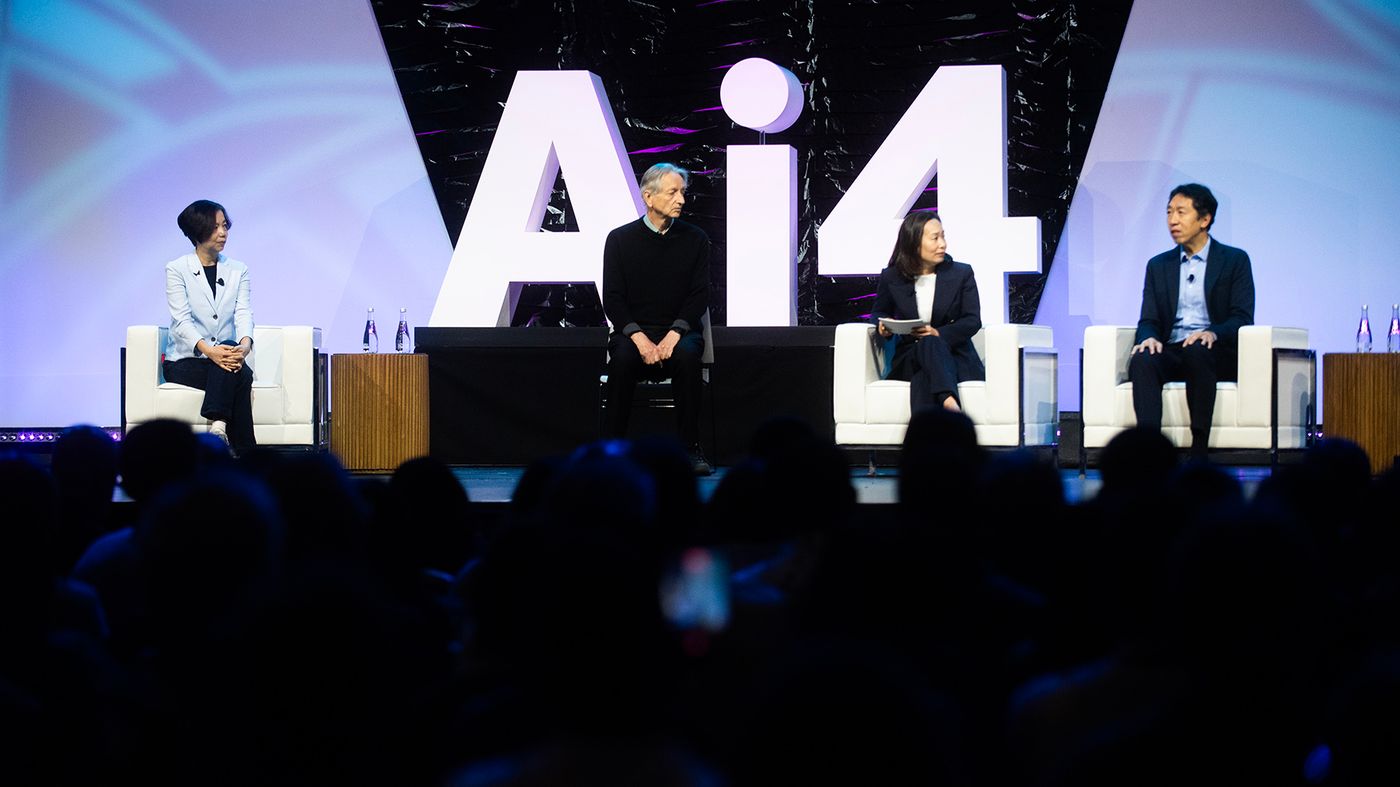
LAS VEGAS — As hyperscale data center developers pour unprecedented amounts of capital into the physical foundations of the artificial intelligence boom, the philosophical and strategic bedrock supporting that investment is beginning to fracture. At the Ai4 2026 conference in Las Vegas, three of the most influential figures in the history of machine learning gathered on a single stage for a rare joint appearance titled “The Architects of Intelligence: A Historic Convergence.”
Rather than presenting a unified front of technological triumph, the panel exposed profound fissures among the discipline’s founding minds. Geoffrey Hinton, Fei-Fei Li, and Andrew Ng clashed over nearly every foundational question facing the industry: the timeline to artificial general intelligence (AGI), the reality of AI-driven job displacement, the wisdom of open-source weights, and the appropriate scope of government regulation.
For the data center industry, utility providers, and infrastructure investors betting hundreds of billions of dollars on long-term computational demand, the debate carries massive implications. The panel underscored that even the architects of the technology disagree on how fast AI will scale, how disruptive it will become to society, and what guardrails might ultimately restrict the construction of the next generation of AI compute factories.
Executive Overview: A Convergence of Divergent Visions
The stakes of the Las Vegas panel extend far beyond Silicon Valley lecture halls. Global energy grids, real estate developers, chipmakers, and hyperscalers are racing to construct mega-campuses capable of supporting clusters of hundreds of thousands of GPUs. This multi-year capital expenditure supercycle is predicated on the assumption that AI utility will accelerate exponentially, transforming global enterprise.
However, the Ai4 session revealed that the intellectual leaders of the movement hold radically different expectations for where the technology is heading:

- Geoffrey Hinton, the Turing Award laureate often styled as the "godfather of AI," warned that machines could surpass human intelligence within five to 20 years, necessitating aggressive government oversight to prevent existential and societal harms.
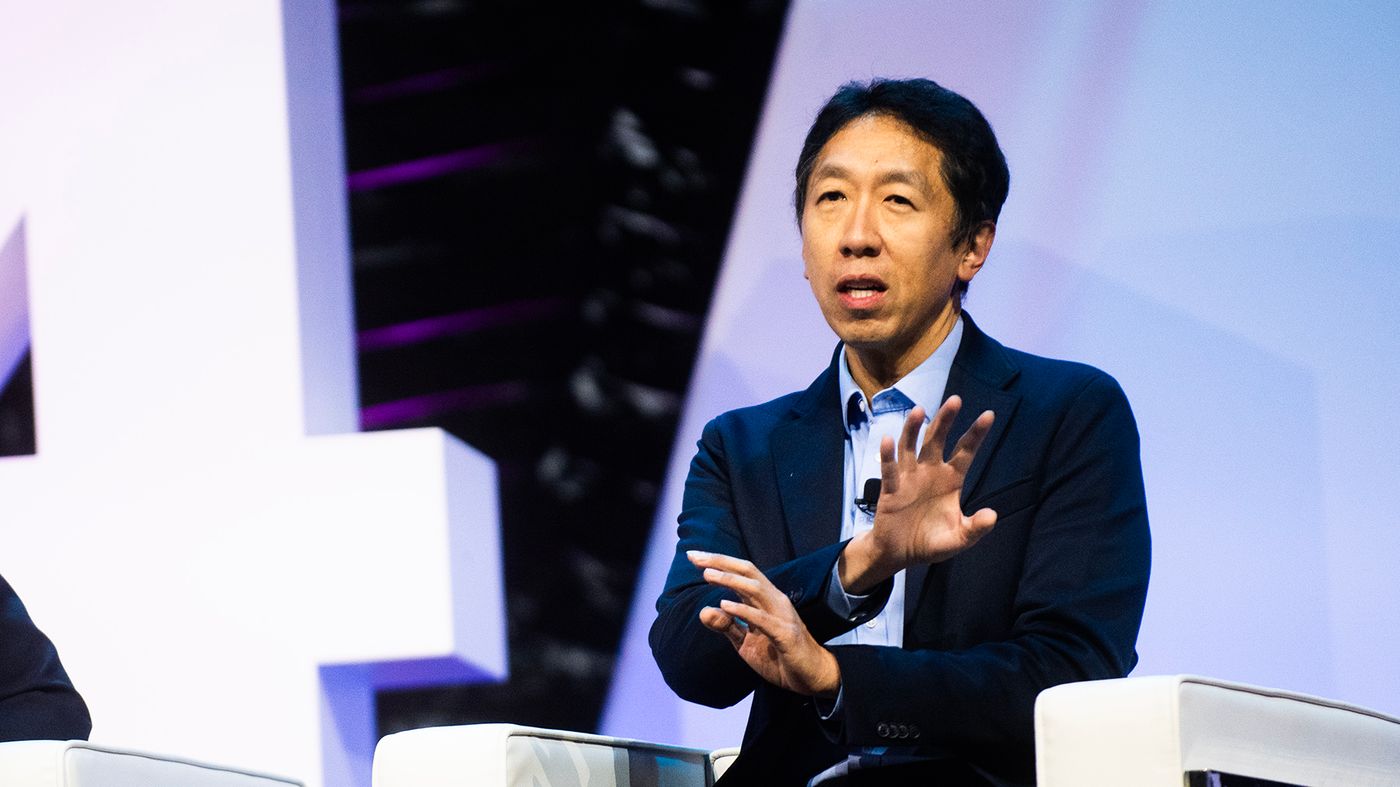
- Andrew Ng, founder of DeepLearning.AI, pushed back sharply against dystopian job-loss narratives and restrictive safety frameworks, arguing that human-AI collaboration will enhance productivity rather than devastate the workforce.
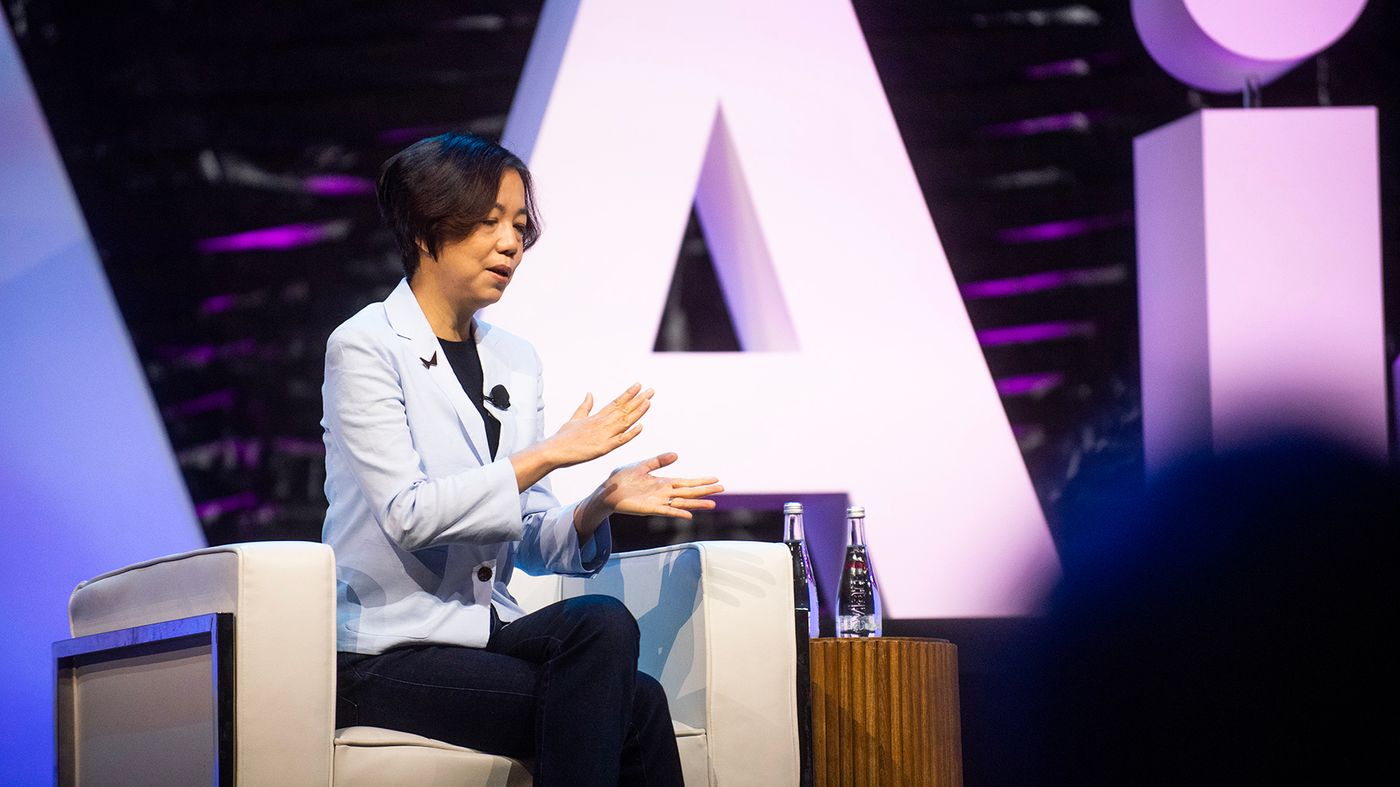
- Fei-Fei Li, co-director of the Stanford Institute for Human-Centered AI, urged the tech community and policymakers to strip away sensationalist fearmongering, advocating for practical, sector-specific governance and robust public investment in foundational AI infrastructure.
Detailed Chronology: The Las Vegas Debate Unfolds
Moderated by Yun-Hee Kim, Deputy Editor at Washington Post Intelligence, the conversation kicked off with high-level projections before spiraling into direct disagreements regarding economics, safety, and operational philosophy.
Setting the Stage: The Divergence on Superintelligence
The tone was set early when Hinton was asked about the trajectory of machine intelligence. Without hesitation, Hinton reiterated his stark warnings regarding artificial superintelligence (ASI).
"I think it’s going to be smarter than us," Hinton declared, estimating that true artificial superintelligence could emerge within the next five to 20 years. He argued that as neural networks scale, they naturally develop forms of reasoning that will eclipse human cognitive capacities. Rather than viewing this as a distant theoretical milestone, Hinton framed it as an imminent inflection point that requires immediate policy intervention.
The White-Collar Labor Market Under Scrutiny
Building on his timeline for superintelligence, Hinton turned his focus to the immediate economic impacts, drawing a parallel between historical industrial mechanization and modern digital automation. While early industrial revolutions replaced manual physical labor, Hinton warned that the ongoing wave of generative AI and agentic systems will systematically displace routine intellectual work.
"If AI can do routine intellectual labor, any job that consists mainly of routine intellectual labor is going to be done by AI," Hinton stated. He cautioned that white-collar professionals—ranging from entry-level coders and data analysts to legal associates and administrative workers—face a fundamental restructuring of their professions. Furthermore, Hinton highlighted the growing threat of sophisticated, AI-enabled cyberattacks and the dangerous centralization of compute power among a handful of monopolistic tech giants.
Ng’s Rebuttal: Augmentation Over Displacement
Andrew Ng offered a starkly different perspective on the economic realities of AI adoption, directly challenging the narrative that widespread mass unemployment is inevitable.
"The people who thrive in the future are people working with AI," Ng asserted. Rather than viewing large language models and autonomous agents as wholesale replacements for human employees, Ng argued that current evidence points toward significant productivity gains driven by human-AI integration.
In Ng’s view, AI automates individual, repeatable tasks rather than entire professions, allowing workers to pivot toward higher-order responsibilities. He strongly encouraged workers to embrace AI literacy as an essential survival skill rather than attempting to compete with machines in isolated silos.
Li’s Call for Rational Discourse and Sector-Specific Governance
Fei-Fei Li directed her critique inward, taking aim at the public discourse surrounding AI, which she argued has been hijacked by polarized extremes. She contended that hyperbolic narratives—oscillating wildly between utopian salvation and apocalyptic doom—obscure the practical, everyday challenges of deploying technology safely and equitably.
"We cannot have a rational debate if discussions continue to be driven by fear rather than evidence," Li told the audience.
Rather than welcoming sweeping, broad-stroke AI legislation that could choke innovation, Li advocated for updating existing regulatory frameworks within established sectors such as healthcare, transportation, finance, and education. She emphasized that society should treat AI as a powerful augmentation tool rather than an autonomous actor operating outside of human systems.
Supporting Context, Metrics, and Technical Divides
The philosophical clash between Hinton, Ng, and Li mirrors technical and structural divisions playing out across the digital infrastructure ecosystem.
The Open-Weight vs. Closed-Model Battleground
One of the most contentious debates of the session centered on open-weight models versus proprietary, closed-source ecosystems. This debate holds major strategic consequences for international competitiveness, enterprise adoption, and data center resource allocation.
- The Security Argument (Hinton): Hinton expressed deep reservations about the open release of model weights. He argued that making advanced foundational weights freely accessible lowers the barrier to entry for malicious actors, potentially accelerating the development of automated cyber weapons, biological threats, and sophisticated disinformation campaigns.
- The Innovation Argument (Ng): Ng forcefully defended open-weight models, framing them as a non-negotiable safeguard against industry monopolies. He argued that open weights democratize access to advanced technology, foster academic and startup innovation, and ensure that a handful of dominant corporations cannot dictate terms to the rest of the market—particularly as international rivals, including China, rapidly expand their domestic AI ecosystems.
- The Nuanced View (Li): Li rejected the binary framing of open versus closed, suggesting that the degree of openness should be calibrated based on the specific risk profile and domain application of the model.
Infrastructure Implications: Power, Compute, and Capital
For the data center community, these divergent visions directly influence how capital is deployed. Hyperscalers are currently investing hundreds of billions of dollars into liquid-cooled data centers, high-voltage electrical substations, and dedicated nuclear or renewable energy power purchase agreements (PPAs).
If Hinton’s view of rapid, disruptive superintelligence prevails, the pressure to secure compute capacity will remain hyper-aggressive, prioritizing raw computational scale above all else. Conversely, if Li and Ng’s more pragmatic, augmentation-focused views dictate enterprise integration, infrastructure buildouts may focus increasingly on edge computing, specialized efficiency, and vertical integration rather than endless frontier model scaling.
Future Outlook: Five-Year Horizons and Unresolved Tensions
As the panel concluded, moderator Yun-Hee Kim asked each researcher to share their ideal headline for the artificial intelligence industry five years into the future. Their answers neatly encapsulated their distinct philosophies:
- Fei-Fei Li avoided making predictions about raw model parameters or processing speeds. Instead, she expressed her hope that AI would become "as invisible as electricity"—seamlessly embedded into society to drive breakthroughs in healthcare, education, scientific discovery, and food security without dominating daily headlines.
- Geoffrey Hinton offered a more guarded perspective, emphasizing that while AI holds the potential to dramatically elevate global living standards, that outcome is entirely dependent on society’s ability to proactively identify, regulate, and mitigate catastrophic risks before they materialize into crises.
Conclusion: No Consensus on the Horizon
Ultimately, the historic convergence at Ai4 2026 proved that the intellectual architects of modern artificial intelligence remain deeply divided over the destination of their own creation. As the data center industry races to construct the physical backbone of the AI era—balancing soaring megawatt demands against grid constraints and sustainability goals—it does so without a unified roadmap from the top minds in the field.
These unresolved tensions regarding speed, safety, openness, and economic disruption will not only shape regulatory policy in Washington, Brussels, and Beijing, but will also determine whether the multi-trillion-dollar infrastructure buildout of 2026 proves to be a sustainable foundation for human progress or a precursor to unprecedented systemic shocks.