







Executive Overview
The security architecture of Western Europe is facing an unprecedented and intensifying challenge from the skies. In the wake of a thwarted sabotage attempt targeting Germany’s vital Leipzig/Halle Airport, senior European lawmakers, intelligence analysts, and security experts are confronting an alarming reality: suspected Russian covert operations are increasingly penetrating European territory through asymmetric means. The incident at Leipzig—a facility of paramount strategic importance to both NATO logistics and Ukraine’s strategic airlift capabilities—has triggered intense political fallout in Berlin.
Roderich Kiesewetter, a prominent German parliamentarian and member of the Bundestag’s intelligence oversight committee, did not mince words in the aftermath of the event, directly labeling the incident an "attempted act of terrorism" orchestrated by Moscow. This assessment is further underscored by unvarnished reactions from Kremlin-aligned propagandists who openly lamented the failure of what they presumed to be a targeted strike against Ukrainian assets stationed on German soil.
The suspected drone operation at Leipzig is far from an isolated anomaly. It forms a central chapter in a sweeping, continuous campaign of aerial incursions that have targeted European airports, critical energy grids, maritime ports, and military installations since 2024. Despite repeated warnings from defense experts and intelligence officials, the much-touted European "drone wall"—envisioned as a pan-continental counter-drone shield—remains largely aspirational. As individual states resort to patchwork national defenses, the continent finds itself grappling with a sophisticated, low-cost provocation strategy that exploits regulatory blind spots, jurisdictional fractures, and critical gaps in short-range air defense capabilities.
Against the backdrop of Germany’s steadfast support for Kyiv—including billions in financial aid, advanced military hardware, and pioneering joint ventures in artificial intelligence-powered kamikaze drones—the vulnerabilities exposed at Leipzig serve as a stark wake-up call. Europe’s critical infrastructure is no longer shielded by geographic distance or traditional deterrence, demanding an urgent and unified reassessment of continental security.
Detailed Chronology
The Leipzig Incident and the Strategic Target
The unfolding crisis at Leipzig/Halle Airport highlights the shifting nature of modern sabotage. While full details of the thwarted operation continue to be processed by federal investigators, the implications of the target are profound. Leipzig/Halle is not merely a commercial civil aviation hub; it functions as a critical nexus for international air cargo, regularly processing complex logistical shipments for NATO operations and the German Bundeswehr.
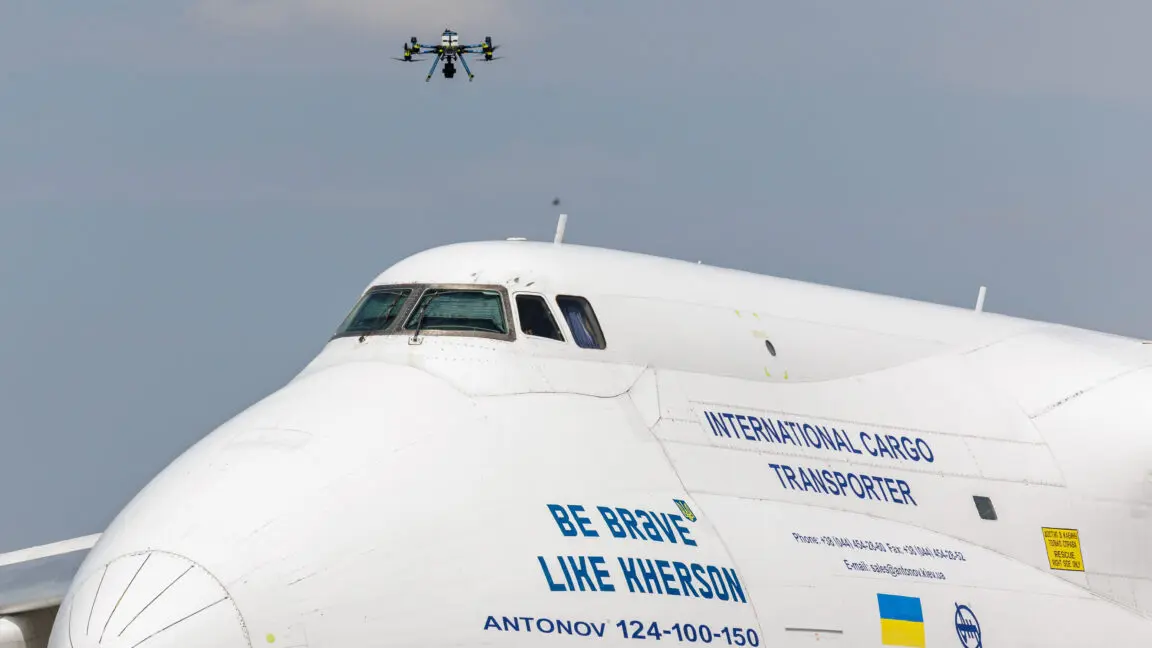
More crucially, the facility serves as the current operational home base for Ukraine’s Antonov Airlines. Operating a charter cargo fleet that includes the legendary Antonov An-124 Ruslan—the world’s largest operational cargo aircraft—the airline provides indispensable strategic airlift capabilities. For Moscow, neutralizing or disrupting the operations of Antonov Airlines represents a high-value asymmetric objective, directly impacting Kyiv’s logistics and international supply chains.
The gravity of the threat was inadvertently highlighted by Alexander Sosnowski, a well-known pro-Kremlin propagandist and regular guest on Russian state television. In a revealing video broadcast on Telegram, Sosnowski openly discussed the operation, assuming it to be a targeted Russian military intelligence (GRU) or proxy operation designed to cripple the Ukrainian aircraft stationed at the hub. According to reports from the German tabloid The Bild, Sosnowski expressed palpable frustration and disappointment that the attack had ultimately failed. This digital slip by a prominent Kremlin mouthpiece provided investigators and intelligence analysts with a telling window into Moscow’s operational intent and mindset.
A Pattern of Escalation: Airports and Incursions Across Europe
The Leipzig event is the latest, and perhaps most audacious, escalation in a relentless wave of drone sightings and airspace violations that have plagued European infrastructure since 2024. The campaign has systematically targeted the connective tissue of European commerce and defense:
- The Munich Airport Shutdowns: In May, Munich Airport—one of Germany’s primary international gateways—was forced to completely suspend flight operations twice within a 24-hour window following confirmed drone sightings in restricted airspace. These closures disrupted tens of thousands of travelers and highlighted the paralyzing effect that low-cost commercial drones can have on major economic centers.
- Northern and Eastern Europe on High Alert: Nations in the Baltic region, Scandinavia, and Eastern Europe have borne the brunt of these incursions. Their geographic proximity to Russia and the theater of war in Ukraine has made them prime testing grounds for Kremlin probing tactics. Fighter jets from NATO member states have been forced to scramble on numerous occasions to intercept unidentified or hostile UAVs.
- Collateral Damage in Romania: The creeping danger of these operations transitioned from disruption to physical destruction when a Russian drone crashed on Romanian territory, triggering a catastrophic building fire and resulting in multiple injuries on the ground.
These incidents demonstrate a deliberate effort by actors operating on behalf of the Kremlin to map vulnerabilities, stress-test air traffic management systems, and exhaust the air defense assets of NATO’s eastern and central flanks.
Supporting Context & Metrics
The Stalled "Drone Wall" and European Vulnerabilities
The proliferation of low-altitude, hard-to-detect unmanned aerial vehicles has exposed a glaring blind spot in European air defense. For decades, continental defense strategies—including NATO’s Integrated Air and Missile Defense (IAMD)—were engineered to counter high-altitude threats such as strategic bombers, ballistic missiles, and cruise missiles. They were fundamentally not designed to detect and neutralize swarming, low-signature commercial drones hovering near civilian airports.
To address this existential gap, European leaders previously floated the concept of a "European Drone Defence Initiative"—frequently referred to as the "drone wall." Promoted as a comprehensive, pan-European counter-drone surveillance and kinetic interception shield stretching from the Arctic to the Black Sea, the initiative was meant to unify defenses and share real-time telemetry data across borders.
However, according to Ulrike Franke, a senior policy fellow at the European Council on Foreign Relations, writing in World Politics Review, the initiative has "yet to materialize in any meaningful way." Bureaucratic friction, budgetary disputes, and differing national priorities have stymied collective progress. Rather than a unified European shield, the continent is witnessing a fragmented landscape where individual nations—most notably Poland, alongside the Baltic states—are forced to unilaterally engineer and finance their own national counter-drone systems. This patchwork approach leaves dangerous seams and administrative borders that hostile actors can easily exploit.
Germany’s Unwavering Support for Ukraine
The urgency of securing German infrastructure is inextricably linked to Berlin’s pivotal role in supporting Ukraine’s war effort. Since the launch of Russia’s full-scale invasion in February 2022, Germany has transformed its defense and foreign policy paradigms, emerging as one of Kyiv’s most indispensable financial and military backers.
According to data compiled by Deutsche Welle, Berlin has provided approximately $118 billion in total assistance to Ukraine. This massive fiscal commitment spans several critical categories:
- Direct Military Aid: Advanced air defense systems (including multiple Patriot and IRIS-T batteries), Leopard main battle tanks, armored personnel carriers, artillery ammunition, and communications equipment.
- Humanitarian and Financial Support: Billions allocated to stabilize the Ukrainian state budget, support displaced populations, and rebuild critical civic infrastructure.
- Human Capital and Training: The Bundeswehr has successfully trained more than 24,000 Ukrainian military personnel on modern Western weapon systems, while Germany currently hosts over 1 million Ukrainian refugees.
Furthermore, the bilateral defense relationship has evolved beyond traditional aid into high-tech industrial cooperation. Germany and Ukraine have increasingly pooled their resources to co-produce next-generation military hardware. In a recent landmark development covered by technology and defense analysts, a $100 million deal—reportedly financed by Berlin—was executed to equip the Ukrainian armed forces with cutting-edge drones enhanced with artificial intelligence (AI) target tracking capabilities, designed to dominate electronic warfare environments and execute precision kamikaze strikes. It is precisely this deepening technological partnership and industrial synergy that has made German territory and logistics hubs prime targets for Russian sabotage and intimidation campaigns.
Official Statements
The revelations surrounding the Leipzig incident and the broader wave of infrastructural incursions have sparked urgent debates within political and intelligence circles across Europe.
Roderich Kiesewetter, speaking as both a seasoned lawmaker and a senior voice on the German parliament’s intelligence committee, did not hesitate to contextualize the event within a broader geopolitical framework. His assertion that the Leipzig incident constitutes an "attempted act of terrorism" reflects a growing frustration among German security elites with the creeping nature of hybrid warfare. Kiesewetter’s remarks signal a departure from cautious diplomatic phrasing, pushing the German government to formally attribute these actions to Moscow and respond with robust counter-measures.
Independent policy experts have echoed these warnings, emphasizing that hybrid attacks are designed to operate just below the threshold of Article 5 of the North Atlantic Treaty. Ulrike Franke of the European Council on Foreign Relations pointed out the institutional inertia plaguing European defense integration, noting that while technological solutions exist, political will and administrative agility remain severely lagging. "A patchwork of national defenses is simply not sufficient against a coordinated, state-sponsored campaign of asymmetric provocation," Franke noted in her analysis for World Politics Review.
Meanwhile, the stark contrast between official diplomatic denials from Moscow and the boastful admissions of Kremlin-aligned commentators like Alexander Sosnowski has provided Western counterintelligence agencies with compelling rhetorical ammunition. By publicly lamenting the failure of the Leipzig operation on Telegram, Sosnowski inadvertently pierced the plausible deniability veil that Russia routinely attempts to maintain over its covert operations abroad.
Future Outlook
As Europe moves deeper into an era defined by great power competition and hybrid conflict, the security paradigm governing its civilian and military infrastructure must undergo a radical transformation. The incident at Leipzig/Halle Airport is a diagnostic warning sign: grey-zone warfare has arrived at Western Europe’s front door, targeting the logistical lifelines that sustain both domestic economies and international alliances.
Addressing these vulnerabilities will require a multi-pronged strategy:
- Accelerating Counter-Drone Integration: European capitals must move past bureaucratic delays and translate the concept of the "drone wall" into operational reality. Investments must be immediately channeled into advanced radio-frequency jamming, directed-energy weapons, acoustic sensors, and AI-driven optical tracking systems capable of protecting critical civilian airports and industrial zones.
- Hardening Critical Infrastructure: Facilities like Leipzig/Halle Airport, Munich Airport, and major maritime ports must be reclassified as critical national security assets, subject to heightened physical security, restricted airspace enforcement, and integrated counter-UAS (Unmanned Aerial Systems) defense bubbles.
- Countering Hybrid and Asymmetric Threats: Intelligence-sharing among NATO allies must be deepened to track and preempt Russian intelligence officers, proxy networks, and operatives utilizing maritime shadow fleets and commercial fronts to orchestrate domestic sabotage.
- Resilience Through Partnership: Despite ongoing threats of sabotage and intimidation, Germany and its European partners have signaled that their strategic commitment to Ukraine will not waver. The joint development of advanced AI-enabled drone systems and continued logistical support represent the ultimate deterrent against Russian aggression—proving that attempts to terrorize Europe into submission will instead accelerate its industrial and defensive unification.