Executive Overview
In the fast-moving world of artificial intelligence, history has a curious habit of repeating itself—often with a price tag running into the tens of billions of dollars. Meta, formerly Facebook, has officially thrown its hat back into the consumer digital assistant ring with the debut of Muse, an advanced AI-powered chatbot and companion tool. Designed to let users customize their bot’s identity, execute background tasks, and act as an ever-present personal concierge, Muse represents CEO Mark Zuckerberg’s latest push toward what he envisions as personal superintelligence for the masses.
Yet, beneath the glossy marketing materials and celebrity endorsements lies a striking irony: Meta is attempting to sell the exact same concept it pioneered, promoted, and ultimately abandoned nearly a decade ago.
Despite the public repeatedly rejecting Meta’s prior iterations of digital assistants—from the heavily human-backed "M" assistant on Messenger in 2015 to a graveyard of celebrity-voiced chatbots and Messenger platform bots—Zuckerberg remains undeterred. This persistence highlights a fundamental philosophical disconnect between Silicon Valley’s executive suite and the average consumer. While tech leaders view daily life through a hyper-optimized lens of efficiency, automation, and maximized productivity, everyday users often prefer the organic, unscripted friction of human decision-making and genuine social connection.
As Meta pours staggering resources into its massive AI infrastructure, the launch of Muse serves as a critical stress test. Will advanced generative AI finally make the personal assistant concept irresistible, or is Meta destined to repeat the mistakes of its past, mistaking an executive obsession for a mass consumer demand?
Detailed Chronology: A Decade of Meta’s Quest for the Bot
To understand the stakes surrounding the launch of Muse, one must examine Meta’s turbulent history with conversational agents and automated assistants. Far from being a fresh pivot born of the modern generative AI boom, the digital assistant concept has been a cornerstone of Zuckerberg’s roadmap for over ten years.
2015–2018: The Rise and Fall of Project M
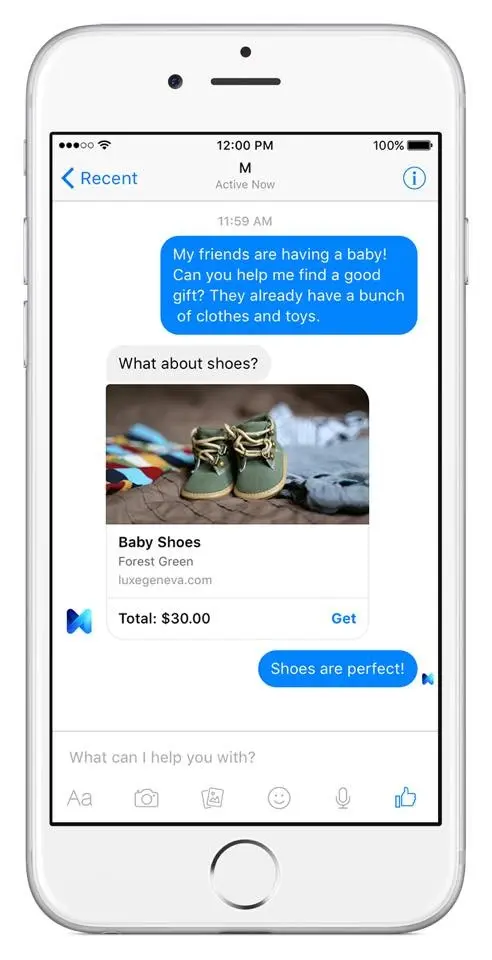
In August 2015, Facebook introduced M, a virtual assistant integrated directly into the Messenger app. Unlike Siri or Cortana, which relied purely on automated speech recognition and rigid rule-based programming, Facebook’s M was backed by a hybrid system of artificial intelligence and human contractors ("trainers") who stepped in to complete complex requests.
Promoted aggressively by then-Messenger chief David Marcus, M promised to handle the friction points of modern life. As Marcus explained at the time, M could "purchase items, get gifts delivered to your loved ones, book restaurants, travel arrangements, appointments and way more."
Functionally, the core value proposition of M was virtually identical to Meta’s modern Muse project: an omnipresent digital concierge capable of working autonomously in the background. However, despite heavy promotional pushes, user adoption stalled. The operational costs of maintaining human supervision proved unsustainable, and consumer interest remained remarkably flat. Meta quietly pulled the plug on M in January 2018, less than three years after its grand unveiling.
2016–2023: Messenger Bots and Celebrity Avatars
Undeterred by the quiet death of M, Meta attempted to crowdsource the assistant model. In 2016, the company launched the Messenger Bot Platform, inviting third-party developers to build automated customer service and utility bots within the chat interface. While useful for specific enterprise niches, the consumer-facing chatbot ecosystem failed to capture the public imagination, often devolving into clunky, frustrating automated menus.
Years later, as large language models began to capture public interest, Meta pivoted toward personality-driven AI. The company rolled out a suite of celebrity-themed chatbots on Messenger, Instagram, and WhatsApp, featuring the likenesses and simulated personas of famous cultural figures and athletes. Once again, despite substantial promotional investments and high-profile endorsements, these digital avatars failed to sustain meaningful, long-term user engagement.
2025 and Beyond: The Debut of Muse
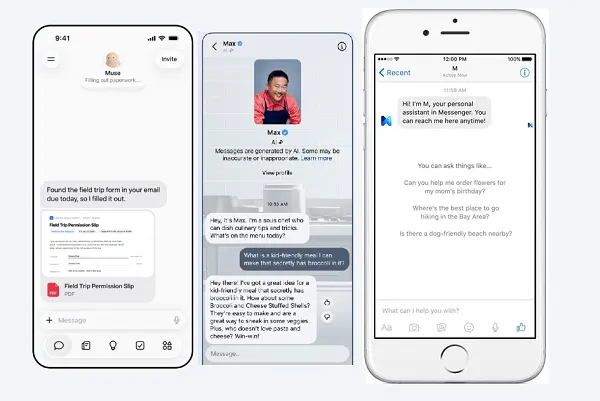
Enter Muse. Released as Meta’s most sophisticated AI-powered personal assistant to date, Muse takes the foundational concepts of M and supercharges them with modern generative architecture. Users can assign names to their bots, delegate complex multi-step tasks to run asynchronously in the background, and rely on the AI as an all-purpose companion.
For Zuckerberg, Muse is not merely a feature; it is a vital milestone on the road to ubiquitous personal superintelligence. Yet, as the echoes of Project M demonstrate, upgrading the underlying technology does not automatically solve the underlying problem of consumer demand.
Supporting Context & Metrics: The Economics of Consumer Apathy
Meta’s stubborn insistence on pushing conversational assistants into the mainstream occurs against a backdrop of unprecedented financial commitment to artificial intelligence. Across the tech sector, capital expenditures are soaring as companies race to secure dominance in the generative AI era. For Meta, these investments represent a massive bet on future monetization and platform relevance.
However, historical metrics across the industry suggest a persistent gap between technical capability and consumer utility.
- The Engagement Gap: Industry studies consistently show that while consumers are willing to experiment with conversational AI for creative writing, coding assistance, or quick informational queries, long-term retention for "lifestyle management" and autonomous task delegation remains low.
- The Trust Hurdle: Delegating personal finances, travel arrangements, and relational maintenance to a corporate-owned algorithm requires an immense degree of consumer trust—a commodity that Meta, given its history regarding data privacy and platform governance, struggles to maintain effortlessly.
- The Feature-Versus-Product Trap: Much like the early wearable technology market, where step-counters were initially sold as lifestyle revolutions, digital assistants often suffer from being solutions in search of a problem. When a consumer can easily browse a restaurant reservation app or text a friend directly, the marginal utility of launching a dedicated AI agent often feels like an unnecessary layer of friction.
By tying the success of its broader AI ecosystem to the adoption of products like Muse, Meta risks creating a high-stakes bottleneck. If consumers continue to treat digital assistants as a novelty rather than a daily necessity, the return on investment for Meta’s multi-billion-dollar data centers and hardware experiments could face severe headwinds.
Official Statements & Philosophy: The Optimization Mindset
Why does Meta continue to pursue a concept that the public has repeatedly shrugged off? The answer lies in the philosophical worldview of its leadership, most notably Mark Zuckerberg.
In an interview with Sources, Zuckerberg laid out his personal vision for how AI tools should integrate into daily life, offering a rare window into the motivations driving projects like Muse:
"For me, when I’m using my Muse Agent, I kind of want it to help me be a better father and a better husband, and show up better for my friends."
This statement encapsulates a fundamental perceptual misalignment between tech executives and everyday users. Zuckerberg approaches life through an optimization mindset—a worldview focused on maximizing efficiency, minimizing wasted time, and squeezing maximum productivity out of every waking moment. In this framework, routine tasks, administrative friction, and unstructured decision-making are inefficiencies to be engineered away.
However, this philosophy is far from universal.
While programmers and business executives thrive on optimization, the average consumer often views life through a fundamentally different lens. Activities that Zuckerberg might categorize as inefficient—such as browsing through product options, researching gifts for loved ones, or engaging in spontaneous, unoptimized human interactions—are precisely what many people consider to be the rich, lived texture of human experience.
When an AI assistant attempts to streamline away the journey of discovery, shopping, and social negotiation, it strips away the very experiences that people enjoy undertaking for themselves. Meta views human behavior through the lens of optimization data, cataloging metrics to be improved, whereas regular users view those same behaviors as an end in themselves.
Future Outlook: Can Meta Bridge the Cultural Divide?
As Muse rolls out across Meta’s sprawling social media empire—spanning billions of users across Facebook, Instagram, and WhatsApp—the company faces a defining moment. The technology powering Muse is undeniably lightyears ahead of the human-assisted scripts of 2015’s Project M. Natural language processing, contextual awareness, and generative synthesis have transformed AI from a clumsy novelty into a powerhouse of raw computational capability.
Yet, technology alone cannot manufacture cultural relevance.
To prevent Muse from suffering the same quiet obsolescence as its predecessors, Meta must overcome a psychological barrier that no amount of computing power can easily dissolve: the desire of human beings to retain agency over their own lives. If digital assistants are marketed merely as productivity hacks for hyper-busy executives, they will likely remain niche tools for power users.
Conversely, if Meta hopes to make personal AI assistants as ubiquitous as smartphones, the company must shift its narrative. It must convince a skeptical public that automation is not about stripping the humanity out of daily routines, but about genuinely enriching social and personal connections—without demanding that users adopt a Silicon Valley mindset of relentless self-optimization.
Until that cultural bridge is successfully built, Meta’s latest multibillion-dollar bet on the digital assistant risks becoming a high-tech echo of history: an ambitious solution searching for a problem that the public never asked to solve.