Executive Overview
Germany’s aggressive crusade against online copyright infringement has reached a critical juncture. For years, the nation’s primary anti-piracy mechanism—the Clearing Body for Copyright on the Internet (CUII)—has operated as the tip of the spear in neutralizing unauthorized streaming and downloading platforms. By uniting major telecommunications providers and rightsholders under a unified framework, Germany has systematically blocked dozens of high-profile domains, ranging from massive international video streaming hubs to specialized literary repositories like Anna’s Archive and Library Genesis.
However, a newly scrutinized legal threshold has illuminated the complex, data-driven methodology behind these blocks. Recent court filings from the Cologne Regional Court reveal an emerging numerical floor: an unofficial, yet increasingly influential benchmark establishing that illegal content must account for at least 81.5% of a website’s catalog before a site-blocking order is considered legally "reasonable and proportionate."
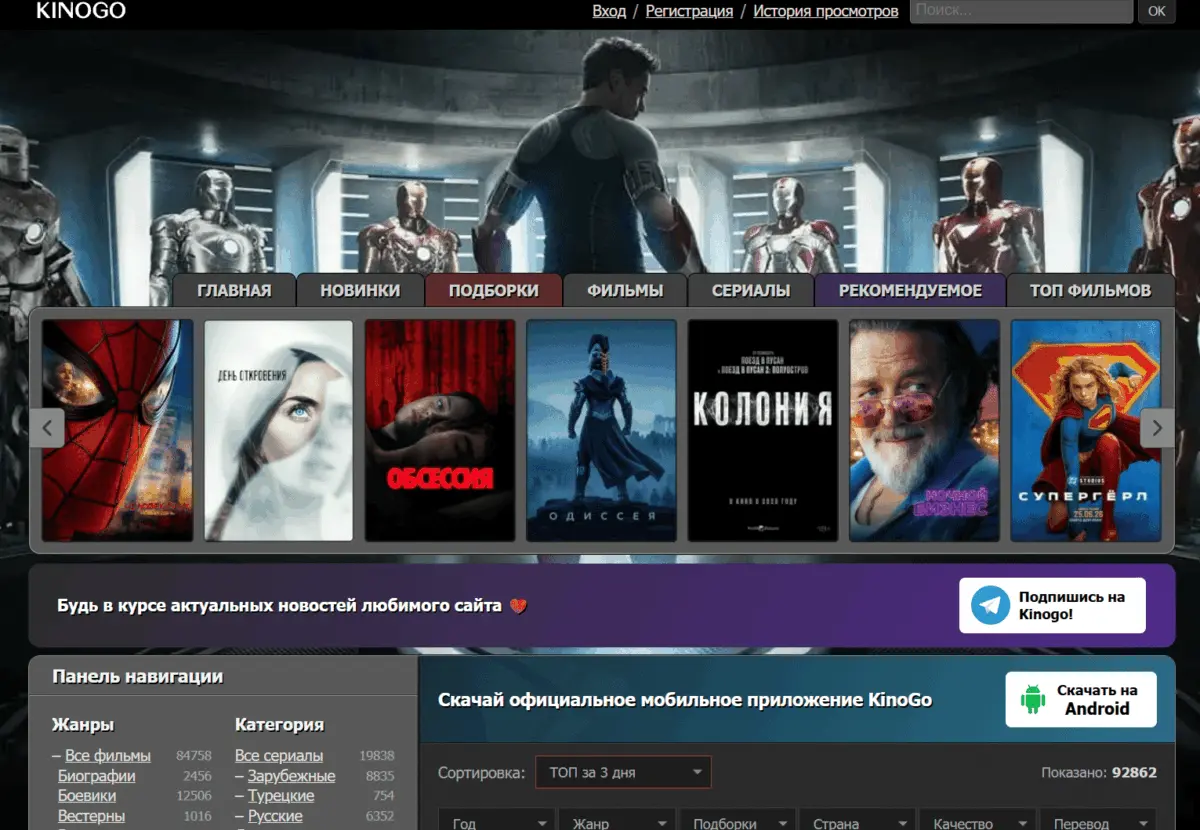
With recent court-mandated blocks targeting major platforms like KinoGo—where infringing material was calculated to sit between a staggering 82.4% and 94.6%—this threshold is being tested closer than ever before. This mathematical approach to copyright enforcement raises profound questions about the future of digital governance, the validity of random statistical sampling, and the potential for site operators to exploit legal loopholes by padding their libraries with public domain or AI-generated filler. As regulatory bodies and copyright holders refine their tactics, the battle over what constitutes a "structurally infringing" website has evolved from a matter of qualitative assessment into a precise, albeit vulnerable, statistical science.
Detailed Chronology: From Administrative Scheme to Judicial Scrutiny
To understand the current state of site-blocking in Germany, one must trace the institutional evolution of the infrastructure that enables it. The framework underwent a radical transformation in mid-2025, shifting away from a closed administrative model toward a more transparent, judicially supervised process.
The Origins of CUII (2021–2024)
Since March 2021, major German Internet Service Providers (ISPs)—including giants like Deutsche Telekom, Vodafone, and Telefonica—have united with rightsholders to establish the CUII clearinghouse. The original architecture was designed for speed and administrative efficiency. Rather than forcing rightsholders to initiate costly and time-consuming lawsuits against ISPs for every single pirate domain, the system relied on an internal committee.
CUII’s expert committee would review complaints, issue blocking recommendations, and submit them to the Federal Network Agency (Bundesnetzagentur) for regulatory sign-off. Once approved, participating ISPs would voluntarily implement DNS and IP blocks across their networks. While efficient at sweeping away the country’s most egregious pirate sites, the system faced fierce criticism from civil liberties groups and digital rights advocates due to its glaring lack of judicial oversight and transparency.
The Mid-2025 Structural Overhaul
Recognizing mounting legal pressures and potential vulnerabilities under European human rights frameworks and domestic administrative law, stakeholders enacted a sweeping overhaul of the CUII code of conduct in mid-2025.
Under the revised system, the administrative shortcut was dismantled. Today, every site-blocking initiative must originate in a formal court of law. A rightsholder is now required to file a lawsuit against at least one major ISP, compelling the judiciary to review the merits of the blockade. Once a competent German court—frequently the Regional Court of Cologne—confirms that the target platform is structurally infringing, a binding judgment is issued. While CUII no longer holds the sole authority to issue binding administrative orders, it continues to act as an informational clearinghouse, promptly communicating judicial recommendations to all participating ISPs so they can follow suit and implement coordinated blocks.

Recent Escalations: KinoGo, Streamed, and Romsns
In recent weeks, this revamped judicial process has borne fruit for rightsholders. Following orders handed down by the Cologne Regional Court, CUII published a fresh batch of recommendations targeting several prominent domains. Among them are streamed.pk, streamed.st, and kinogo.ec (collectively referred to in data as Streamed and KinoGo), which were officially blocked across German networks this month.
Furthermore, the scope of targeted content continues to expand horizontally. Alongside video portals, CUII recently published recommendations targeting Romsns.com, a retro gaming ROM distribution site. Security scans, such as those provided by VirusTotal, revealed multiple malware warnings associated with the domain, underscoring how rightsholders and safety advocates increasingly align their arguments to frame blocking orders as measures that protect consumers from malicious software alongside protecting intellectual property.
Supporting Context & Metrics: The Structural Infringement Check
At the heart of every modern German site-blocking order is the legal doctrine of "structural infringement." Because shutting down access to an entire domain is a severe measure that impacts the open internet, German courts require proof that a website’s primary purpose, business model, and content base are overwhelmingly dedicated to copyright violation.
Statistical Sampling and Confidence Levels
To establish this structural infringement objectively, rightsholders do not rely on subjective impressions. Instead, they employ private investigators to conduct rigorous statistical audits of a target site’s library.
For each targeted domain, investigators pull a randomized sample of the site’s total content library. They then analyze this sample to calculate the exact percentage of infringing material, applying a rigorous 95.5% confidence level to ensure the statistical projection holds up under judicial scrutiny. This scientific approach provides the numerical bedrock upon which courts base their rulings of proportionality.
The Historical Data Matrix
An examination of historical CUII determinations and independent tracking data from the transparency portal CUIIListe reveals how consistency in these sampling percentages has been maintained over the years. Below is a comprehensive overview of notable sites targeted by German blocking orders, along with their adjudicated infringing content shares:
| Site | Ruling / Action Date | Adjudicated Share Infringing (Confidence Interval) |
|---|---|---|
| KinoGO | July 2026 | 82.4% to 94.6% |
| LIVETV.SX | April 2026 | 85.28% to 96.72% |
| SPORTPLUS | February 2026 | 88.8% to 100% |
| MegaKino | February 2024 | 89.8% to 100% |
| Kinoger | November 2025 | 91.4% to 99.0% |
| Anna’s Archive | September 2025 | 91.6% to 94.8% |
| NSWPedia | January 2026 | 94.4% to 99.8% |
| s.to | February 2021 | 94.84% to 100% |
| LibGen | May 2024 | 96.07% to 98.23% |
| Streamed | July 2026 | 96.16% to 100% |
| cine.to | June 2022 | 96.28% to 100% |
Anatomy of the 81.5% "Line"
While the table above demonstrates that many pirate sites routinely hover in the high 90s, a critical threshold emerged in early 2025. In a March 2025 blocking order directed at platforms such as HDFILME, STREAMCLOUD, and FILMPALAST, CUII explicitly articulated the tipping point where illegal content definitively outweighs legal offerings.
The order stated:

"The illegal content on the websites far outweighs the legal content. This is the case in any event when at least 81.5% of the website’s content is illegal."
This exact figure traces its origins to a January 2025 default judgment issued by the Cologne Regional Court against the download portal NOX—a lawsuit that went uncontested by the site’s operators, instantly triggering a nationwide block.
When looking at the recent action against KinoGO, whose infringing content share was calculated between a floor of 82.4% and a ceiling of 94.6%, the enforcement mechanism is clearly scraping close to this unofficial 81.5% borderline. While KinoGO remains a massive international juggernaut—attracting over 50 million monthly visits primarily originating from Eastern European nations like Ukraine and Belarus—the narrowing margin prompts critical legal inquiries regarding the exact limits of judicial tolerance.
Official Statements and Regulatory Clarifications
The proximity of sites like KinoGO to the 81.5% floor sparked widespread speculation within the digital rights and legal communities: Is 81.5% a rigid, hard quantitative benchmark that automatically triggers a site block, or is it merely a flexible guideline derived from case-specific jurisprudence?
To resolve these ambiguities, TorrentFreak reached out directly to the Clearing Body for Copyright on the Internet (CUII) for an official clarification.
CUII’s Definitive Stance
In an official statement addressing the inquiry, CUII firmly pushed back against the notion of a rigid numerical formula. The clearinghouse clarified that 81.5% is not a fixed quantitative limit.
Instead, CUII grounded its explanation in the underlying proportionality test established by Germany’s Federal Court of Justice (Bundesgerichtshof). Under this judicial doctrine, a site block is considered legally proportionate when illegal content so comprehensively dominates the platform that any remaining legal content is rendered entirely negligible.
Furthermore, CUII emphasized that the decisive question for the judiciary is never a matter of simple arithmetic percentages. Rather, the core legal test asks whether a website operates an infringement-based business model that fundamentally violates German copyright law. CUII reiterated that it restricts its recommendations strictly to domains utilized exclusively for such systemic infractions.

The "Legal Filler" Countermeasure
This clarification directly addresses theoretical exploits concerning the manipulation of audit results. Critics and legal scholars had previously hypothesized that cunning site operators might attempt to evade blocks by artificially "padding" their digital archives—uploading massive volumes of public domain movies, open-source educational texts, or AI-generated filler content. In theory, such a tactic could artificially depress a random investigator’s statistical sample below the critical 81.5% line, all while keeping the core pirated library completely untouched.
However, CUII’s official response neutralizes this hypothetical exploit. Because the judiciary evaluates the overall character and core business model of a platform rather than relying on a blind mathematical cutoff, stuffing a database with public domain placeholders would fail to alter the structural reality of the site. If a platform’s primary economic engine and user appeal rely on unauthorized copyrighted works, procedural courts will view legal padding as a superficial evasion tactic rather than a legitimate pivot toward legal compliance.
Future Outlook: The Horizon of German Copyright Enforcement
As Germany enters the latter half of the decade, the landscape of digital site-blocking faces both structural maturation and ongoing technological challenges. The integration of mandatory judicial oversight in mid-2025 has successfully insulated the CUII framework from sweeping constitutional challenges regarding administrative overreach, providing a more stable and defensible legal foundation for rightsholders and ISPs alike.
The Escalating Arms Race
Yet, the cat-and-mouse game between anti-piracy enforcers and platform operators is far from over. As statistical sampling becomes more sophisticated—incorporating confidence intervals, random content pulls, and strict evidentiary thresholds—site operators are increasingly forced to adapt. While padding content libraries with legal filler has been effectively dismissed by CUII’s adherence to the "business model" doctrine, operators continue to explore decentralized domain-flipping, mirror networks, and encrypted distribution channels to circumvent DNS-level blocks.
Moreover, the expansion of CUII’s mandate beyond traditional video and movie streaming portals into niche distribution networks—such as academic text repositories (Anna’s Archive, LibGen) and video game ROM archives (Romsns)—signals an increasingly broad interpretation of what constitutes structural infringement. As rightsholders from diverse creative industries latch onto the clearinghouse mechanism, the pressure on German ISPs to implement expansive, automated network filters will only intensify.
Conclusion
The evolution of Germany’s site-blocking regime from a opaque administrative clearinghouse to a transparent, court-vetted enforcement model illustrates a concerted effort to balance copyright enforcement with constitutional proportionality. While figures like the 81.5% threshold and confidence intervals provide a comforting illusion of mathematical precision, the ultimate arbiter remains the legal character of the platform itself. As long as illicit business models remain the driving force behind targeted domains, Germany’s judicial apparatus—bolstered by CUII’s rigorous evidentiary standards—will continue to draw a hard line against digital piracy.