LAS VEGAS — At this year’s high-stakes Black Hat USA conference, Amazon Web Services (AWS) made a series of sweeping announcements aimed at redefining software supply chain security and cloud posture management. As generative artificial intelligence (AI) transitions rapidly from a novelty to the primary engine of enterprise software engineering, the attack surface has shifted beneath developers’ feet. Addressing this vulnerability head-on, AWS revealed strategic partnerships with foundational AI leaders Anthropic and OpenAI, deepened its cloud infrastructure defenses through expanded alliances with Chainguard and Socket, and integrated specialized runtime protection directly into its Web Application Firewall (WAF) via Miggo Security.
These moves arrive at a critical inflection point for the software industry. Driven by unprecedented productivity gains, enterprise reliance on AI coding tools and autonomous agents has reached a tipping point. Yet, this velocity has introduced staggering new risks, highlighted by recent industry data showing that while AI now generates the majority of production code for many organizations, a staggering three-quarters of IT decision-makers have already confronted production incidents directly attributable to AI-generated errors or vulnerabilities.
Executive Overview
The modern software development lifecycle (SDLC) is undergoing its most radical transformation since the advent of cloud computing. Developers are no longer just writing code line-by-line; increasingly, they are acting as orchestrators of complex, multi-tiered AI agents capable of writing, testing, and deploying applications autonomously. Recognizing that traditional, human-centric security tools cannot keep pace with machine-speed development, AWS is pivoting aggressively toward agentic security—a paradigm designed to secure workflows both as code is developed and after AI applications are deployed.
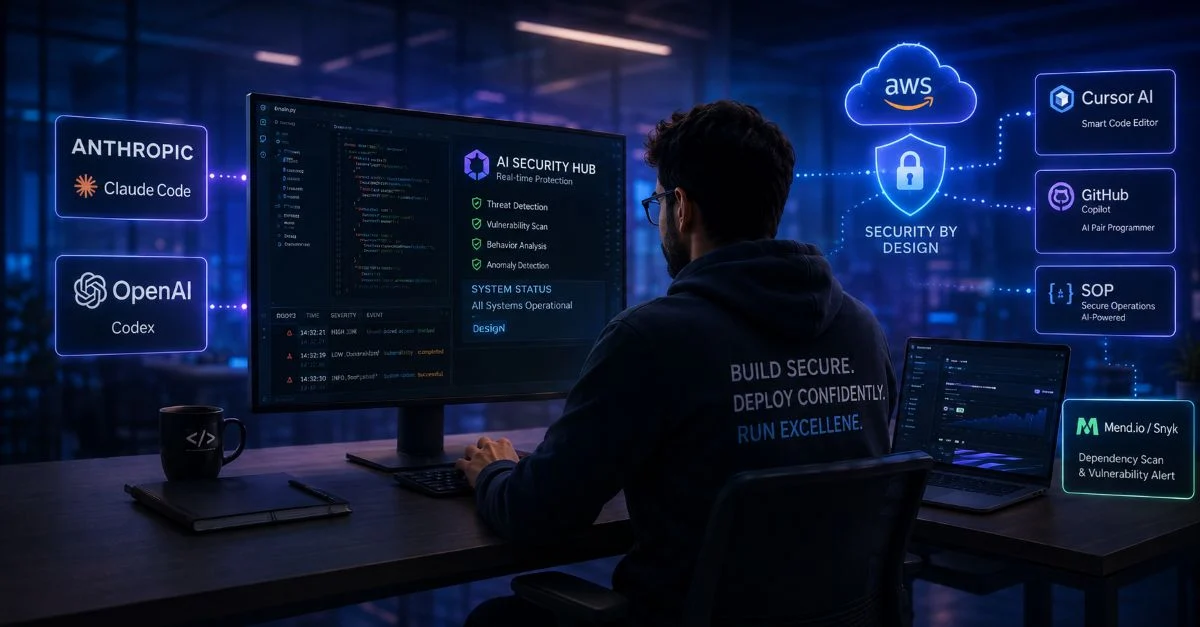
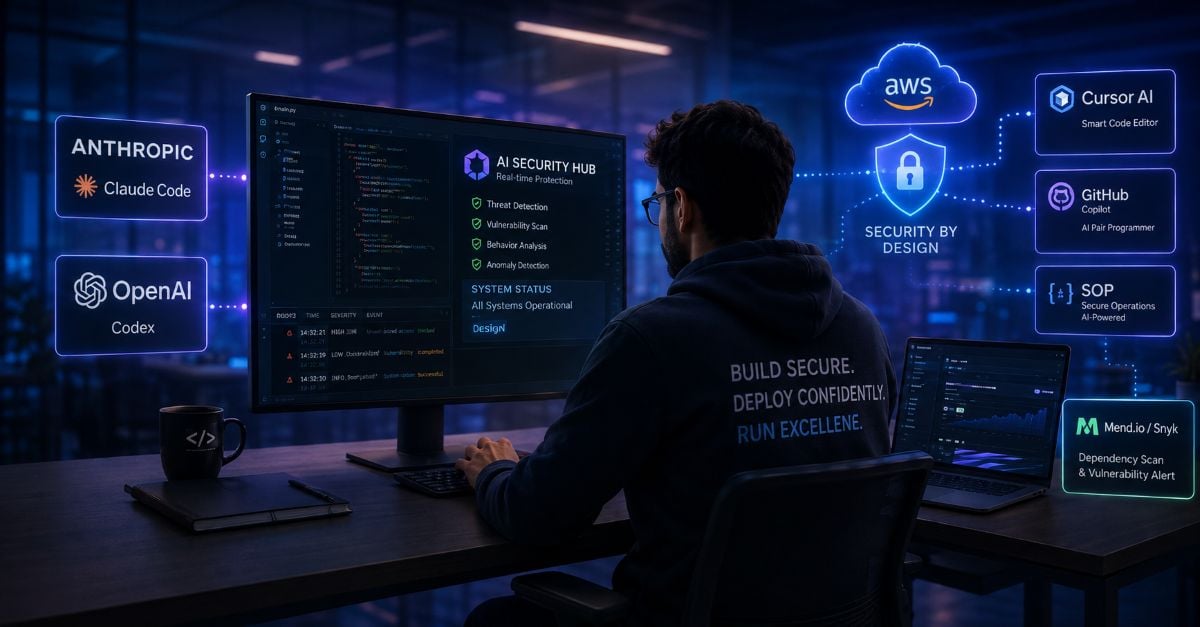
At the core of the AWS strategy unveiled in Las Vegas is the expansion of AWS Continuum, a cutting-edge service launched earlier this year designed to employ AI agents for the automated discovery, validation, and prioritization of software vulnerabilities. By integrating Continuum directly with coding environments powered by Anthropic and OpenAI, AWS is shortening the feedback loop for developers, embedding security guidance natively into the developer workspace.
Simultaneously, AWS is hardening the downstream supply chain. Through significant updates to AWS Security Hub Extended, the cloud giant has integrated telemetry from open-source curation leader Chainguard and malicious package detector Socket. This ensures that risky, malicious, or poorly maintained dependencies are flagged and blocked long before they ever touch an enterprise repository. Finally, by incorporating Miggo Security’s advanced AI runtime security and Application Detection and Response (ADR) rules directly into the AWS WAF console, AWS is bridging the persistent gap between pre-production code hygiene and real-time runtime defense.
Detailed Chronology of Announcements at Black Hat USA
The rollout of AWS’s new security posture management capabilities spans three distinct pillars of modern application development: developer workflow integration, supply chain dependency monitoring, and runtime application protection.
1. Bridging AI Coding Assistants with AWS Continuum
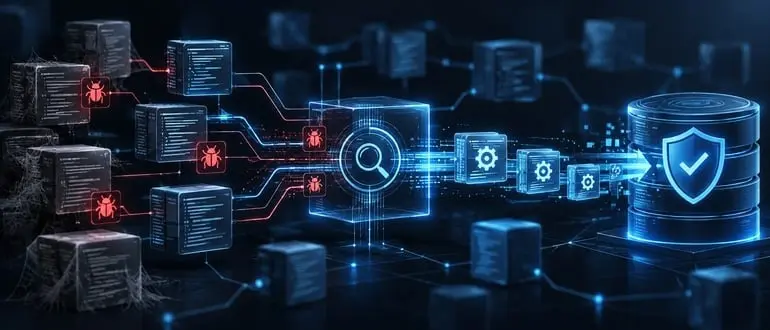
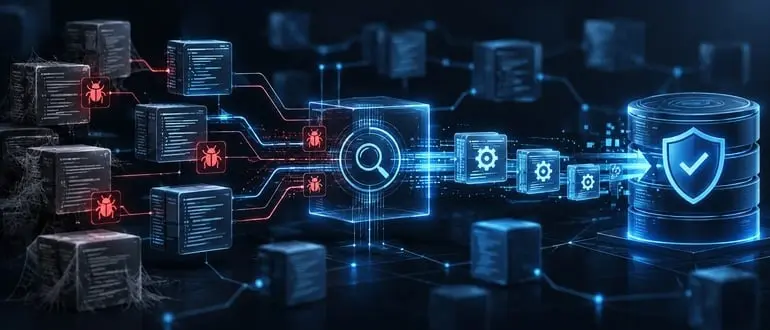
Launched earlier this year in preview, AWS Continuum was built to solve a fundamental problem of modern scale: the sheer volume of vulnerabilities generated in complex codebases outpaces human remediation capacity. Continuum deploys specialized AI agents that autonomously scour repositories, validate whether a reported vulnerability is actually exploitable in context, prioritize findings based on risk, and surface concrete remediation recommendations.
At Black Hat USA, AWS announced that Continuum is breaking out of its silo through direct integrations with the coding tools and environments provided by Anthropic and OpenAI.
- The Developer Loop: By connecting AWS Continuum directly to Anthropic and OpenAI developer tools, engineers receive contextual, real-time security guidance directly inside their preferred coding environments.
- Actionable Remediation: Instead of context-switching to a separate security dashboard, developers are met with AI-driven validation and patches generated by language models that understand both the developer’s intent and the enterprise’s broader security posture.
2. Upgrading AWS Security Hub Extended for Supply Chain Defense
Writing secure code is only half the battle; modern applications are heavily reliant on external open-source libraries, third-party packages, and container images. A vulnerability in a single upstream dependency can compromise an entire enterprise stack.
To combat this, AWS expanded the reach of AWS Security Hub Extended—its unified cloud security and posture management service. The extended platform now natively ingests and correlates data from two major security innovators:
- Chainguard: Known for its minimalist, cryptographically signed, and securely curated open-source libraries and container images, Chainguard’s telemetry allows AWS Security Hub to verify the provenance and integrity of base layers.
- Socket: A specialized platform that flags malicious software packages, typosquatted dependencies, and supply chain anomalies. Socket’s intelligence feeds directly into AWS to block malicious dependencies before incorporation.
Importantly, AWS is prioritizing interoperability by sharing all security findings generated by Security Hub via the Open Cybersecurity Schema Framework (OCSF), an open standard being actively advanced under the auspices of the Linux Foundation. This ensures that security operations centers (SOCs) can easily ingest AWS threat intelligence into their broader Security Information and Event Management (SIEM) ecosystems.
3. Fortifying Runtime Protection via Miggo Security and AWS WAF
Securing the SDLC does not stop when code is pushed to production; applications must defend themselves against novel, evasive threats in real time. To address this, AWS announced a strategic technical integration with Miggo Security, an emerging leader in AI runtime security and Application Detection and Response (ADR).
Through this partnership, Miggo’s specialized emerging threat and AI/ML partner rulesets are now available directly within the Amazon Web Services (AWS WAF) console. This allows cloud architects and security engineers to seamlessly deploy advanced, context-aware web application firewall rules that detect sophisticated injection attacks, API abuses, and behavioral anomalies stemming from compromised workloads or malicious AI agents operating in the runtime environment.
Supporting Context and Metrics: The Rise of AI-Driven SDLC
The urgency behind these announcements is validated by empirical market data. The transition from human-written code to AI-assisted and AI-generated code is happening at an exponential velocity, fundamentally altering enterprise software engineering.
A comprehensive global survey conducted by The Futurum Group, polling 839 IT decision-makers, underscores this paradigm shift:
- Pervasive Adoption: The survey reveals that 54% of IT decision-makers now work for organizations that utilize AI across more than half of their entire software development lifecycle (SDLC).
- Code Generation at Scale: Perhaps most startlingly, 40% of respondents reported that AI has already generated the majority of production code merged into their repositories over the last 90 days.
- Future Projections: Looking ahead just three years, a total of 58% of enterprise leaders expect AI to autonomously build 80% or more of their organization’s software.
The Governance Gap: Production Incidents and AI Blind Spots
However, this velocity has come at a cost. The speed at which code is being produced has severely outpaced traditional testing and governance frameworks, creating a massive security blind spot.
According to the Futurum Group data:
- Three-Quarters Affected: A striking 75% of survey respondents have encountered a production issue that they have formally confirmed is directly attributable to AI-generated code or misconfigurations.
- Repeated Failures: Compounding this issue, 42% of those respondents reported experiencing multiple such incidents.
These metrics illustrate a sobering reality: while AI is an extraordinary accelerator of software velocity, it is equally capable of scaling up technical debt, logic flaws, and subtle security vulnerabilities at machine speed. Without strict guardrails, automated governance, and runtime validation, organizations risk trading operational efficiency for systemic fragility.
Official Statements and Industry Perspective
Addressing the architectural and cultural challenges of this new era, Gee Rittenhouse, Vice President for Agentic Security at AWS, provided deep insight into the company’s strategic vision during his briefings at Black Hat USA.
"In general, AWS is working toward securing agentic workflows both as code is developed and after AI applications and agents are deployed," Rittenhouse explained.
He highlighted the unique engineering hurdles posed by autonomous systems, noting that the underlying AI agents driving modern enterprise workflows are inherently dynamic. Unlike static scripts or traditional microservices, these agents frequently change personas, permissions, and roles at various stages of a complex execution workflow.
"The challenge is that the AI agents that drive these workflows tend to change personas and roles at various stages of those workflows," Rittenhouse noted. "Applying the right controls at the right time requires a significant amount of visibility and context to ensure, for example, any patch that might be created is trusted enough to safely deploy."
Rittenhouse’s remarks underscore the core philosophy behind AWS’s latest announcements: security tools can no longer be reactive checklists applied at the end of a CI/CD pipeline. They must be active, contextual participants in the AI workflow itself, capable of evaluating trust, verifying provenance, and enforcing least-privilege access dynamically.
Future Outlook: The Software Engineer as an Orchestrator
As the dust settles on the exhibition floors of Black Hat USA 2026, the broader implications of AWS’s product expansions point toward a permanent reshaping of the software engineering profession.
For decades, the metric of a software engineer’s productivity has been tied to lines of code written, pull requests merged, and manual debugging sessions completed. As LLMs, autonomous coding assistants, and agentic workflows assume the burden of routine code generation, that definition is evaporating.
Industry consensus—reinforced by the architectural trajectory demonstrated by AWS—suggests that the software engineer of the near future will transition from a builder of syntax to an orchestrator of agents. In this new role, engineers will spend their time defining business logic, designing security guardrails, setting policy boundaries, and auditing the automated actions executed by clusters of cooperating AI agents.
Ultimately, tools like AWS Continuum, enhanced Security Hub integrations with Chainguard and Socket, and runtime protections via Miggo and AWS WAF represent the foundational infrastructure for this autonomous future. By embedding security natively into the loop where AI agents write, test, and deploy code, AWS is helping enterprises build a framework where velocity and security are no longer mutually exclusive trade-offs, but mutually reinforcing pillars of modern cloud architecture.