For nearly two decades, the meta description was considered an immutable pillar of search engine optimization (SEO). Webmasters, content creators, and digital marketers painstakingly crafted these 150-to-160-character HTML snippets, treating them as prime real estate to pitch searchers, wedge in stubborn keywords, and secure coveted click-through rates (CTR). Back when Google relied almost exclusively on these hand-written summaries to populate organic search results pages (SERPs), a well-optimized meta description was the ultimate bridge between a user’s query and a website’s conversion funnel.
Today, that landscape has fundamentally shifted. Modern search engines—led by Google’s advanced natural language processing models—frequently bypass custom meta descriptions entirely. Instead, algorithms dynamically extract snippets directly from a webpage’s body copy, synthesizing text on the fly to match the precise intent of a user’s query. This algorithmic autonomy has sparked a lingering debate across the digital marketing community: Are meta descriptions officially dead, or are they simply misunderstood?
Recent disclosures from Google’s Search Central documentation, paired with insights from Search Advocate John Mueller, suggest a nuanced reality. While meta descriptions are no longer mandatory and Google often ignores them, they remain a valuable asset in an SEO’s toolkit. They act as fallback copy, editorial guideposts for search crawlers, and crucial contextual summaries for the burgeoning ecosystem of Generative AI (GenAI) search platforms, such as ChatGPT, Claude, and Perplexity.
This article explores the evolving role of meta descriptions in the age of algorithmic search and generative artificial intelligence. We will examine official statements from search engine leadership, analyze real-world use cases, evaluate the integration of programmatic AI-generated tags for large-scale e-commerce sites, and chart a definitive roadmap for how modern digital strategists should approach on-page optimization.
Detailed Chronology: From Static HTML Snippets to Dynamic Neural Summaries
To understand where meta descriptions stand today, it is helpful to trace how search engines have evolved their approach to page summaries over the years.
The Golden Era of Static Snippets (Early 2000s–2015)
In the formative years of commercial search, Google’s algorithms were heavily reliant on explicit on-page signals. While title tags and header elements ruled supreme, the meta description tag (<meta name="description" content="...">) functioned as a direct instruction manual for the search engine. If a webmaster wrote a compelling 155-character pitch, Google would dutifully display that exact text beneath the blue link in search results. Optimization during this era was mechanical: stuff the description with exact-match keywords, include a clear call-to-action, and watch the traffic roll in.
The Rise of Dynamic Extraction (2015–2022)
As semantic search matured through milestones like Google’s Hummingbird, BERT, and MUM updates, search engines grew increasingly sophisticated at understanding user intent rather than simply matching keywords. Google recognized that hand-written meta descriptions often failed to address complex, long-tail queries.
Gradually, Google began rewriting search snippets on a massive scale. Studies published by SEO software providers during this period revealed that Google rewrote meta descriptions for over 60% of search queries, preferring to pull a sentence from an H2 heading, a paragraph, or a bulleted list that directly answered the user’s question. Panic rippled through the SEO community. Many questioned whether spending time writing custom meta descriptions was an exercise in futility.
The Generative AI Era (2023–Present)
The current era is defined by the blending of traditional search with Large Language Models (LLMs) and conversational search interfaces. Today, users do not just look at a list of ten blue links; they receive synthesized answers via Google’s AI Overviews, Search Generative Experience (SGE), and third-party AI assistants like ChatGPT and Claude.
In this multi-platform search ecosystem, the definition of a "snippet" has expanded. Crawlers from both traditional search engines and GenAI platforms index web pages to feed their context windows and retrieval-augmented generation (RAG) pipelines. While algorithms still dynamically generate answers, they increasingly lean on concise, highly structured meta descriptions when they need a reliable, authoritative summary of a complex page—especially on high-intent transactional URLs like product detail pages, category hubs, and pricing sheets.
Supporting Context & Metrics: When and Why Meta Descriptions Still Matter
Despite the algorithmic shift toward dynamic text generation, data and practical observation prove that meta descriptions retain strategic value. The secret lies in understanding where they are deployed and how search engines utilize them.
The Structural Challenge of Complex Pages
For simple blog posts or informational articles, Google’s crawlers can easily scan the text, locate a definitive summary paragraph, and carve out a neat snippet. However, large, database-driven sites—such as e-commerce giants, SaaS pricing portals, and directory listings—present a unique challenge.
These pages are dense with disparate information:
Detailed technical specifications
Tiered service breakdowns
Customer reviews and star ratings
User testimonials and interactive widgets
Because this information is fragmented across the page layout, search engines and GenAI crawlers often struggle to condense it into a cohesive summary. This is precisely where a well-crafted meta description acts as an anchor. By providing a pre-packaged, human-edited summary of the page’s core value proposition, webmasters eliminate guesswork for the algorithm.
Empirical Evidence: The Klaviyo SMS Pricing Case Study
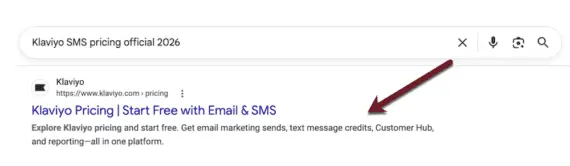
Consider a real-world example from the e-commerce and marketing automation space. When a user queries platforms like Google or ChatGPT for "Klaviyo SMS pricing official 2026," the resulting search snippets must accurately convey pricing tiers, bundled features, and platform capabilities without overwhelming the reader.
Klaviyo’s official SMS pricing page utilizes the following custom meta description:
"Explore Klaviyo pricing and start free. Get email marketing sends, text message credits, Customer Hub, and reporting — all in one platform."
When tested against modern search engines and AI assistants, both Google and ChatGPT pulled this exact meta description to construct their search snippet and citation card. By supplying a clean, comprehensive overview of what the page offers, Klaviyo successfully guided how both algorithmic engines and generative models presented its brand to high-intent searchers.
Official Statements: What Google and Industry Leaders Say
To separate SEO myth from technical reality, it is essential to examine the direct guidance provided by search engine representatives.
Google Search Central Documentation
Google’s official documentation on crafting snippets provides explicit instructions on how meta descriptions are processed. The documentation notes:
"Google primarily uses the content on the page to automatically determine the appropriate snippet. We may also use descriptive information in the meta description element when it describes the page better than other parts of the content."
Furthermore, Google adds a practical recommendation for site owners who manage large inventories:
"…at the very least, create a description for the critical URLs like your home page and popular pages."
This guidance undercuts the notion that meta descriptions should be abandoned entirely. While they are not a hard ranking factor—meaning the presence of a meta description will not magically boost your position in search results—they are a critical contextual tool.
John Mueller’s Perspective
John Mueller, Search Advocate at Google, addressed the ongoing debate in a recent community discussion on Reddit. Mueller clarified the role of meta descriptions in modern site architecture:
"…sometimes it [a meta description] helps you to figure out a clear focus for a page. Overall, I think it’s still worthwhile to do so for individual pages that you care about, but it’s definitely not a requirement."
Mueller’s commentary highlights an internal benefit that many marketers overlook: the act of writing a meta description forces the content creator to crystallize the core focus and audience intent of that specific URL. If a writer cannot summarize a page in 150 characters, it often indicates that the page itself lacks a clear, focused value proposition.
Strategic Best Practices for the Modern SEO Era
Given that search engines may or may not use your hand-written meta description, how should modern SEO professionals approach writing them? The strategy must pivot from universal optimization to high-value prioritization.
1. Prioritize High-Intent and High-Traffic Pages
With thousands or millions of URLs on enterprise sites, writing custom meta descriptions for every single low-level page is an inefficient use of resources. Instead, focus manual copywriting efforts on high-value, high-intent landing pages:
Homepage and core brand hubs
Main product category and subcategory pages
High-converting product detail pages (PDPs)
Core service and pricing pages
Flagship thought-leadership resources and pillar content
2. Tailor for Both Humans and GenAI Crawlers
When drafting descriptions today, write with a dual audience in mind: the human searcher scanning the SERP for a reason to click, and the GenAI crawler looking for crisp context to feed into an LLM response.
Be concise: Keep lengths within the optimal display window (typically 120–155 characters) to prevent truncation.
Highlight unique value: Clearly state what makes the page unique (e.g., free shipping, instant setup, enterprise-grade security).
Include natural context: While keyword stuffing is entirely dead, incorporating natural, top-level semantic terms helps AI crawlers map the page’s topical authority.
3. Programmatic Scaling for Large Sites
For database-driven e-commerce and publisher sites with thousands of dynamic URLs, manual writing is impossible. Here, webmasters should deploy programmatic meta description generation.
Leverage Generative AI tools (such as ChatGPT, Claude, or custom LLM integrations) combined with structured product data (database attributes like product name, category, price range, and key features).
Establish strict template rules to ensure programmatic descriptions remain grammatically correct and within character limits.
Crucial Rule: Always implement human quality-assurance reviews for top-tier traffic pages and high-conversion product lines. Never leave mission-critical landing pages entirely to unmonitored automated scripts.
Future Outlook: The Evolution of Search Summaries
As we look toward the future of search, the boundaries between traditional search engine optimization and generative AI optimization (AIO) will continue to blur. Search engines are no longer just indexing text; they are synthesizing ecosystems of data, intent, and user experience.
In this environment, meta descriptions will not regain their status as rigid, guaranteed layout instructions. Google and conversational AI platforms will always prioritize dynamic extraction when user queries demand hyper-specific, contextual answers. However, meta descriptions will endure as authoritative semantic anchors.
By treating meta descriptions not as a checkbox SEO task, but as a strategic exercise in brand messaging and crawler guidance, digital marketers can maintain influence over how their digital assets are represented across both traditional search results and next-generation AI answers. Ultimately, whether a human reads it on Google or an LLM digests it for a conversational summary, a well-crafted meta description ensures that your page is understood on your terms.