By James Walker
Executive Editor, Data Center Knowledge
August 3, 2026
Executive Overview
As the artificial intelligence (AI) boom continues to push traditional land-based infrastructure to its absolute limits, the data center industry is increasingly looking toward unconventional frontiers. In a major milestone that bridges heavy maritime engineering with hyperscale computing, South Korea’s Samsung Heavy Industries (SHI) has finalized a pivotal engineering agreement with Texas-based infrastructure developer Mousterian Corporation.
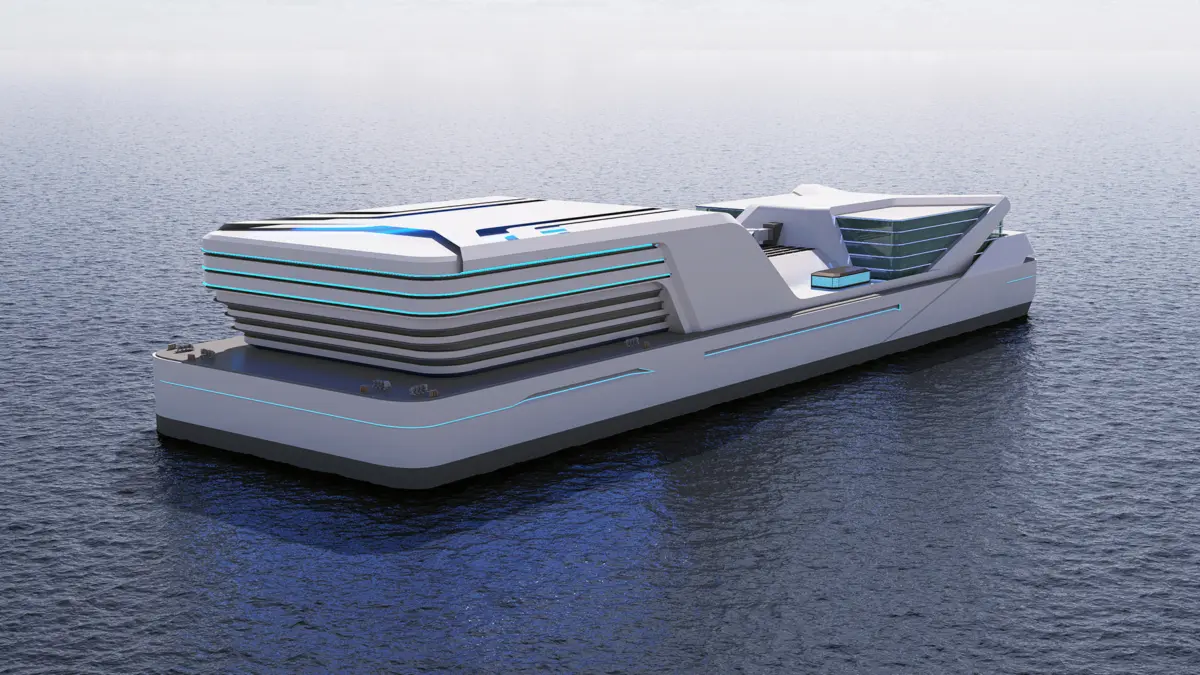
Announced on August 3, 2026, this strategic partnership will see the two companies jointly execute the basic and production engineering for purpose-built, moored floating data center units. Each modular unit is designed to deliver a staggering 50 megawatts (MW) of critical IT capacity. Initial deployments are slated for coastal and inland water sites across Texas and other high-demand US markets.
This high-profile pact transitions floating data centers from abstract concept art to tangible execution. By leveraging shipyard fabrication standards, developers hope to bypass many of the land acquisition bottlenecks, municipal zoning disputes, and crippling power grid queues that currently plague terrestrial AI developments. With commercialization targeted for the second quarter of 2028, the SHI-Mousterian initiative signals a paradigm shift in how the world powers and cools the next generation of high-density computational workloads.
Detailed Chronology: From Maritime Concept to Engineering Reality
The journey toward floating data center commercialization has accelerated rapidly over the past year, driven by the sheer thermodynamic and electrical demands of modern AI hardware.
June 2026: Unveiling at Posidonia
The blueprint for this partnership was first revealed to the global maritime and energy sectors in June 2026 at the prestigious Posidonia exhibition. There, Samsung Heavy Industries introduced its cutting-edge floating data center concept. Designed to operate in environments where real estate, electrical power, and potable water are scarce, the platform caught the eye of infrastructure developers searching for scalable alternatives to traditional brick-and-mortar server farms.
August 3, 2026: The Mousterian Agreement
Barely two months after its public debut, the concept graduated to a formal engineering pact. SHI and Mousterian Corporation inked a joint venture agreement to finalize the comprehensive engineering, procurement, and construction (EPC) guidelines. According to SHI, the collaboration aims to build standardized, factory-manufactured floating modules that can be towed to site and linked directly to existing baseload power supplies—such as coastal natural gas, nuclear, or offshore wind assets—that are otherwise unreachable by traditional grid expansions.
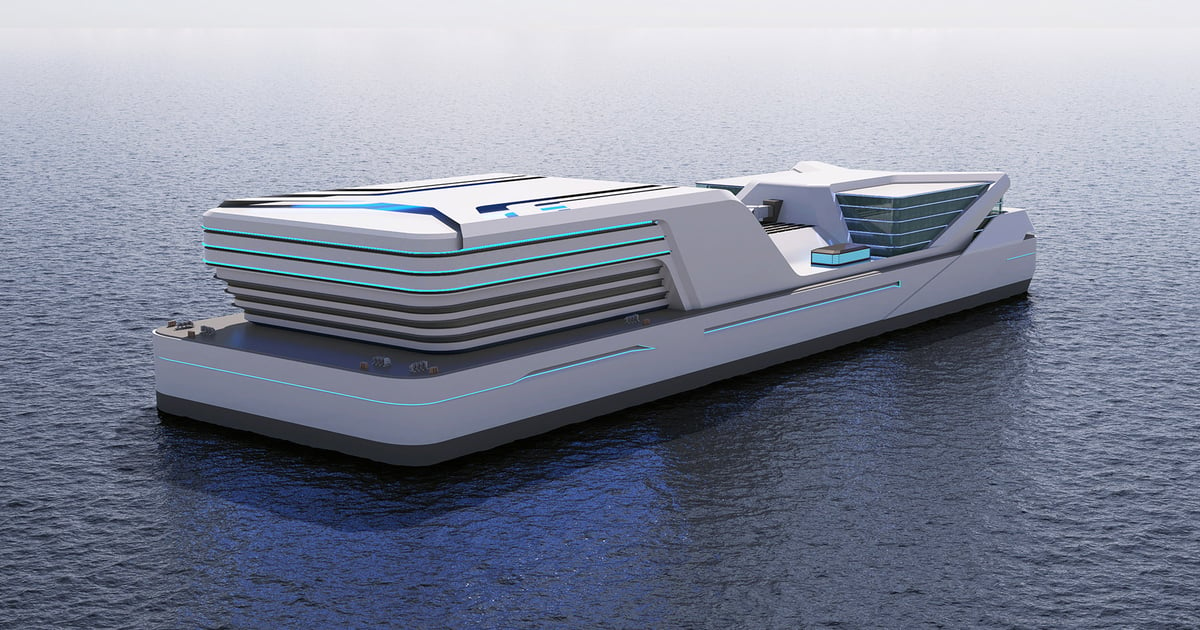
According to regional reports from the Seoul Economic Daily, SHI has set an aggressive commercial launch window, aiming to have the first wave of operational platforms deployed and revenue-generating by Q2 2028.
Supporting Context & Metrics: Overcoming the AI Siting Crisis
The rush toward marine-based data infrastructure is not merely a novelty; it is a calculated response to a multi-pronged crisis facing hyperscalers and enterprise AI developers alike.
The Power and Land Conundrum
Traditional data center builds require massive swathes of land, extensive zoning approvals, and multi-year wait times just to secure grid interconnection agreements. In primary US data center hubs like Northern Virginia, West Texas, and Silicon Valley, local utilities are struggling to generate enough electrons to keep pace with clusters of power-hungry AI accelerators like NVIDIA’s latest enterprise GPUs.
Floating data centers bypass these hurdles by utilizing marine rights-of-way and floating directly above or adjacent to abundant energy sources. By tapping into coastal power generation or offshore renewable arrays, operators can secure multi-megawatt blocks of power far faster than land-based grid connections allow.
Advanced Cooling and Environmental Metrics
Cooling accounts for a massive percentage of a data center’s operational expenditure (OpEx) and environmental footprint. Traditional facilities often consume millions of gallons of potable water daily for evaporative cooling towers.
In contrast, floating data centers utilize non-evaporative, closed-loop cooling systems that draw upon surrounding oceanic, river, or lake water for frictionless heat rejection. This approach yields several distinct operational advantages:
- Zero Potable Water Consumption: By utilizing surrounding bodies of water for heat exchange without direct consumption, floating facilities avoid putting a strain on municipal water reserves.
- Liquid-Cooling Readiness: SHI’s structural design natively accommodates high-density liquid-to-liquid cooling loops, which are mandatory for dense racks of AI servers.
- Acoustic Mitigation: Water acts as a natural acoustic buffer. SHI’s floating design is engineered to operate at significantly lower ambient noise levels compared to land-based facilities packed with roaring industrial air-handlers.
Official Statements and Industry Leadership
The partnership brings together heavyweights from distinct industrial sectors—combining decades of offshore shipbuilding expertise with cutting-edge digital infrastructure development.
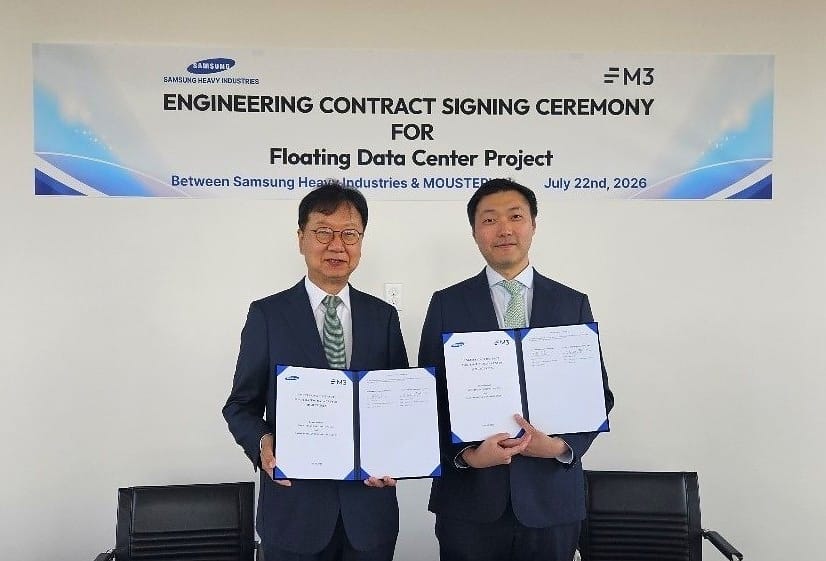
"Signing this engineering contract transitions our partnership from intent to execution and gives us a clear path to scaling factory-built critical IT capacity for AI-class facilities. Building to shipyard standards allows fabrication to proceed in parallel with site work while enabling deployment alongside existing baseload power that may be inaccessible to conventional land-based developments."
— Min Suh, CEO of Mousterian Corporation
Echoing this sentiment, Samsung’s executive leadership emphasized that the company’s extensive maritime heritage provides an unassailable competitive advantage in marine architecture, structural integrity, and oceanic resilience.
"Floating data centers build directly upon our decades of offshore engineering and shipbuilding experience. We are proud to partner with Mousterian to bring industrial-grade manufacturing rigor to the digital infrastructure sector."
— Sung-an Choi, Vice Chairman and CEO of Samsung Heavy Industries
The broader coalition backing SHI’s ecosystem includes international heavyweights such as Greece-based Capital Clean Energy Carriers and maritime classification society Lloyd’s Register, ensuring that the floating pods meet strict international maritime safety, environmental, and structural regulations.
A Global Movement: The Rise of Marine Infrastructure
Samsung is far from alone in betting on the water as the next frontier for digital storage and compute. Across the globe, shipbuilders, shipping giants, and municipal governments are racing to prove the viability of aquatic and submerged data centers.
- Mitsui O.S.K. Lines (MOL) & Kinetics (2025): Japanese shipping giant MOL partnered with renewable energy firm Kinetics to develop what was billed as the world’s first integrated floating data center platform.
- MOL & Hitachi (April 2026): Expanding its footprint in the sector, MOL announced a separate high-profile partnership with Hitachi to design floating data centers utilizing converted commercial vessels, with commercial deployments targeted for 2027.
- Shanghai’s Underwater Data Center (Late 2025): In China, authorities within Shanghai’s Lin-gang Special Area announced the completion of the world’s first wind-powered underwater data center. Backed by a staggering 1.6 billion yuan ($226 million) investment, the 24 MW facility demonstrated the appetite for marine-based computing architectures in Asia.
Future Outlook
As the industry looks toward 2028, the success of the SHI-Mousterian joint venture will likely serve as a litmus test for the entire marine data center sector. If factory-built, 50MW modular units can be successfully towed, moored, and plugged into coastal energy grids in Texas and beyond without catastrophic structural or environmental hurdles, a new asset class will be born.
While regulatory hurdles, maritime insurance complexities, and salt-water corrosion maintenance remain legitimate challenges, the sheer pressure of the AI revolution leaves developers with little choice but to innovate. By taking data centers off the land and onto the water, companies like Samsung Heavy Industries and Mousterian Corporation are charting a bold course where the future of computing floats on the tide.