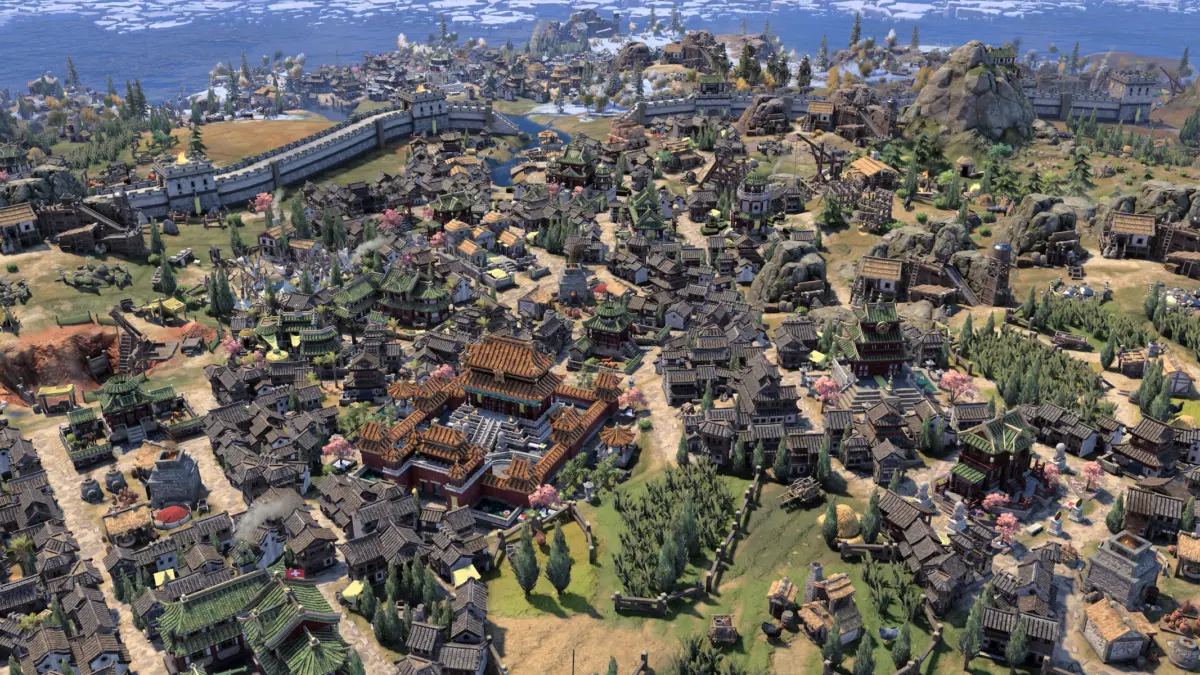
For over three decades, the Civilization franchise has stood as an indomitable titan in the strategy video game genre, shaping the way millions of players interact with digital history, geopolitics, and turn-based mechanics. As the series approaches its monumental 35th anniversary this September, its enduring cultural footprint is perhaps best illustrated not by corporate metrics, but by a domestic snapshot: legendary game developer Sid Meier’s four-year-old grandson singing “Baba Yetu,” the iconic choral theme from Civilization IV, day and night.
Despite having never played the turn-based strategy game himself, the preschooler’s obsession underscores an unexpected reality for Firaxis Games—an unprecedented intergenerational connection. As Meier notes, the franchise has transcended its origins as a niche personal computer title to become a multi-generational heirloom. Parents who spent sleepless nights during the 1990s expanding their digital empires are now introducing their own children to the series, creating a continuous, self-sustaining ecosystem of players.
This milestone arrives alongside the 30th anniversary of Firaxis Games, the studio Meier founded, which continues to anchor its success on foundational intellectual properties like Civilization and XCOM. Under the leadership of Studio Head Heather Hazen, Firaxis navigates the rare paradox of competing against its own legacy, balancing the release of modern entries like Civilization 7 with a dedicated player base still deeply entrenched in past installments like Civ V and Civ VI. Through meticulous community feedback loops, major updates like the recent “Test of Time” overhaul, and a strict developmental philosophy, Firaxis remains a masterclass in studio longevity within an otherwise volatile gaming industry.
Detailed Chronology: From SimCity Prototype to Global Phenomenon
The genesis of Civilization reads like a piece of gaming folklore, marked by rapid prototyping, accidental discoveries, and last-minute creative pivots. When Sid Meier began conceptualizing the project alongside design partner Bruce Shelley in 1990—fresh off the success of Railroad Tycoon—the game was envisioned as an entirely different beast.
The Accidental Turn-Based Pioneer
Initially, the original prototype was not turn-based at all. Heavily inspired by Maxis’s SimCity, the early design was a hands-off simulation where players would zone geographical areas, designating regions for agriculture or industrial production, and simply watch the simulation unfold.
However, about halfway through development, Meier and Shelley realized that passive observation lacked the gripping intellectual engagement they desired. The team made the pivotal decision to shift the game to a turn-based model, forcing players to actively move units, weigh tactical options, and carefully consider long-chain consequences. This structural shift transformed the experience, instantly engaging the player’s brain with the classic strategic query: "What should I do next, and what will happen if I do?"
The 1991 Launch and the Geopolitical Awakening
When Civilization finally launched in 1991, it was developed by a team of just three people over the course of a year. The turn-based mechanics resonated immediately, but the initial release featured a limited lineup of just 14 playable civilizations—including the Americans, Aztecs, and Babylonians—leaving international audiences wanting more.
Meier recalls receiving mail from fans worldwide, including Canadians asking why their nation was absent from the historical rubric. At the time, the team had no grand ambitions of defining world history; they simply wanted to build an entertaining video game. Over time, however, the developers realized the profound educational impact the game wielded. Players were naturally absorbing historical information about countries, leaders, and global eras.
This realization forced a cultural reckoning within Firaxis. As the studio grew and acquired the necessary resources, subsequent sequels expanded their rosters, introducing greater diversity, inclusivity, and non-military paths to victory. Notably, Civilization 1 was ahead of its time in incorporating global warming as a mechanical consequence of industrialization—a feature Meier remains visibly proud of today.
The Evolution of Sequels and the "Moddable" Revolution
Following the completion of the first game, Meier believed he had exhausted every possible idea in the strategy genre, pivoting briefly to music-generating software like 1994’s C.P.U. Bach. However, incoming designer Brian Reynolds championed a new vision for Civilization II, moving the engine to the Windows operating system and introducing a feature Meier initially resisted: moddability.
While Meier initially scoffed at the idea—believing his core game was already perfect—Reynolds proved prophetic. Mod support unlocked a new dimension of player-driven longevity, cementing the franchise’s trajectory through successive iterations characterized by incremental, calculated innovations, such as the monumental transition from grid squares to hexagonal tiles in Civilization V.
Supporting Context & Metrics: The Firaxis Business Ecosystem
Operating as a mid-sized studio for three decades is an extraordinary feat in the modern video game industry, where mass layoffs, studio closures, and failed live-service gambles are commonplace. Firaxis has maintained its stability by relying on deep-rooted intellectual properties and an unyielding commitment to strategy gaming.

The "Civ Ecosystem" and Internal Competition
According to Firaxis President Heather Hazen, who has spent nearly six years leading the studio, Firaxis occupies a unique market position where its primary competitor is not rival publishers, but its own past catalog.
"The benefit that we have in the Civilization ecosystem is that ‘Civ 6’ is the biggest competitor to ‘Civ 7,’" Hazen explains. "And it’s funny because you’re like, ‘Wow, is that a benefit? Is that a tough situation to be in?’ And the truth is, we want our fans to be playing Civilization, regardless of which installment it is."
This multi-generational ecosystem creates unique logistical challenges. Players often split into distinct camps—some swearing by the mechanics of Civ V, others devoted to Civ VI, and newcomers adopting Civ 7. Hazen notes that the studio is actively exploring ways to smooth the transitional friction between these titles, accommodating players whether they have 30 minutes or 30 hours to spare.
The "Test of Time" and Public Playtesting
The launch of Civilization 7 brought fresh challenges, particularly regarding its controversial new "Ages" system, which drew mixed reactions from the community. Rather than doubling down or dismissing the criticism, Firaxis instituted a rigorous community feedback loop.
The studio conducted three rounds of public playtesting with dedicated fans before rolling out Test of Time, a major system overhaul designed to restore the sense of narrative continuity and player agency characteristic of the franchise. This collaborative development cycle highlights how Firaxis leverages its community not just as consumers, but as active co-designers of the gameplay experience.
Official Statements and Industry Insights
The philosophy driving Firaxis is anchored in a deep sense of stewardship. Sid Meier often speaks of the studio’s legacy with a mixture of humility and profound responsibility.
"We’re kind of established in a way that many companies are not, and that’s a responsibility," Meier reflects. "But that’s a wonderful place to be where people will say, yeah, I’ll take a look at that next game because I’ve enjoyed some of your games in the past. So what’s a little bit unique about Firaxis is the longevity of the company. The 30 years that we talk about — some people have been playing our games for 30 years, and that’s a real gift that we get to take advantage of."
Heather Hazen echoes this sentiment, emphasizing how the studio’s 30-year bedrock provides a stable springboard for future endeavors. In an era where technological shifts and market trends dictate corporate strategy, Firaxis has doubled down on the core tenets that made its franchises household names.
Future Outlook: The Blueprint for Civilization VIII
As Firaxis looks toward the horizon, the roadmap for the franchise is governed by Meier’s time-tested design principles. The development of any future sequel—including the conceptual framework for a hypothetical Civilization 8—follows the strict "one-third rule."
According to this internal formula, every new iteration of the franchise must be constructed out of three distinct pillars:
- One-Third Classic Mechanics: The foundational systems that define the core Civ DNA, ensuring players immediately feel at home.
- One-Third Improved Iterations: Refined, optimized, and modernized versions of features introduced in previous titles.
- One-Third Brand New Innovations: Fresh ideas, mechanics, and experimental concepts that could not fit into the preceding game.
Once the "new ideas" bucket overflows, the studio recognizes that it is time to formalize the next major sequel. This disciplined cadence—typically spanning five to seven years between flagship releases—ensures that every numbered entry justifies its existence through meaningful mechanical evolution rather than cynical cash-grabs.
Whether it is navigating the delicate balance of historical representation, refining complex political systems, or watching a new generation discover the hauntingly beautiful choral refrains of "Baba Yetu," Firaxis Games remains uniquely positioned at the pinnacle of strategic game design. As long as humanity retains its innate urge to build, explore, and conquer—even if only from the comfort of a desk chair—Sid Meier’s grand vision will continue to shape the digital empires of tomorrow.