The breathless acceleration of artificial intelligence has transcended software algorithms, user interfaces, and enterprise applications. Today, the most profound transformation is taking place beneath the surface, quietly reshaping the physical, electrical, and geographical infrastructure of the modern world. As hyperscalers and tech enterprises rush to train increasingly sophisticated large language models and manage relentless inference workloads, they are running headfirst into a hard physical reality: the traditional data center is obsolete.
Driven by exponential power demands, traditional approaches to facility site selection, structural floor planning, and grid interconnection can no longer support the staggering densities required by modern AI architecture. Developers, architects, and engineers are being forced to take bold, unprecedented steps toward the future. They are tossing out decades-old industry rules of thumb, pioneering off-grid power generation, rethinking mechanical and electrical cooling layouts, and scouting unconventional geographic locations.
According to recent industry forecasts, power demand from AI data centers in the United States could surge more than thirtyfold by 2035, reaching an astronomical 123 gigawatts (GW). Hyperscale giants such as Amazon, Meta, Microsoft, and Google are currently planning and constructing facilities designed to double—and in some cases quadruple—the capacities of their largest legacy builds. Yet, this high-stakes race faces a formidable bottleneck: grid stress and capacity limitations.
To circumvent these obstacles, the data center industry is undergoing a radical paradigm shift. This article examines the multi-layered strategies defining the next generation of mission-critical infrastructure, exploring how cutting-edge energy solutions, AI-optimized physical footprints, and visionary site-selection methodologies are rewriting the blueprint for the digital age.
Detailed Chronology: The Evolution of Mission-Critical Infrastructure
To understand the severity of the current pivot, one must look at how rapidly the foundational parameters of data center design have shifted over the past two decades.
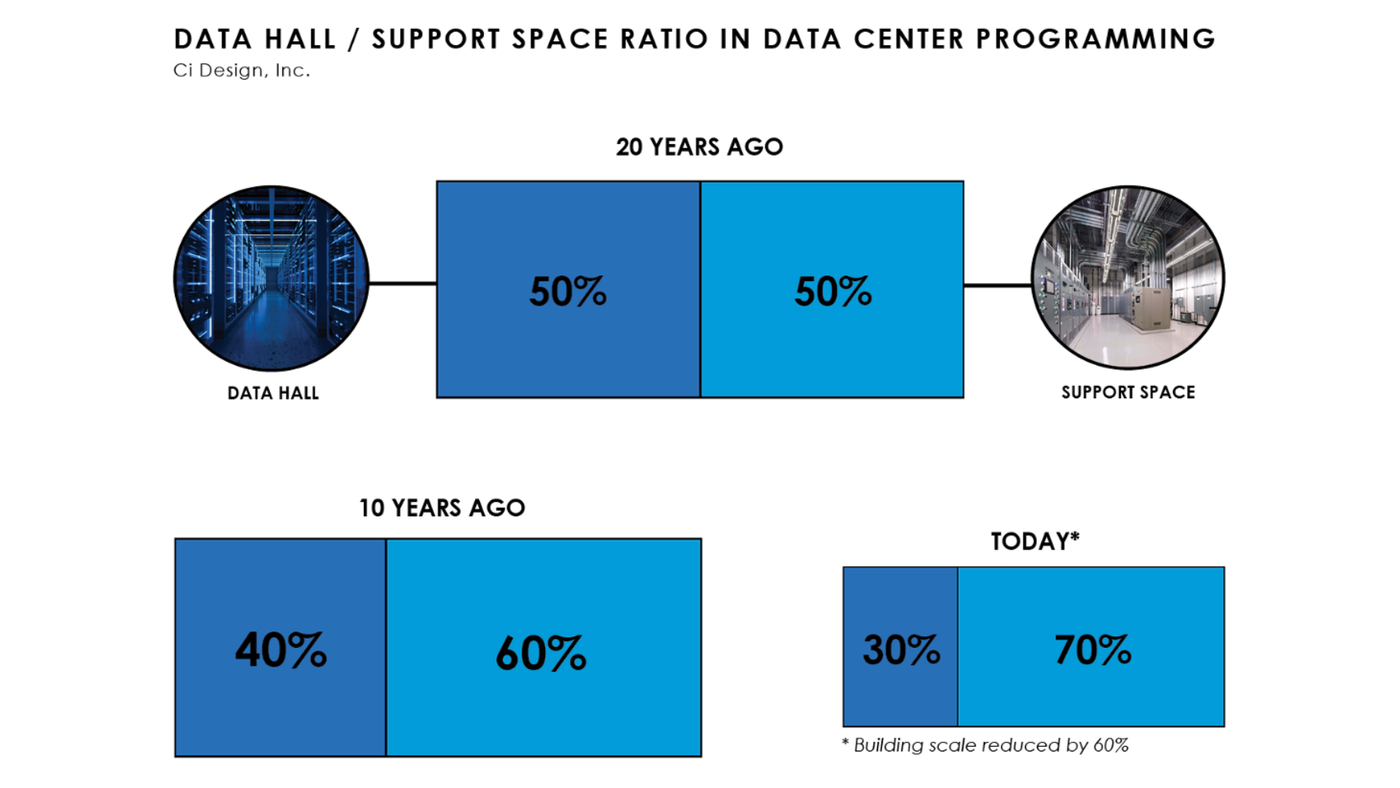
The Legacy Era: A 50/50 Balance
Twenty years ago, data center construction followed a predictable, standardized formula. The architectural layout of a typical facility relied on a neat equilibrium between data halls housing the server racks and the ancillary support space required to keep them running. The standard ratio of data halls to support space hovered comfortably at 50/50. Electrical and mechanical systems were substantial, but they fit neatly within predictable spatial boundaries. Power densities per rack were measured in modest increments—typically 5 to 10 kilowatts (kW)—and traditional computer room air conditioner (CRAC) units deployed on raised floors were more than adequate to manage the heat load.
The Cloud and Big Data Transition (2010–2020)
As cloud computing matured and big data analytics gained prominence, rack densities began a steady, manageable climb into the 25–30 kW range. Facilities grew larger, and mechanical footprints expanded, but the fundamental relationship between building volume and site footprint remained largely proportional. Utility providers could generally accommodate these new loads through standard grid upgrades, substation additions, and conventional power purchase agreements.
The AI Inflection Point (2020–Present)
The arrival of generative AI and deep learning shattered these historical baselines. Within the span of just a few years, rack densities skyrocketed from 30 kW to an unprecedented 600 kW per rack. This staggering concentration of computing power transformed server enclosures into thermal infernos that traditional air-cooling methodologies could no longer touch.
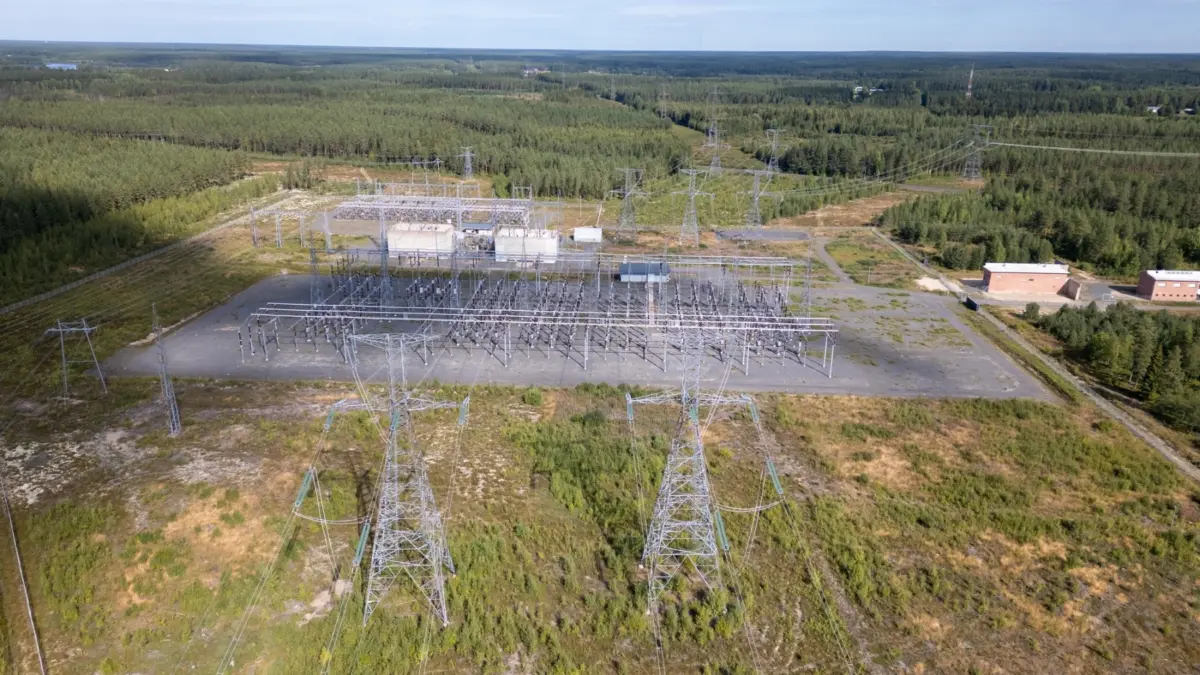
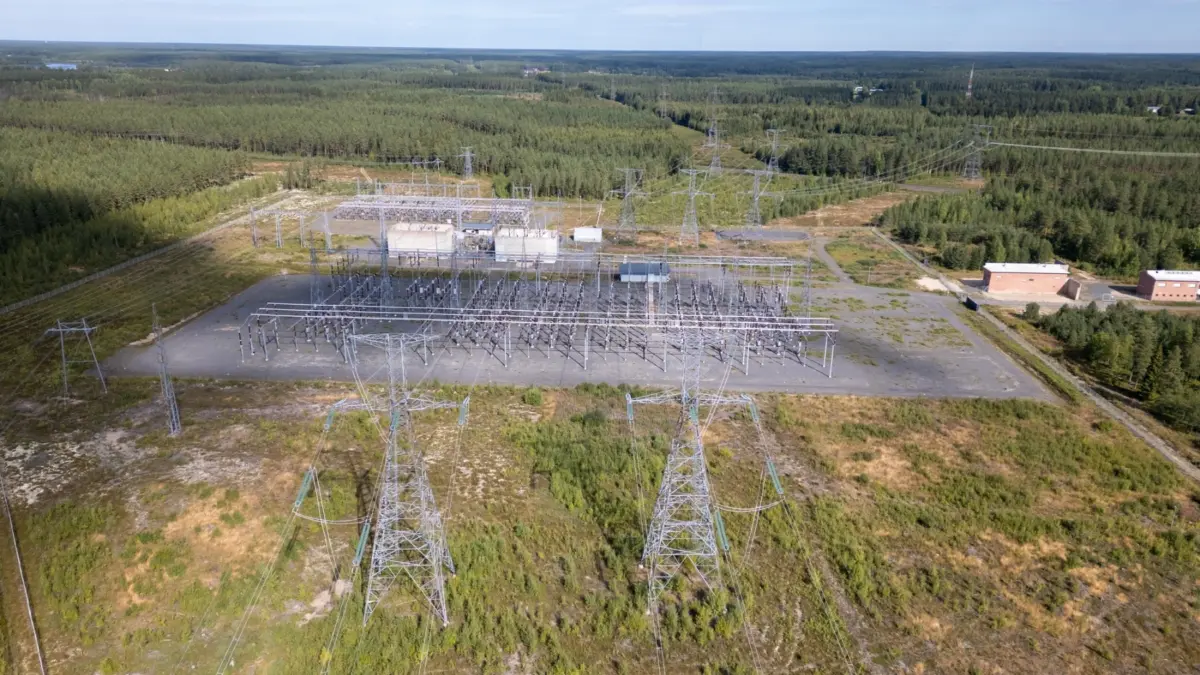
Simultaneously, the physical architecture of the data center flipped on its head. While the actual building footprints dedicated to server floor space began to shrink, the overall site area remained the same or expanded drastically. Why? Because the massive auxiliary infrastructure required to power and cool these high-density beasts—ranging from advanced liquid-cooling distribution units and massive chillers to on-site substations and alternative energy generation plants—now demands enormous amounts of real estate outside the core data hall.
The traditional rules of thumb that architects and engineers relied on for decades have effectively been rendered moot. Today’s data center is no longer just a warehouse for servers; it is an industrial-grade power plant and thermal management facility wrapped into one.
Supporting Context & Metrics: The Numbers Driving the Crisis
The friction between the digital ambitions of AI developers and the physical capacities of global infrastructure is illuminated by hard data and striking financial commitments.
Power Demands and Grid Constraints
The 2035 Horizon: Deloitte’s 2025 AI Infrastructure Survey projects that power demand from U.S. AI data centers could skyrocket over thirtyfold by 2035, scaling up to an astonishing 123 GW.
Hyperscale Expansion: Facilities currently on the drawing boards for major tech leaders are slated to deliver double or quadruple the capacity of previous-generation builds.
The Nuclear Bet: Recognizing that local electrical grids cannot sustain this surge without severe instability or increased reliance on fossil fuels, tech companies have aggressively pursued alternative energy sources. According to Goldman Sachs, tech firms have signed new contracts securing more than 10 GW of potential new nuclear power capacity over the past year alone.
Thermal and Spatial Realities
Density Shocks: Rack densities have leaped from historic norms of 25–30 kW to a staggering 600 kW.
Rethinking Rooftops: The concentration of heat generated by high-density AI clusters means that placing enough cooling equipment on building roofs to prevent thermal runaway has become physically and structurally unfeasible. Consequently, mechanical plants are migrating to the ground level, fundamentally altering site layout dynamics.
Official Statements and Industry Insights
The complexity of this infrastructure revolution has prompted leading voices in engineering, architecture, and vertical development to sound the alarm and share strategic insights.
Breaking Free from the Grid
Chris Hastings, Power Group Managing Principal at Vanderweil Engineers, emphasizes the necessity of moving beyond traditional utility dependencies.
"By planning beyond the boundaries of traditional utility service, facilities can meet customers’ needs without being bottlenecked by local grid capacity or reliability issues—a critical differentiator as AI adoption accelerates," Hastings notes.
Solving the Rubik’s Cube of Design
Dutch Wickes, Principal and Global Mission Critical Practice Leader at Ci Design, Inc., highlights the unprecedented architectural hurdles introduced by AI workloads.
"The challenges of site and building planning are tied to the mechanical and electrical system design now more than ever," Wickes explains. "All the variables make a Rubik’s Cube look easy! Especially when you throw in on-site power generation, whether it is bridging power or permanent power. The typical rules of thumb are moot."
Navigating Strategic Site Selection
Mason McPike, Executive Director of Vertical Development & Delivery at Provident Data Centers, points out that geography is no longer just about network latency and proximity to end-users, but about energy access and stakeholder alignment.
"Utilities significantly impact data center site selection decisions. We’re seeing data centers emerge in more remote locations that have access to less strained grids, but the lack of adequate power interconnection and infrastructure can pose issues," McPike observes. "Finding a successful data center site starts with building strong relationships between the end user, government entities, utility companies, and the local community."
Future Outlook: The Next Generation of Mission-Critical Infrastructure
As the tech industry charges headlong into the future, the successful deployment of AI infrastructure will hinge on three core pillars: integrated system design, alternative power integration, and collaborative partnerships.
1. Integrated System Design and Co-Location
Future data centers will require an unprecedented level of synergy between civil, structural, mechanical, and electrical engineering. By developing conceptual master plans alongside clients from day one, developers can ensure that on-site power generation and distribution systems harmonize seamlessly with facility architecture. This integrated approach not only maximizes operational efficiency but also provides the modular scalability required to upgrade core systems without halting operations.
2. Embracing Behind-the-Meter and Clean Energy Solutions
To mitigate carbon footprints and avoid crippling grid bottlenecks, tomorrow’s data centers will increasingly operate "behind the meter." By co-locating load demands directly with clean energy sources—such as advanced fuel cells, large-scale battery storage arrays, renewable installations, and Small Modular Reactors (SMRs)—facilities can achieve 24/7 reliability while drastically reducing water consumption for cooling and bypassing fossil-fuel emissions entirely.
3. Early Collaboration Across the Ecosystem
Ultimately, navigating this industrial renaissance requires abandoning siloed workflows. Early collaboration among end-users, developers, architects, and engineers will position projects at the vanguard of the market.
As Mason McPike aptly summarizes: "The changing market demand allows us to have an adaptive perspective in how we approach data center development. Everything has to work in tandem, from finding the right site to sourcing power supply and creating an efficient design. We have to rapidly evolve as the online world continues to grow in response to new technologies."
By confronting energy constraints head-on, engineering for ultra-high densities, and selecting visionary sites that support off-grid independence, the data center industry is not merely keeping pace with artificial intelligence—it is building the physical foundation upon which the future of human technological achievement will rest.