Executive Overview
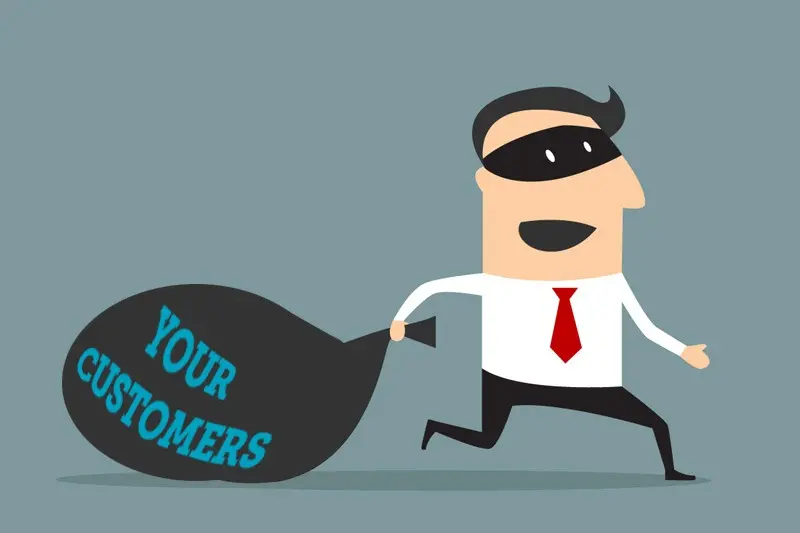
In the high-stakes, hyper-competitive arena of modern Software-as-a-Service (SaaS) and B2B technology enterprises, complacency is the ultimate strategic vulnerability. For emerging startups and established industry titans alike, the prevailing wisdom regarding market defense has undergone a radical paradigm shift. According to recent expert insights highlighted in the SaaStr community dialogues, executive leadership and go-to-market (GTM) teams must adopt an unyielding baseline assumption: your competitors are actively cold-calling your existing customers.
More critically, they should be.
Far from being an unethical or desperate outreach tactic, targeting an active competitor’s customer base represents a foundational pillar of aggressive, modern enterprise growth strategy. While the immediate return on investment (ROI) for cold-outreach campaigns targeting satisfied users may appear statistically modest at first glance, the secondary and tertiary effects—ranging from unearthing latent customer dissatisfaction to systematically intercepting accounts during renewal cycles—are profound.
This deep-dive investigation explores the underlying mechanics of modern competitor poaching, examines why passive customer retention strategies fail, analyzes the operational economics of dedicated "Steal Teams," and outlines actionable playbooks for safeguarding your revenue engine in an ecosystem where loyalty is constantly under siege.
Detailed Chronology: The Evolution of Customer Acquisition and Competitive Poaching
To understand the current obsession with competitor outreach, one must examine how outbound sales development has matured over the past two decades.
Phase 1: The Wild West of Mass Cold Calling (Early 2000s – 2010s)
In the early days of cloud computing and SaaS, outbound sales development was defined by sheer volume. Sales Development Representatives (SDRs) relied on scraped lists, generic email blasts, and unfiltered cold calls. Competitor targeting during this era was largely accidental or opportunistic. Companies focused the vast majority of their capital and human resources on greenfield accounts—prospects who had never used any software solution to solve their operational pain points.
Phase 2: The Rise of Precision Account-Based Marketing (2015 – 2020)
As the software market saturated, customer acquisition costs (CAC) skyrocketed. Greenfields became harder to find and vastly more expensive to close. Sales leaders shifted toward Account-Based Marketing (ABM) and hyper-targeted outbound frameworks. During this period, sales operations teams began utilizing technographic data providers (such as BuiltWith, ZoomInfo, and Datanyze) to identify precisely which companies were utilizing competitor technologies. Cold calling ceased to be a broad net and became a high-precision spear.
Phase 3: The Modern "Steal Team" Era (Present Day)
Today, mature SaaS organizations do not leave competitor displacement to chance. High-growth enterprises routinely build specialized outbound units—colloquially known as "Steal Teams"—whose sole operational mandate is to systematically target, engage, and convert accounts currently locked into contracts with rival vendors. These teams are heavily incentivized, equipped with deep competitive intelligence playbooks, and trained to strike precisely when a competitor shows signs of customer service fatigue, product stagnation, or unexpected price hikes.
Supporting Context & Metrics: The Economics of Counter-Targeting
Why do aggressive sales organizations spend time and capital chasing customers who are already happily integrated into a competitor’s ecosystem? The answer lies in the evolving economics of lifetime value (LTV), acquisition efficiency, and account maturity.
1. The Yield Reality vs. Long-Term Value
It is a well-documented truth in outbound sales that cold-calling a happy customer yields a very low immediate conversion rate. If a buyer is completely satisfied with their current vendor’s uptime, customer support, and feature set, an outbound call from a rival sales rep will likely be met with polite rejection or indifference.
However, enterprise software is rarely static. Over a standard 12-to-36-month contract lifecycle, friction points inevitably emerge:
- Price Creep: Annual cost increases that outpace perceived value.
- Support Degradation: Slower ticket resolution times as the competing vendor scales past their support capacity.
- Feature Gaps: Stagnation in product development, leaving the customer longing for modern capabilities your platform provides.
When a competitor maintains a consistent, respectful, and consultative cold-outreach cadence over months or years, they position themselves as the immediate alternative the exact moment one of these friction points causes customer frustration.
2. Recycling Lost Deals: The Multi-Year Play
One of the most catastrophic strategic missteps startups make is abandoning a prospect the moment a deal is lost to a competitor.
When a B2B sales cycle concludes with a loss, the startup already possesses invaluable intelligence: organizational charts, budget constraints, technical requirements, and direct contact details. Yet, the standard operating procedure for many early-stage companies is to archive the CRM record and move on.
Market data indicates that winning back a lost deal can take anywhere from 24 to 36 months. While this timeline sounds daunting, the probability of securing a meeting spikes dramatically during the subsequent renewal window. If a customer was strong-armed into a three-year contract with your competitor and experienced underwhelming onboarding or unfulfilled feature promises, they will be acutely receptive to a check-in call 30 months down the road.
Official Industry Perspectives and Expert Insights
Industry leaders and seasoned investors emphasize that acknowledging this competitive reality is the first step toward building a resilient defensive moat.
Mark Suster, prominent venture capitalist and managing partner at Upfront Ventures, frequently notes that founders routinely underestimate the aggression of market incumbents and hungry upstarts alike. "If you aren’t aggressively trying to figure out how to take market share from your rivals, rest assured they are mapping out your customer base right now," Suster observes.
Similarly, SaaS operational experts emphasize that customer retention cannot be passive. A net revenue retention (NRR) rate exceeding 110% is not achieved merely by delivering a good product; it requires active, preemptive engagement.
According to executive go-to-market advisors:
"Assume your competitor is cold-calling your existing accounts. They should be. Your job is to make those calls entirely ineffective by delivering an indispensable product experience coupled with white-glove customer success that makes switching unthinkable."
Future Outlook: How Founders and GTM Leaders Must Adapt
As artificial intelligence accelerates outbound personalization and lead identification, the frequency and precision of competitor cold-calling will only intensify. AI-driven tools can now monitor job changes, review site sentiment, and public tech stack updates in real-time, alerting rival sales reps the microsecond a customer account shows vulnerability.
To survive and thrive in this hyper-aggressive environment, SaaS leaders must implement a comprehensive defensive and offensive playbook:
1. Shift from Customer Service to Customer Obsession
The ultimate defense against competitor cold-calling is an unshakeable bond between your organization and your customers. Customer success teams must transform from reactive ticket-resolvers into proactive business advisors who continuously prove ROI. If a customer can explicitly articulate how your software directly drives their revenue or cuts their costs, a cold call from a competitor becomes white noise.
2. Institutionalize "Closed-Lost" Nurture Campaigns
Revamp your CRM workflows to automate long-term nurture sequences for every closed-lost opportunity. Design specialized email and content campaigns tailored specifically to past evaluators, offering them updates on major product releases, customer success stories, and industry benchmarks. Treat every lost deal not as a permanent rejection, but as a delayed pipeline opportunity.
3. Deploy Defensive Listening Systems
Monitor review platforms like G2, Capterra, and Trustradius vigilantly—not just for your own product, but for your competitors’. Conversely, analyze your own customer churn and contraction data relentlessly. If multiple customers cite the same missing feature or service bottleneck, fast-track those fixes before a rival’s "Steal Team" weaponizes those gaps against you.
4. Consider Counter-Offensive Operations
For companies that have achieved sufficient scale and resource abundance, building a structured competitive displacement motion is not merely an option—it is a logical engine for growth. Identifying top-tier competitor accounts, understanding their renewal milestones, and executing targeted, value-driven outbound campaigns allows you to play offense while fiercely defending your home turf.
Conclusion
The modern B2B software landscape operates on Darwinian principles. Competitors are not waiting for permission to knock on your customers’ doors, nor should they. By shedding naive assumptions of brand loyalty, acknowledging the inevitability of competitor outreach, and systematically fortifying customer relationships while nurturing lost deals, founders can turn potential vulnerabilities into enduring competitive advantages.
In the end, the market rewards those who do not just build great products, but who fiercely, intelligently, and relentlessly defend the territory they have conquered.