








Published: October 7, 2026
Author: Tech & Robotics Editorial Desk
Executive Overview
The race to build autonomous, intelligent humanoid robots has hit a critical bottleneck: the scarcity of high-fidelity, real-world physical data. While artificial intelligence models designed for text and code have gorged themselves on the vast expanses of the internet, machines designed to operate in the physical world—walking, grasping, repairing, and manufacturing—face a starkly different reality. They cannot learn to navigate human environments solely by reading web pages. They need to learn how humans move, interact, and manipulate objects.
Enter Mecka AI, a burgeoning force in the physical AI ecosystem. Founded in 2024, the startup has officially announced the closure of a $60 million Series B funding round. Led by legendary venture capital firm Sequoia, the round also features heavy-hitting participation from industry titans including Nvidia and Microsoft’s venture arm, M12. This fresh capital injection values the two-year-old startup at an impressive $500 million, confirming earlier reports that Mecka was rapidly scaling its market position amid an unprecedented gold rush for robotics training data.
Mecka AI is positioning itself to become the foundational data engine for the robotics industry. Much like Scale AI, Mercor, and Surge revolutionized large language models (LLMs) by turning human-generated text, code, and annotations into the fuel that powers generative AI, Mecka is building the infrastructure for physical intelligence. By compensating everyday people to record themselves performing routine tasks—such as brewing morning coffee, operating machinery, or repairing automobiles—while outfitted with advanced body sensors and smartphones, Mecka captures the nuanced physics of human motion.
As venture capitalists pour billions into humanoid hardware companies, the market is waking up to a simple truth: the hardware is only as good as the software, and the software is only as good as the training data. With Sequoia, Nvidia, and Microsoft now backing its vision, Mecka AI is poised to dictate the speed at which physical AI moves from science fiction into commercial reality.
Detailed Chronology: From Stealth to a $500 Million Valuation
The trajectory of Mecka AI reads like a masterclass in modern venture velocity. In an era where deep tech startups often spend years in academic research labs before courting commercial investors, Mecka bypassed traditional timelines by capitalizing on the immediate, desperate needs of the robotics industry.
2024: The Genesis of a Data Paradigm
Mecka AI was founded in 2024 by a team of machine learning researchers and robotics engineers who recognized a glaring oversight in the broader AI boom. While billions of dollars were being channeled into foundational models like GPT-4 and Claude, the physical robotics sector was starving for high-quality training sets.
Roboticists attempting to train bipedal and quadrupedal machines quickly discovered that simulation environments—while useful for initial reinforcement learning—fall drastically short when transferred to the messy, unpredictable real world. Teaching a robotic arm to pick up an egg or a humanoid to navigate a cluttered room requires capturing the micro-adjustments, grip pressures, and spatial awareness inherent in human movement.
Mecka’s founders realized that solving this meant building a distributed human data-collection network. Instead of relying on expensive, synthetic data generation, they built a platform designed to capture and annotate real human labor at scale.
Mid-2026: Whispers of the Mega-Round
By the middle of 2026, the robotics market had reached a fever pitch. Humanoid robots, once viewed as perpetual laboratory novelties, were being deployed for pilot programs in automotive factories, logistics warehouses, and retail environments. However, these deployments underscored the severe limitations of existing training methodologies.
In September 2026, industry reports surfaced indicating that Mecka AI was quietly finalizing a massive funding deal. Insiders revealed that Sequoia was stepping in to lead a round that would value the startup at approximately $500 million—an astronomical valuation for a company that had existed for barely two years. The market watched closely, recognizing that the investment signaled a structural shift in how venture capital views the robotics value chain: away from speculative hardware manufacturers and toward the data infrastructure providers sitting beneath them.
October 2026: The Formal Series B Announcement
On October 7, 2026, Mecka AI formally pulled back the curtain on its $60 million Series B raise. The inclusion of Nvidia and Microsoft’s M12 alongside Sequoia transformed the round from a standard venture financing into a strategic alignment of the world’s most influential AI and computing giants. With capital secured and a half-billion-dollar valuation locked in, Mecka transitioned instantly from an ambitious newcomer to an essential pillar of the global robotics economy.
Supporting Context & Metrics: The Robotics Data Gold Rush
To understand why Mecka AI commands a $500 million valuation after just two years of operation, one must examine the broader economic landscape of physical AI and the escalating valuation metrics governing the sector.
The Scale AI Playbook for the Physical World
In the early days of the generative AI boom, companies like Scale AI realized that raw computational power and transformer architectures were useless without pristine, human-annotated data. Scale AI built an army of human workers to label images, review text outputs, and fine-tune models through Reinforcement Learning from Human Feedback (RLHF).

Mecka AI is executing this exact playbook, but translated into three dimensions. The company equips everyday gig-workers and participants with body-worn inertial sensors, specialized spatial tracking devices, and standard smartphones. These individuals then record themselves executing everyday manual tasks.
+-----------------------------------------------------------------+
                 THE PHYSICAL AI DATA PIPELINE
+-----------------------------------------------------------------+
|                                                                 |
|  [ Human Workers ]                                              |
|  - Outfitted with body sensors, spatial trackers, smartphones   |
|  - Perform everyday tasks (making coffee, repairs, assembly)    |
|                                                                 |
|                              v                                  |
|                                                                 |
|  [ Mecka AI Platform ]                                          |
|  - Ingests multi-modal motion, depth, and kinematic data        |
|  - Cleans, annotates, and structures physical datasets          |
|                                                                 |
|                              v                                  |
|                                                                 |
|  [ Robotics & Humanoid Developers ]                             |
|  - Nvidia, Microsoft ecosystem partners, hardware builders      |
|  - Train foundational physical AI policies                      |
|                                                                 |
+-----------------------------------------------------------------+
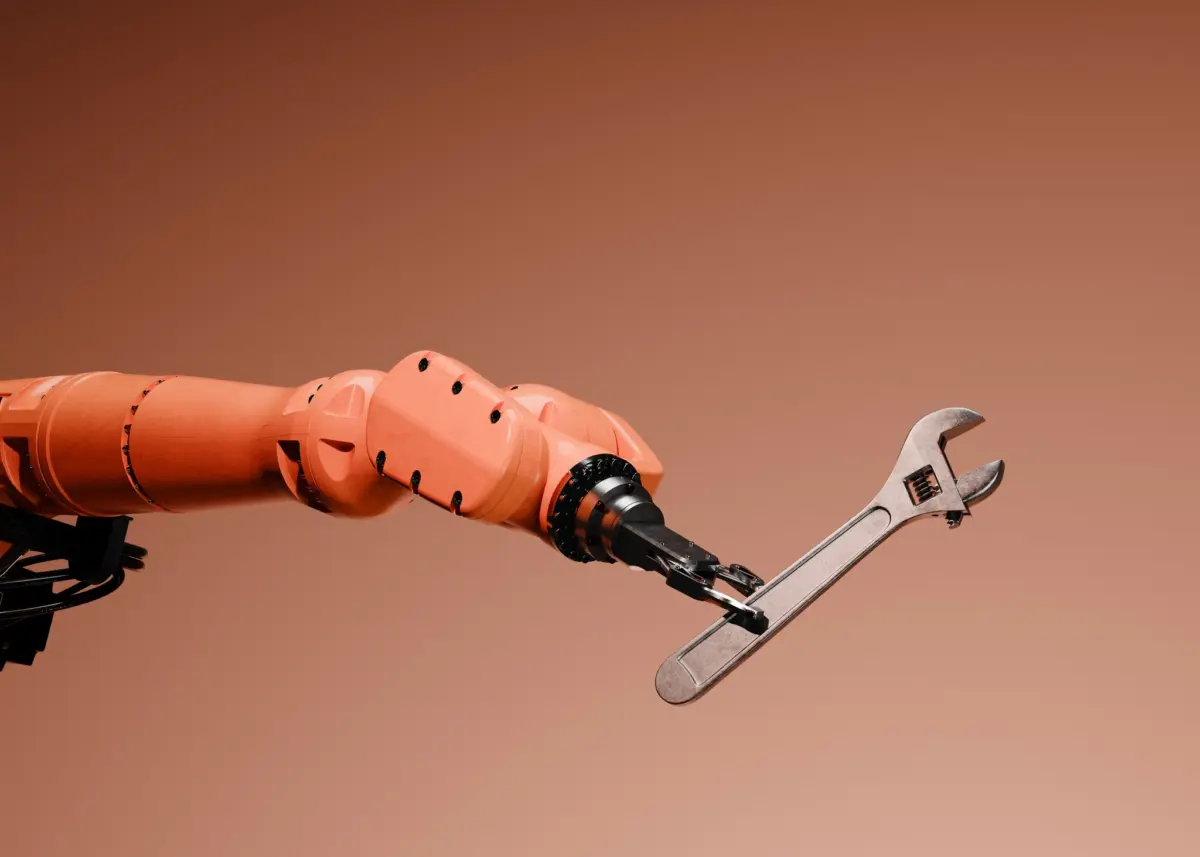
Why is this necessary? A humanoid robot cannot simply "read" how to turn a wrench. It needs to observe the precise muscle activation, wrist rotation, torque application, and visual feedback loop of a human doing the exact same thing. By aggregating millions of hours of diverse human motion data, Mecka creates the foundational training sets that allow robot brains to generalize skills across different environments and physical form factors.
The Valuation Boom and Competitive Landscape
Mecka AI is not operating in a vacuum. The race to capture the physical training data market has triggered a massive valuation surge across the tech sector.
Earlier in September 2026, TechCrunch reported that XDOF, another startup focused on real-world robot training data, was in active talks to raise a Series B round at an eye-watering $1.2 billion valuation—despite having emerged from stealth only three months prior.
Simultaneously, legacy human-data and annotation platforms that cut their teeth on text-based LLMs are aggressively pivoting into robotics to protect their market share. Major players such as Scale AI and Micro1 (which secured funding at a $500 million valuation in late 2025) are expanding their operational scope to ingest multi-modal, spatial, and kinematic datasets.
Despite this intense competition, Mecka’s strategic alliance with chipmaker Nvidia—the undisputed backbone of AI training infrastructure—and Microsoft positions the startup uniquely to integrate its pipelines directly into the hardware and simulation frameworks used by top-tier robotics developers.
Official Statements & Industry Perspectives
While formal press statements from the round emphasize collaboration and the dawn of a new era in automation, industry insiders are reading between the lines to understand the strategic positioning of the investors.
The participation of Sequoia as lead investor underscores a thesis that venture capital has chased for years: that the most defensible companies in an artificial intelligence wave are the ones controlling the data pipelines. By securing early access to Mecka’s repository, Sequoia-backed robotics ventures will theoretically gain a structural advantage in training their proprietary physical models.
Meanwhile, Nvidia’s investment points directly toward the synergy between simulation and real-world data collection. Nvidia’s Omniverse and Isaac robotics simulation platforms require massive real-world datasets to bridge the "sim-to-real" gap—the persistent challenge where algorithms trained in virtual physics engines fail when exposed to the chaotic friction of the physical world. By investing in Mecka AI, Nvidia helps ensure that developers utilizing its chips and simulation software have access to the highest-grade human demonstration data available.
Microsoft’s M12 fund brings enterprise software muscle and cloud infrastructure depth into the fold. Processing, storing, and streaming petabytes of high-definition spatial video, sensor telemetry, and kinematic data requires massive cloud compute resources—a domain where Microsoft Azure holds a dominant position.
Future Outlook: Challenges and Commercial Horizons
As Mecka AI absorbs its $500 million valuation and $60 million war chest, the company faces a demanding set of operational milestones. The next eighteen to twenty-four months will test whether human-motion data collection can scale efficiently without compromising data quality or running afoul of privacy and labor regulations.
Key Challenges Ahead
- Data Quality and Generalization: Unlike text, which can be standardized and filtered relatively easily, physical motion data is notoriously noisy. Variations in human height, limb proportions, and environment can introduce artifacts that confuse a robot’s neural network. Mecka must prove its annotation and normalization pipelines can turn chaotic real-world video into clean, machine-readable motor policies.
- Privacy and Consent: Collecting high-resolution spatial and video data of humans performing tasks in homes, offices, and workshops raises significant data privacy questions. Ensuring robust anonymization and strict consent protocols will be paramount as regulatory scrutiny on biometric and motion data intensifies globally.
- Hardware Agnosticism: To maintain its high valuation, Mecka cannot afford to tie its fortunes to a single humanoid manufacturer. The startup must prove its datasets are flexible enough to train everything from wheeled warehouse logistics robots to four-legged inspection quadrupeds and dual-armed manufacturing humanoids.
The Horizon of Physical AI
We are entering a transitional decade where the bottleneck of technological progress is shifting decisively from digital intelligence to physical execution. The generative AI boom proved that machines can write poetry, code software, and generate art. The physical AI boom—fueled by startups like Mecka AI—aims to prove that machines can do our laundry, assemble our electronics, harvest our crops, and assist our aging populations.
By monetizing the subtle, everyday movements of ordinary people, Mecka AI is effectively translating human physical culture into machine code. With the financial backing of Sequoia, Nvidia, and Microsoft, the startup has the resources, the technology, and the market timing to become the foundational operating system of the robotic age. The question is no longer whether autonomous robots will populate the physical world, but how fast companies like Mecka can feed them the data they need to survive in it.