With just seven days remaining until the doors swing open at Moscone West, the global technology community is turning its collective gaze toward San Francisco. From October 13–15, TechCrunch Disrupt 2026 will convene more than 10,000 founders, investors, operators, and visionary tech leaders for three high-intensity days of keynote presentations, deal-making, and critical debates shaping the architecture of tomorrow’s economy.
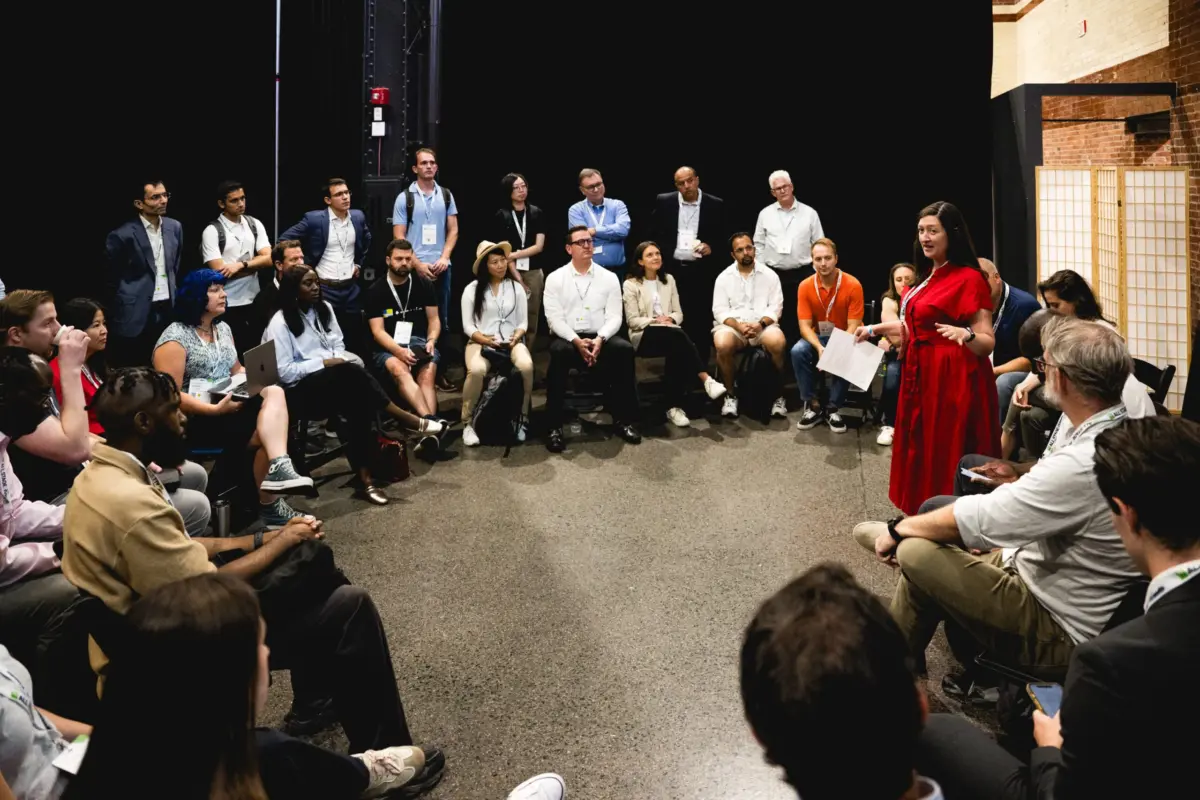
Beyond the main stages and bustling exhibition halls, one of Disrupt’s most anticipated components returns with an expanded footprint: the interactive, deep-dive roundtables. Designed to break down the barrier between speaker and audience, these intimate sessions give attendees a direct line to industry pioneers. Participants can pressure-test business models, dissect real-world scaling hurdles, and confront head-on the seismic shifts occurring across artificial intelligence, enterprise software, venture capital, and deep tech.
As capital allocation strategies shift and foundational AI matures into physical and enterprise workflows, the 2026 roundtable agenda captures the pulse of an industry in rapid transition. This report explores the core themes, heavy-hitting speakers, and strategic imperatives driving the conversation at this year’s premier startup summit.
Detailed Chronology and Thematic Breakdown
The 2026 roundtable sessions are spread across two dedicated spaces throughout the three-day event. They address the most pressing operational bottlenecks and structural opportunities facing modern builders.
The Physical AI Frontier: From Digital Models to Real-World Mechanics
While the past few years were defined by software-bound generative models, 2026 marks the definitive turn toward Physical AI—systems that interact with the physical world through robotics, automation, and spatial computing.
The Data Challenge: In “Arm Wrestling Your Data: The Physical AI Challenge,” iMerit Founder and CEO Radha Basu highlights that autonomous systems require far more than scaled-up models. She dives deep into edge cases, multimodal data ingestion, and building robust pipelines capable of reliable real-world execution.
Atoms vs. Bits: Expanding on this theme, Jackson Feder, VP of Investment at MetaProp, leads a session titled “Atoms vs. Bits: Physical AI for the Physical World,” exploring the unique demands of applying intelligence to construction, real estate, infrastructure, and energy grids.
Execution Over Demos: Proving that a great demo is miles away from a viable product, Logan Farrell (Co-founder and CTO of Rugged Robotics) and Austin Yount (Partner at Brick & Mortar Ventures) host “Beyond the Demo: Building Physical AI That Actually Works.” The conversation focuses on trust, reliability, ROI, and industrial-scale adoption.
Scientific Discovery: Pushing the boundaries of computation even further, Piotr Byrski (CEO of Molecule.one) addresses “When Frontier Models Are Not Enough: How to Make AI Capable of Breakthrough Scientific Discoveries,” examining autonomous experimentation and the acceleration of chemistry, biology, and materials science.
The Enterprise Transformation: SaaS, Agents, and Legacy Modernization
The enterprise software stack is undergoing a profound reckoning. Rather than simply replacing legacy infrastructure, today’s most successful startups are figuring out how to inject intelligence into existing workflows.
Is SaaS Dead?: Smartsheet CEO Rajeev Singh challenges conventional wisdom in “Is SaaS Dead? AI Is Getting What Enterprise Software Got Wrong.” Singh argues that AI isn’t destroying SaaS; rather, it is exposing the fragmentation underneath, leaving orchestration and contextual workflow intelligence as the true differentiators for the next software generation.
The Integration Dilemma: Addressing the enterprise appetite for AI without catastrophic system overhauls, Naren Krishna (CEO of Balerion) and Travis Skelly (Partner at Pruven Capital) tackle “AI-Native Won’t Work for the Enterprise,” examining why intelligent agent layers on top of legacy systems are winning near-term market share.
From Pilot to Production:Dr. Maha Achour (Kodamai) and Pankaj Kedia (2468 Ventures) host “From Pilot to Production at Scale: Provable, Trusted Agentic AI for the Enterprise,” dissecting why so many enterprise pilots stall and how teams can achieve verifiable, scaled production.
Fundraising, Finance, and the Modern Cap Table
Navigating macroeconomic pressures requires a completely different playbook for modern entrepreneurs. From securing institutional checks to orchestrating pre-IPO financial discipline, the financial sessions at Disrupt 2026 offer masterclasses in capital management.
The Early Check:Aditi Maliwal, General Partner at Upfront Ventures, pulls back the curtain on early-stage decision-making in “How to Land Your First Institutional Check (From the Person Who Writes Them),” providing actionable guidance on pre-traction storytelling and investor psychology.
Architecting a Fundraise:Alex Li, Partner at MVP Ventures, leads “Beyond the Term Sheet: How to Architect a Great Fundraise,” focusing on cap table hygiene, competitive processes, and choosing investors who accelerate—rather than hinder—future growth.
The AI-First P&L:Marshall Egger (Founder and COO of Spacemilk) presents “Grow Like a Founder, Think Like a CFO,” helping early-stage leaders balance aggressive expansion with rigorous cash-flow forecasting and unit economics.
Post-Exit Realities: For founders navigating massive liquidity events, Vishal Kumar and Tushar Kumar of Twin Peaks Wealth Advisors present “‘My Company Is a Rocket Ship.’ What Comes After the Landing?” addressing tax strategies, concentration risk, and wealth preservation.
Supporting Context & Metrics: The State of the Ecosystem
As Disrupt 2026 kicks off, the macroeconomic backdrop for technology startups is characterized by a polarized capital environment. On one hand, venture investment in foundational frontier AI models and hard-tech infrastructure continues to shatter historical records. On the other hand, traditional venture funding requires unprecedented capital efficiency.
The $100 Billion Question: PitchBook Senior Research Analyst Harrison Rolfes tackles market concentration in “The $100 Billion Entry Fee: Can Anyone Still Compete in AI?” As capital floods into a handful of massive labs, the session explores defensibility and survival strategies for startups operating outside the tech giants.
The SoCal Hard Tech Migration: In a session sponsored by the New York Stock Exchange, Kevin Hawkins (NYSE) and El Segundo City Councilmember Drew Boyles explore “The Rise of SoCal Hard Tech: Why VCs and Founders Are Gravitating to Gundo,” analyzing how municipal policy, specialized talent, and defense tech funding have transformed El Segundo into a premier hub for aerospace and hardware innovation.
Healthcare’s Rapid Pivot:Brian Butler (Questa Capital) examines the breathtaking pace of healthtech innovation in “Healthcare Took 40 Years to Adopt EHRs, Then Adopted Generative AI in Three. What Comes Next?” highlighting how medical institutions are altering their procurement cycles to integrate generative workflows.
Official Statements and Industry Insights
Organizers and industry veterans emphasize that the true value of TechCrunch Disrupt lies in its ability to foster direct, unfiltered dialogue among ecosystem participants.
"Roundtables are where the Disrupt agenda becomes a conversation," organizers noted in a statement ahead of the event. "Instead of just hearing how someone else approached a problem, you can ask the questions that matter to your company, compare experiences with the people around the table, and leave with ideas you can put to work immediately."
Industry leaders echoing this sentiment point to the democratization of knowledge exchange during these sessions. Whether it is Cassie Kozyrkov (Founder of Kozyr and former Chief Decision Scientist at Google) leading an interactive clinic on decision science, or Cal Amir (Introduction Lab) teaching the fine art of the memorable professional introduction in an AI-dominated landscape, the focus remains squarely on actionable execution.
Future Outlook: What to Watch at Disrupt 2026
As attendees descend upon Moscone West next week, several critical inflection points will dictate the trajectory of tech for the remainder of the decade:
The Maturation of Agentic Workflows: Moving past simple chatbots, the industry is aggressively evaluating autonomous agents capable of managing complete business workflows across Go-To-Market (GTM) and operations teams.
The Hard-Tech Resurgence: The blurring lines between bits and atoms—spanning robotics, aerospace, quantum computing, and advanced materials—signal that venture capital is returning to physical-world engineering challenges with renewed vigor.
Pragmatic Enterprise Architecture: The rush toward "AI-native" overhauls is being tempered by enterprise pragmatism, favoring secure, modular, open-weight, and agentic wrapper layers that integrate smoothly with existing systems of record.
Secure Your Pass
Registration for TechCrunch Disrupt 2026 is currently open, with special promotional pricing allowing attendees to save up to $100 on their pass, alongside a 50% discount on a second ticket for co-founders, operators, or colleagues. For full details on the agenda, speaker bios, and roundtable reservations, visit the official TechCrunch Disrupt portal.