









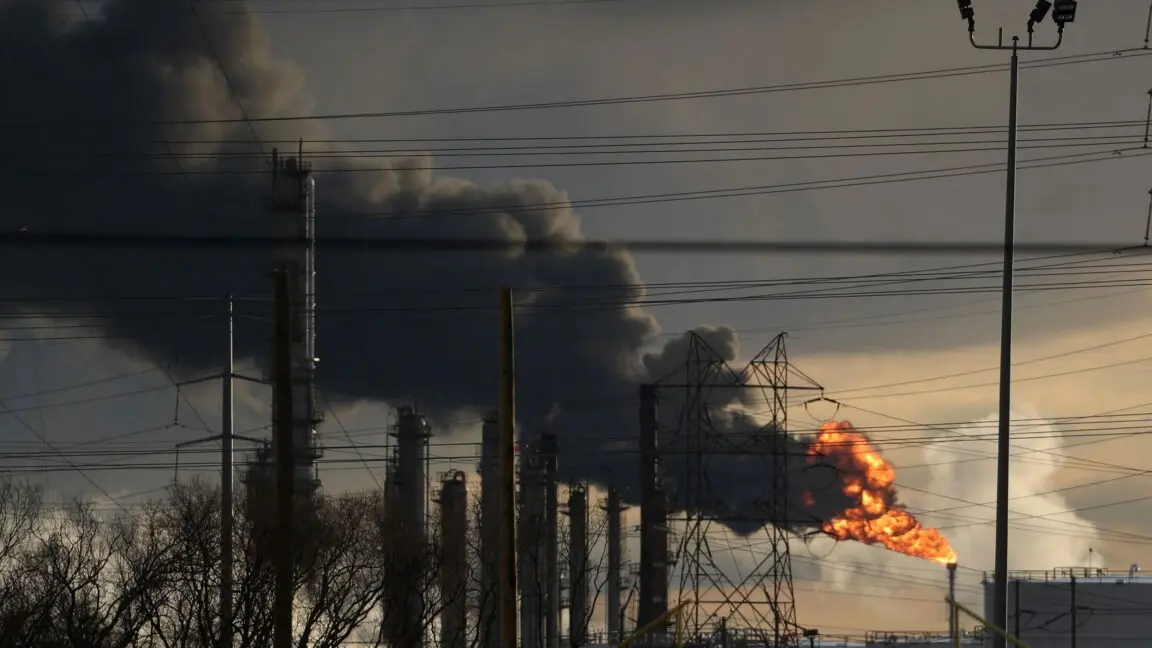
Newly unearthed court filings from an ongoing 2019 Massachusetts lawsuit against ExxonMobil have brought to light a trove of internal corporate documents. These records expose decades of internal deliberations, strategic planning, and dissonance between public relations campaigns and private scientific assessments within one of the world’s largest energy conglomerates.
While public attention has frequently focused on the oil industry’s early understanding of climate change, these freshly scrutinized files—spanning from the late 1980s through the 2010s—illustrate how ExxonMobil systematically managed the threat of greenhouse gas regulation. The documents reveal that company scientists and researchers repeatedly warned executives that heavily touted technological fixes, such as large-scale algae biofuels and specific carbon capture and storage (CCS) initiatives, were economically unviable, technologically impossible to scale, or entirely distinct from the solutions being marketed to the public and investors.
The timing of this disclosure coincides with a pivotal legal battleground. The U.S. Supreme Court recently heard oral arguments regarding whether a climate accountability lawsuit brought by Boulder, Colorado, should proceed, a decision that could directly influence more than two dozen similar municipal and state actions nationwide. As climate-fueled extreme weather costs mount into the tens of billions of dollars annually, these internal records feed a growing body of evidence suggesting that fossil fuel majors knowingly promoted public skepticism and misleading solutions while anticipating the severe macroeconomic impacts of climate stabilization policies.
Detailed Chronology: From Early Warnings to Corporate Strategy
The 1988 Turning Point and the Sprow Memorandum
The historical arc of modern climate awareness often traces back to the summer of 1988, when NASA climatologist James Hansen delivered stark testimony to the U.S. Congress, asserting that global warming was underway and driven by anthropogenic greenhouse gas emissions. Months later, the United Nations established the Intergovernmental Panel on Climate Change (IPCC).
Just weeks prior to a key U.N. vote that autumn, Frank Sprow of Exxon’s corporate research department authored an internal memorandum that mapped out the company’s defensive playbook. Sprow warned his colleagues:
"If a worldwide consensus emerges that action is needed to mitigate against Greenhouse gas effects, substantial negative impacts on Exxon could occur."
Rather than sounding alarms externally, Sprow’s memorandum recommended that Exxon’s research and development surrounding greenhouse gases be governed by two foundational imperatives:
- Protect the value of traditional corporate assets (oil, gas, and coal).
- Preserve Exxon’s business options.
To achieve these objectives, Sprow suggested maintaining a prominent presence in climate modeling—such as embedding a researcher at leading academic hubs like Princeton University—while simultaneously monitoring alternative energy sources (nuclear, solar, and biofuels) to evaluate their commercial viability or locate a "research breakthrough" that neatly aligned with corporate interests. According to expert analyses, this document served as an architectural blueprint for the company’s strategic posture over the ensuing decades.
The 1997 Kyoto Protocol Playbook
By the late 1990s, as international negotiations converged on the 1997 Kyoto Protocol, Exxon and broader trade associations intensified their campaigns to shape public perception and counter regulatory momentum.
Newly published records from a 1997 climate steering group meeting hosted by the American Petroleum Institute (API) detail coordinated efforts to question the scientific consensus and highlight the economic burdens of emissions reductions. The steering group resolved to "continue to question the scientific basis and cite the high economic cost" of climate policies while actively "avoid[ing] pressures to negotiate a compromise."
Internal planning documents also reveal that Exxon evaluated polling data to determine which messaging strategies would most effectively resonate with the public. Furthermore, the records show Exxon coordinated the funding of targeted projects through conservative think tanks like the Competitive Enterprise Institute (CEI) and the American Enterprise Institute (AEI). These initiatives sought to narrow the public debate onto the economic impacts of climate proposals on individual consumers and trade competitiveness, aiming to stall near-term legislative action.
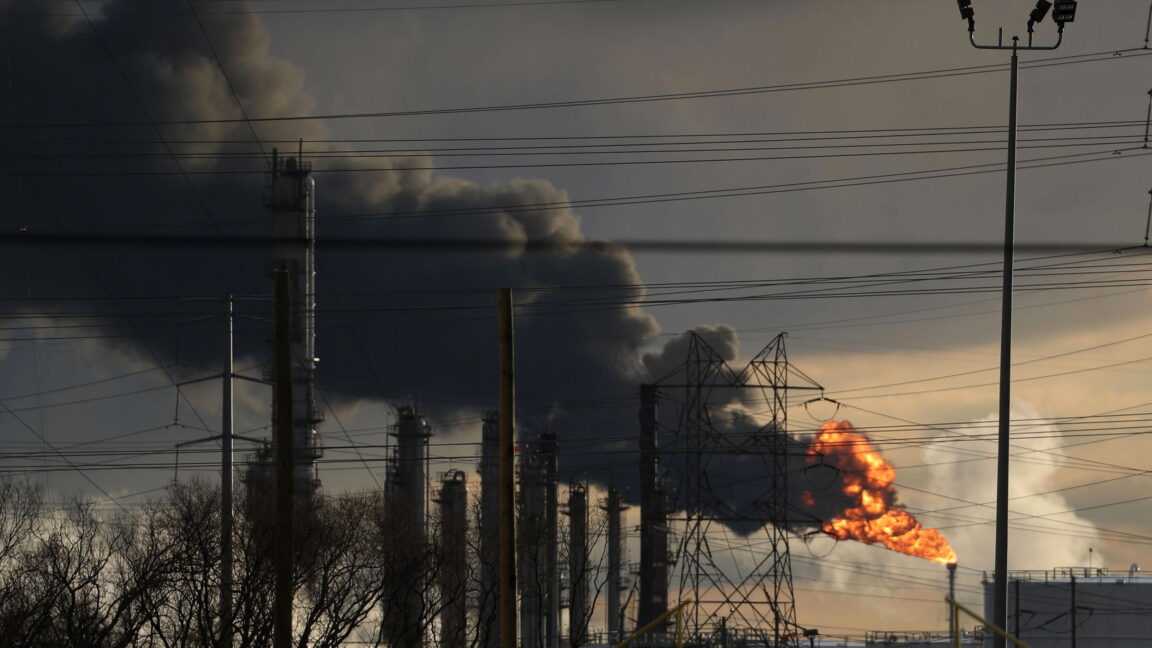
The 2000s: Public Skepticism and Evolving Scientific Reality
Throughout the mid-2000s, amidst mounting shareholder and public criticism regarding corporate funding of climate-skeptic organizations, Exxon’s public stance remained guarded. In 2005, company representatives maintained that scientific evidence regarding greenhouse gas emissions remained inconclusive, emphasizing investments in academic research programs such as Stanford University’s Global Climate and Energy Project.
Behind the scenes, however, the corporate apparatus was adapting. Documents from the Massachusetts litigation show that by 2006, public relations teams were actively coordinating meetings with prominent global warming skeptics even as internal researchers integrated deeper into international scientific bodies. By the 2010s, maintaining outright denial of anthropogenic warming became untenable as the IPCC’s conclusions solidified and the United States prepared to enter the Paris Agreement.
Internal documents from this era reveal that Exxon scientists were tasked with drafting a comprehensive "climate risk matrix." In 2016, an Exxon scientist who had contributed to the U.N. climate panel explicitly warned colleagues about the escalating probability of climate "tipping points," noting that failing to curb emissions would drive temperatures—and subsequent socioeconomic shocks—far beyond direct thermal impacts after 2040.
Supporting Context & Metrics: Marketing Versus Reality
While internal risk assessments engaged with the severe realities of unmitigated warming, the newly unsealed Massachusetts filings demonstrate that Exxon’s public relations apparatus leaned heavily into technological solutions that internal experts knew to be dead ends.
The Algae Biofuels Illusion
For years, Exxon heavily publicized its research into algae-based biofuels as a sustainable alternative to petroleum, launching aggressive advertising campaigns and multi-million-dollar partnerships. A prominent 2018 corporate press release announced anticipated production targets of 10,000 barrels of algae biofuel per day by 2025.
However, depositions and internal communications reveal a starkly different internal consensus. An Exxon scientist who worked on the program testified that the 2018 target was "completely impossible to achieve" and that "all the clauses in there are patently false." The scientist further stated that he had informed company leadership of these infeasibilities prior to publication, and characterized a heavily promoted R&D milestone as "a dead end." Despite these internal conclusions, internal evaluations from 2017 ranked the algae advertising campaigns among the company’s highest-performing public relations assets, designating them "All-Around Winners."
The Carbon Capture and Storage (CCS) Disconnect
Similarly, as research into algae was phased out, Exxon pivoted its public positioning toward Carbon Capture and Storage (CCS) as an indispensable bridge to a lower-carbon economy.
Internal presentations from 2014 detailed profound structural hurdles to commercializing CCS, including the requirement for "massive investment," exorbitant costs, and a total absence of market-based incentives. By 2017, internal correspondence revealed pushback from company scientists asked to endorse advertisements claiming corporate leadership in CCS. One researcher noted they were "not a big fan" of the claims, pointing out that existing corporate carbon capture operations were largely restricted to gas processing plants—stripping pollutants from methane to reinject into hydrocarbon reservoirs—which bore "nothing to do" with the industrial-scale capture of power plant emissions being promoted to the public.
An internal 2021 presentation outlining an advertising campaign aimed at financial and political elites noted that the primary objective was to ensure target audiences "believe ExxonMobil is committed to helping solve climate change" and to solidify the perception that the company plays an "indispensable role" in energy transitions. Despite these marketing pushes, the vast majority of capital expenditures remained tethered to fossil fuel extraction, with corporate planning documents projecting an expansion of oil and gas production by more than 15 percent by 2030.
Official Statements & Legal Defenses
The legal and public relations ramifications of these disclosures are profound, dividing legal scholars, advocacy groups, and corporate representatives.
ExxonMobil’s Position
ExxonMobil has consistently denied allegations of misleading the public or investors regarding climate change or the viability of its transition technologies. In formal annual securities filings, the company has characterized active litigation as meritless:

"We believe the legal and factual theories set forth in these proceedings are meritless and represent an inappropriate attempt to use the court system to usurp the proper role of policymakers in addressing the societal challenges of climate change."
Furthermore, the corporation contends that its business disclosures have always complied with federal and state securities laws, and that its investments in carbon capture and low-carbon research represent genuine, long-term technological aspirations rather than corporate greenwashing.
Perspectives from Climate Accountability Advocates
Legal and environmental advocates argue that the newly released documents pull back the curtain on a calculated, multi-decade strategy of corporate deception. Aaron Regunberg, director of climate accountability at Public Citizen, noted that the fierce legal resistance mounted by oil companies against discovery phases in climate lawsuits stems from a deep apprehension of public exposure.
"They are really scared of the public finding out about this reality," Regunberg remarked, suggesting that the Massachusetts filings indicate the public has witnessed only a fraction of internal documentation demonstrating decades of intentional public obfuscation.
Geoffrey Supran, an associate professor of environmental science and policy at the University of Miami who has extensively analyzed corporate climate records, described the newly public internal memos and strategy guides as "sophisticated strategies to use and weaponize experts in order to perpetuate their denial… This is the playbook all in one place."
Perspectives from Cited Researchers
Jonathan Adler, now a law professor at William & Mary Law School whose past work with the Competitive Enterprise Institute received support discussed in the 1997 API documents, defended the integrity of his past scholarship. In an interview, Adler stated that his research was independently motivated and aligned with the free-market principles of his organization, declining to speak directly to the internal motivations of petroleum trade associations while emphasizing that his institutional focus remained centered on analytical accuracy.
Future Outlook: Judicial Crossroads and Accountability
The release of these internal documents arrives at a watershed moment for the energy sector. Financially, the stakes are immense. As public infrastructure costs tied to climate-fueled extreme weather events routinely exceed $100 billion annually in the United States, a wave of municipal and state lawsuits—including the high-profile Boulder, Colorado, case before the U.S. Supreme Court—seeks to hold fossil fuel producers financially liable for adaptation and recovery expenses.
At the same time, the Massachusetts attorney general’s office is pursuing distinct civil remedies under state consumer protection and securities laws. The state seeks substantial financial penalties and permanent injunctions against allegedly deceptive marketing practices, arguing that ExxonMobil systematically misled investors and consumers regarding the speed and efficacy of its low-carbon transformation.
The ultimate resolution of these legal proceedings hangs in the balance. Should the U.S. Supreme Court rule that municipal and state climate lawsuits are preempted by federal statute, dozens of pending actions could be dismissed. Conversely, should the courts allow these cases to advance to full discovery, the legal system may unlock an even wider repository of internal corporate archives. As these judicial battles unfold, the historical record preserved in these unsealed files will continue to shape public understanding of how the fossil fuel industry navigated the dawn of the climate crisis.