By Shane Snider | Senior News Writer, Data Center Knowledge
August 31, 2026
Executive Overview
In a strategic pivot that reshapes the competitive landscape of high-performance computing, Nvidia has announced it is opening its proprietary rack-scale AI infrastructure to custom accelerators from hyperscalers and third-party developers. By extending its industry-standard NVLink technology beyond its own graphics processing units (GPUs), Nvidia is attempting to capture the foundational architecture layer of the modern data center—regardless of whose silicon is running workloads inside the rack.
Central to this expansion is an upgraded alliance with MediaTek, anchored by a massive $3.5 billion investment via convertible bonds issued to the Taiwanese chip designer. Under this expanded framework, joint customers can design bespoke custom AI accelerators, or XPUs, on a pre-validated NVLink Fusion platform. These custom silicon components can then be seamlessly integrated into Nvidia-connected AI factory infrastructure built around the modular GPU Accelerated (MGX) ecosystem.
This move addresses a fundamental reality of the modern cloud computing era: hyperscale giants like Amazon Web Services (AWS), Google, and Microsoft have invested billions of dollars into proprietary custom silicon—such as AWS Trainium and Inferentia, Google TPUs, and Microsoft Maia accelerators—to optimize specific inference and training workloads. Rather than forcing these tech titans to build entirely new infrastructure stacks around proprietary silicon, Nvidia’s strategy offers a bridge.
"Ultimately, this gives customers more freedom to innovate without having to rebuild the entire AI factory around custom silicon," said Dion Harris, senior director of HPC and AI hyperscale infrastructure solutions at Nvidia, during a media briefing.
Detailed Chronology & Strategic Evolution
The Shift Toward Heterogeneous Infrastructure
The path to opening NVLink to third-party silicon has been years in the making, accelerated by the relentless diversification of enterprise and cloud AI workloads. As foundational large language models (LLMs) mature, the computational demands shift from pure training—where Nvidia’s massive GPU clusters have traditionally reigned supreme—to inference at scale, where cost-efficiency, latency, and customized architectures dictate hardware choices.
- May 2025: Nvidia officially introduces NVLink Fusion at its developer conference, signaling an initial willingness to let select infrastructure partners integrate Nvidia’s ultra-high-speed interconnects into non-GPU components.
- Late 2025 – Early 2026: Industry murmurs grow regarding the operational friction of heterogeneous compute clusters. Hyperscalers struggle to unify proprietary custom accelerators with high-speed scale-up networks.
- August 2026: Nvidia formalizes its ecosystem play. By injecting $3.5 billion in convertible bonds into MediaTek and scaling out NVLink Fusion, Nvidia transforms from a pure-play semiconductor vendor into the undisputed landlord of rack-scale AI architecture.
How NVLink Fusion and MGX Operate
The technical barrier to building custom AI factories has never been the processor alone; it is the agonizingly complex ecosystem required to make thousands of processors talk to each other without latency bottlenecks. Nvidia’s solution relies on two primary pillars:
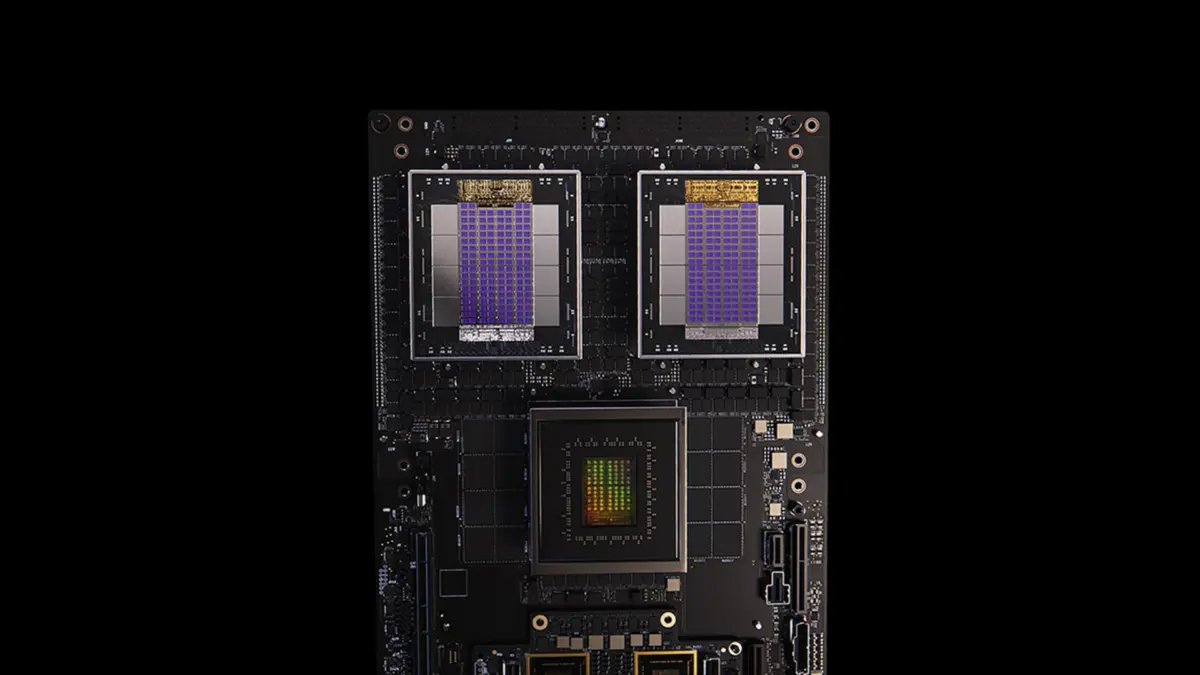
- NVLink Fusion and NVLink-C2C: By combining high-bandwidth memory (HBM), advanced chiplet technologies, and the NVLink Chip-to-Chip (C2C) interconnect, Nvidia allows customers to use Nvidia intellectual property for system-level connectivity while maintaining absolute creative and architectural control over their proprietary compute engines (XPUs).
- The MGX Modular Architecture: Nvidia’s MGX server and rack reference architecture provides a standardized mechanical and thermal blueprint. Instead of engineering a custom rack chassis from scratch for every new chip iteration, developers can drop their MediaTek-packaged XPUs directly into pre-vetted MGX slots.
"Production AI factories require packaging, HBM, I/O, and networking," Harris noted. "Customers also have to qualify and certify rack-scale systems at data center scale. We’ve built out this incredible ecosystem, which is what we call MGX, that now all these customers can tap into, and they don’t have to go and reinvent the wheel."
Supporting Context & Market Metrics
The Triad of Scale-Up Fabrics
As heterogeneous computing takes hold, analysts point out that data center architects are evaluating three primary methods for high-speed, scale-up interconnects within massive clusters:
- Ethernet: The historical baseline of data center networking, traditionally used for scale-out traffic, though rapidly evolving with high-speed iterations like 102.4T Ethernet to handle tighter cluster topologies.
- NVLink Fusion: Nvidia’s high-performance, proprietary scale-up fabric that now welcomes third-party XPUs via partners like MediaTek, Astera Labs, Marvell, Samsung, and AIchip. On the CPU side, heavyweights like Arm, Intel, Qualcomm, and SiFive have added support.
- UALink (Ultra Accelerator Link): An open-standard alternative championed by a rival coalition of chip and infrastructure developers—most notably AMD, which is integrating UALink into its Helios rack-scale platform.
According to Matt Kimball, vice president and principal analyst at Moor Insights & Strategy, the industry is entering an era where hardware lock-in is giving way to ecosystem interoperability driven by sheer physical necessity.
"Heterogeneity is the future of AI," Kimball stated. "These fabrics are to make scale-up easier and more performant. [All] require broad ecosystem support to be meaningful."
The Competitive Pressures of UALink
Nvidia’s expansion of NVLink Fusion is not happening in a vacuum. The formation of the UALink consortium represents a direct counter-offensive by competitors eager to break Nvidia’s grip on data center fabric standards.
For instance, AMD’s Helios AI system couples 72 AMD MI455X accelerators with Epyc CPUs and Pensando networking, utilizing UALink for ultra-fast intra-rack scale-up while relying on standard Ethernet for scale-out operations. By opening NVLink Fusion to external chipmakers, Nvidia is executing a preemptive defense: ensuring that even if a hyperscaler opts for a non-Nvidia accelerator, that chip still relies on Nvidia’s interconnect fabric and rack-scale management software.
Official Statements & Industry Perspectives
Nvidia’s leadership is keen to frame this pivot not as a defensive maneuver, but as the natural evolution of an infrastructure provider fulfilling a market need. When pressed on whether Nvidia’s ultimate goal is to dictate the blueprint of every AI data center rack regardless of the processor inside, Dion Harris rejected the notion of territorial control.
"It’s not really about ownership. It’s really about being able to take all the technologies that we’ve built over the last several decades, and offering that to the ecosystem," Harris explained. "Nvidia is an AI infrastructure company. Customers need different architectures for different workloads."
MediaTek’s expanded role is equally critical to this vision. While Nvidia supplies the high-speed networking, switch architecture, and NVLink-C2C IP, MediaTek brings the heavy lifting of system-on-chip (SoC) design, advanced packaging, and custom silicon execution. This allows companies utilizing MediaTek’s design services to focus entirely on specialized compute logic without burning capital on reinventing interconnect protocols.
"Customers can focus on differentiated compute," Harris emphasized.
Furthermore, the partnership extends well beyond hyperscale data centers. MediaTek and Nvidia are concurrently driving edge and local AI computing initiatives, pushing forward on consumer-facing RTX Spark and DGX PC platforms, as well as next-generation automotive cockpit systems that blend MediaTek hardware with Nvidia AI software stacks.
Future Outlook: What Lies Ahead for AI Factories
The financial commitment underpinning this strategy—exemplified by Nvidia’s $3.5 billion convertible bond investment in MediaTek—signals that the era of closed, single-vendor hardware monopolies is yielding to a pragmatic, ecosystem-driven reality.
As hyperscalers continue to refine their internal silicon roadmaps, the ability to plug custom accelerators into pre-validated, high-bandwidth architectures like NVLink Fusion will drastically shorten deployment times and lower capital expenditures. However, data center operators will closely monitor how licensing fees, proprietary constraints, and open standards like UALink shape procurement decisions over the next 24 to 36 months.
For now, Nvidia has drawn a clever line in the sand: you do not have to buy our GPUs to build an AI factory, but to make it run at peak hyperscale performance, you will likely still be plugging into our network.
About the Author
Shane Snider is Senior News Writer at Data Center Knowledge, covering AI infrastructure, hyperscale data centers, cloud platforms, and the power and energy systems driving modern compute expansion. He has won multiple awards for his reporting on utility constraints, liquid cooling, and next-generation data center architectures. Based in Raleigh, North Carolina, he can be reached via email or LinkedIn.