Executive Overview
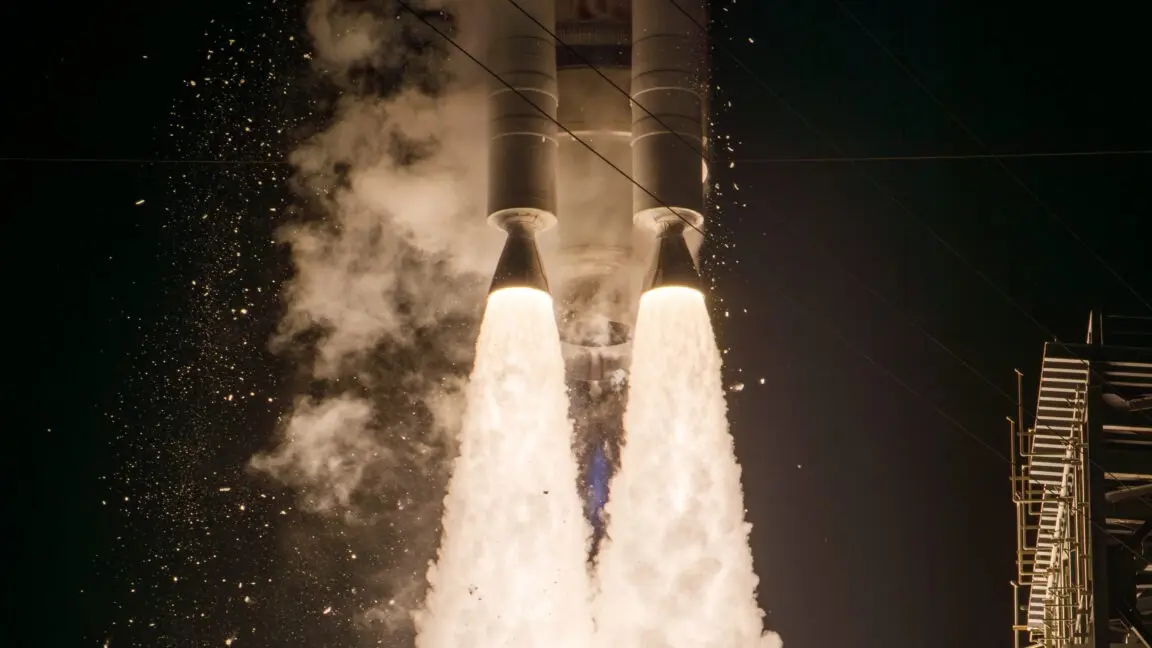
In a historic and paradigm-shifting announcement that is certain to send diplomatic shockwaves through Beijing and Moscow, Air Force Secretary Troy Meink officially declared on Monday that the United States has deployed operational "space control weapons" into orbit. Speaking at the Air and Space Forces Association’s annual Air, Space & Cyber Conference near Washington, D.C., Meink’s confirmation marks the first time a senior U.S. defense official has publicly acknowledged the presence of active offensive and defensive kinetic and non-kinetic warfare systems residing in Earth’s orbital planes.
The declaration represents a monumental pivot in Pentagon strategy. For decades, military leadership maintained a posture of strategic ambiguity regarding orbital warfare, preferring to keep discussions of space-based weapons strictly classified or entirely off the table. However, escalating geopolitical competition, rapid technological advancements by adversarial states, and the critical reliance of modern joint military forces on space assets have forced a dramatic acceleration of U.S. posture.
While Meink framed the deployment as an essential defensive measure aimed at deterring hostile action and safeguarding the joint force, the revelation officially rips away the fragile diplomatic veil that has historically kept the space domain clear of deployed weapon systems. As defense analysts, international think tanks, and foreign capitals digest the news, the global community is forced to confront an uncomfortable reality: the militarization of space is no longer a theoretical projection of future science fiction—it is an active, operational reality of the 21st-century arms race.
Detailed Chronology of Orbital Escalation
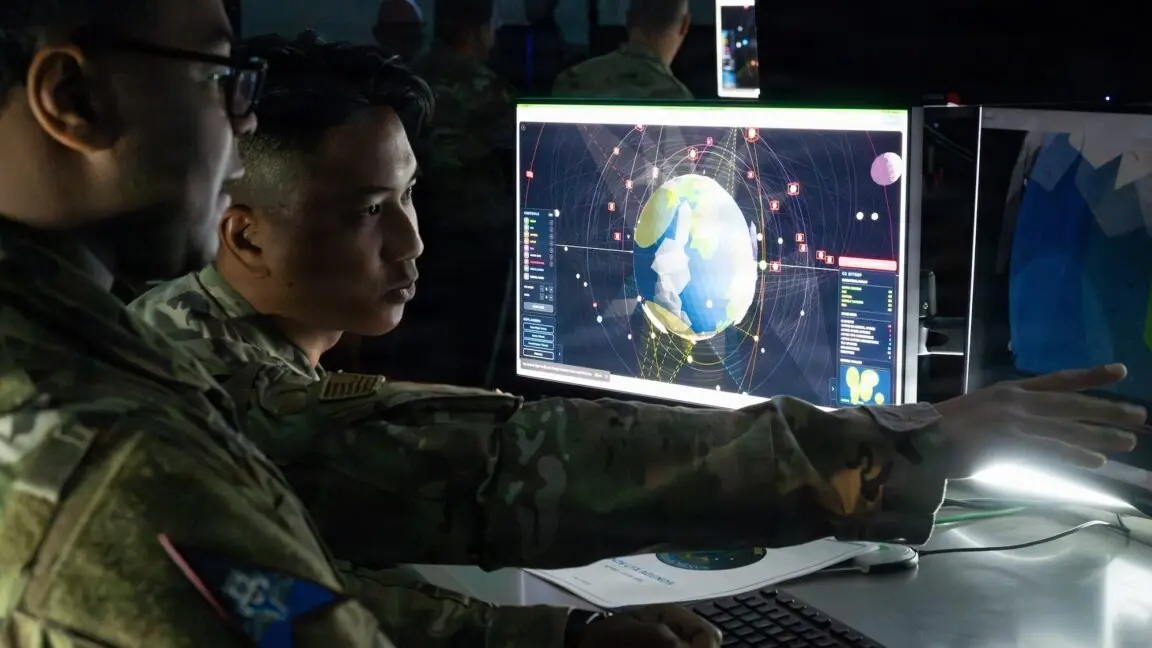
To fully understand the weight of Secretary Meink’s announcement, one must trace the rapid escalation of tensions and technological milestones that have unfolded in low-Earth orbit (LEO) and geostationary Earth orbit (GEO) over the past decade.
The Shift from Ambiguity to Open Disclosure
For years, U.S. military policy treated space as a "contested domain," yet public admissions of weaponization were non-existent. Ground-based electronic warfare capabilities, such as mobile satellite jammers, were developed in relative obscurity. However, as peer competitors like China and Russia aggressively tested orbital maneuverability and anti-satellite (ASAT) technologies, U.S. military leadership gradually shifted its rhetoric.
By the early 2020s, intelligence reports and think-tank assessments began leaking into mainstream discourse, revealing a shifting landscape where satellites were no longer merely passive observers or communication relays, but active participants in geopolitical chess matches.
Key Milestones in the New Space Race
- 2020: U.S. intelligence and defense officials begin openly highlighting Russian testing of an apparent anti-satellite projectile in orbit, setting off alarms within the Pentagon regarding rendezvous and proximity operations (RPO).
- 2024: The Biden administration formally accuses Russia of deploying operational anti-satellite systems to orbit. Simultaneously, Capitol Hill is rocked by intelligence disclosures—led by prominent lawmakers such as Rep. Mike Turner—revealing that Moscow is actively considering or developing a nuclear-armed anti-satellite capability designed to cripple LEO constellations en masse.
- 2025: The Center for Strategic and International Studies (CSIS) publishes its annual Space Threat Assessment, detailing China’s fleet of highly maneuverable satellites capable of tailing and inspecting U.S. national security payloads. Concurrently, outgoing Chief of Space Operations Gen. Chance Saltzman publicly states that adversary nations are actively pursuing all six major categories of space warfare, arguing that the U.S. must seriously evaluate matching those capabilities.
- June 2026: The Space Force achieves a major milestone by declaring the operational acceptance of its first acknowledged ground-based system: the Meadowlands mobile electronic warfare jammer.
- September 2026: Air Force Secretary Troy Meink delivers his landmark address at the Air, Space & Cyber Conference, crossing the Rubicon by confirming that the U.S. has placed "space control weapons" directly into orbit.
Supporting Context, Metrics, and Technical Realities
The physical architecture of modern space warfare is complex, governed by the unforgiving laws orbital mechanics and the looming threat of the Kessler Syndrome—a catastrophic cascading effect of space debris that could render low-Earth orbit unusable for generations.
Categories of Counterspace Capabilities
According to defense analysts and strategic frameworks outlined by organizations like the Secure World Foundation and CSIS, counterspace weapons generally fall into distinct categories, each carrying unique strategic implications:

- Kinetic Physical Destruction: Weapons designed to physically smash into a target satellite, such as direct-ascent missiles or orbital impactors. While devastating, these systems are widely condemned internationally because they generate vast, long-lived clouds of high-velocity space debris capable of destroying friendly assets, commercial constellations (like Starlink), and crewed spacecraft alike. Public records indicate the U.S. has heavily avoided testing orbital kinetic weapons to prevent debris proliferation.
- Directed-Energy Systems: Technologies such as high-powered lasers ("dazzlers") and particle beams designed to temporarily blind or permanently fry sensitive optical sensors on reconnaissance satellites.
- Electronic Warfare (EW): Radio-frequency jammers and spoofers capable of disrupting telemetry, tracking, and command links between ground stations and orbiting spacecraft.
The "Doppelgänger" Dilemma of Orbital Hardware
One of the most profound technical challenges in monitoring space weaponization is the dual-use nature of orbital hardware. As Clayton Swope, deputy director of the Aerospace Security Project at CSIS, points out, non-kinetic space weapons are often technological doppelgängers of benign commercial and military hardware already common in orbit.
"Any radio transmitter could be a jammer. Any inter-satellite optical link could be a laser dazzler," Swope notes. Consequently, distinguishing between an innocent inspection satellite performing routine orbital maintenance and an active weapon tracking a target has become nearly impossible for ground-based observers.
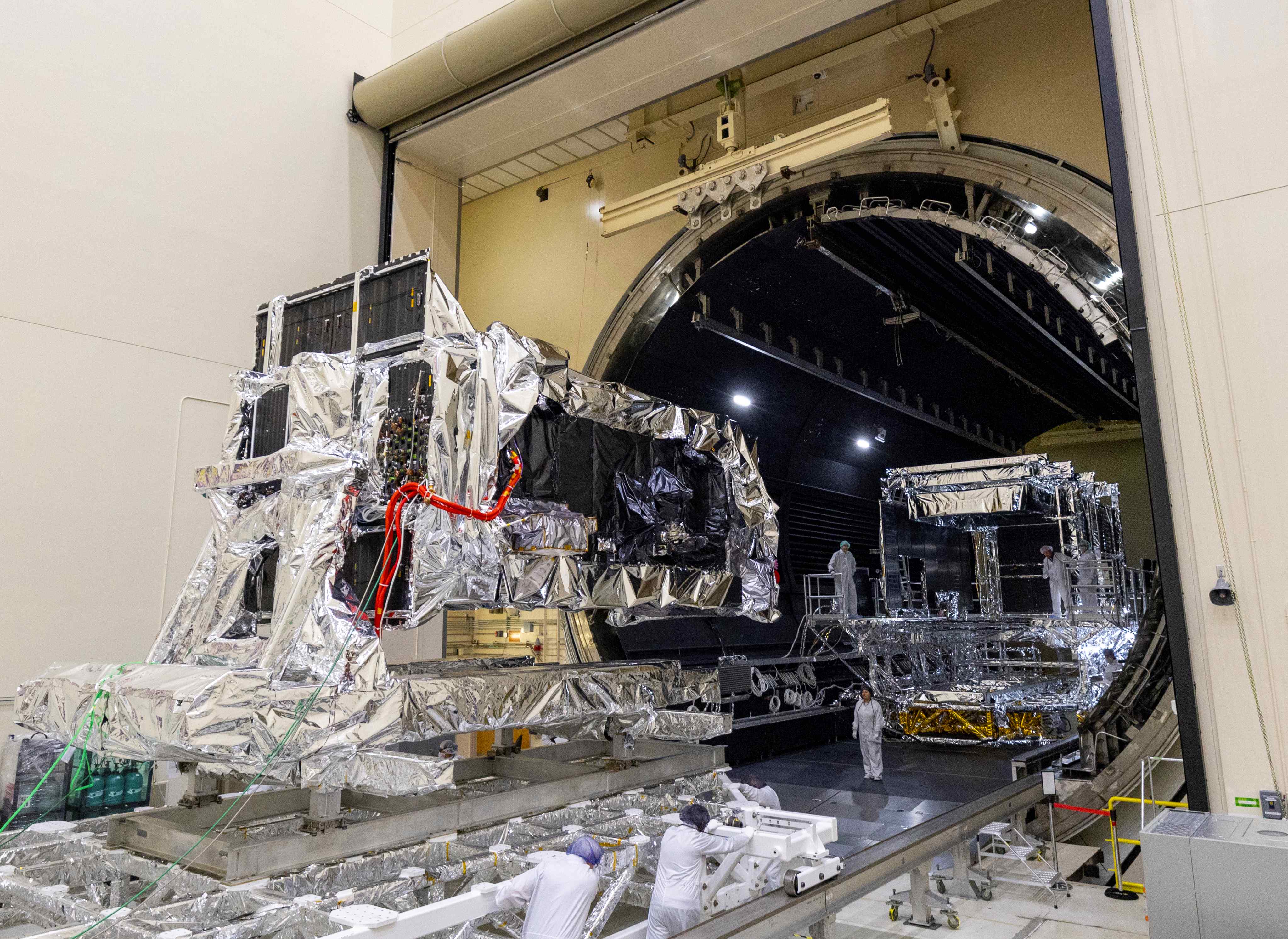
Furthermore, the scale of financial investment underscores how critical this domain has become. The Space Force’s Next-Generation Overhead Persistent Infrared (Next-Gen OPIR) missile warning satellites, for instance, carry a price tag exceeding $4 billion per vehicle, making them high-value targets that require aggressive on-orbit active and passive defense mechanisms.
Official Statements and Strategic Analysis
The rationale behind the Pentagon’s sudden transparency is deeply rooted in the doctrine of deterrence. Yet, the ambiguity surrounding Meink’s statements has left defense experts divided on whether the disclosure achieves its intended stabilizing effect.
The Pentagon’s Perspective: Deterrence Through Readiness
In his follow-up press conference, Secretary Meink defended the administration’s stance by pointing directly to the established weapon development programs of rival superpowers.
"Is there any question in the room, by anybody, about whether or not the Chinese or Russians have been developing these sorts of weapons?" Meink challenged reporters. "For over a decade, we’ve been talking about the fact, and we have expressed concern, that the Chinese and Russians were developing weapons for space. We need to focus on making sure we can protect ourselves operating in that environment."
Meink emphasized that the space environment is inextricably linked to both national security and global economic stability. Without guaranteed freedom of maneuverability in orbit, modern military operations—from precision long-range fires to global communications and strategic missile early-warning systems—would effectively be blinded.
Criticisms and the Paradox of Strategic Ambiguity
Despite the Pentagon’s emphasis on deterrence, strategic analysts have raised sharp questions regarding the utility of such a vague announcement. Victoria Samson, chief director of space security and stability at the Secure World Foundation, noted that while space-based jammers or defensive countermeasures are logical evolutionary steps, official confirmation carries heavy diplomatic consequences.

"Now that the United States has officially acknowledged it has those systems in space, it has opened the door for China and Russia to do the same, which people in the US will then use as justification for why we needed those systems there in the first place," Samson observed.
Echoing these concerns, Clayton Swope argued that Meink’s remarks lacked the specific parameters necessary to establish true deterrence.
"It is too vague to have a meaningful deterrent value," Swope stated. "Deterrence is not only about a weapon’s fact of existence but also about having an awareness of how the weapon will be used. For example, the concept of mutually assured destruction was based on the premise of how nuclear weapons would be used and not simply the fact of their existence… Both how and when the weapon would be used and its destructive potential are ambiguous."
Future Outlook: The Orbital Arms Race Unbound
As the geopolitical dust settles from Meink’s unprecedented revelation, the trajectory of international relations in the aerospace sector has entered a volatile new phase. The unvarnished admission that American strike-and-defense systems are actively orbiting above our heads removes the last remaining diplomatic fictions regarding the demilitarization of outer space.

Moving forward, several critical trends are expected to define the space security landscape:
- Acceleration of Counterspace Programs: With the taboo of acknowledging on-orbit weapons broken, foreign adversaries like Beijing and Moscow are virtually guaranteed to use the U.S. disclosure to justify their own expanded deployments, further accelerating the celestial arms race.
- Heightened Vulnerability and RPO Activity: Satellites in LEO and GEO will increasingly engage in high-stakes cat-and-mouse games, utilizing aggressive proximity operations, defensive maneuvering thrusters, and encrypted optical links to outmaneuver potential threats.
- The Search for Norms and Guardrails: Paradoxically, as militarization deepened, international bodies and diplomatic channels may find themselves under intense pressure to establish rules of the road for military behavior in space to prevent accidental escalations that could trigger terrestrial conflict.
The frontier once envisioned by dreamers as a peaceful expanse for scientific cooperation and human exploration has officially transformed into the ultimate high ground of military competition. Whether this overt display of orbital might will successfully deter conflict or merely prime the pump for future orbital skirmishes remains the defining security question of our era.