By Shane Snider | Senior News Writer, Data Center Knowledge August 11, 2026
Executive Overview
In a dramatic reimagining of how massive technological infrastructure is powered, SpaceX intends to completely bypass the public electrical grid for its colossal semiconductor and advanced-computing campus in Grimes County, Texas. Known as the Terafab, this vertically integrated manufacturing and artificial intelligence hub is slated to rely entirely on an onsite power generation plant and utility-scale battery storage system.
According to a fully executed tax-abatement agreement between SpaceX and Grimes County officials, the facilities—once fully operational—are explicitly expected to run on self-generated electricity rather than drawing power from the local grid. This unprecedented architectural choice establishes SpaceX not just as a consumer of power, but as a private utility provider responsible for its own generation reserves, voltage and frequency stability, black-start capabilities, and system restoration.
With initial investments valued at $16.8 billion—and potential multi-phase projections reaching up to $119 billion—the Terafab initiative signals a fundamental shift in the AI infrastructure landscape. As tech giants grapple with localized power constraints, grid congestion, and surging electricity prices, Elon Musk’s enterprises are choosing to control the entire physical stack: from silicon chip manufacturing to the very electrons that power the computation.
Detailed Chronology: The Road to the Terafab
The realization of the Grimes County campus has moved at a staggering pace, underscored by strategic regulatory filings, local government agreements, and sweeping corporate pivots.
June 3, 2026: Establishing the Reinvestment Zone
The foundational framework for the project was officially laid when Grimes County commissioners formally voted to designate the sprawling development site as Reinvestment Zone No. 1 (01-2026-001). Public records from this order highlighted the multi-faceted scope of the initiative, specifying that the zone would encompass a state-of-the-art semiconductor manufacturing plant, an artificial intelligence cluster, and a dedicated, onsite power generation facility.
August 5, 2026: Briefing Local Commissioners
SpaceX’s lead developer for the Terafab project, Riley Trettel, formally briefed the Grimes County Commissioners Court. Trettel outlined key operational parameters, confirming plans to construct natural-gas-fired power plants alongside massive battery energy storage systems (BESS). The discussions during this session laid the groundwork for the legally binding tax-abatement terms that followed immediately thereafter.
August 6, 2026: Official Corporate Announcement and Financial Scale
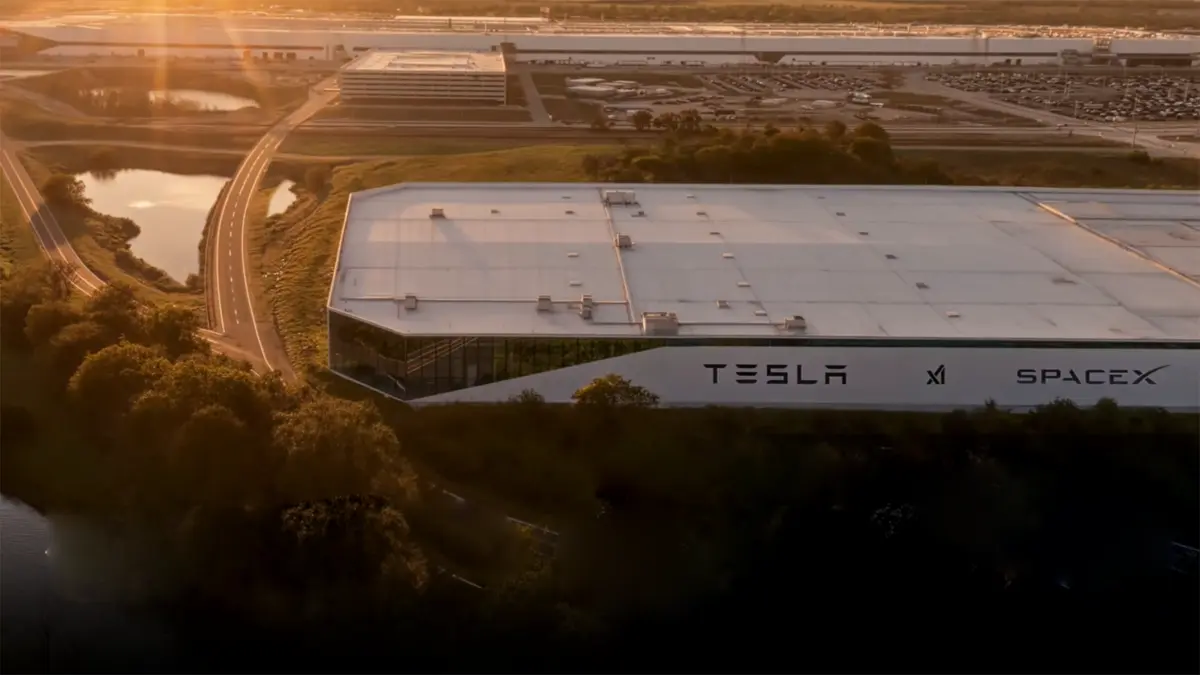
SpaceX and sister company Tesla formally unveiled the Terafab project to the public, announcing an initial capital expenditure of $16.8 billion. The grand vision detailed a staggering 100-million-square-foot campus designed to produce custom semiconductors. Texas Comptroller incentive filings later revealed that the project is structured as a four-phase long-term rollout, with aggregate capital investments potentially swelling to $119 billion.
Concurrently, SpaceX’s strategic SEC IPO filings reframed the aerospace giant as a comprehensive AI infrastructure corporation, arguing that the true bottlenecks of the artificial intelligence boom are physical chip foundries, data center architecture, and private power generation.
August 11, 2026: The Execution of the Tax-Abatement Agreement
The fully executed tax-abatement contract between SpaceX and Grimes County was made public, confirming the most radical element of the development: the facility’s explicit intent to operate completely off-grid under standard operating conditions.
Supporting Context & Metrics: Operating Like a Private Utility
To understand the engineering magnitude of the Terafab, one must look beyond standard industrial energy requirements. Traditional semiconductor fabrication plants (fabs) require an extraordinary level of power quality. A microsecond voltage sag or frequency disturbance can ruin billions of dollars worth of silicon wafers, rendering months of production useless.
The Behind-the-Meter Architecture
While the tax-abatement document notes that the Terafab is "not expected to use electricity from the grid," industry experts point out that this does not necessarily preclude a physical interconnection. Neil Osnato, founder of Persistence Analytics Group, emphasizes the crucial distinction between operational self-sufficiency and total electrical isolation.
"For industrial facilities to use onsite generation, cogeneration, or dedicated power is not unusual," Osnato noted in an interview with Data Center Knowledge. "For a semiconductor/AI complex of the scale being contemplated here to plan for primary self-supply with essentially no routine grid electricity is much more unusual."
Operating a campus of this magnitude without a safety net requires an industrial electrical topology mirroring a micro-utility. Key components of this architecture include:
Multiple Generation Units: Redundant natural gas turbines providing baseload resilience.
Utility-Scale Battery Storage: Large-scale BESS deployment to handle rapid load fluctuations, smoothing out generator transients, and providing instantaneous bridging power during unexpected equipment trips.
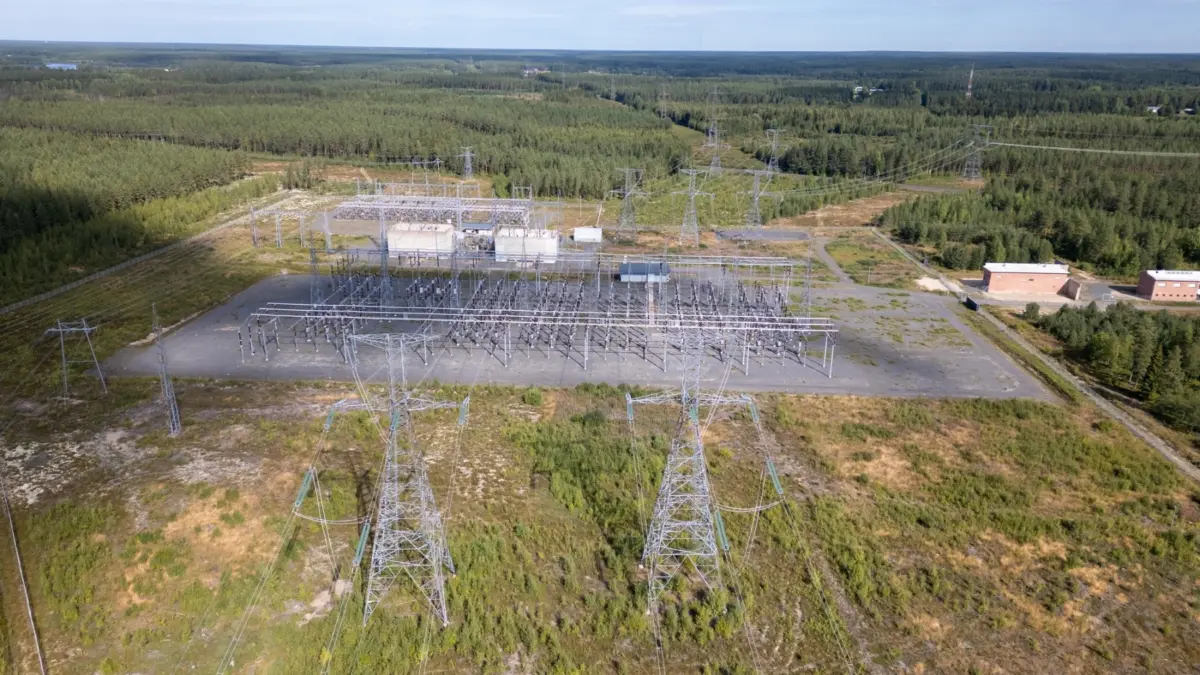
Redundant Substations and Buses: Multi-tiered electrical routing to eliminate single points of failure across the 100-million-square-foot footprint.
Black-Start Capabilities: The ability to autonomously cold-start the entire local power grid from scratch without relying on external transmission signals.
Beyond Power: Water and Wastewater Infrastructure
Power is only one piece of SpaceX’s infrastructural independence strategy. The Grimes County agreement mandates strict environmental and resource management guidelines. SpaceX has committed to deploying commercially reasonable efforts to minimize water consumption, maximize wastewater recycling, and construct a dedicated onsite wastewater treatment facility. Crucially, the agreement restricts the company from drawing on local groundwater supplies for standard operations, pushing the project toward circular water management systems.
Official Statements and Industry Perspectives
The move to self-power has triggered intense debates across energy markets, technology sectors, and regulatory bodies.
The Strategy of Controlling the Stack
In its recent public filings, SpaceX articulated a philosophy that goes far beyond aerospace engineering:
"The key constraints on AI growth are physical chip manufacturing, data center infrastructure, and power generation. The future of AI will be determined by the control of the physical stack."
By producing chips locally to power Tesla vehicles, humanoid Optimus robots, and SpaceX’s proprietary enterprise supercomputing grids, the companies are insulating themselves from external supply chain shocks.
Shifting the Reliability Boundary
For regional grid operators, the Terafab model introduces unprecedented paradigms. The Electric Reliability Council of Texas (ERCOT) routinely manages unprecedented load growth driven by data centers and crypto-mining facilities. However, if the Terafab relies entirely on behind-the-meter generation, its routine operational load is effectively removed from ERCOT’s day-to-day demand forecasts.
As Neil Osnato observed regarding the shift in risk profiles:
"Behind-the-meter generation does not eliminate the reliability problem. It relocates the reliability boundary."
Instead of depending on ERCOT’s transmission lines, substations, and generation portfolio, the safety of the Terafab’s multi-billion-dollar manufacturing lines will rest entirely on SpaceX’s own internal fuel supply chains, mechanical maintenance crews, and redundant software control loops.
Future Outlook: A Precedent for Future AI Megaprojects?
The construction and execution of the Grimes County Terafab will likely serve as a watershed moment for high-density computing infrastructure worldwide. As AI compute clusters balloon from hundreds of megawatts to multiple gigawatts, public utilities are increasingly struggling to interconnect these facilities within acceptable timeframes.
If SpaceX successfully proves that a massive, power-hungry industrial campus can operate cleanly, efficiently, and entirely off-grid via localized natural gas and utility-scale battery storage, it could establish a definitive blueprint for future hyperscalers. Rather than waiting years for regional transmission organizations to upgrade grid capacity, technology leaders may increasingly follow Elon Musk’s lead—bringing their own power plants, their own batteries, and their own resilience models directly to the point of consumption.
For Grimes County and the state of Texas, the Terafab represents an immense economic boon, promising tens of thousands of high-tech jobs and massive capital investment. Yet, it also ushers in a new era where corporate titans act as sovereign energy entities, redefining the boundary lines between private enterprise and public infrastructure.