Executive Overview
The global aerospace landscape is undergoing a profound and potentially irreversible economic schism. A decade ago, the United States and Europe operated on relatively comparable financial footings when it came to purchasing tickets to orbit. Today, that parity has vanished, replaced by a yawning chasm of launch costs that threatens to reshape geopolitical power, commercial enterprise, and scientific access to space.
Driven by the aggressive commercialization of launch services—spearheaded almost single-handedly by SpaceX’s pioneering reusability model—the United States has driven the cost of sending payloads to orbit down to an unprecedented average of $3,225 per kilogram. Meanwhile, traditional spacefaring nations and regional blocs find themselves lagging far behind. Europe, once a peer to the US, now faces average launch costs nearly three times higher for comparable payloads, clocking in at $9,897 per kilogram.
Recent research published in Economics Letters highlights a harsh global reality: the rest of the world is struggling to keep pace. From Japan and China to Russia, Europe, and India, nations are grappling with the structural limitations of legacy aerospace models. As the economics of rocketry shift decisively toward high-cadence operations, massive payload capacities, and—most importantly—vertical landing and reusability, policymakers from Brussels to Tokyo face a difficult crossroads. They must choose between strategic technological sovereignty through expensive domestic rockets or ceding economic competitiveness to the growing monopoly of American commercial launch infrastructure.
Detailed Chronology: The Decade That Upended the Launch Market
To understand the current cost disparity, one must look back at how the commercial space paradigm shifted so radically over the past fifteen years.
2010–2015: The Rise of the Falcon 9 and the Death of Expendability
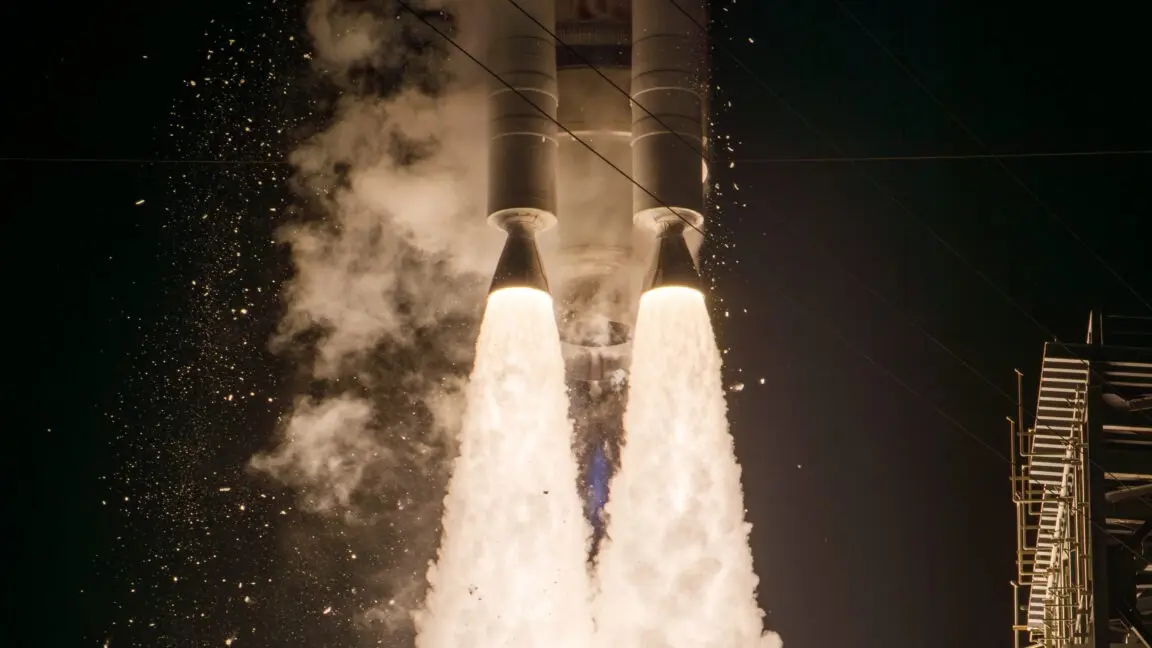
At the turn of the 2010s, the global launch market was characterized by expendable rockets. Whether launching aboard an American Atlas V, a European Ariane 5, or a Russian Proton, the fundamental architecture remained the same: multi-million-dollar hardware was flown once and discarded into the ocean.
During this period, launch costs hovered relatively uniformly across major space powers. However, SpaceX’s persistent testing of propulsive landing technology began to signal a paradigm shift. While traditional agencies and legacy contractors dismissed early booster recovery attempts as a costly distraction, SpaceX systematically gathered flight data, refined its guidance systems, and slowly chipped away at the financial pillars of the expendable rocket industry.
2015–2020: The Breakthrough of Reusability
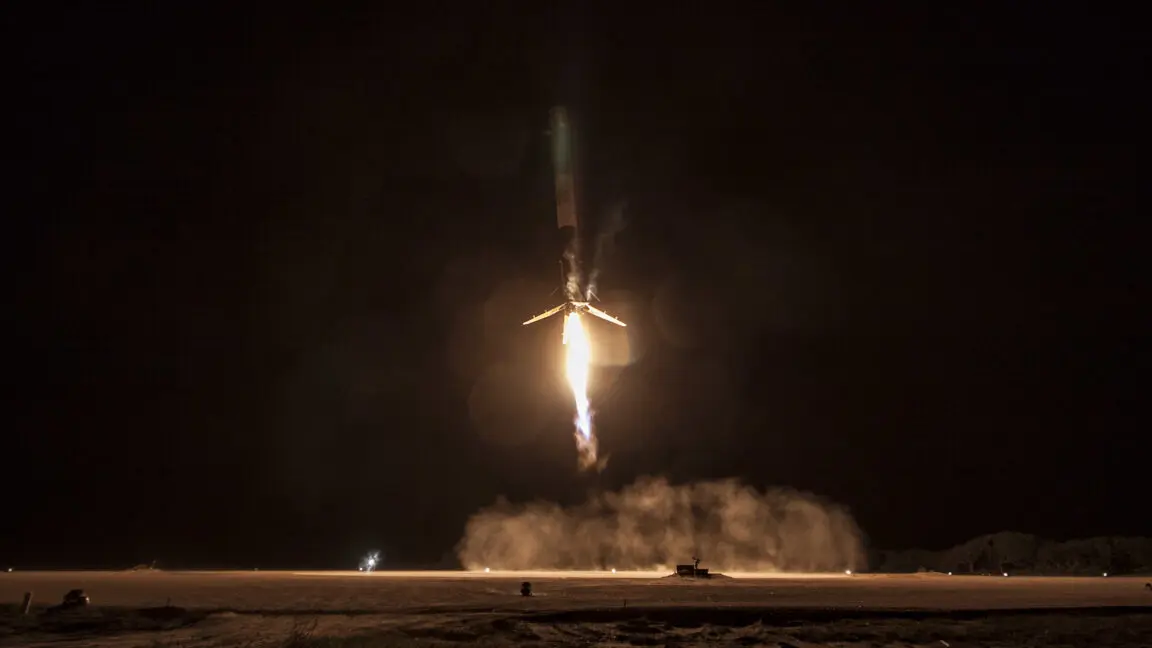
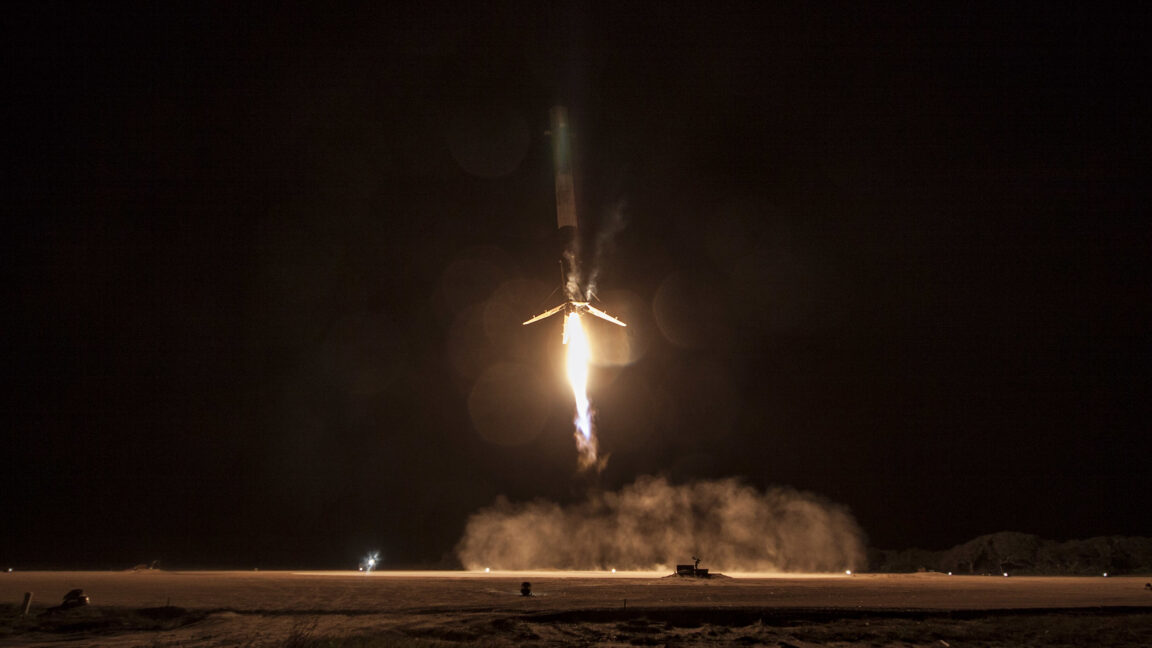
The watershed moment arrived in December 2015, when SpaceX successfully landed a Falcon 9 first stage back at Cape Canaveral for the first time. By 2017, the company began routinely flying previously launched boosters.
This technological achievement broke the foundational economic law of rocketry: that vehicle manufacturing costs scale linearly with the number of flights. By amortizing the high capital expenditure of building a rocket over dozens of subsequent missions, SpaceX slashed its marginal cost per launch. Competitors in Europe, Russia, and Asia, bound by traditional procurement models, cost-plus contracting, and bureaucratic supply chains, found themselves locked into an expendable paradigm that could not match these new unit economics.
2020–Present: The Widening Gulf and the Race to Catch Up
By the mid-2020s, the gap had widened into a canyon. According to publicly available data synthesized by aerospace economists, the average cost per kilogram to low Earth orbit (LEO) starkly illustrates the fragmentation of the global market:
- United States: $3,225 / kg
- Japan: $5,287 / kg
- China: $5,809 / kg
- Russia: $6,682 / kg
- Europe: $9,897 / kg
- India: Nearly $15,000 / kg
While the United States capitalized on private sector innovation and heavy commercial demand—primarily fueled by the deployment of massive satellite constellations like Starlink—other space programs struggled to pivot. Europe’s flagship next-generation rocket, Ariane 6, experienced years of delays, while its experimental reusable booster programs, such as Themis, stalled in developmental limbo.
Supporting Context & Metrics: Decoding the Global Cost Disparity
The raw numbers tell a story of stark contrasts, but examining why these discrepancies exist reveals deep-seated structural issues within different national space programs.
The Myth of Indian Frugality
At first glance, India’s position at the high end of the cost spectrum—nearing $15,000 per kilogram—appears counterintuitive. The Indian Space Research Organisation (ISRO) has cultivated a global reputation for executing exceptionally frugal missions, such as its landmark lunar and interplanetary probes, often achieving feats on a fraction of Western budgets.
However, the authors of the Economics Letters study clarify this paradox:
"The very high figure for India might be counterintuitive as it stands in stark contrast with the narrative of the country’s frugal space program. However, this is a result of focusing on small rocket sizes, which implies that, albeit being low by international standards, fixed costs get amortized over a limited payload."
In rocketry, infrastructure, range operations, mission control, and engineering overhead represent largely fixed costs. When these expenses are distributed across smaller rockets with modest payload capacities, the cost-per-kilogram metric spikes. Conversely, massive heavy-lift vehicles that fly frequently can distribute those same fixed overhead costs across tens of thousands of kilograms of cargo per year, driving unit costs dramatically downward.
The Three Pillars of Cost Reduction
The data clearly demonstrates that reducing the cost of access to space is not a matter of luck, but of engineering and operational discipline. The researchers identified three core factors driving down costs:
- Larger Rockets: Maximizing structural efficiency and volume allows for greater economies of scale.
- Increased Flight Cadence: High-frequency operations ensure that capital assets do not sit idle, maximizing return on investment.
- Vehicle Reuse: Capturing and flying primary structures multiple times breaks the multi-million-dollar replacement cycle per mission.
While the United States—driven by commercial entities—has weaponized all three of these pillars, international players have lagged behind, constrained by political mandates, regional manufacturing distribution (common in Europe’s ESA member states), and risk-averse procurement strategies.
Official Statements & Strategic Dilemmas
The implications of this cost divide extend far beyond corporate balance sheets; they strike at the heart of national security, scientific autonomy, and geopolitical influence. For European policymakers, the situation has created an acute strategic crisis.
Trapped Between a Rock and a Hard Place
Europe’s historic independence in space is enshrined in its commitment to autonomous access via independent launchers like the Ariane and Vega families. However, the sheer economic weight of American commercial dominance is rendering this independent streak financially punishing.
As the study’s authors bluntly summarize:
"Looking specifically at Europe, for now the continent is stuck between a rock and a hard place, having to choose between continuing to depend on lower-cost American launch technology and relying on expensive, poorly scalable domestic technology to expand its strategic presence in space."
If European institutions, telecommunications firms, and scientific agencies choose fiscal pragmatism, they must rely on American providers—chiefly SpaceX—thereby outsourcing critical infrastructure and enriching a foreign competitor. Conversely, if they mandate the use of domestic rockets to protect European aerospace jobs and strategic autonomy, they face exorbitant costs that will inevitably constrain their ability to deploy competitive satellite constellations, Earth observation networks, and deep-space science payloads.
Future Outlook: The Global Scramble for Reusability
To remain viable in the coming decades, traditional spacefaring nations must radically overhaul their technical roadmaps. Expendable rocketry is effectively a dead end for any nation wishing to scale space operations affordably.
The Global Response
- The United States: The undisputed leader in reusability. Beyond SpaceX’s Falcon and Starship programs, virtually every major American commercial rocket currently under development—from Blue Origin’s New Glenn to Relativity Space and Rocket Lab’s Neutron—incorporates propulsive or mid-air-capture reuse.
- China: Recognizing the threat of American dominance, Chinese commercial aerospace firms and state-backed entities are aggressively advancing vertical takeoff, vertical landing (VTVL) technologies. Several Chinese startups have conducted successful low-altitude hop tests, signaling that Beijing intends to close the reusability gap before the decade is out.
- Europe: Europe’s response has been notoriously sluggish. A prime example is the European Space Agency’s (ESA) Themis program—an initiative designed to demonstrate small, suborbital vertical takeoff and landing hops. Originally scheduled to perform low-altitude flight tests by 2022, the vehicle has repeatedly slipped its schedule and has yet to leave the ground. Without an accelerated pivot toward operational reuse, Europe risks being permanently relegated to a secondary tier of space access.
Conclusion
The global space economy has entered a ruthless meritocracy where legacy prestige no longer shields uncompetitive programs from economic reality. As the cost per kilogram to orbit continues to plummet in the United States and potentially China, nations relying on high-cost, low-cadence, expendable launch architectures will find themselves priced out of the cosmos. For Europe, Japan, India, and others, the path forward requires not just incremental updates to existing hardware, but a fundamental reinvention of how rockets are designed, built, flown, and recovered.