Executive Overview
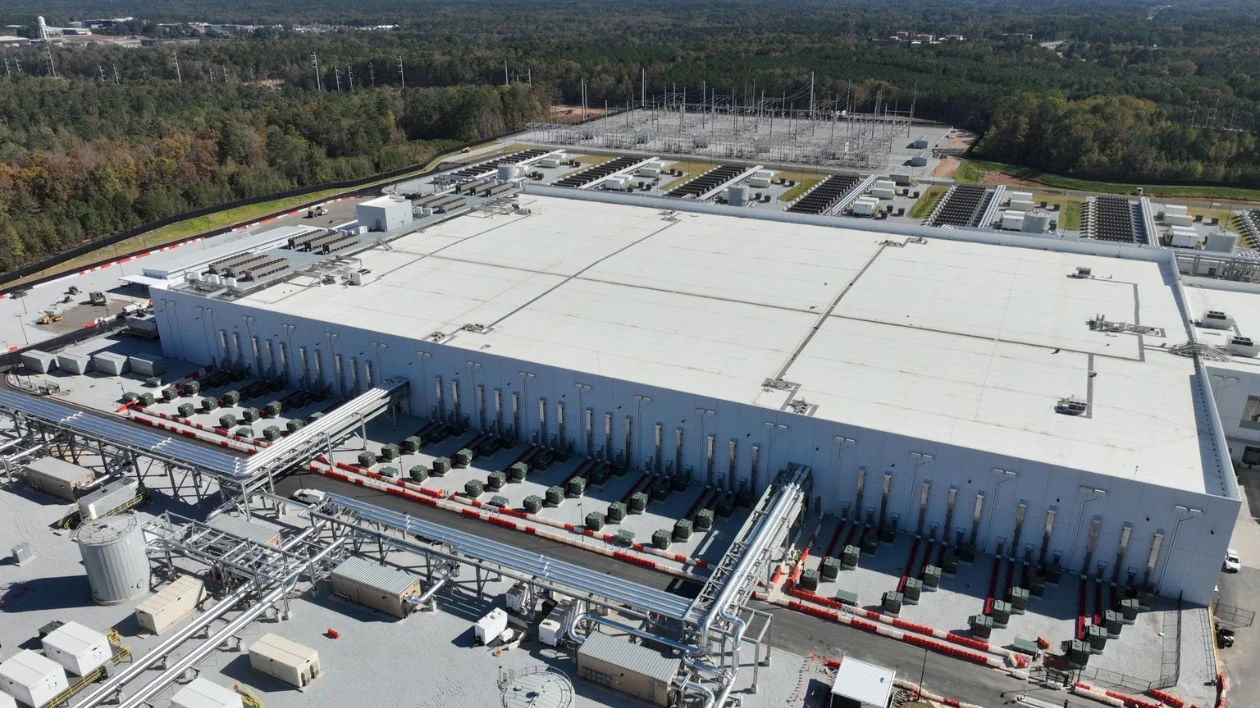
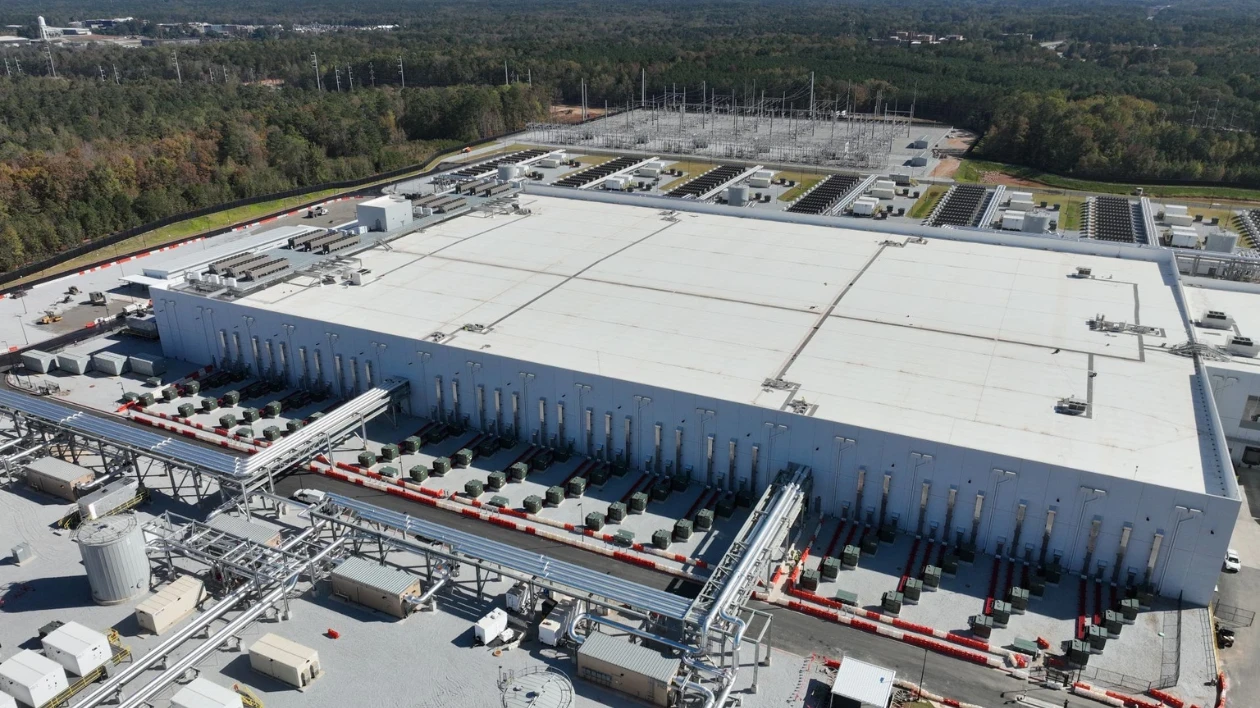
As global demand for cloud computing and artificial intelligence accelerates, the physical infrastructure underlying the modern digital economy has grown exponentially. At the core of this expansion is Microsoft’s global datacenter footprint, an intricate, hyper-distributed network of facilities housing critical compute, storage, and networking hardware. Securing these physical assets requires an unbroken operational posture where on-site security personnel monitor physical access, analyze live video feeds, investigate perimeter alerts, and execute real-time incident responses around the clock.
However, rapid global scaling introduced an inherent enterprise challenge: maintaining operational consistency, security compliance, and system responsiveness across thousands of physical security servers deployed across hundreds of facilities worldwide. These critical systems—historically managed as hybrid or localized deployments due to strict network segmentation and resiliency requirements—risked operational drift, fragmented management, and administrative overhead.
To resolve these challenges without compromising local operational autonomy, Microsoft’s physical security engineering organization executed a comprehensive modernization strategy. By deploying Azure Arc, Azure Virtual Desktop (AVD), Azure Update Manager, and Azure Monitor, Microsoft established a unified hybrid management layer across its global datacenter operations.
This operational shift delivered immediate quantitative results:
- Application launch times for operators improved by approximately 12x.
- Software release cycles accelerated by roughly 6x, turning multi-week update windows into automated processes completed in hours.
- Automated patch management saved thousands of operational hours annually, enabling a lean engineering team to govern a rapidly expanding global footprint.
Detailed Chronology: The Hyper-Expansion Challenge
+-----------------------------------------------------------------------------------+
|                            HYPERSCALE GROWTH ERA                                  |
| - Datacenter footprint expands globally to support Cloud & AI demand.             |
| - Physical security infrastructure scales to thousands of localized servers.       |
| - Core systems run in highly segmented, air-gapped on-prem/hybrid networks.       |
+-----------------------------------------------------------------------------------+
                                          │
                                          ▼
+-----------------------------------------------------------------------------------+
|                          THE OPERATIONAL DRIFT BOTTLENECK                         |
| - Fragmented management tools across isolated datacenter sites.                   |
| - High operational friction: manual patching, slow app launches, long update cycles.|
| - Mandate: Standardize operations WITHOUT moving local workloads off-premises.    |
+-----------------------------------------------------------------------------------+
                                          │
                                          ▼
+-----------------------------------------------------------------------------------+
|                       HYBRID UNIFICATION ARCHITECTURE                             |
| - Control Plane: Azure Arc brings centralized governance to on-prem servers.      |
| - Workstation Layer: Azure Virtual Desktop (AVD) deployed close to infrastructure.|
| - Automation & Observability: Azure Update Manager, Azure Policy, Azure Monitor.  |
+-----------------------------------------------------------------------------------+
                                          │
                                          ▼
+-----------------------------------------------------------------------------------+
|                        MEASURABLE OPERATIONAL OUTCOMES                            |
| - 12x Faster Application Launch Speeds                                            |
| - 6x Faster Host Image Release Cycles                                             |
| - Thousands of Hours Saved Annually via Automated Patching                        |
+-----------------------------------------------------------------------------------+
The Initial Scaling Landscape
During the initial phase of hyperscale expansion, physical security platforms were deployed locally at each datacenter cluster. This architecture prioritized fault tolerance, low latency, and operational isolation. If an external network link degraded, physical security systems—such as access control readers, perimeter intrusion detection systems, and video management infrastructure—needed to remain fully operational.
Consequently, these applications ran on physical servers and local virtual machines embedded within isolated operational networks. While this design achieved local autonomy, it generated administrative complexity:
- Operational Drift: Local variations in hardware configurations, operating system patch levels, and application versions emerged across regions.
- Maintenance Friction: Software updates, configuration audits, and security compliance checks required manual intervention or site-specific scripting.
- Inconsistent User Experience: Security operators executing shifts across different regions or remote consoles experienced variable application responsiveness and login latency.
The Strategic Imperative
The physical security engineering team recognized that simply moving these systems directly into the public cloud was impractical. Edge infrastructure must remain physically close to security hardware, and local autonomy during network disruptions remains non-negotiable for critical facility safety.
The mandate was clear: Microsoft needed to extend its cloud-native management and virtualization capabilities down into its distributed on-premises and edge security infrastructure. The solution had to centralize control, enforcement, and monitoring without changing where the physical security workloads executed or degrading local security perimeters.
Technical Architecture: Building the Hybrid Control Plane
                                GLOBAL AZURE CONTROL PLANE
       ┌─────────────────────────────────────────────────────────────────────────┐
       │ - Azure Policy & Governance              - Azure Update Manager         │
       │ - Azure Monitor & Log Analytics          - Azure Role-Based Access      │
       │ - Azure Copilot Observability Agent      - Managed Identities           │
       └────────────────────────────────────┬────────────────────────────────────┘
                                            │
                                 Azure Arc Extended Plane
                                            │
               ┌────────────────────────────┴────────────────────────────┐
               │                                                         │
               ▼                                                         ▼
   ┌───────────────────────┐                                 ┌───────────────────────┐
   │ DATACENTER REGION A   │                                 │ DATACENTER REGION B   │
   │ (On-Premises / Edge)  │                                 │ (On-Premises / Edge)  │
   ├───────────────────────┤                                 ├───────────────────────┤
   │ [ Azure Arc Agent ]   │                                 │ [ Azure Arc Agent ]   │
   │  Physical Security OS │                                 │  Physical Security OS │
   │  & Access Controllers │                                 │  & Access Controllers │
   ├───────────────────────┤                                 ├───────────────────────┤
   │ [ Azure Virtual  ]    │                                 │ [ Azure Virtual  ]    │
   │ [ Desktop Hosts  ]    │                                 │ [ Desktop Hosts  ]    │
   └───────────────────────┘                                 └───────────────────────┘
Extending Azure Arc to On-Premises Physical Security
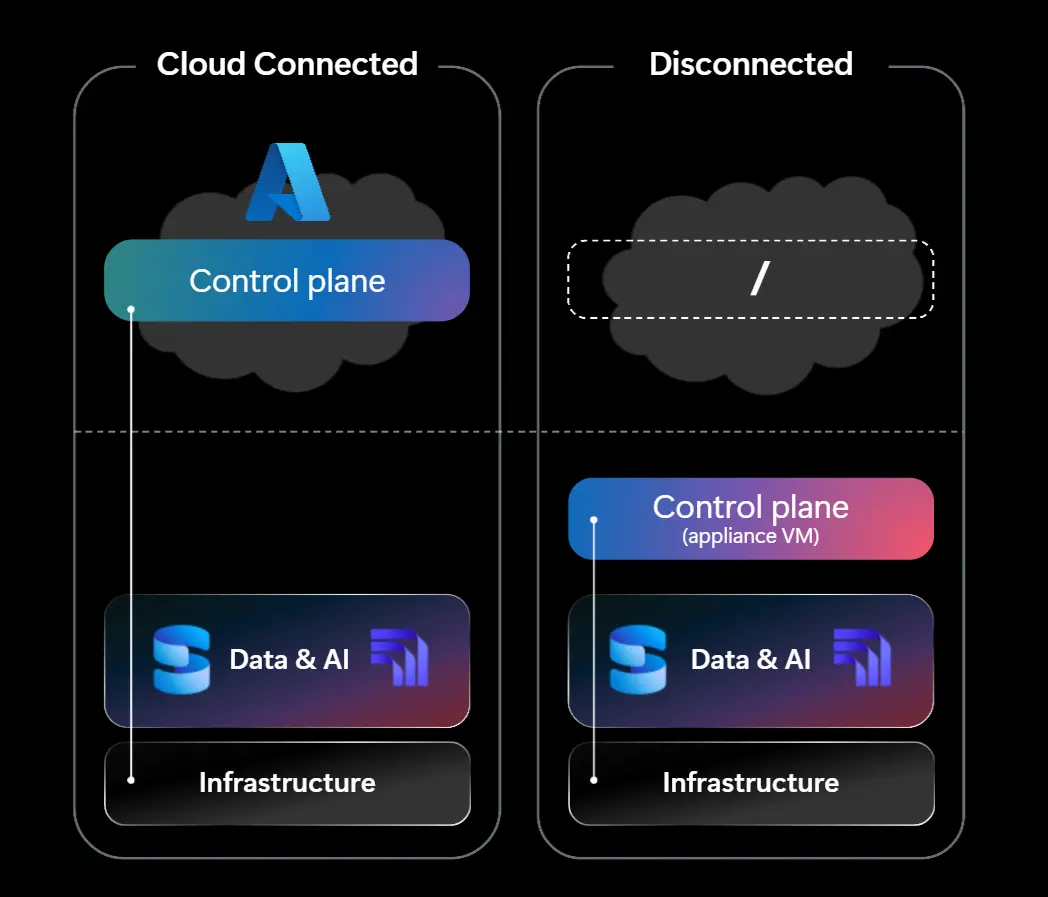
To bridge the gap between cloud control and edge execution, the team implemented Azure Arc as the core management fabric. Azure Arc projects physical servers, virtual machines, and edge devices into Azure Resource Manager (ARM). Once onboarded, servers located inside segmented datacenter networks appear alongside cloud-native virtual machines within a single, unified administrative dashboard.
Core Architectural Benefits of Azure Arc Integration:
- Centralized Visibility Without Relocation: The physical security systems remained on-premises near physical sensors and cameras, but gained standard resource IDs, tagging structures, and subscription management in Azure.
- Unified Compliance Enforcement: Using Azure Policy and Guest Configuration, system configurations are continuously evaluated against baseline security standardizations. If a machine configuration drifts (e.g., an unauthorized registry modification or disabled service), Azure Policy detects and flags the anomaly automatically.
- Zero-Trust Access Control: By integrating Managed Identities and Azure Role-Based Access Control (RBAC), the architecture reduced reliance on local static domain credentials. Operators and administrators interact with management tools using fine-grained identity permissions governed by Azure Active Directory (Microsoft Entra ID).
Standardizing Maintenance via Azure Update Manager
Historically, patching thousands of physical and virtual servers distributed globally required extensive manual planning, local change windows, and site-by-site execution.
By leveraging Azure Update Manager across Arc-enabled infrastructure, the operations team consolidated update routines into automated, rule-based schedules. The system automates patch assessment, deployment orchestration, and reboot sequences across disparate hybrid networks, verifying post-patch system health automatically.
Application Modernization via Azure Virtual Desktop
While Azure Arc streamlined back-end server management, the frontline operator experience required a parallel evolution. Security operators rely on complex multi-monitor desktop suites to view video telemetry, process access requests, and act on facility alarms.
To standardize this desktop layer, the team deployed Azure Virtual Desktop (AVD), re-architecting how security applications are presented to shift operators:
- Proximity Optimization: Virtual desktop host pools were positioned in physical proximity to the underlying security backend servers, eliminating network latency across high-bandwidth video streams and access queries.
- Immutable Infrastructure Blueprint: Rather than manually updating persistent desktop machines, the team transitioned to an automated, image-based host refresh cycle. Golden virtual machine images are continuously maintained, pre-configured with security tooling, and automatically deployed across host pools via automated pipelines.
Supporting Context & Metrics: Quantitative Operational Assessment
The modernization of Microsoft’s physical security operations layer delivered measurable performance gains across application performance, infrastructure deployment speed, and ongoing system governance.
| Operational Benchmark | Legacy / Baseline Model | Modernized Azure Architecture | Performance Gain / Impact |
|---|---|---|---|
| Application Launch Latency | High latency across localized endpoints; multi-minute initialization | Optimized AVD sessions positioned near backend data layers | ~12x Acceleration in app launch speed |
| Host Environment Update Cycle | Weeks to months of coordinated, site-by-site deployment | Automated pipeline building from golden desktop images | ~6x Faster deployment cycles (reduced to hours) |
| Patch Management Overhead | Manual tracking, regional change boards, site-specific scripting | Centralized orchestration via Azure Update Manager | Thousands of operational hours saved annually |
| System Visibility & Telemetry | Fragmented local event logs and isolated site monitoring | Aggregated telemetry via Azure Monitor & Log Analytics | Real-time, global operational dashboards |
                       BENCHMARK IMPROVEMENTS AT A GLANCE

Application Launch Speed  [████████████] 12x Faster
Host Release Cycles       [██████] 6x Faster
Patch Management Hours    [████████████████████] Saved 1,000s of Hours/Year
Deep-Dive Analysis of Operational Metrics
1. Operator Responsiveness (12x Launch Acceleration)
In critical physical security environments, seconds matter. Under legacy configurations, security applications loading extensive server topologies, floor plans, and live camera feeds experienced latency during startup. By co-locating AVD session hosts near backend access control databases and streaming nodes, compute-heavy application rendering was offloaded to optimized virtual hosts. Application launch times dropped by roughly 12x, allowing operators to initiate monitoring tools rapidly upon shift startup or incident escalation.
2. Infrastructure Lifecycle Acceleration (6x Cycle Improvement)
Maintaining persistent operating systems across thousands of remote operator consoles traditionally created software drift. By moving to immutable host refreshes driven by standardized images, host updates that previously required weeks or months of regional coordination are now executed within hours. This 6x acceleration in deployment pipelines ensures operational security patches and application features reach frontline personnel immediately.
3. Continuous Observability & Predictive Maintenance
Integrating Azure Monitor, Azure Copilot Observability Agent, and Log Analytics across the global hybrid footprint transformed the engineering team’s maintenance paradigm from reactive troubleshooting to proactive remediation. Real-time telemetry tracks session health, round-trip time (RTT), bandwidth utilization, and client-side application stability. Telemetry patterns indicating performance degradation trigger automated alerts or auto-remediation runbooks via Azure Automation before an operator experiences a service interruption.
Official Statements & Engineering Philosophy
Reflecting on the operational overhaul, platform architects emphasized that solving hybrid enterprise challenges at scale requires standardizing management planes rather than forcing architectural homogenization.
"The primary objective was never to force every critical physical system into the public cloud for the sake of cloud migration. Many physical security workloads must reside on-premises to guarantee local resiliency, maintain sub-millisecond hardware interactions, and conform to regional data sovereignty rules. Azure Arc allowed us to apply standard Azure governance, policy, and automation directly to our edge servers without compromising local stability."
— Engineering Lead, Microsoft Global Physical Security Infrastructure
Highlighting the operator-centric outcome, workstation deployment engineers noted:
"By pairing Azure Arc at the infrastructure layer with Azure Virtual Desktop at the presentation layer, we decoupled the operator’s physical hardware from application logic. This allowed us to treat workstation environments as ephemeral, automatically refreshed components. The result is a 12x reduction in application launch overhead and a platform that adapts smoothly alongside Microsoft’s global datacenter expansion."
Strategic Takeaways & Enterprise Implementation Blueprint
The architectural pattern established by Microsoft’s physical security team serves as a production-validated reference design for enterprises managing complex, multi-site hybrid environments (such as healthcare systems, global manufacturing networks, logistics hubs, and financial institutions).
                      HYBRID OPERATIONAL BLUEPRINT FOR ENTERPRISES

       +------------------------------------------------------------------------+
       | 1. DECOUPLE MANAGEMENT FROM LOCATION                                   |
       |    Enforce unified governance via Arc without moving workloads.         |
       +------------------------------------------------------------------------+
                                          │
                                          ▼
       +------------------------------------------------------------------------+
       | 2. IMPLEMENT IMMUTABLE WORKSTATION CONTEXTS                            |
       |    Streamline operator UX using standardized Virtual Desktop pools.     |
       +------------------------------------------------------------------------+
                                          │
                                          ▼
       +------------------------------------------------------------------------+
       | 3. AUTOMATE LIFECYCLE MANAGEMENT                                       |
       |    Shift patching and policy enforcement to continuous pipelines.     |
       +------------------------------------------------------------------------+
                                          │
                                          ▼
       +------------------------------------------------------------------------+
       | 4. CENTRALIZE HYBRID OBSERVABILITY                                     |
       |    Unify edge, on-prem, and cloud telemetry into a single analytics engine.|
       +------------------------------------------------------------------------+
Core Implementation Principles
- Decouple the Management Plane from Workload Placement: Organizations do not need to migrate physical assets to cloud datacenters to gain cloud operational efficiencies. Implementing hybrid control planes like Azure Arc brings cloud governance directly to on-premises bare-metal and virtualized infrastructure.
- Standardize Workstations via Virtualization: Running mission-critical management applications natively on endpoint hardware introduces client-side latency, drift, and maintenance overhead. Centralizing desktop execution into virtual desktop environments positioned close to backend databases minimizes application launch delays and simplifies image-level updates.
- Automate Update Lifecycle & Policy Enforcement: Enterprise scale renders manual patching unviable. Transitioning to automated patch orchestration tools (e.g., Azure Update Manager) and declarative policy compliance frameworks (e.g., Azure Policy) reduces operational overhead while lowering security risk profiles.
- Unified Observability Drives Proactive Maintenance: System logging must not remain isolated within local facilities. Centralizing telemetry into a unified analytics pipeline enables cross-site correlation, predictive failure detection, and automated remediation.
Future Outlook: Scaling Datacenter Operations for the AI Era
As Microsoft continues to construct next-generation cloud and AI datacenter campuses worldwide, the unified physical security architecture provides a standardized operational foundation. New facilities can be onboarded to the global physical security fabric within hours through automated Azure Arc registration scripts and pre-configured Azure Virtual Desktop host pools.
Looking ahead, Microsoft plans to deepen its integration of advanced telemetry and AI-driven operational insights into the platform:
- Predictive Diagnostics: Leveraging Azure Copilot Observability to process incoming telemetry, identify hardware degradation patterns prior to failure, and automatically trigger maintenance tickets.
- Dynamic Capacity Management: Scaling virtual desktop host capacity dynamically based on operator shift schedules and active regional incident responses.
- Expanded Edge Automation: Extending additional Azure edge services into localized datacenter nodes to maintain full operational capabilities during prolonged WAN connectivity disruptions.
By standardizing infrastructure management, streamlining desktop delivery, and automating governance, Microsoft has built a resilient, scalable, and highly performant physical security platform designed to protect the physical engines of the modern AI cloud.