Executive Overview
For decades, the philosophy guiding data center design was remarkably straightforward: build raw capacity and build it fast. When enterprise workloads were relatively predictable, sequential, and moderate in scale, this foundational approach served the industry well. Facilities could be planned years in advance with a standard template, scaling power and cooling requirements linearly as demand dictated.
Today, that paradigm is fracturing under the relentless weight of artificial intelligence. The explosive growth of high-density, dynamic AI and machine learning workloads has fundamentally altered the equation. Modern facilities can no longer afford to treat power, thermal management, compute density, and operational lifecycle management as isolated silos. A change in power architecture instantly shifts cooling demands; thermal decisions dictate water and energy consumption; and shifting compute loads ripple back through the entire structural framework.
With more than 1,500 new data centers currently in development across the United States—increasingly clustered in rural regions to access raw land and high-capacity transmission corridors—operators face a pivotal, once-in-a-generation window. Rather than attempting costly, reactive retrofits down the line, developers have the unique opportunity to bake comprehensive efficiency into infrastructure from day one.
As articulated by industry leaders like Chris Butler, President of the Embedded and Critical Power Business at Flex and incoming Chief Technology and Strategy Officer at Axiom Solutions International, the future of AI infrastructure is not about racing to deploy raw square footage or leaning on a single technological silver bullet. Instead, it demands a holistic, systems-level approach where power, cooling, compute, and operations are synchronized from the blueprint phase through to continuous daily execution.
Detailed Chronology: The Evolution of Data Center Efficiency
To understand how the industry arrived at this critical juncture, it is helpful to trace the evolution of data center efficiency benchmarks and design methodologies over the past two decades.
2007–2015: The PUE Awakening and Early Standardization
For years, energy usage was largely unmeasured or evaluated through fragmented metrics. However, the introduction of Power Usage Effectiveness (PUE)—formalized by The Green Grid in 2007—transformed the conversation. In its infancy, the industry standard for PUE hovered around a staggering 2.50, meaning that for every watt delivered to IT equipment, an additional 1.5 watts were consumed by cooling, lighting, and power distribution infrastructure.
During this era, operators focused heavily on basic containment strategies, hot/cold aisle configurations, and upgrading legacy uninterruptible power supplies (UPS). While these steps yielded incremental gains, workloads remained traditional, CPU-centric, and low-density, typically demanding between 3 to 5 kilowatts (kW) per rack.
2016–2023: Hyper-Scale Expansion and the Efficiency Plateau
As cloud computing exploded, hyper-scale operators drove PUE figures down aggressively. By optimizing air-flow management, implementing economizer-based free cooling, and deploying high-efficiency transformers, the industry average steadily improved. Newer facilities began routinely achieving PUEs below 1.5, and elite hyper-scale campuses pushed toward 1.2.
Yet, this era was still predicated on predictability. Infrastructure was engineered for steady-state workloads where power draws remained relatively flat over long stretches. Cooling was almost exclusively air-based, and facilities were distributed near major metropolitan peering hubs, regardless of escalating grid constraints.
2024–2026 and Beyond: The High-Density AI Disruptor
The mass commercialization of generative AI ruptured the comfort zone of traditional data center engineering. Modern GPU clusters—packed with power-hungry accelerators—now routinely demand density profiles ranging from 40 kW to upwards of 100 kW per rack. Air cooling has hit its physical limits, forcing a rapid, industry-wide pivot toward direct-to-chip liquid cooling and advanced immersion technologies.
Concurrently, average PUE metrics have dropped further—the Uptime Institute Global Data Center Survey pegs the global average at 1.52, with state-of-the-art facilities achieving 1.3 or lower. However, industry veterans emphasize that PUE alone is no longer an adequate north star. Modern AI data center design must simultaneously factor in dynamic grid interactions, water conservation, carbon intensity, energy reuse, and localized supply chain resilience.
Supporting Context & Metrics: Navigating the Multi-Dimensional Infrastructure Matrix
The shift from single-metric optimization to multi-dimensional systems engineering requires operators to track a broad, interconnected suite of performance indicators across the entire lifecycle of a facility.
Rethinking the Metric Baseline
While PUE remains a valuable baseline for overall electrical efficiency, it fails to capture the full environmental and operational footprint of an AI-driven data center. A facility might boast an exceptional PUE of 1.2, yet suffer from massive water stress if it relies heavily on evaporative cooling towers in arid regions. Conversely, a closed-loop liquid cooling system might conserve water but present intricate corrosion challenges and rigorous maintenance overhead.
To maintain resilience, modern operators are adopting an expanded framework that evaluates performance through several interconnected lenses:
- Water Usage Effectiveness (WUE): Measuring the liters of water consumed per kilowatt-hour of IT load, becoming critical as water scarcity triggers local regulatory pushback.
- Carbon Usage Effectiveness (CUE): Tracking operational carbon emissions relative to IT energy consumption, integrating real-time grid carbon intensity data into workload scheduling.
- Compute Utilization & Efficiency: Ensuring that high-density silicon is not idling inefficiently, thereby squandering embodied carbon and operational energy.
- Energy Reuse Effectiveness (ERE): Accounting for waste heat captured and redirected to district heating, agricultural applications, or industrial processes.
- Grid Interaction Flexibility: Assessing a facility’s capacity to dynamically curtail load, participate in demand-response programs, or integrate alternate on-site power generation (such as small modular reactors, fuel cells, or advanced energy storage systems) to prevent local grid destabilization.
The Rural Migration and Supply Chain Convergence
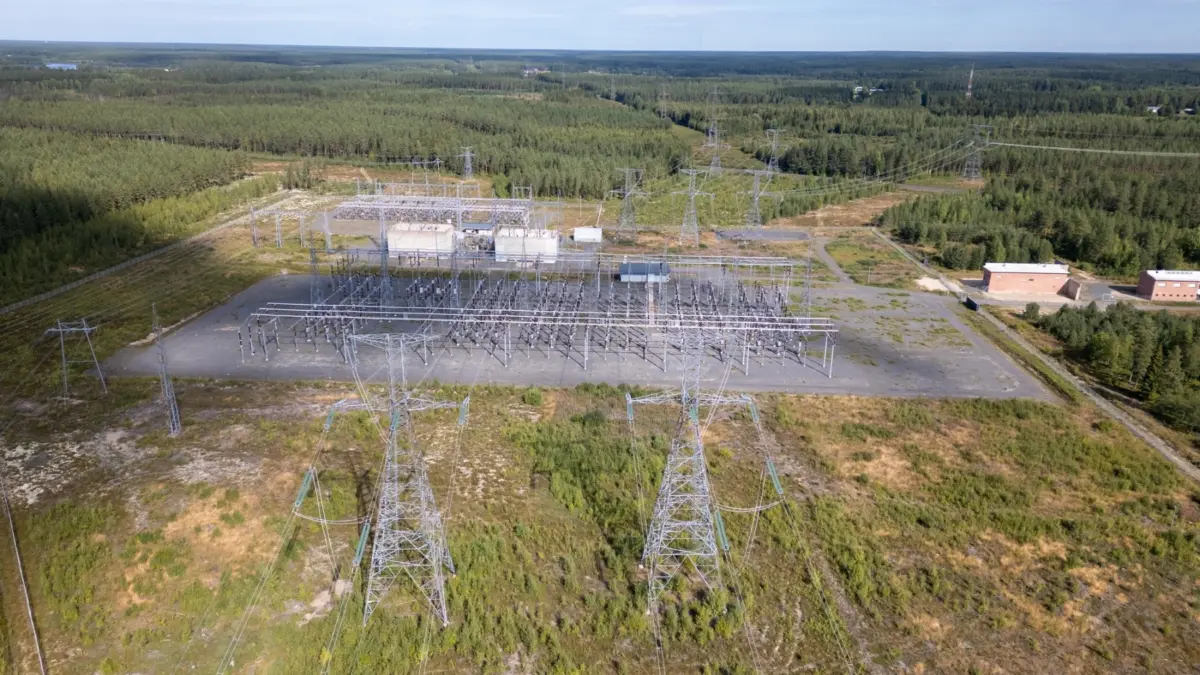
This technical complexity is unfolding against a dramatic geographic backdrop. With more than 1,500 new data center projects currently winding through development pipelines across the United States, the center of gravity is shifting decisively away from congested urban hubs toward rural communities. These locations offer the expansive footprints and high-voltage substation access necessary to feed multi-megawatt AI clusters.
However, building in rural areas introduces unique logistics and supply chain hurdles. To mitigate these risks, the industry is seeing a profound strengthening of domestic manufacturing and engineering partnerships. Bringing production, integration, and system design closer together allows data center developers to customize modular power skids and liquid-cooling distribution units rapidly, shielding projects from global supply chain volatility and accelerating time-to-market.

Official Perspectives: Industry Leadership on Systems-Level Design
The transition toward integrated infrastructure is championed by leaders at the intersection of manufacturing, power electronics, and cloud architecture. Chris Butler, President of the Embedded and Critical Power Business at Flex and incoming Chief Technology and Strategy Officer at Axiom Solutions International, emphasizes that the old playbook of discrete component procurement is officially obsolete.
"For years, data center design was driven by a straightforward goal: build enough capacity to meet demand. That approach made sense when workloads were more predictable, but AI is changing that equation," Butler explains. "Today’s infrastructure needs to support higher-density, dynamic workloads while making better use of power and resources. This shift is about more than efficiency for efficiency’s sake."
According to Butler, the cascading interdependencies of modern AI hardware mean that isolated decision-making is a recipe for operational failure. When an engineering team adjusts a power distribution unit (PDU) to handle surging transient loads, it directly impacts thermal profiles, which in turn influences cooling infrastructure and water usage.
"Teams must coordinate decisions and consider the upstream and downstream consequences of their choices," Butler notes. "This helps operators balance the need for new capacity against how effectively they use existing infrastructure. Addressing these considerations during design can also reduce reliance on costly retrofits later."
Furthermore, as AI infrastructure scales rapidly to meet insatiable model training and inference demands, industry stakeholders stress that capital expenditure (CapEx) must be matched by meticulous operational visibility. By embedding metrics into every stage of development—from site selection and electrical architecture to daily operational telemetry—operators can safeguard margins, protect local power grids, and future-proof their investments against shifting technological requirements.
Future Outlook: Building for What Comes Next
As the artificial intelligence buildout charges ahead, the defining metric of success will undergo a fundamental transformation. Capacity alone—measured purely in megawatts delivered or square footage constructed—is no longer a sufficient indicator of corporate health or technical prowess.
The next generation of industry leaders will be distinguished by their ability to harmonize power, cooling, compute, and operations into a single, cohesive ecosystem. By embracing a systems-level approach from day one, operators can unlock unprecedented operating efficiencies, enhance facility resilience against grid volatility, and navigate the intricate environmental demands of high-density computing.
Ultimately, the data centers that thrive in the AI era will not be remembered simply for how much raw power they could draw from the grid, but for how intelligently, efficiently, and reliably they converted that power into intelligence.