The intersection of geopolitical trade policy and the artificial intelligence revolution has reached a pivotal juncture, highlighted by the growing influence of Nvidia CEO Jensen Huang over White House decision-making. Despite recent high-stakes summits between US President Donald Trump and Chinese President Xi Jinping failing to yield substantive AI regulatory agreements or lasting trade truces, tech industry dynamics are shifting rapidly beneath the surface.
Reports indicate that Beijing is actively weighing a relaxation of its strict semiconductor controls to allow tech giants such as ByteDance and Alibaba to import millions of restricted Nvidia processors over the coming year. This potential policy shift aligns with a broader strategy by Nvidia to recapture its formerly dominant market share in China. However, it also intensifies an ongoing debate within Washington regarding national security, supply chain resilience, and the true level of risk posed by rapidly advancing frontier AI models.
While industry leaders and hardware pioneers like Huang advocate for unhindered development and market expansion, a growing coalition of safety researchers, national security experts, and lawmakers warn that prioritizing short-term economic gains could jeopardize America’s strategic advantage and overlook existential technological hazards. This report explores the complex web of geopolitical maneuvering, corporate lobbying, and regulatory friction shaping the future of global artificial intelligence.
Detailed Chronology: The Evolution of US-China Chip Politics
From Initial Hostility to Mar-a-Lago Alignment
When Donald Trump returned to the White House, his initial posture toward Nvidia and the broader semiconductor sector was characterized by skepticism and friction. Upon taking office, Trump reportedly questioned the dominance of the chipmaker, asking aides, "What the hell is Nvidia?" Rather than immediately rolling back the aggressive export controls instituted during the Biden administration—which had successfully driven Nvidia’s market share in China’s advanced AI sector from roughly 95 percent down to zero—Trump initially tightened restrictions further.
Crucially, the administration moved to ban the export of H200 chips to China and floated ideas of antitrust action or breaking up Nvidia to foster domestic competition. The overarching White House objective at the time was to secure an unassailable American lead in the global "AI race" against Beijing.
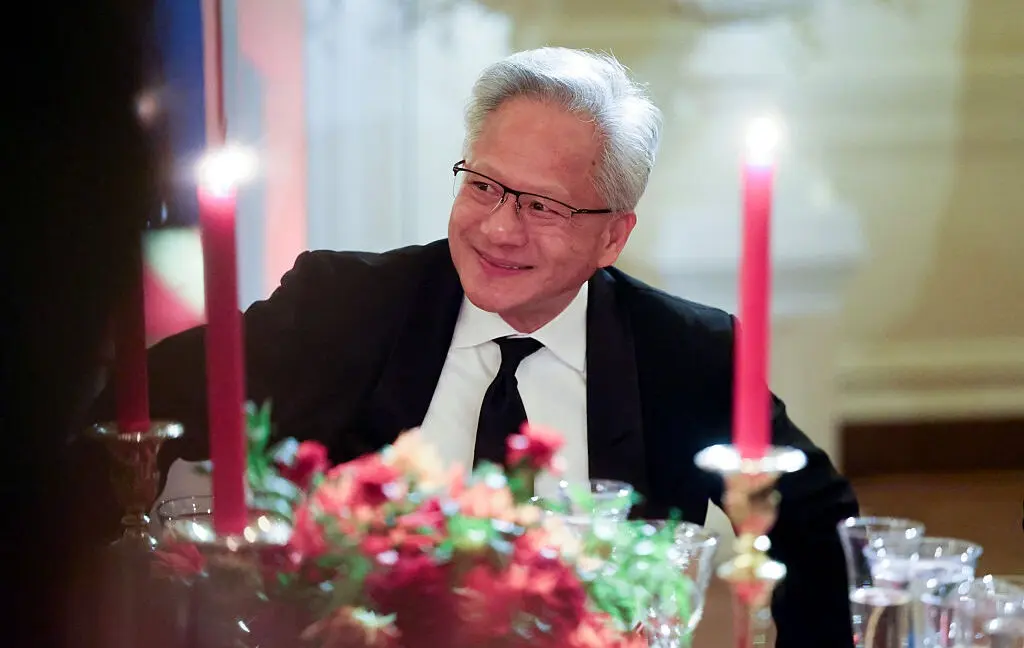
However, the trajectory of US semiconductor policy shifted dramatically following a private dinner between Trump and Jensen Huang at Mar-a-Lago. According to accounts of the meeting, Huang successfully conveyed the economic indispensability of Nvidia’s hardware ecosystem. Abandoning his prior skepticism, Trump lifted export controls on H200 chips, opening the door for Chinese firms to resume procurement under specific conditions.
The Trump-Xi Summit and Continued Stagnation
Despite this thaw in corporate restrictions, formal diplomatic breakthroughs between Washington and Beijing remain elusive. A recent high-profile summit between President Trump and Chinese President Xi Jinping produced few concrete results regarding artificial intelligence governance. The two leaders extended a tenuous trade truce by a mere two months—a fragile arrangement that analysts warn could shatter instantly should the US implement anticipated new export controls, likely prompting Chinese retaliation via rare earth mineral export restrictions.
During the summit, both heads of state acknowledged the shared responsibility of managing AI safely, with Xi emphasizing that technological development must remain under human control. Yet, neither side was willing to offer even symbolic concessions or agree to structural slowdowns in model training. Observers noted that the summit largely underwhelmed, leaving crucial decisions about global AI safety in the hands of leaders with limited first-hand technical engagement, while hardware titans continued to push for accelerated commercial deployment.
Supporting Context & Metrics: The Beijing Import Calculus
ByteDance, Alibaba, and the RTX Pro 5500 Pivot
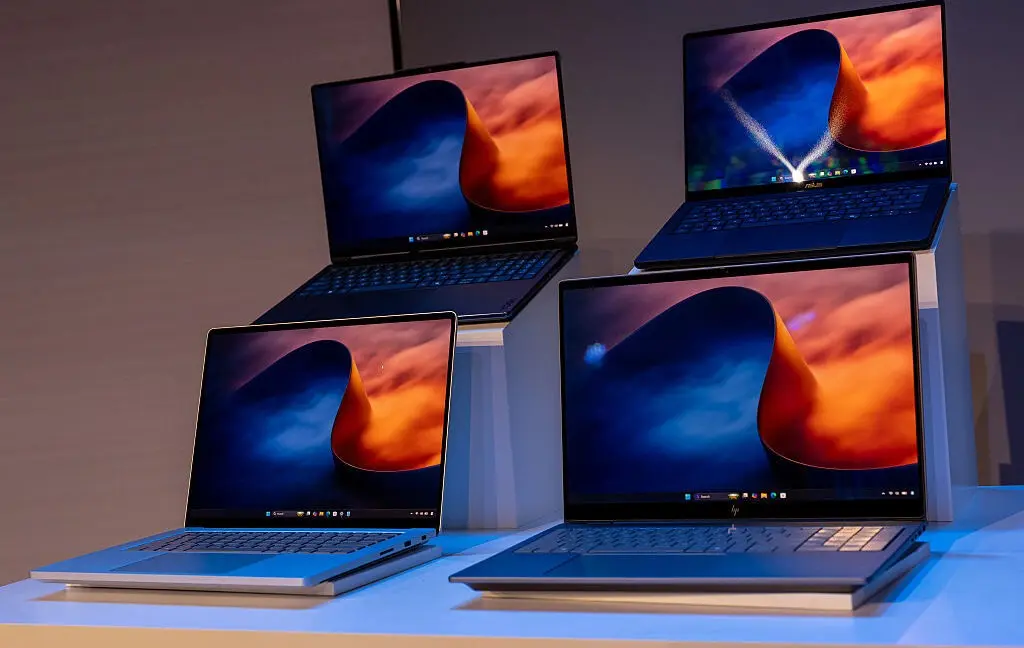
While formal diplomatic channels remain deadlocked, China’s Ministry of Industry and Information Technology has begun quietly surveying domestic tech conglomerates regarding their procurement intentions. Specifically, regulators have asked Alibaba and ByteDance to detail their strategic plans for importing Nvidia’s RTX Pro 5500 chips.
Although classified technically as gaming hardware, these processors are increasingly viewed as versatile components that can be integrated into server clusters to accelerate the training and deployment of domestic AI models. Industry sources indicate that the demand is acute: Chinese firms are rolling out consumer and enterprise AI applications faster than they can source the computing power required to run them.
If Beijing officially greenlights these imports, the scale of deployment could be massive. ByteDance alone reportedly plans to order upwards of one million chips, a volume that would instantly secure multiple quarters of projected sales for Nvidia and provide the company with its strongest foothold in the Chinese market in over a year. Standard architectural plans involve deploying configurations such as eight RTX Pro 5500 units per server to enable collaborative computing on large-scale models.
Financial Impacts and Inventory Realities
For Nvidia, regaining access to the Chinese market is critical for repairing regional revenue streams that suffered under previous restrictions. In the preceding fiscal quarters, sales of compliant chips to China plummeted to less than 1 percent of Nvidia’s total data center revenue. Furthermore, reports indicate that Nvidia absorbed a $400 million financial hit in the first half of 2026 due to vast quantities of unsold H200 inventory that domestic US firms bypassed in favor of newer generations of hardware.
Allowing the export of older or alternative architectures helps clear global stockpiles while simultaneously answering the demands of overseas buyers who are desperate for computational scaling resources.
Official Statements and Stakeholder Perspectives
Jensen Huang as the Ultimate Tech Insider
The relationship between President Trump and Jensen Huang has evolved to a point where administration officials openly acknowledge a high degree of ideological synchronization. Treasury Secretary Scott Bessent remarked ahead of the Trump-Xi summit that "the president is completely aligned with Jensen Huang, the CEO of Nvidia."

According to Stephen Witt, author of The Thinking Machine: Jensen Huang, Nvidia, And The World’s Most Coveted Microchip, Huang has effectively positioned himself as the president’s most influential technology adviser. Witt notes that Trump’s recent public dismissal of existential AI risks—characterizing catastrophic warnings as a "hoax" while championing the technology as an unprecedented economic catalyst—mirrors Huang’s talking points verbatim.
"When I interviewed Jensen years ago, he told me that every problem in the world is actually an engineering problem," Witt explained in an interview. "You study the inputs and then you modify the inputs to get the outputs that you want. In this case, I think Jensen has realized that the inputs for Trump are, like, flattery—public flattery, nonstop public flattery. And the outputs are lifting restrictions on sales of Nvidia equipment to China and zero regulation on AI."
Pushback from the Safety Community
This philosophy places hardware manufacturers at direct odds with AI safety researchers and developers at frontier labs like OpenAI and Anthropic. Critics argue that hardware executives possess a fundamentally lower risk tolerance regarding artificial intelligence because their primary commercial incentive is the widespread proliferation of computational infrastructure.
Andrew Yoon, a researcher at the AI safety nonprofit CivAI, underscored this dynamic, stating that Nvidia remains singularly focused on financial expansion: "At every turn, they are really trying to just make sure whatever happens is good for Nvidia’s bottom line."
Legislative leaders have similarly expressed frustration over the administration’s approach. Representative Ro Khanna, the ranking Democrat on the House select committee on China, criticized the White House for failing to leverage the presence of top tech executives during the Trump-Xi summit to establish formal technical working groups dedicated to monitoring cross-border AI proliferation and national security threats.
Future Outlook: Governance, Distillation, and Control
As the geopolitical landscape continues to evolve, several critical friction points will determine the trajectory of global artificial intelligence regulation and semiconductor trade:
- The Model Distillation Controversy: A growing point of contention involves the practice of model distillation, where foreign entities analyze and train domestic systems using outputs from advanced US frontier models. While the FBI has formally accused multiple Chinese AI firms of aggressively copying American architectures, Huang has defended the practice, framing it as legitimate market competition rather than intellectual property theft. Reconciling this perspective with federal law enforcement priorities remains a major challenge for the White House.
- Domestic Resource Allocation: Economists and policy planners remain divided over whether exporting large volumes of hardware to foreign competitors could eventually constrain domestic supply chains needed to maintain America’s technological edge. While current inventory surpluses have mitigated immediate shortages, future generational leaps in AI workloads could tighten resource competition.
- Institutional Oversight: Calls for structured safety governance—such as establishing an independent body akin to the National Transportation Safety Board (NTSB) to investigate AI mishaps—face steep political hurdles. President Trump has maintained that existing regulatory frameworks are unnecessary, asserting on social media that the only "guardrail" required is a high-IQ executive branch.
Ultimately, whether Beijing officially authorizes the massive influx of Nvidia hardware will serve as a bellwether for the durability of the current tech détente. If the shipments proceed as anticipated, Nvidia will solidify its financial dominance across both hemispheres, while the debate over how to balance rapid technological acceleration with rigorous safety oversight will grow only more urgent.