In the high-stakes environment of modern film, television, and commercial production, the demands placed on support gear have intensified. As camera packages grow more complex and the reliance on real-time, high-fidelity monitoring becomes universal, the infrastructure supporting these tools must evolve. Recognizing this critical need, Burbank-based industry pioneer Matthews Studio Equipment (MSE) has unveiled the Monitor Stand III. Priced at $649, this heavy-duty support platform is engineered specifically to meet the rigorous demands of camera technicians, digital imaging technicians (DITs), directors, and producers who require absolute reliability, mobility, and safety on set.
The Monitor Stand III is not merely an incremental update; it represents a comprehensive re-engineering of the mobile monitor station. Built upon Matthews’ decades-long legacy of producing rugged, battle-tested grip gear, this new iteration introduces significant mechanical enhancements. Key features include an innovative straight-tracking, dual-locking caster system, a highly durable black forge-texture finish, an ultra-low-profile base, and an integrated Rocky Mountain leveling leg. Together, these elements deliver a highly stable, easily maneuverable platform designed to safeguard expensive monitoring equipment across diverse and challenging shooting environments.
+-----------------------------------------------------------------+
|                    MATTHEWS MONITOR STAND III                   |
+-----------------------------------------------------------------+
| Price: $649.00 USD                                              |
| Weight Capacity: 70 lbs (31.75 kg)                              |
| Height Range: 31" (78 cm) to 69" (175 cm)                       |
| Base Height: 5.5" (14 cm)                                       |
| Physical Weight: 20 lbs (9 kg)                                  |
| Primary Finish: Black Forge-Texture                             |
| Country of Origin: USA (Burbank, California)                    |
+-----------------------------------------------------------------+
Detailed Chronology: The Evolution of On-Set Monitoring Support
To understand the engineering achievements of the Monitor Stand III, one must examine the historical trajectory of monitoring on film sets. In the analog era of cinematography, video assist (often referred to as "video tap") was a low-resolution, secondary tool. Monitors were heavy, cathode-ray tube (CRT) units housed in bulky cases, typically stationary and relegated to a dedicated video village truck or a static table.
The Digital Transition and the Rise of Mobile Monitoring
The digital cinematography revolution of the late 2000s fundamentally altered this workflow. The introduction of high-definition digital cameras necessitated critical focus pulling, real-time color grading, and immediate exposure assessment directly on set. Consequently, high-end production monitors transitioned from luxury reference tools to indispensable operational assets.
Initially, crews adapted standard light stands, baby stands, or heavy C-stands to hold these increasingly expensive LCD and OLED monitors. However, these improvised solutions presented severe limitations:
Inadequate Weight Distribution: Light stands lacked the structural integrity to support heavy production monitors alongside wireless receivers, battery plates, and sun hoods.
Mobility Constraints: Standard stands had to be picked up and carried, risking damage to sensitive electronic components during rapid set moves.
High Center of Gravity: Mounting a monitor high on a narrow-base stand created a severe tipping hazard, particularly in fast-paced production environments.
The Specialized Monitor Stand Era
In response, grip manufacturers began developing dedicated wheeled monitor stands. Matthews Studio Equipment led this segment by introducing specialized rollers designed to keep monitors low, stable, and mobile. The first- and second-generation Matthews monitor stands established the standard for the "rolling station," allowing DITs and focus pullers to wheel their setups seamlessly between setups.
However, as production environments transitioned from traditional soundstages to rugged, real-world locations, new challenges emerged. Standard casters struggled with cable management, gravel, and uneven terrain. Furthermore, the aesthetic demands of modern sets required gear that was not only functional but also visually non-reflective and highly durable. The release of the Monitor Stand III represents the culmination of this evolutionary process, directly addressing modern feedback from technicians working on the front lines of global production.
Supporting Context & Metrics: Technical Deep-Dive
The Monitor Stand III is defined by its precise technical specifications, mechanical engineering, and material composition. Every design choice has been calculated to maximize utility while minimizing the physical footprint on set.
The stand balances structural strength with portability. It features a minimum loading height of 31 inches (78 cm), allowing users to position monitors at desk height for seated directors or DITs. It extends to a maximum height of 69 inches (175 cm), positioning displays at eye level for standing crew members.
Despite weighing a manageable 20 lbs (9 kg), the stand boasts a certified load capacity of 70 lbs (31.75 kg). This high weight-to-payload ratio ensures that the stand can easily support large-format 31-inch production monitors, dual-monitor configurations, or heavy client displays outfitted with wireless transmitters, conversion boxes, and heavy-duty battery systems.
Advanced Mobility and Braking Systems
One of the most critical upgrades in the Monitor Stand III is its wheel assembly. Mobility on set is a double-edged sword; while stands must move effortlessly, they must also remain absolutely stationary once positioned.
Straight-Tracking Casters: The custom-engineered casters are designed to track in a straight line without the wobble common in cheap utility wheels. This allows operators to push heavily loaded rigs down narrow hallways or across uneven stages with precise control.
Dual-Locking, V-Shaped Brakes: Traditional caster brakes apply pressure to a single point on the wheel tread, which can slip under heavy loads or on inclined surfaces. The Monitor Stand III utilizes V-shaped brakes that lock in at three distinct points of contact. This dual-locking mechanism secures both the wheel rotation and the swivel axis, preventing any micro-movements or pivoting.
Low-Profile Base and Leveling Capabilities
On busy sets, space is at a premium. The Monitor Stand III features an ultra-low base height of just 5.5 inches (14 cm). This low clearance allows the legs of the stand to slide easily under furniture, camera dollies, playback carts, and low-clearance platforming, maximizing floor space and allowing the monitor to be positioned closer to the viewer.
For exterior locations or uneven stage floors, the inclusion of a Rocky Mountain leveling leg is a critical safety feature. This adjustable leg can be extended independently to level the stand on stairs, hillsides, cobblestones, or over cables, ensuring the center of gravity remains perfectly vertical and eliminating the need for unsafe wooden cribbing or improvised wedges.
Materiality, Finish, and Serviceability
The physical chassis of the Monitor Stand III is coated in a premium black forge-texture finish. This specialized coating serves three distinct purposes:
Durability: It provides superior resistance to scratches, abrasions, and impacts compared to traditional chrome or smooth powder coats.
Anti-Reflection: The textured matte-black surface absorbs light, preventing unwanted reflections or glare from entering the camera lens or distracting crew members on darkened stages.
Ergonomic Grip: The texture provides a more secure handgrip for operators adjusting the stand’s height or moving it across the set.
In alignment with Matthews’ long-standing manufacturing philosophy, the Monitor Stand III is built utilizing a fully serviceable design. Rather than relying on permanent welds or rivets that render a stand useless if a single component fails, the Monitor Stand III is constructed entirely with nuts and bolts. Replacement parts are readily available directly from Matthews’ Burbank, California factory, ensuring that rental houses and owner-operators can easily maintain and repair their investments for decades.
+---------------------------+--------------------------------------------+
| Feature                   | Practical Benefit on Set                   |
+---------------------------+--------------------------------------------+
| 70-lb Weight Capacity     | Safely supports large monitors & accessories|
| 5.5" Low-Profile Base     | Slides under furniture and dolly tracks     |
| Rocky Mountain Leg        | Instantly levels the stand on uneven ground|
| V-Shaped 3-Point Brakes   | Prevents rolling and pivoting on inclines  |
| Bolt-Together Design      | Allows fast repairs with standard tools    |
+---------------------------+--------------------------------------------+
Official Statements and Industry Implications
The release of the Monitor Stand III has generated significant interest among production professionals, rental house managers, and industry analysts. The design choices reflected in the new stand speak directly to the changing workflows of contemporary film sets.
In official product documentation, Matthews emphasized the operational advantages of the new design:
"To benefit today’s on-set workflow, Monitor Stand III adds straight-tracking, dual-locking casters that glide seamlessly across any set, with V-shaped brakes that lock in at three points of contact, so the rig stays put exactly where it’s placed. A new tough black forge-texture finish adds durability and a premium look."
The Power Distribution Dilemma: The Battery Tray Solution
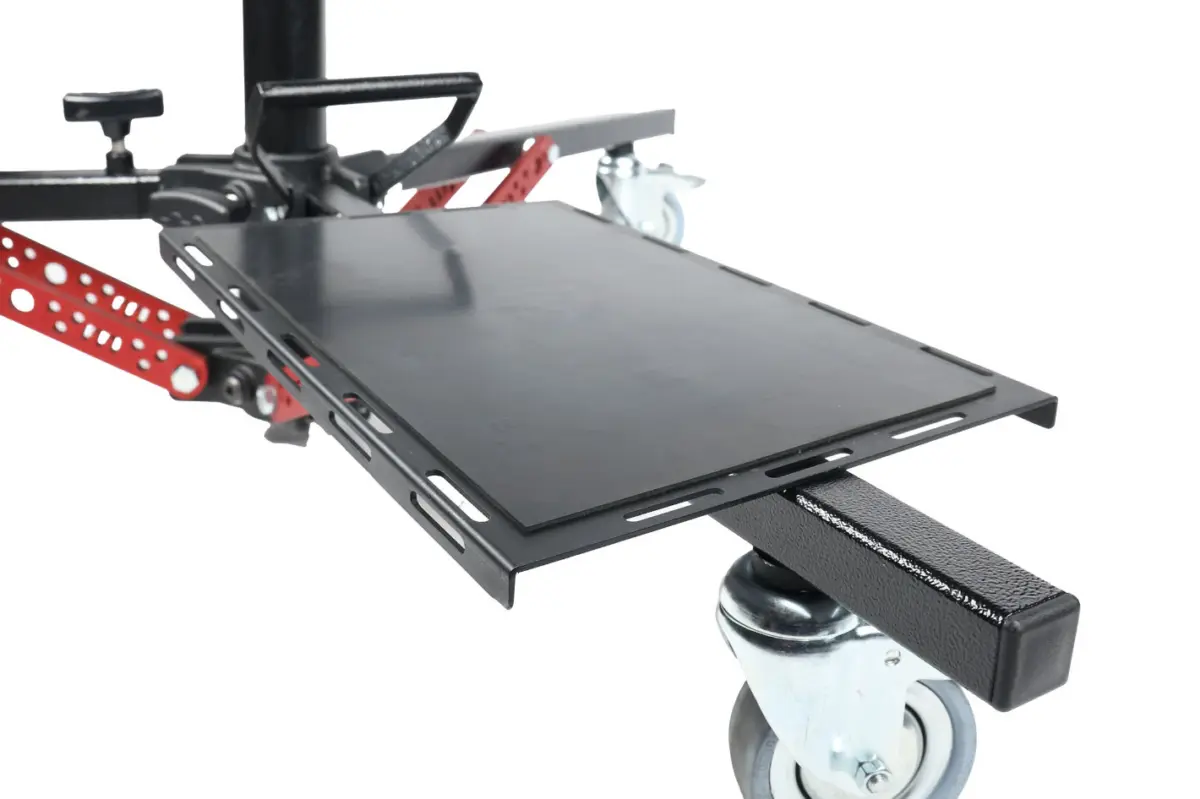
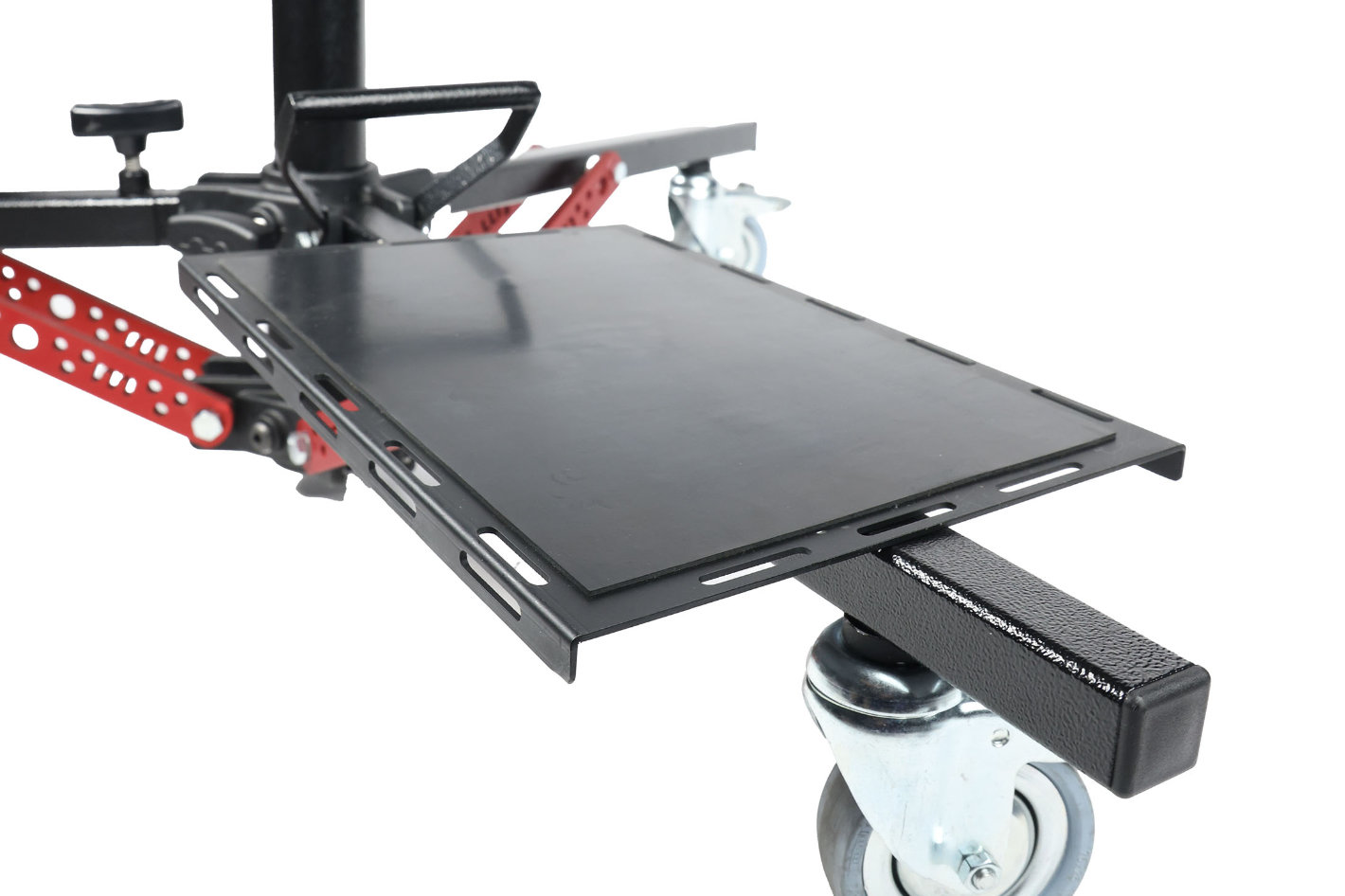
One of the most notable workflow innovations accompanying the Monitor Stand III is its integrated accessory ecosystem. Historically, mounting high-capacity block batteries or V-mount/Gold-mount plates to monitor stands has been an ergonomic challenge. Placing heavy batteries high on the risers raises the center of gravity, increasing the risk of a tip-over, while loose cabling presents a constant tripping hazard.
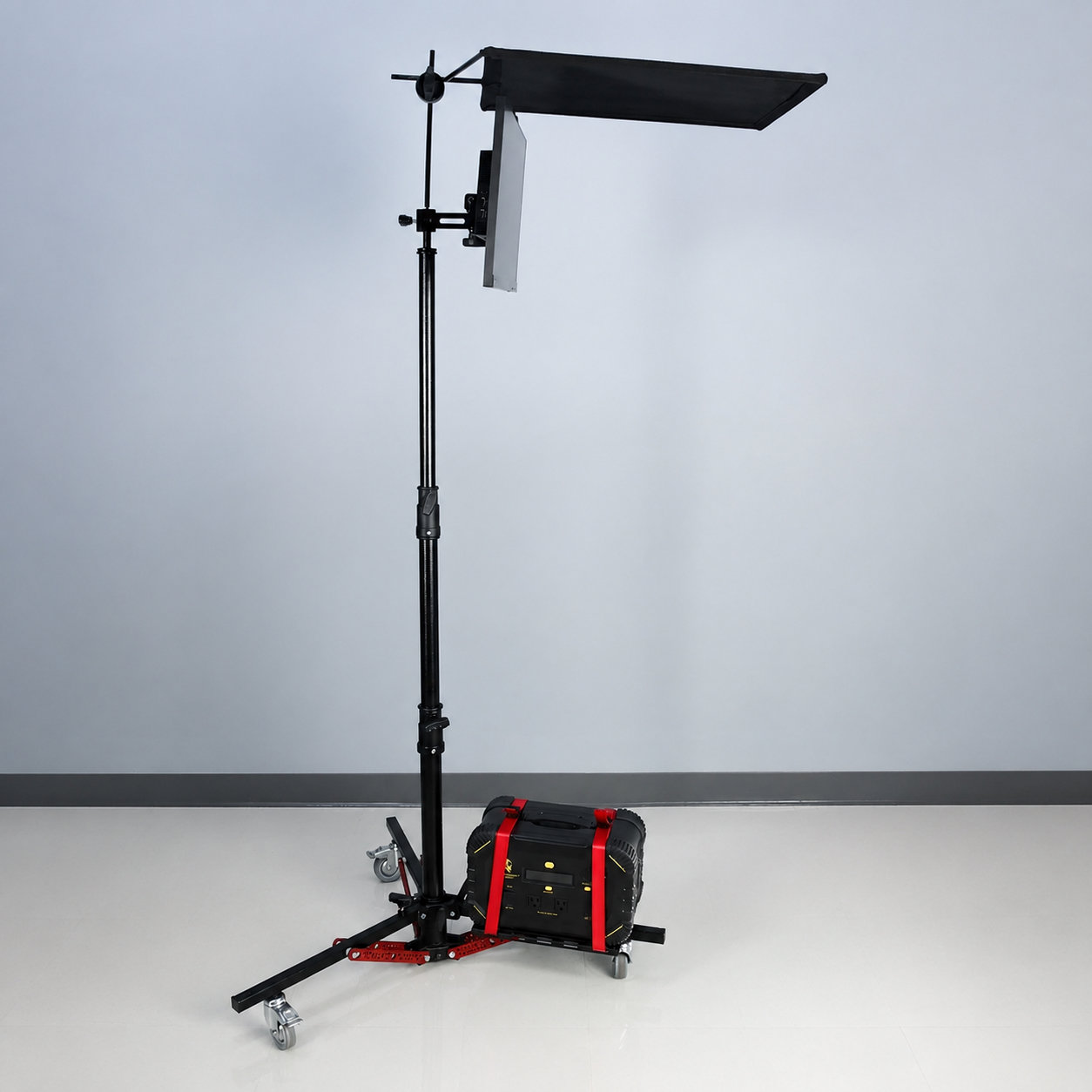
To solve this, Matthews has introduced an optional, bolt-on Battery Tray system. By utilizing the lower section of the stand, this system places the heavy power source at the very base of the unit.
[Monitor Unit] (Elevated)
      |
      |  <--- Clean, unencumbered risers
      |
[Battery Tray] (Positioned at base)
      |
=================== <--- Low center of gravity (maximum stability)
This configuration yields several distinct advantages:
Enhanced Physical Stability: Placing heavy batteries at the bottom of the stand acts as a natural counterweight, significantly lowering the overall center of gravity.
Uncluttered Risers: By relocating the power source to the base, the upper risers remain completely clear for mounting monitors, wireless video receivers (such as Teradek Bolt systems), controllers, and focus motors.
Clean Cable Management: Power cables can run cleanly up the center column of the stand, reducing the risk of snags during rapid set transitions.
The optional Battery Tray is available in two configurations: the standard Battery Tray (SKU 861837) and the Battery Tray with Junior Pin (SKU 861836), offering flexible integration options for various battery types and mounting hardware.
Future Outlook: The Changing Landscape of On-Set Monitoring
As the film and television industry continues to evolve, the role of on-set monitoring is poised to expand even further. Several emerging trends suggest that high-performance, mobile support platforms like the Monitor Stand III will remain critical to production infrastructure.
The Rise of High-Brightness HDR Monitoring
The industry-wide transition to High Dynamic Range (HDR) workflows has mandated the use of high-brightness monitors on set. These displays require sophisticated backlighting systems, which inherently increase both the weight and the power consumption of the monitor units. Consequently, the need for a stable, high-capacity wheeled stand capable of supporting heavy displays alongside robust battery power supplies is more critical than ever.
Decentralized Sets and Remote Production
Modern production safety standards and efficient workflow designs have led to more decentralized sets. Rather than gathering a large crowd around a single "Video Village," productions increasingly deploy multiple smaller, highly mobile monitoring stations scattered across the location. Focus pullers, makeup artists, lighting directors, and script supervisors now require their own dedicated, mobile viewing setups. The Monitor Stand III, with its combination of mobility, small footprint, and high durability, is uniquely positioned to serve as the foundation for these decentralized, specialized viewing stations.
Long-Term Value and Sustainability
In an era dominated by rapid technological obsolescence, where cameras and digital accessories are replaced every few years, mechanical grip gear remains a remarkably stable investment. By prioritizing domestic manufacturing, robust steel construction, and complete serviceability, Matthews Studio Equipment offers a product that resists obsolescence. For rental houses and production companies, the Monitor Stand III represents a long-term capital asset capable of delivering reliable service for decades, outlasting generations of the cameras and monitors it supports.
With its thoughtful engineering, robust safety features, and modular accessory ecosystem, the Monitor Stand III stands as a testament to Matthews’ commitment to supporting the evolving artistry and technical demands of the global filmmaking community.