In an era dominated by ultra-high-definition media production, massive dataset manipulation, and real-time collaborative environments, local area network (LAN) speeds have increasingly become the primary bottleneck for creative and enterprise professionals. While modern computers boast internal solid-state drives (SSDs) capable of read/write speeds measuring in thousands of megabytes per second, their connection to shared network storage (NAS or SAN) has frequently remained restricted by outdated Gigabit Ethernet standards.
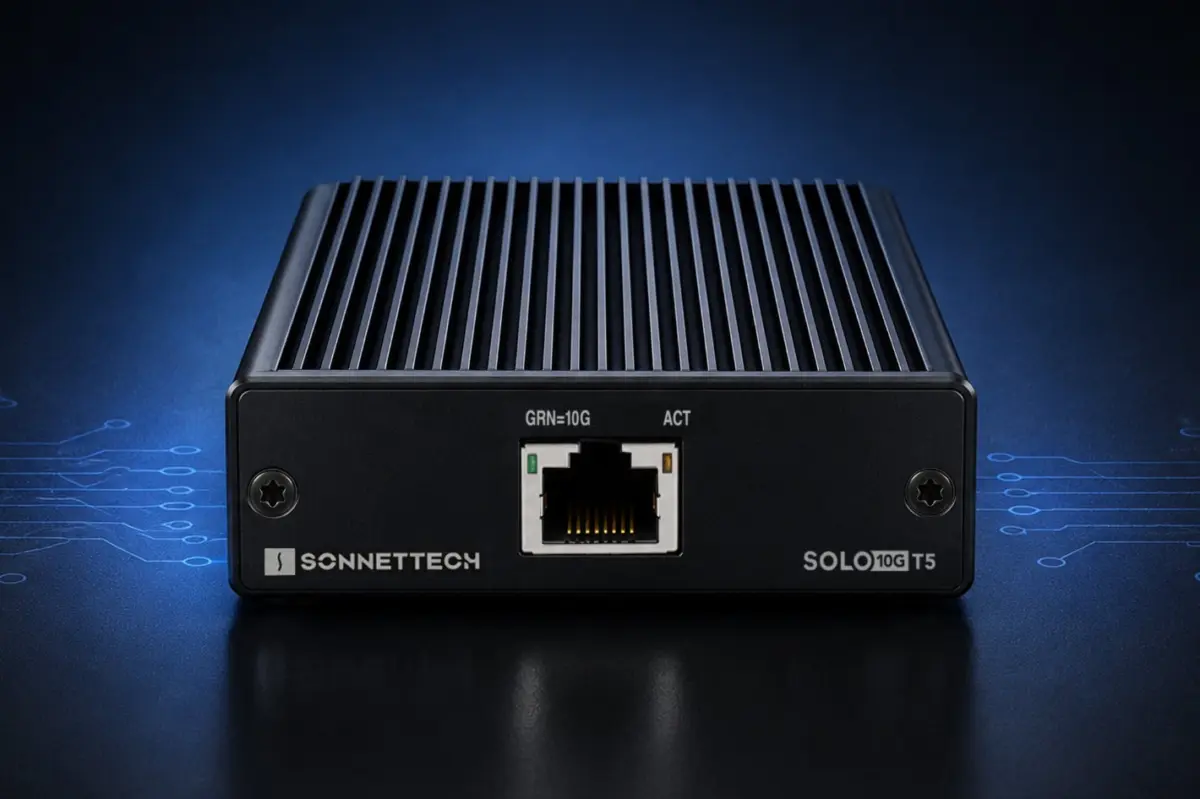
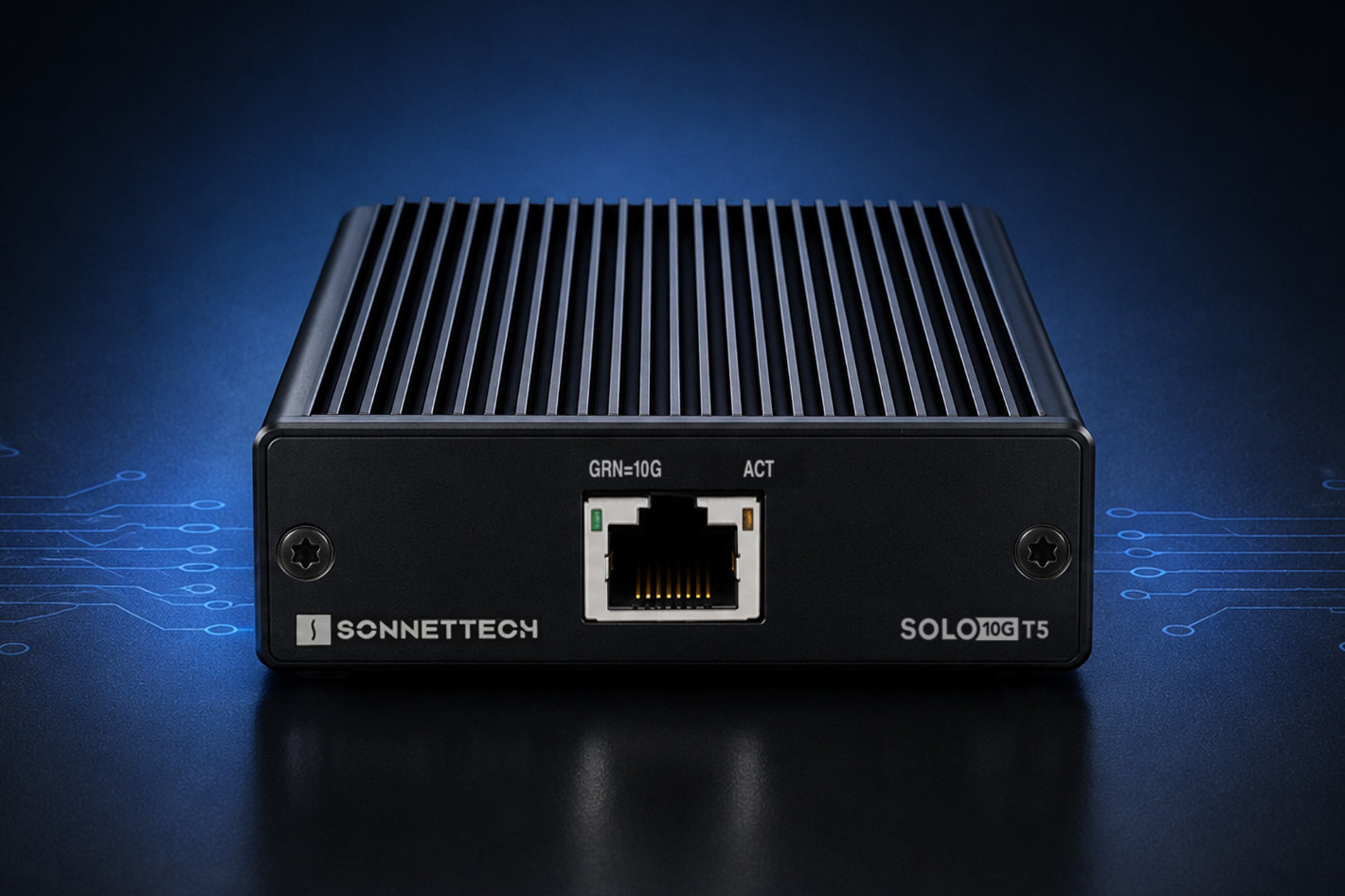
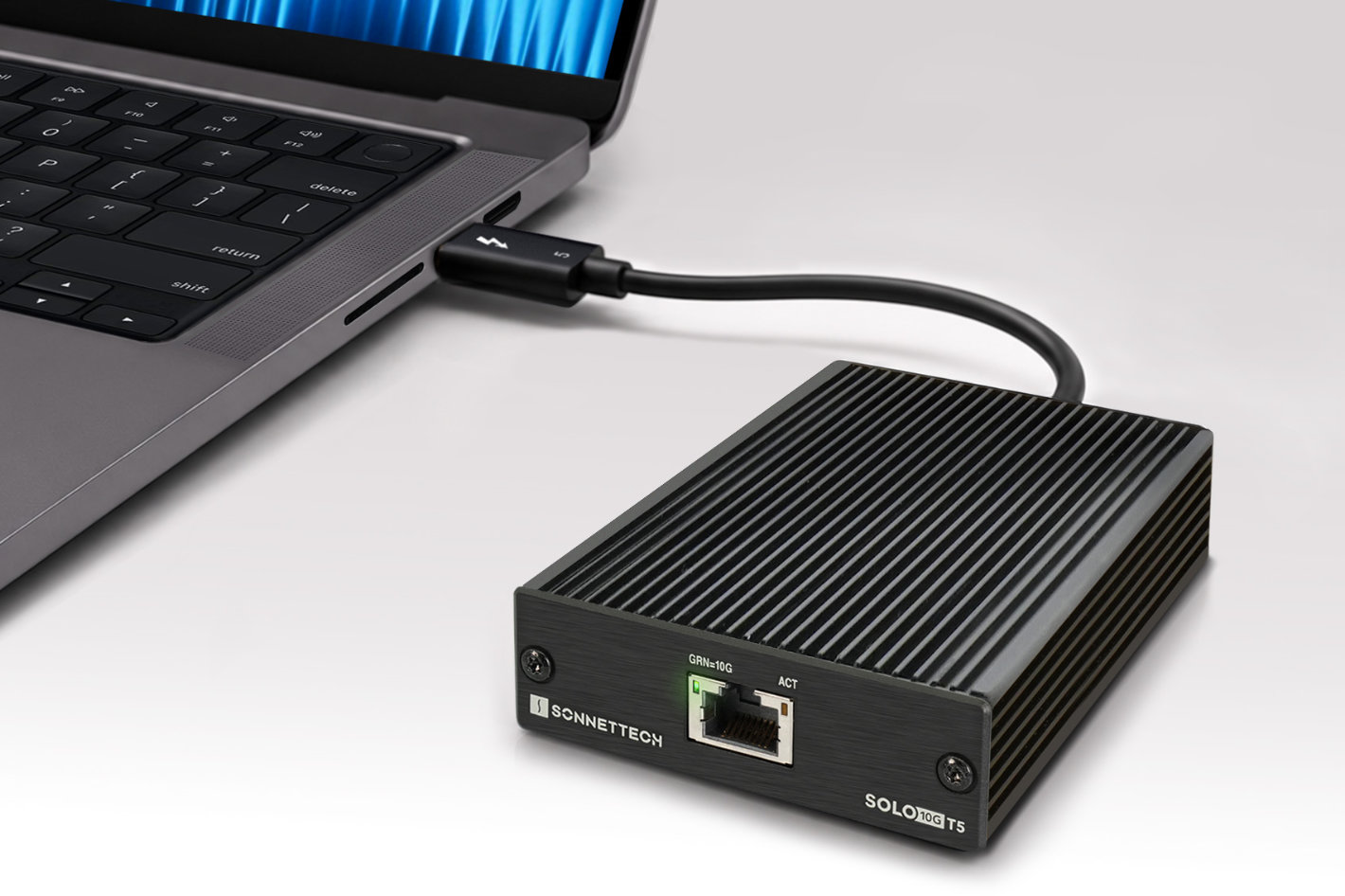
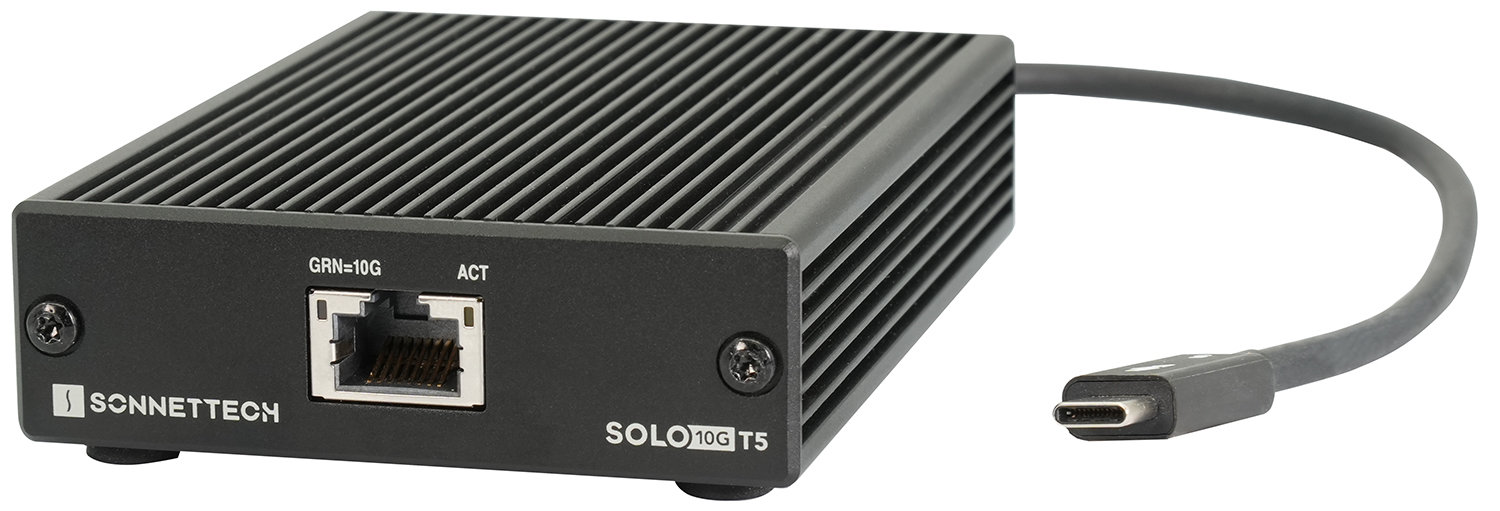
To bridge this massive performance chasm, Sonnet Technologies has introduced the Solo10G T5, a high-performance 10 Gigabit Ethernet (10GbE) adapter utilizing the cutting-edge Thunderbolt 5 interface. Priced at a suggested retail of $199.99, this bus-powered, fanless adapter is designed to instantly add 10GBASE-T connectivity to Mac, Windows, and Linux computers, as well as M-series iPad Pro tablets.
As creative workflows shift from localized storage to high-speed shared networks, the Solo10G T5 represents a crucial infrastructure upgrade. It bypasses the limitations of built-in legacy ports, enabling compact laptops, mini desktops, and mobile tablets to ingest and transfer data at full 10GbE speeds over standard, cost-effective copper cabling. This investigative report analyzes the technical architecture, security protocols, thermal engineering, and broader market implications of Sonnet’s latest connectivity solution.
Detailed Chronology: The Evolution of External High-Speed Connectivity
To understand the engineering achievements of the Sonnet Solo10G T5, it is necessary to trace the developmental timeline of external network adapters alongside the evolution of peripheral interconnect standards.
For over a decade, standard RJ45 Gigabit Ethernet (1GbE) was sufficient for standard office workloads, web browsing, and compressed video playback. However, as camera sensors advanced from 1080p to 4K, 6K, and 8K resolutions, raw file sizes ballooned. A single hour of uncompressed 4K footage can easily exceed several hundred gigabytes. Under a standard 1GbE connection (which maxes out at roughly 110 MB/s of real-world throughput), transferring such files is an agonizingly slow process.
Early attempts to resolve this via USB 3.0-to-Ethernet adapters suffered from significant CPU overhead and inconsistent packet delivery. USB protocols rely heavily on the host system’s CPU to manage data packets, leading to dropped frames during video playback directly from network storage and high system latency.
The Thunderbolt Revolution
Intel’s introduction of the Thunderbolt protocol fundamentally changed external device connectivity by extending the computer’s internal PCI Express (PCIe) bus outside the chassis. This allowed external network adapters to communicate directly with the system memory (DMA, or Direct Memory Access) without taxing the host CPU.
Thunderbolt 3 and 4 standardized the USB-C connector shape and guaranteed up to 40 Gbps of bi-directional bandwidth, making true 10GbE external adapters feasible for the first time.
Thunderbolt 5 and USB4 have pushed these boundaries even further, offering bi-directional bandwidths of up to 80 Gbps (and up to 120 Gbps with Bandwidth Boost). This expanded pipeline ensures that even when daisy-chained with high-resolution displays or fast external NVMe drives, a network adapter like the Solo10G T5 receives a dedicated, uncompromised stream of PCIe lanes.
Sonnet has consistently occupied the vanguard of this transition. By launching the Solo10G T5, the company has aligned its network adapter portfolio with the latest generation of host controllers, ensuring future-proof compatibility and maximizing data packet efficiency.
Supporting Context & Technical Metrics
The value of the Sonnet Solo10G T5 lies in its meticulous balance of electrical efficiency, thermal management, protocol security, and backward compatibility.
Bandwidth and Cabling Metrics
The Solo10G T5 is built around the 10GBASE-T standard, which delivers high-speed data transmission over copper twisted-pair cables. Unlike fiber-optic solutions (SFP+), which require expensive transceivers and specialized, fragile cabling, 10GBASE-T operates over standard RJ45 copper cables that are already widely deployed in modern commercial and residential buildings.
Cable Type
Maximum Supported Speed
Maximum Distance
Cat 6A (Copper)
10 Gbps
100 meters
Cat 6 (Copper)
10 Gbps
55 meters
Cat 5e (Copper)
5 Gbps / 2.5 Gbps / 1 Gbps
100 meters (NBASE-T)
For facilities lacking native Cat 6 or Cat 6A cabling, the Solo10G T5 supports the NBASE-T (IEEE 802.3bz) standard. When paired with a multi-gigabit compatible switch or network-attached storage (NAS) system, the adapter automatically negotiates down to 5 Gbps or 2.5 Gbps speeds over legacy Cat 5e cables. This multi-gigabit capability ensures
that organizations can deploy the adapter immediately, upgrading their physical cable infrastructure incrementally as budgets allow.
Electrical Power Allocation and Efficiency
One of the primary engineering challenges of portable 10GbE adapters is power consumption. Early 10GbE chipsets were notorious power hogs, often requiring dedicated external AC power bricks or generating so much heat that they required internal cooling fans.
The Solo10G T5 addresses this by drawing a mere 7.5 watts of bus power directly from the host system’s Thunderbolt port.
+-----------------------------------------------------------------------+
|                       PORT POWER ALLOCATION                           |
|                                                                       |
|  [Host Thunderbolt Port] ──────────────────────────► Total Available  |
|                                                      Power Budget     |
|                                                            │          |
|                 ┌──────────────────────────────────────────┴──┐       |
|                 ▼                                             ▼       |
|       [Sonnet Solo10G T5]                            [Remaining Power]|
|           Consumes:                                   Available for   |
|            7.5W Max                                   Secondary SSDs/ |
|                                                       Peripherals     |
+-----------------------------------------------------------------------+
This low power draw is highly significant for laptop users. Because the adapter leaves a substantial portion of the host port’s power budget untouched, users can safely connect other bus-powered peripherals—such as external SSDs or card readers—to adjacent ports on the same internal controller without triggering system power overcurrent protections.
Physical Design and Passive Thermals
Active cooling fans are a common point of failure in portable hardware. They introduce noise, consume additional power, and are susceptible to dust buildup, which eventually leads to thermal throttling.
Sonnet engineered the Solo10G T5 with a compact, solid aluminum enclosure. Aluminum possesses high thermal conductivity, allowing the outer shell to act as a giant passive heatsink. Heat generated by the internal physical layer (PHY) chip is transferred directly to the casing and dissipated into the surrounding air.
This silent operation is a critical requirement for:
Audio recording booths and mixing stages.
On-set DIT (Digital Imaging Technician) carts.
Quiet editing bays and color-grading suites.
Firmware Security and Cryptographic Authentication
In enterprise and government environments, peripheral hardware presents a potential attack vector. Uncertified, low-cost USB4 network adapters often lack robust security frameworks, making them vulnerable to malicious firmware overwrites that can compromise the host machine via Direct Memory Access (DMA).
To counter this, the Solo10G T5 underwent the rigorous testing required to achieve official Intel/Apple Thunderbolt Certification.
A core component of this certification is the implementation of hardware-based, cryptographically authenticated firmware. The adapter’s internal EEPROM will only accept firmware updates that are digitally signed with Sonnet’s authorized cryptographic keys. This prevents malicious actors from flashing modified, rogue firmware onto the adapter, ensuring network endpoint integrity for highly secure IT environments.
Official Statements and Market Alignment
Industry analysts and IT administrators note that the Solo10G T5 directly targets a critical, underserved segment of the professional hardware market. While high-end desktop systems like the Mac Pro or custom Windows workstations can accommodate internal PCIe 10GbE network cards, portable systems are left stranded.
Sonnet’s product positioning emphasizes a seamless, friction-free deployment model:
"The Solo10G T5 adapter provides users a powerful yet straightforward and cost-effective way to add blazing-fast 10GBASE-T 10GbE network connectivity. For Mac and Linux users, the Sonnet adapter provides a plug-and-play experience, while Windows users need only download and install a simple driver."
This multi-platform versatility makes the adapter highly attractive to mixed-OS environments. A single IT department can purchase a pool of Solo10G T5 adapters and distribute them dynamically across creative teams—whether they are running macOS-based MacBook Pros for video editing, Windows-based laptops for CAD modeling, or Linux-based systems for rendering and deep learning.
Price-to-Performance Evaluation
At $199.99, the Solo10G T5 represents a highly competitive entry into the professional networking space. When compared to the cost of deploying fiber optic infrastructure (including SFP+ PCIe cards, optical transceivers, and specialized patch cables), a copper-based 10GBASE-T workflow utilizing the Solo10G T5 drastically lowers the barrier to entry for boutique agencies, independent production houses, and remote editors.
Future Outlook: The Role of Thunderbolt 5 and 10GbE Adoption
As industry standards continue to shift toward decentralized post-production and hybrid cloud environments, the demand for local high-speed pipelines will only intensify. Several key trends highlight the future relevance of devices like the Sonnet Solo10G T5.
                  ┌─────────────────────────────────┐
                  │      Future Tech Drivers        │
                  └────────────────┬────────────────┘
                                   │
         ┌─────────────────────────┼─────────────────────────┐
         ▼                         ▼                         ▼
  [Real-Time 8K/12K]      [Local AI Model Pools]     [iPadOS Desktop Parity]
  Requires sustained      Massive dataset transfers  Enables mobile tablets
  1.0 GB/s+ streams       to local compute nodes     as high-speed nodes
Real-Time 8K and 12K Video Production
The adoption of 8K and 12K camera systems (such as those from RED, ARRI, and Blackmagic Design) has made Gigabit Ethernet completely obsolete for direct-from-server editing. Even 10GbE is pushed to its limits when editing multiple streams of multicam footage. The stability and low latency offered by the Solo10G T5’s certified Thunderbolt connection ensure that editors can scrub timelines smoothly without experiencing the frame-dropping and caching delays common with lesser protocols.
Mobile Workstations and iPadOS Integration
The inclusion of M-series processors in the iPad Pro has transformed Apple’s tablet from a consumption device into a legitimate creative workstation. Apple’s iPadOS supports professional applications like DaVinci Resolve and Final Cut Pro, but these apps require rapid access to massive source media files. By supporting the iPad Pro, the Solo10G T5 allows mobile colorists, directors, and editors to connect their tablets directly to a facility’s high-speed storage network on set, facilitating rapid dailies review and immediate backup ingestion.
The Proliferation of Multi-Gigabit Home Networks
The rise of remote work has forced many professionals to replicate enterprise-grade network architectures in their home offices. Internet service providers (ISPs) are increasingly offering fiber-to-the-home packages with speeds exceeding 1 Gbps (often 2 Gbps, 5 Gbps, or even 10 Gbps). Home-office routers and consumer NAS units are rapidly adopting multi-gigabit ports as standard features. The Solo10G T5 serves as the missing link for remote workers, enabling their laptops to fully exploit these high-speed residential pipelines for uploading massive project files and collaborating with offsite servers in real-time.
Conclusion
The Sonnet Solo10G T5 is not merely an incremental accessory; it is a critical piece of infrastructure designed to unlock the true potential of modern, high-performance computers. By combining the massive bandwidth of Thunderbolt 5 with the rugged reliability of a passively cooled, certified hardware design, Sonnet has delivered a highly secure, portable, and cost-effective networking solution that resolves the high-speed data bottleneck for professionals across the creative and enterprise spectrum.