Executive Overview: The Duopoly of Stability in Modern Production
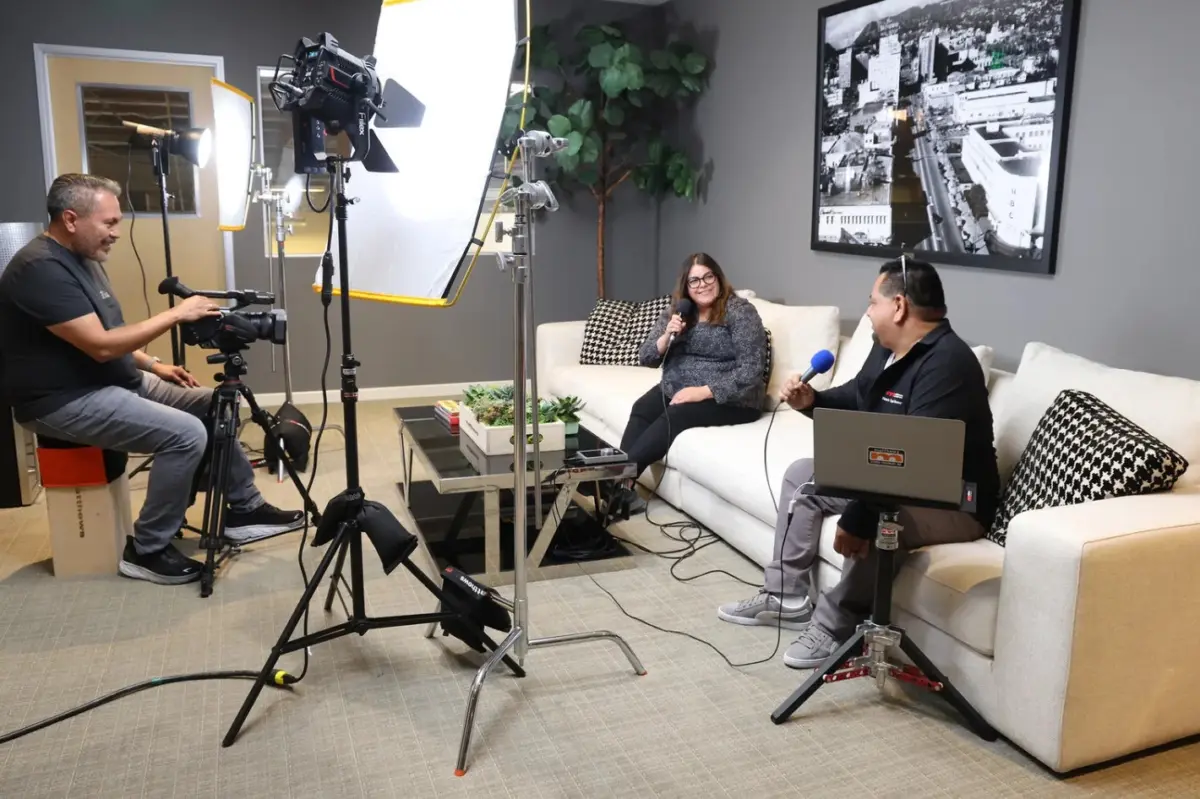
In the highly demanding arena of motion picture, television, and commercial production, physical stability is the silent partner of creative execution. While high-resolution camera sensors, sophisticated optics, and advanced LED lighting fixtures frequently dominate industry headlines, their utility is entirely dependent on the physical support structures that hold them in place. Recognizing the logistical and operational challenges faced by modern gaffers, key grips, and independent creators, Matthews Studio Equipment (MSE)—the pioneering company that originally invented the Century Stand (C-Stand)—has announced the release of its new 40-Inch Sliding Leg C-Stand 2-Pack.
This new offering packages a matched pair of Matthews’ classic, field-tested C-Stands into a single, streamlined box. Crucially, the package includes continental U.S. freight, addressing a persistent pain point for production companies and rental houses: the high logistical overhead associated with shipping heavy, awkward steel hardware. By offering these stands as a dual-unit kit in either classic chrome or low-profile black finishes, Matthews is directly responding to modern set workflows, which almost universally require stands in pairs to balance lighting, diffusion, modification, and rigging needs.
Detailed Chronology: The Evolution of the Century Stand and Matthews’ Legacy
The history of the C-Stand is, in many ways, the history of professional filmmaking lighting. To understand the significance of Matthews’ latest 2-pack offering, one must examine the chronological development of this indispensable tool.
[Early 20th Century] -----------------> [1970s] -----------------------> [2020s & Beyond]
Origin of "Century Stands"             Matthews Standardizes            Matthews Introduces
Used for outdoor solar reflectors      & Patents Grip Hardware          Pre-Packaged 2-Packs with
with 100-inch capacities.              (Sliding Legs, Gobo Heads).      Integrated Shipping Logistics.
The Origins of the "Century" Stand
In the early days of motion picture production, filming relied heavily on natural sunlight. To control and redirect this light, early crews utilized large reflectors. The stands designed to hold these reflectors were manufactured to accommodate various sizes, the most common of which was the 100-inch reflector. Because these stands were engineered to support these "Century" reflectors, they became colloquially known as "Century Stands."
Matthews’ Standardization and Innovation
Before Matthews Studio Equipment standardized grip hardware in the late 1960s and early 1970s, much of the support equipment on film sets was custom-made, heavy, and lacked cross-compatibility. Matthews revolutionized the industry by introducing standardized diameters, receiver sizes, and locking mechanisms.
Among these innovations was the introduction of the sliding-leg design—often referred to in the field as the "Rocky Mountain Leg." This engineering breakthrough solved a fundamental safety and logistical issue: how to position a heavy light stand securely on uneven terrain, stairs, curbs, or theater seating. By allowing one leg of the tripod base to slide vertically along the main riser column, grips could level the stand on almost any surface without relying on unstable workarounds like wooden apple boxes or hazardous stacks of sandbags.
The Modern Era: Addressing the Logistical Bottleneck
In the decades that followed, the Matthews C-Stand became an industry benchmark, trusted on major studio lots and indie sets alike. However, purchasing and shipping these heavy steel tools remained a fragmented process. Buyers often had to purchase stands, grip arms, and gobo heads separately, resulting in variable shipping rates and complex inventory management. The launch of the 40-Inch Sliding Leg C-Stand 2-Pack represents the latest step in this evolutionary timeline, merging mechanical excellence with modern supply chain efficiency.
Supporting Context & Metrics: A Technical and Mechanical Breakdown
To appreciate why the Matthews 40-Inch Sliding Leg C-Stand remains an industry standard, it is necessary to examine its precise physical dimensions, load capacities, and metallurgical design.
| Technical Specification | Imperial Measurement | Metric Measurement |
|---|---|---|
| Maximum Height | 127 inches | 321 cm |
| Minimum Height | 53.25 inches | 135 cm |
| Load Capacity | 22 lbs | 10 kg |
| Physical Weight (Single Stand) | 16 lbs | 7.2 kg |
| Footprint Diameter | 27.5 inches | 70 cm |
| Folded Base Height | 21 inches | 54 cm |
Mechanical Architecture and Materials
Each stand in the 2-pack is engineered to withstand the rigorous wear-and-tear of rental house environments and demanding outdoor locations. The tubing is constructed from high-grade steel, ensuring maximum torsional rigidity when supporting off-axis loads.
The proprietary sliding-leg design utilizes a robust locking collar that ensures positive engagement along the lower column. When deployed on stairs or steep inclines, the sliding leg can be adjusted upward, shifting the center of gravity back over the center of the tripod base. This mechanical adaptability prevents tipping and significantly reduces the risk of equipment damage or on-set injuries.
The Hollywood Arm: Anatomy of a Grip Essential
An critical inclusion in each 2-pack is the 40-inch Hollywood Arm, a proprietary tool exclusive to Matthews C-Stand purchases.
- The Knurled Baby Pin: Unlike smooth mounting pins that can slip or rotate when subjected to off-axis weight, the Matthews Hollywood Arm features a knurled baby pin. This textured surface provides high-friction engagement for mounted fixtures.
- 1/4-20 Tap: Integrated into the end of the baby pin is a 1/4-20 female tap. This addition allows operators to mount auxiliary accessories—such as wireless video transmitters, monitor brackets, or small LED run-and-gun lights—directly to the top of the arm without needing additional rigging adapters.
- Safety Features: Matthews integrates trademarked safety stops and engineered fail-safes into their locking castings, preventing the arm from sliding completely out of the grip head if a locking knob is accidentally loosened under load.
The 2.5-Inch Grip (Gobo) Head
The stands are paired with Matthews’ industry-standard 2.5-inch grip heads, commonly referred to as "gobo heads." These heads utilize a series of calibrated V-shaped jaws (sized at 3/8-inch and 5/8-inch) to clamp down on arms, flags, scrims, or nets.
The interior friction plates feature serrated teeth that bite into the clamped surface, ensuring a "set-it-and-forget-it" lock. This design relies on the physical principle of self-locking: when a load is applied to the arm in the correct direction (clockwise), the force actually tightens the grip head, ensuring the rig becomes more secure under load.
[Applied Downward Load]
       │
       ▼
[Clockwise Rotation of Arm] ───► [Tightens Grip Head T-Handle] ───► [Enhanced Mechanical Lock]
Official Positioning & Industry Implications
The introduction of the 40-Inch Sliding Leg C-Stand 2-Pack highlights an important strategic move by Matthews to address both retail competition and logistical challenges in the professional grip market.

SKU and Finish Variations
To accommodate different production environments, Matthews offers the 2-pack in two distinct configurations:
- Chrome Finish (SKU 999101): Features a classic polished chrome plating on the stands, paired with a stainless-steel Hollywood Arm. Chrome is highly favored for its resistance to scratches, weather, and general wear.
- Black Finish (SKU 999102): Features a matte black powder-coat finish on both the stand and the Hollywood Arm. This option is critical for low-profile applications, such as when stands must be placed close to the edge of a frame, inside reflective environments, or in theatrical spaces where specular highlights from chrome stands could ruin a shot.
The Logistics of Freight Inclusion
Grip equipment is notoriously heavy, dense, and expensive to transport. For decades, the retail price of a C-Stand was only part of the acquisition cost; shipping fees could add a significant premium, especially for independent creators or small production companies located far from major film hubs like Los Angeles, Atlanta, or New York.
By bundling two complete stands into a single box and including continental U.S. freight in the purchase price, Matthews is simplifying the procurement process. This packaging strategy allows dealers to offer clear, upfront pricing while ensuring that end-users receive a matched pair of stands ready for immediate deployment.
Future Outlook: The Endurance of Analog Hardware in a Digital Era
As the production landscape continues to evolve with virtual production volumes, ultra-lightweight carbon fiber camera rigs, and highly efficient LED lighting, the physical demands of the set remain grounded in classical physics. No matter how advanced a camera sensor or lighting engine becomes, it must still be held securely in three-dimensional space.
The Matthews 40-Inch Sliding Leg C-Stand 2-Pack represents a bridge between legacy reliability and modern logistical expectations. While electronic production tools face rapid obsolescence—often lasting only three to five years before technological advances render them outdated—high-quality grip hardware constructed from steel is a multi-decade investment. A Matthews C-Stand purchased today is highly likely to remain in active service on film sets thirty years from now.
By making their classic sliding-leg stands more accessible through bundled packaging and integrated logistics, Matthews Studio Equipment is securing its position at the foundation of the industry. This release ensures that as new generations of filmmakers enter the field, they will continue to build their creative visions on a stable, reliable foundation.