Executive Overview
The post-production software landscape is undergoing a quiet but profound paradigm shift. Historically, video editors, colorists, and sound designers have been at the mercy of major software suites—such as Adobe Premiere Pro, Apple Final Cut Pro, and Blackmagic Design DaVinci Resolve—to address their workflow bottlenecks. When those platforms fell short, users had to hope that a dedicated third-party developer would build a specialized plugin, a business model that was rarely financially viable for niche use cases.
Today, that dynamic is collapsing. The catalyst is not a new
video editing feature, but the rapid advancement of Artificial Intelligence in software engineering. Utilizing advanced LLMs (Large Language Models) such as OpenAI’s Codex and Anthropic’s Claude Code, creative professionals with limited traditional programming experience are now building and deploying their own software utilities.
This trend has bypassed the traditional financial barriers of software development. By lowering the cost and complexity of writing code, AI has enabled a new class of "editor-developers" to build hyper-targeted tools that solve specific, highly frustrating workflow issues. From voice-activated teleprompters to automated rough-cut engines and XML metadata harvesters, the post-production ecosystem is being flooded with lightweight, highly efficient, and often free or open-source utilities. This investigative report analyzes this emerging wave of micro-SaaS and open-source applications, the technology driving their development, and the structural implications for the broader creative software industry.

The Economics of Niche Software: Resolving the "Venn Diagram" Problem
To understand why this sudden explosion of micro-utilities is occurring, one must first analyze the historical economic barriers of the creative software market. Historically, bringing a professional video editing utility or plugin to market required the alignment of three distinct groups of people:
- The Domain Experts: Editors and post-production professionals who intimately understand a highly specific workflow bottleneck (e.g., matching a physical shooting script to specific digital takes in a non-linear editor).
- The Software Engineers: Technical developers capable of writing clean, optimized code, navigating complex NLE APIs, and managing cross-platform compatibility.
- The Financiers/Marketers: Individuals or entities willing to fund development and handle distribution in a market where the total addressable audience might only be a few thousand specialized professionals.
[ Domain Experts (Editors) ] ──┐
                               │
[ Software Engineers ] ────────┼──> [ Viable Commercial Plugin ]
                               │
[ Financiers / Marketers ] ────┘
Because the target market for high-end post-production tools is relatively small, the chances of these three groups overlapping to produce a commercially viable tool have historically been vanishingly small. For a professional programmer, the financial return on investment (ROI) for writing a niche Final Cut Pro utility rarely justified the time spent.
AI coding assistants have fundamentally disrupted this equation by largely removing the need for a dedicated, expensive software engineer. If a video editor has a basic understanding of software logic and can clearly articulate their functional requirements, tools like Claude Code can generate the underlying code, debug errors, and assist in packaging the application. Consequently, the development cost of these utilities has dropped from tens of thousands of dollars to virtually zero, allowing creators to build tools purely to solve their own operational challenges and then share them with the wider community.
Categorized Analysis of the New Wave of Post-Production Utilities
Over the past several months, a diverse array of these specialized utilities has emerged. Many of these tools exhibit the hallmarks of rapid, AI-assisted development: they are highly focused, rapidly iterated, and designed to solve single, acute pain points.
                               ┌── Pre-Production & Planning (Beat)
                               ├── Script-to-Screen & Prompting (PowerCue, EasyPrompter)
                               ├── AI-Driven Rough Cut Engines (Doza Assist, PowerCut, Cutler)
Post-Production Micro-Utilities ├── NLE Pipeline & Asset Management (SyncScript Pro, Malibu Conform, Production Data, Prefab)
                               ├── Open-Source Alternatives (Compositor, OpenPocketCine)
                               └── Special Effects & Skin Smoothing (Softbox, Porefect, PowerSkin)
1. Pre-Production and Visual Scripting
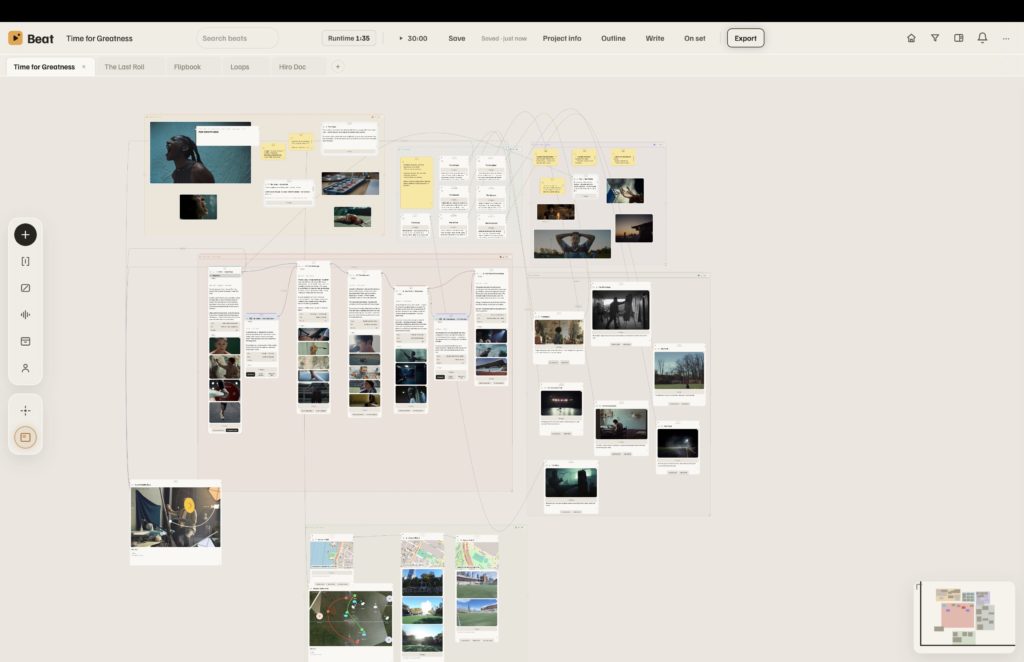
- Beat: A visual, node-based scripting tool designed to bridge the gap between text-based screenplays and physical production planning. Rather than treating a script as a static text document, Beat converts scene narratives into interconnected visual nodes. This structure allows directors and editors to map out story arcs, design set plans, construct shot lists, and generate call sheets within a unified interface. Notably, the application supports the Model Context Protocol (MCP), enabling users to securely connect their own localized AI models for automated script analysis and scene breakdown. The tool is currently distributed entirely free of charge.
2. Intelligent Script-to-Screen and Teleprompting
- PowerCue: Developed by Rafael Ludwig, PowerCue represents a significant evolution in teleprompter software. While traditional teleprompters rely on manual scrolling, fixed speeds, or rigid speech-to-text engines, PowerCue utilizes advanced voice-recognition algorithms designed to handle diverse accents, colloquialisms, and ad-libbing. If a presenter deviates from the script, skips a paragraph, or elaborates on a point, the software intelligently pauses, tracks the spoken audio, and resumes scrolling when the presenter returns to the written text. Operating natively on macOS with companion iOS/iPadOS applications, it also offers robust text styling options—a feature frequently omitted from basic teleprompting software.
- EasyPrompter: For larger, enterprise-level production environments requiring a synchronized, multi-screen prompting architecture, EasyPrompter offers a robust, web-based alternative designed to handle complex, system-wide script distributions.
3. AI-Driven Rough-Cut Automation
The process of sorting through hours of raw footage to assemble a basic narrative skeleton is one of the most time-consuming phases of editing. A new class of automated assembly engines aims to streamline this initial pass:
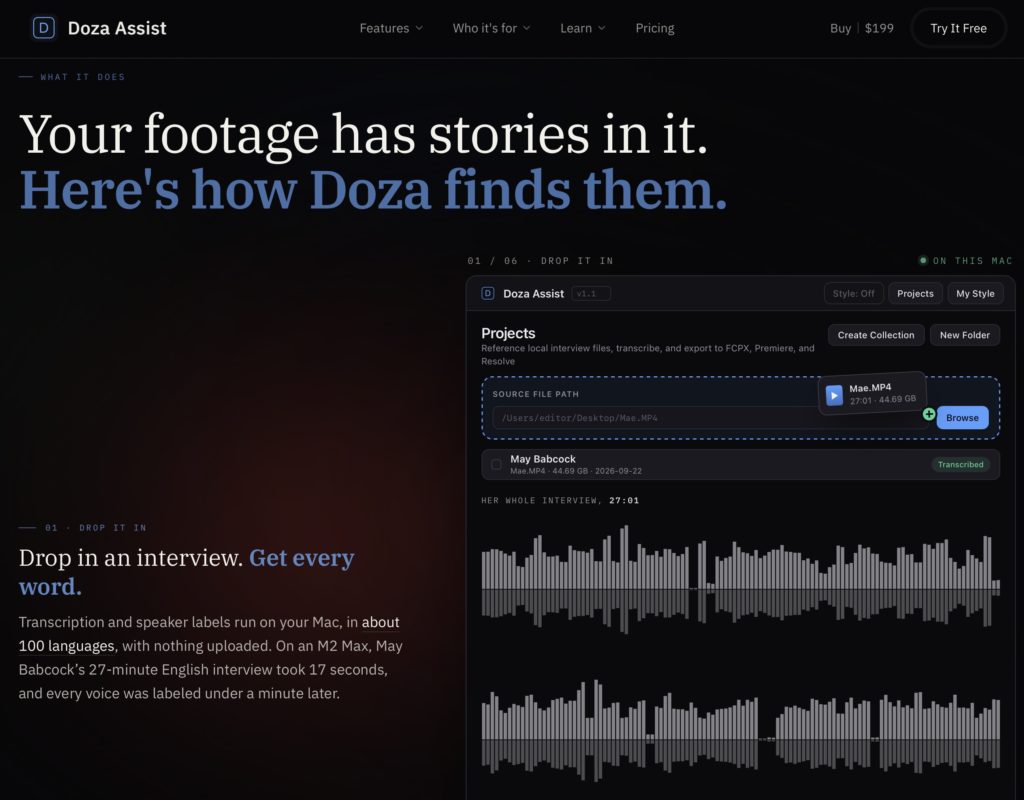
- Doza Assist: A tool that analyzes raw video and transcript data to construct an initial rough cut directly on the timeline, allowing editors to skip the tedious process of manual assembly.
- PowerCut: Another utility by Rafael Ludwig, designed to analyze multi-camera setups and single-source footage to automatically strip out dead space, mistakes, and repetitive takes across major NLE platforms.
- RoughCut & Cutler: Currently in active development and beta testing, these applications represent a growing movement toward offloading the "first pass" of editing to algorithmic models.
- Jumper: For editors who prefer a bespoke approach, Jumper acts as an integration bridge, allowing users to connect their custom local LLMs and AI agents directly to their NLE of choice via MCP.
4. Pipeline Utilities and Metadata Harvesters
For professional editors working in collaborative environments, managing metadata and organizing local assets is critical.

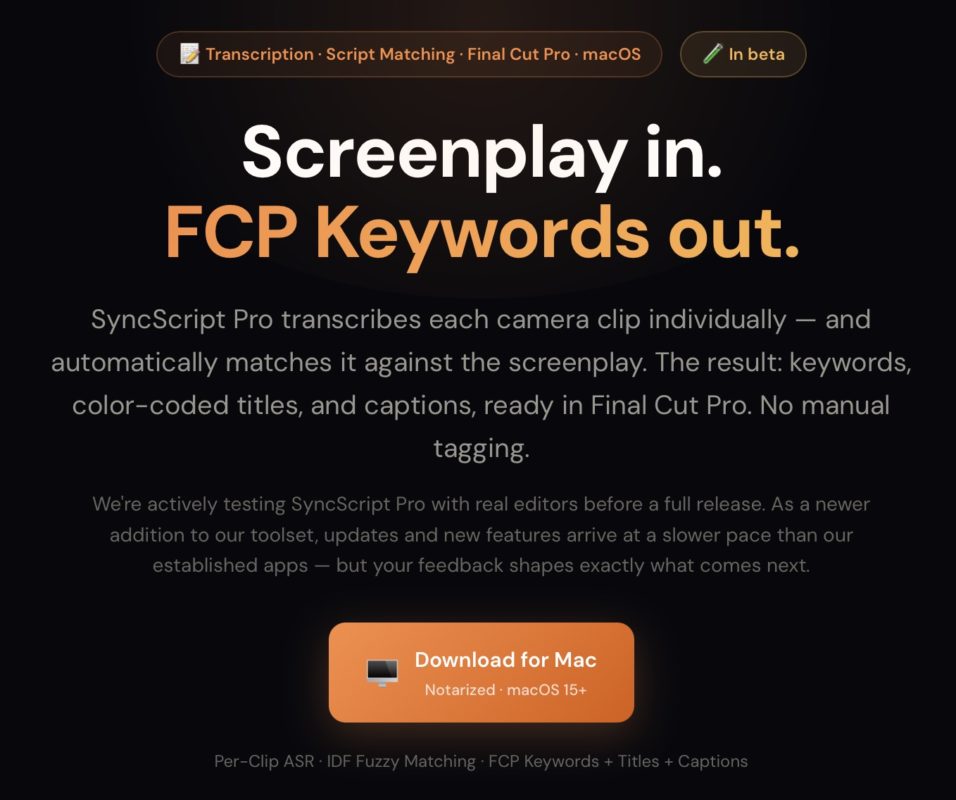
- SyncScript Pro: Created by veteran feature film editor Knut Hake (editor of Blood & Gold and Blood Red Sky), this Final Cut Pro utility automates script-syncing workflows by directly aligning captured footage with the corresponding lines in a digital shooting script.
- Malibu Meter: Also from Hake’s Studio Malibu Berlin, this utility brings high-accuracy EBU R128 loudness metering directly into the FCP ecosystem, ensuring broadcast compliance.
- Malibu Conform: An upcoming tool from the same developer designed to solve the notorious friction of translating FCP XML timelines into DaVinci Resolve, specifically targeting multicam synchronization and conforming errors.
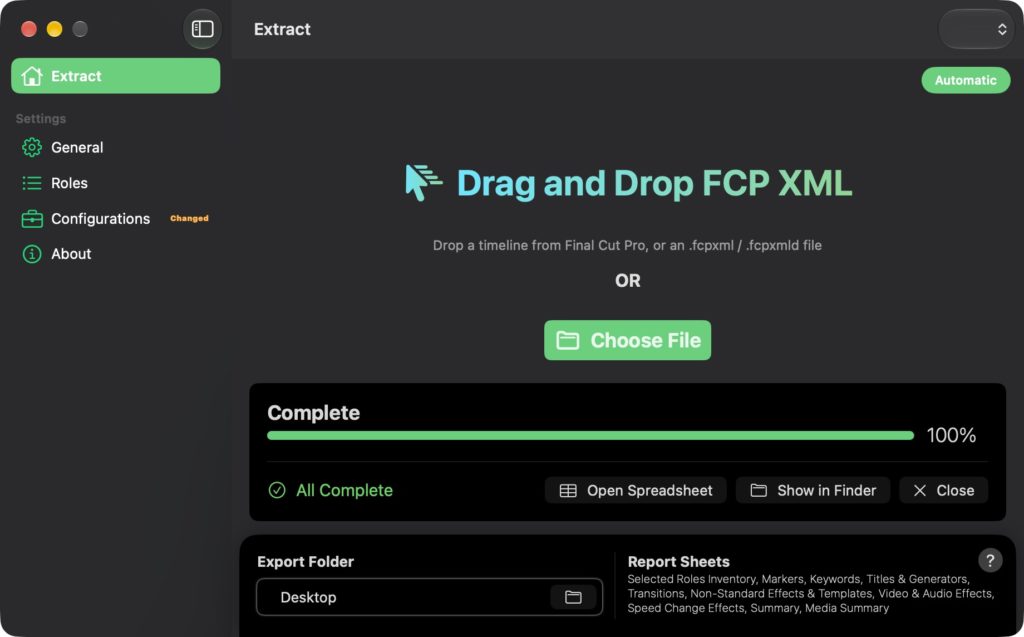
- Production Data: Developed by The Acharya, this utility leverages FCP’s Timeline Index. It extracts deeply embedded clip metadata, roles, applied transitions, and titles, exporting the information into standardized spreadsheets for turnovers, music cue sheets, and VFX tracking.
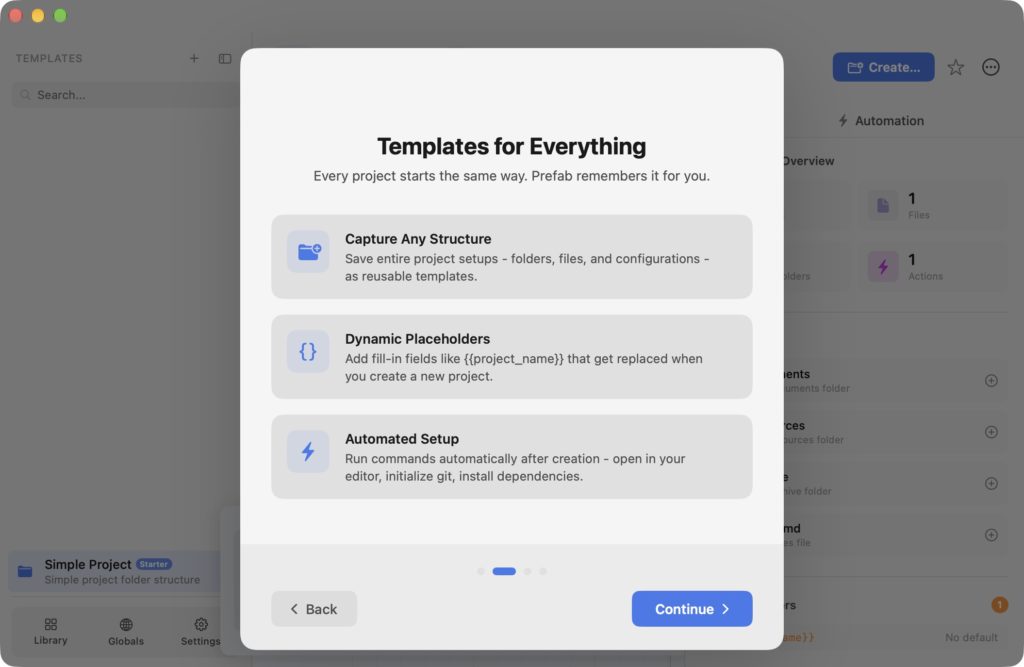
[ Final Cut Pro Timeline ] ──> [ Timeline Index Metadata ] ──> [ Production Data Utility ] ──> [ Excel / CSV Spreadsheet Reports ]- Prefab: A free utility designed to enforce strict folder organization. It automatically generates standardized project directory trees, color-codes folders, inserts template assets, and utilizes the ISO 8601 date format (YYYY-MM-DD) to guarantee correct alphabetical sorting across storage networks.
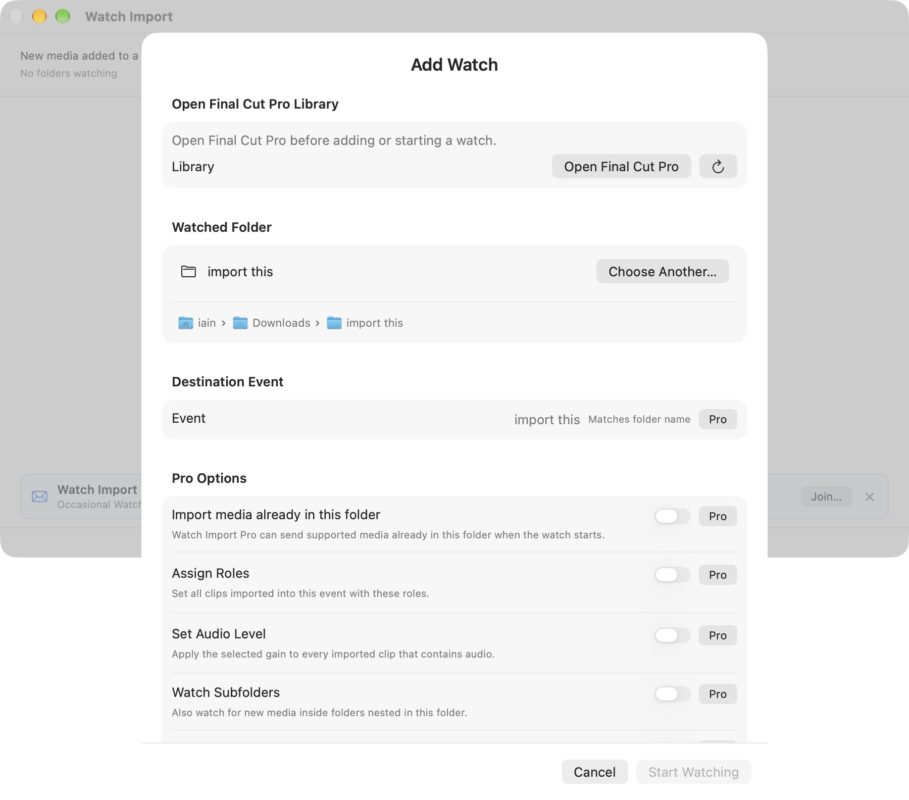
- Watch Import (Automatic Duck) & DropHawk Pro (Dylan Bates): Both tools act as "watch folders" for NLEs. When an asset is dragged into a designated local directory, these background utilities instantly import and catalog the media into the active FCP library, eliminating manual importing steps.
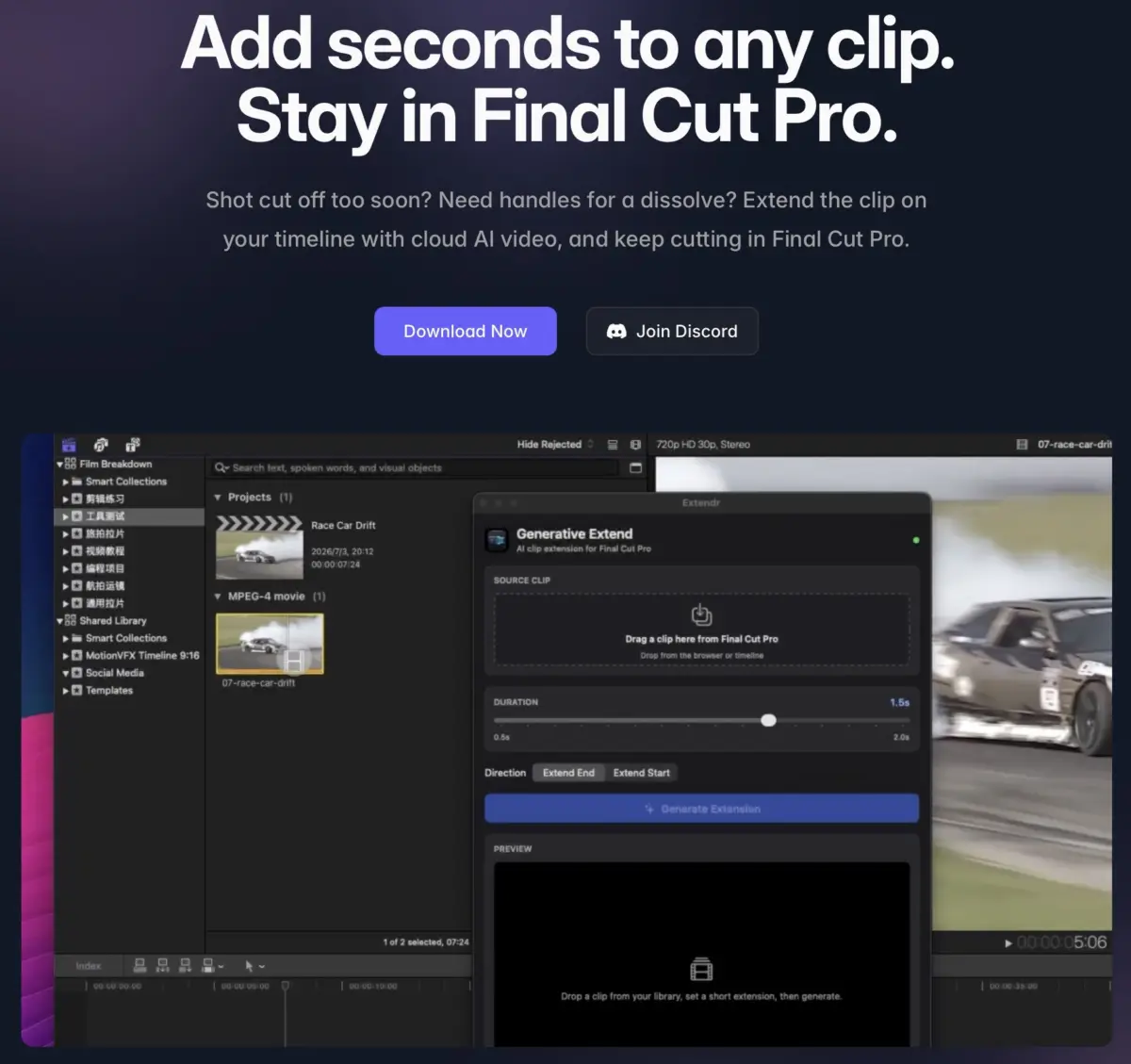
- FCP Extender: This utility addresses a major feature disparity between Adobe Premiere Pro (which features a native "Generative Extend" tool powered by Firefly) and Final Cut Pro. Operating on a pay-per-credit model rather than a recurring subscription, FCP Extender uses generative models to artificially extend the tail or head of a video clip or audio track when an editor lacks sufficient physical handle length.
5. Open-Source Alternatives to Legacy Creative Software
-
Compositor: Perhaps the most ambitious tool in this roundup, Compositor (created by Apple alumnus Robbie Tilton) is a lightweight, open-source alternative to Adobe Photoshop. Built for speed and efficiency, it replicates Photoshop’s core keyboard shortcuts and layer structures while utilizing a fraction of the system memory.
The development velocity of Compositor highlights the efficiency of AI-assisted open-source workflows. When a user requested the addition of non-destructive "Filter Layers" (a feature Photoshop users have wanted for years to avoid the clunky "Smart Objects" workaround), Tilton implemented and merged the feature via GitHub within 24 hours.
Traditional Feature Request:
[ User Request ] ──> [ Product Management Review ] ──> [ Roadmap Prioritization ] ──> [ Annual Update Cycle ] (Months/Years)

AI-Assisted Open Source:
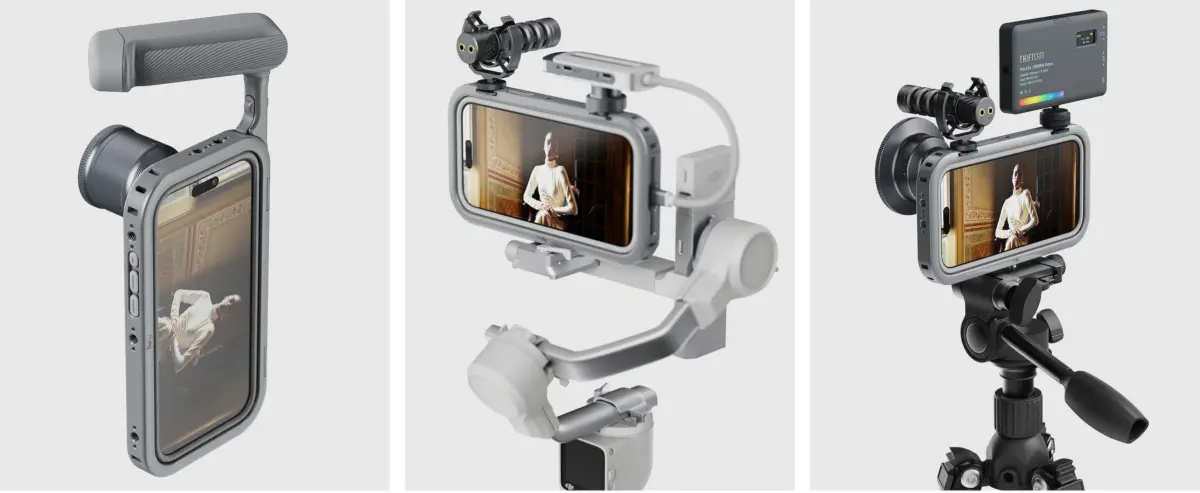
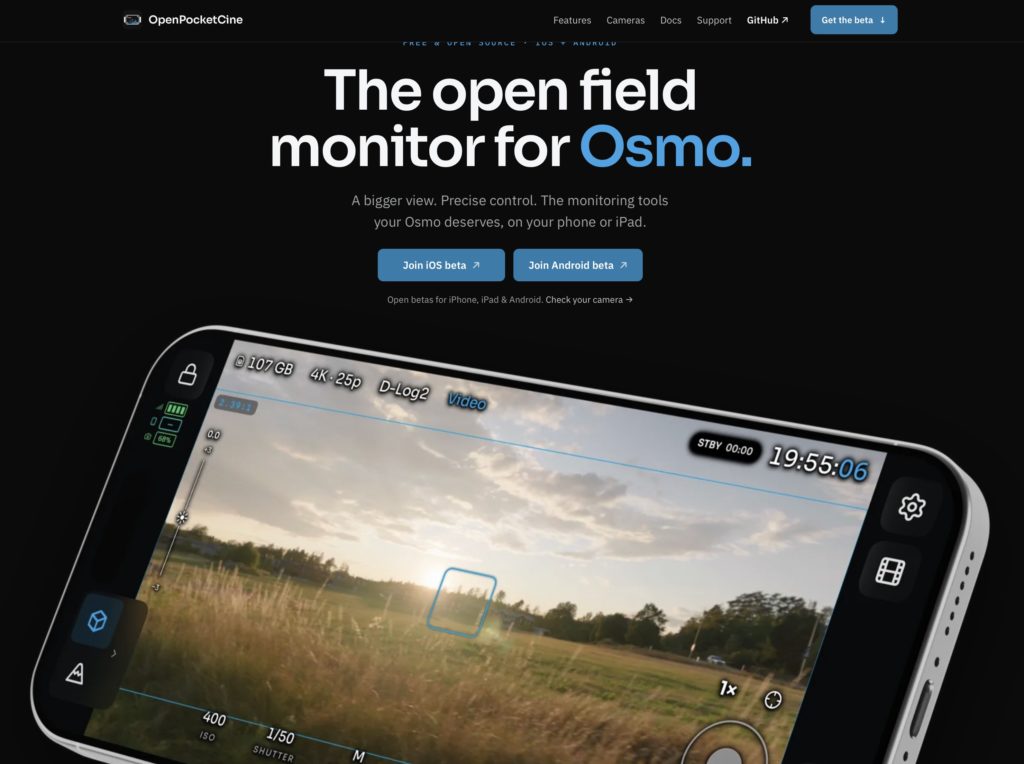
[ User Request ] ──> [ Developer + AI Coding Assistant ] ──> [ Automated Test & Merge ] (24 Hours)- OpenPocketCine: An open-source camera control application designed to replace the proprietary DJI Mimo app for Osmo Pocket cameras. It provides professional monitoring tools (waveforms, histograms, vector scopes), custom aspect ratio overlays, and directly bypasses firmware limitations—such as allowing digital zoom while shooting in D-Log 2 by dynamically toggling camera color profiles.
6. The Skin Smoothing and Retouching Boom
The simultaneous launch of several highly advanced skin-retouching plugins highlights a classic case of parallel development in the creator economy:
- Softbox: Created by the author of the original source text and distributed via FxFactory, this plugin focuses on natural, detail-aware skin smoothing and adaptive sharpening. Rather than using generative AI—which can often introduce unnatural artifacts—Softbox utilizes modern spatial filtering and frequency separation algorithms, leveraging FCP’s native Auto Masking for clean isolation.
- Porefect (Dylan John), PowerSkin (Rafael Ludwig), & Beauty Box (Digital Anarchy): These competing tools all arrived on the market in a remarkably tight window. While they target the same basic task, each exposes different parameters, ranging from simple automated sliders to deep manual control over texture and color frequency bands.
Technical Context: The Power of AI Coding Assistants
The technology driving this sudden democratization of software development relies heavily on specialized coding LLMs. Unlike generalized chatbots, systems like Anthropic’s Claude Code and OpenAI’s Codex-derived tools are optimized for syntactic precision, structural logic, and systemic debugging.
┌────────────────────────────────────────────────────────┐
│               Model Context Protocol (MCP)             │
│                                                        │
│  ┌──────────────┐      Secure API       ┌───────────┐  │
│  │ Local Editor │ <───────────────────> │ Local LLM │  │
│  │ Workspace    │                       │  Engine   │  │
│  └──────────────┘                       └───────────┘  │
└────────────────────────────────────────────────────────┘
Furthermore, the introduction of the Model Context Protocol (MCP) has allowed these AI models to move beyond simple code generation. MCP provides an open standard for secure, bi-directional communication between LLMs and local applications, developer environments, and filesystems. This means an AI assistant is no longer just writing code in a vacuum; it can actively inspect local directories, run compilers, analyze execution errors in real-time, and iteratively refine the code until the application compiles successfully.
For creative professionals, this means the barrier to entry has shifted from knowing syntax to understanding system architecture. An editor who understands the structure of FCPXML (Final Cut Pro’s XML translation format) or the basic mechanics of video frame buffers can successfully direct an AI to build a highly complex utility.
Market Dynamics & The Future of Creative Software
The emergence of these creator-built tools points to a highly decentralized future for creative software. The era of waiting for Adobe, Apple, or Blackmagic to resolve minor, long-standing workflow frustrations is drawing to a close.
| Feature / Metric | Legacy Software Suites (Adobe, Apple) | Creator-Built Micro-Utilities |
|---|---|---|
| Development Speed | Slow (Annual/Quarterly Release Cycles) | Ultra-Fast (Daily/Weekly Iterations via AI/GitHub) |
| Pricing Model | High-Cost Recurring Subscriptions | Free, Open-Source, or One-Time Micro-Transactions |
| Feature Focus | Broad, Generalist Toolsets | Hyper-Specific, Niche Workflow Problem Solving |
| Community Feedback Loop | Multi-Layered, Impersonal Support | Direct Developer Access & Rapid GitHub Merges |
While this shift promises a more responsive and customizable editing experience, it also introduces several new challenges:
- The Support and Maintenance Gap: Building an application with AI is relatively straightforward; maintaining it across future operating system updates and host application API changes is highly demanding. If an editor-developer loses interest or encounters a complex bug they cannot easily resolve, their tool may quickly become obsolete.
- The "Feature Fatigue" and Bloat Paradox: As these applications grow in popularity, users naturally demand more features. Managing these requests without bloating the software’s codebase or cluttering its user interface requires seasoned product design experience—a skill that AI coding tools cannot easily replicate.
- Downward Price Pressure: As high-quality, open-source alternatives like Compositor and Beat proliferate, paid plugins and applications face significant downward price pressure. This trend may force established developers to rethink their pricing models or pivot toward enterprise-grade, highly integrated pipeline services.
Conclusion
The intersection of creative domain expertise and AI-assisted software development has opened up an exciting new frontier for post-production tools. By lowering the financial and technical barriers to entry, AI is allowing editors to reclaim control over their workflows. Whether this movement ultimately results in a fragmented landscape of single-use utilities or a robust, community-driven ecosystem of open-source alternatives, one thing is clear: the relationship between the creators who use software and the technology that drives it has been permanently transformed.