






Executive Overview
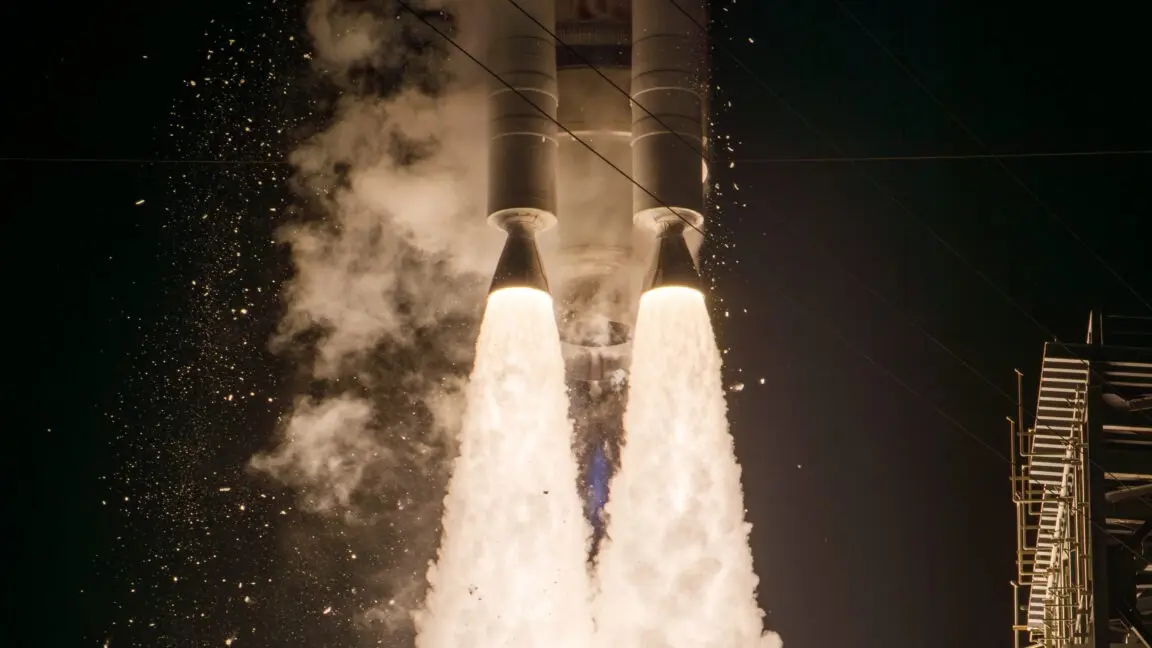
The global aerospace landscape is entering a critical inflection point characterized by rapid commercialization, shifting regulatory timelines, and intense competition across small-, medium-, and heavy-lift launch sectors. At the center of this dynamic period is the United Launch Alliance (ULA) and its next-generation Vulcan rocket. After years of development, rigorous qualification testing, and iterative delays, Vulcan is finally poised to scale its flight cadence significantly, backed by heavyweight commercial commitments from Amazon’s Project Kuiper (Leo) broadband initiative.
Concurrently, international space agencies and private enterprise startups are reshaping orbital economics. South Korea’s indigenous Nuri rocket has notched another resounding success, cementing its reliability and signaling a national pivot toward a commercialized space ecosystem. In Europe, however, structural friction persists. Launch startups like Rocket Factory Augsburg (RFA) and HyImpulse face leadership changes and operational delays, while institutional programs like the European Commission’s SALTO reusable launcher initiative stumble against protracted testing timelines.
Simultaneously, the private space sector is experiencing financial and infrastructural pressures. Rumors of aggressive debt financing structures to secure critical hardware—such as SpaceX’s capital strategy for artificial intelligence microchips—have triggered scrutiny from financial credit markets. At the same time, spaceport infrastructure is undergoing radical security modernization, highlighted by the deployment of directed-energy anti-drone systems at Cape Canaveral to protect sensitive military-industrial payloads.
This comprehensive report examines the structural shifts, technical milestones, and logistical hurdles dominating the aerospace sector as global launch providers race to meet soaring demand for orbital real estate.
Detailed Chronology of Recent Aerospace Events
1. South Korea’s Nuri Delivers Milestone Success
In a decisive demonstration of domestic engineering capability, South Korea’s homegrown Nuri small-lift rocket successfully executed its fifth orbital flight from the Naro Space Center, deploying a payload of five microsatellites intended for the nation’s first domestically produced Earth observation constellation. According to the Korea AeroSpace Administration (KASA) and the Yonhap News Agency, the primary payloads—designed for national safety and environmental monitoring—separated successfully.
Additionally, nine out of ten secondary CubeSat payloads were successfully inserted into their targeted low Earth orbits. The single anomaly of the mission involved the PERSAT-02 CubeSat, developed by South Korean startup Quaternion, which failed to cleanly separate from the upper stage.
This flight marks Nuri’s fourth consecutive success following a failed inaugural attempt in 2021, lifting the vehicle’s cumulative success rate to an impressive 80 percent. Speaking after the launch, Science Minister Bae Kyung-hoon emphasized the South Korean government’s intention to transition space development responsibilities away from state laboratories and toward private commercial entities.
2. Falcon 9 Experiences Rare Late-Countdown Scrub
In the United States, SpaceX encountered a rare operational interruption when a Falcon 9 launch sequence was aborted in the final minute of the countdown. The mission, tasked with deploying a batch of 21 data-transport satellites for the United States Space Force’s Space Development Agency (SDA), was abruptly halted as the launch vehicle transitioned into its automated startup protocol.
While SpaceX did not immediately disclose the exact telemetry trigger or subsystem fault that prompted the abort, the unexpected wave-off disrupted a high-tempo operational schedule. The mission relies on Falcon 9 first-stage booster B1103—a veteran flight asset making its sixth journey, having previously flown missions for the SDA’s Tranche 1 Transport Layer (T1TL-E), NROL-179, and multiple internal Starlink satellite constellations. After addressing the undisclosed vehicle or range issue, subsequent launch windows point to a mid-October resumption of flight operations.
3. HyImpulse and European Launch Iterations Slip
European commercial launch developments continue to navigate a turbulent regulatory and meteorological environment. German suborbital launch startup HyImpulse announced a schedule shift for the second flight of its SR75 suborbital rocket, pushing the target launch window out to the spring of 2027.

Though company representatives previously stated the mission would take place by the end of 2026, HyImpulse officials clarified that the delay stems from rigorous licensing framework requirements and seasonal meteorological challenges at the SaxaVord Spaceport in the Shetland Islands, rather than any technical immaturity of the launch vehicle itself. This upcoming mission will represent a monumental milestone for the startup: its first flight from European soil and its maiden voyage carrying commercial payload contracts, following its successful inaugural suborbital test from the Koonibba Test Range in South Australia in May 2024.
Meanwhile, institutional European projects are encountering parallel slowdowns. The European Commission formally extended the operational deadline for the SALTO (Shared Cost Actions for a Reusable Launcher TecHnology) project through the end of 2026. This administrative extension grants the program an additional three-quarter window to execute the initial low-altitude "hop test" of Europe’s Themis reusable rocket demonstrator at Esrange, Sweden. The ArianeGroup-led initiative, part of the wider European Space Agency (ESA) Themis program, aims to validate vertical takeoff and vertical landing (VTVL) capabilities vital for future European launch sovereignty.
Supporting Context & Metrics
The economics of the contemporary launch market are dictated by unprecedented volume demands contrasted against stubborn manufacturing and supply-chain constraints.
| Metric / Financial Indicator | Value / Status | Context / Significance |
|---|---|---|
| SpaceX Credit Default Swap Spread | 194 basis points | Indicates heightened credit risk pricing following multi-billion-dollar debt accumulation for strategic technology investments. |
| Nuri Launch Success Rate | 80 percent | Four consecutive successes following the 2021 inaugural failure, validating South Korea’s small-lift architecture. |
| SALTO Project Budget | €42.8 million | European Union research grant managed via ESA to demonstrate the recovery and reusability of the Themis prototype. |
| Blue Origin Long-Term Pad Strategy | 4 Active Pads | Jeff Bezos confirmed construction of three new launch complexes alongside LC-36A to support an ambitious long-term launch cadence. |
| ULA Parallel Processing Capacity | 2 Integration Bays | Dual Vehicle Integration Facilities at Cape Canaveral now allow simultaneous vertical processing of Vulcan rockets. |
Financial Vulnerabilities and Credit Pressures
Beyond pure hardware logistics, financial engineering within the private space sector has drawn the close attention of global financial markets. Reports from The Financial Times revealed that SpaceX is pursuing massive debt financing—approaching $40 billion—to fund the massive procurement of specialized Nvidia hardware chips to fuel its expanding artificial intelligence and computing infrastructure.
This aggressive capital strategy has caused noticeable anxiety among bondholders and credit analysts. The cost of protecting $1 million of SpaceX’s debt against default over a five-year period via credit default swaps surged to 194 basis points, equating to an annual protection cost of $19,400. This fiscal maneuver follows a staggering $25 billion investment-grade debt issuance earlier in the year, which came hot on the heels of an $86 billion initial public offering framework. Industry analysts view this as a high-stakes, aggressive doubling-down by CEO Elon Musk on advanced semiconductor computing architecture.

Spaceport Security: Directed-Energy Defense at Cape Canaveral
As spaceports handle increasingly sensitive national security payloads and multi-billion-dollar commercial constellations, perimeter security has evolved from passive surveillance to active kinetic and directed-energy interdiction. Reports indicate that Cape Canaveral Space Force Station is slated to receive advanced laser defense systems designed to neutralize unauthorized drone intrusions.
With hundreds of drone incursions recorded over the region in recent years, traditional electronic countermeasures—such as radio-frequency jamming—present unacceptable risks. Jamming signals can easily interfere with the delicate, highly synchronized telemetry, guidance, and ground-support systems of nearby orbital launch vehicles. Consequently, high-energy laser systems provide a precise, kinetic alternative to safeguard assets belonging to SpaceX, ULA, Blue Origin, and Relativity Space against prying eyes and potential sabotage.
Official Statements and Industry Insights
ULA and Amazon: Vulcan’s Dual-Stream Assembly
The overarching narrative dominating American heavy-lift logistics is the long-awaited operational debut and ramp-up of United Launch Alliance’s Vulcan rocket. In an expansive interview with aerospace analysts, Amazon Leo Vice President Rajeev Badyal underscored the strategic necessity of diversifying launch providers from the inception of the Project Kuiper mega-constellation.
"From day one we decided to go with a diverse set of partners to supply us with rockets," Badyal noted. "We started off with ULA, Blue Origin, Arianespace, and SpaceX. We signed deals with all four of them. We knew there was risk, but we had to get heavy lift vehicles."
Highlighting the immediate horizon for Vulcan, Badyal provided concrete operational timelines for Amazon’s aggressive deployment schedule:

"I can say we’re weeks away from launching on Vulcan. Things are on track. We’ll follow that with an Arianespace launch and at least one more Vulcan this year. I can also tell you the infrastructure that we put and built with ULA now allows us to process two rockets simultaneously. So right now, there are two vehicle integration facilities, and both have a Vulcan rocket that is vertical and getting ready for our missions."
This parallel processing capability represents a paradigm shift for ULA, which historically relied on sequential, single-bay vehicle integration methodologies. If the upcoming solid rocket boosters perform nominally during the late-October return-to-flight mission, ULA is structurally positioned to achieve an unprecedented launch cadence moving into the next calendar year.
Blue Origin’s Ultra-High Cadence Ambitions
Meanwhile, Blue Origin founder Jeff Bezos outlined a remarkably ambitious long-term infrastructure and flight-rate vision for the company during a media appearance. Addressing the rebuild of Launch Complex 36 (LC-36A) at Cape Canaveral to support the massive New Glenn heavy-lift vehicle, Bezos revealed a sweeping expansion of ground infrastructure.
"We’re building three more pads," Bezos stated. "So we’re building—we’ll have a total of four pads that we’re under construction right now."
This aggressive concrete expansion directly mirrors Blue Origin’s formal requests filed with the Federal Aviation Administration (FAA) to support up to 50 orbital launches per year from Florida alone. When questioned regarding the ultimate operational cadence of the enterprise, Bezos outlined an incremental, nearly science-fiction-inspired escalation curve:

"Our goal is to fly every day. And then once we’re flying every day, we want to fly every hour. And then once we’re flying every hour, we want to fly every minute. And by the way, that’s where I lose the team."
While a launch rate occurring "every minute" remains well outside current industrial engineering paradigms—particularly for an enterprise still working to establish a consistent monthly cadence—it underscores the absolute commitment of private space billionaires toward transforming orbital travel into a high-throughput logistics network.
Future Outlook: The Next Three Launches
As the global launch manifests clear their immediate holds and technical reviews, attention turns to the active pads across Asia and the United States. The upcoming three launches on the global calendar highlight the relentless pace of state-sponsored and commercial orbital insertion:
-
October 9, 2025 – 19:25 UTC
- Vehicle: Long March 12
- Payload: Classified/Unknown Payload
- Site: Wenchang Space Launch Site, China
-
October 10, 2025 – 07:29 UTC

- Vehicle: Falcon 9 (Booster B1103)
- Payload: Tranche 1 Transport Layer (T1TL) – Generation A
- Site: Vandenberg Space Force Base, California, USA
-
October 12, 2025 – 23:00 UTC
- Vehicle: Falcon 9
- Payload: Starlink Group 15-25
- Site: Vandenberg Space Force Base, California, USA
Conclusion
The global space sector stands at a fascinating crossroads of industrial maturation and financial stress-testing. Vulcan’s impending commercial debut offers ULA a vital lifeline to prove its dual-pad processing mettle against Amazon’s insatiable bandwidth demands. Simultaneously, international actors like South Korea continue to methodically capture market share in the small-lift arena, while European startups grapple with bureaucratic, meteorological, and leadership growing pains.
As corporate entities shoulder massive debt to fund cutting-edge computational infrastructure, and spaceports fortify their perimeters against emerging aerial threats, the coming months will dictate which aerospace enterprises possess the operational resilience to survive the crucible of the modern commercial space age.