








Executive Overview
The sheer volume of human activity in low-Earth orbit (LEO) has transformed from a sparse frontier into a congested, high-speed highway. With tens of thousands of active satellites and fragments of space debris hurtling around the globe at speeds exceeding 17,500 miles per hour, the margins for error are shrinking to the vanishing point.
Speaking at the International Astronautical Congress in Antalya, Turkey, Michael Nicolls—Senior Vice President of Starlink at SpaceX and President of xAI—delivered a stark warning. As commercial space ventures expand exponentially, driven by megaconstellations and ambitious orbital infrastructure projects, operators are increasingly flying blind relative to one another.
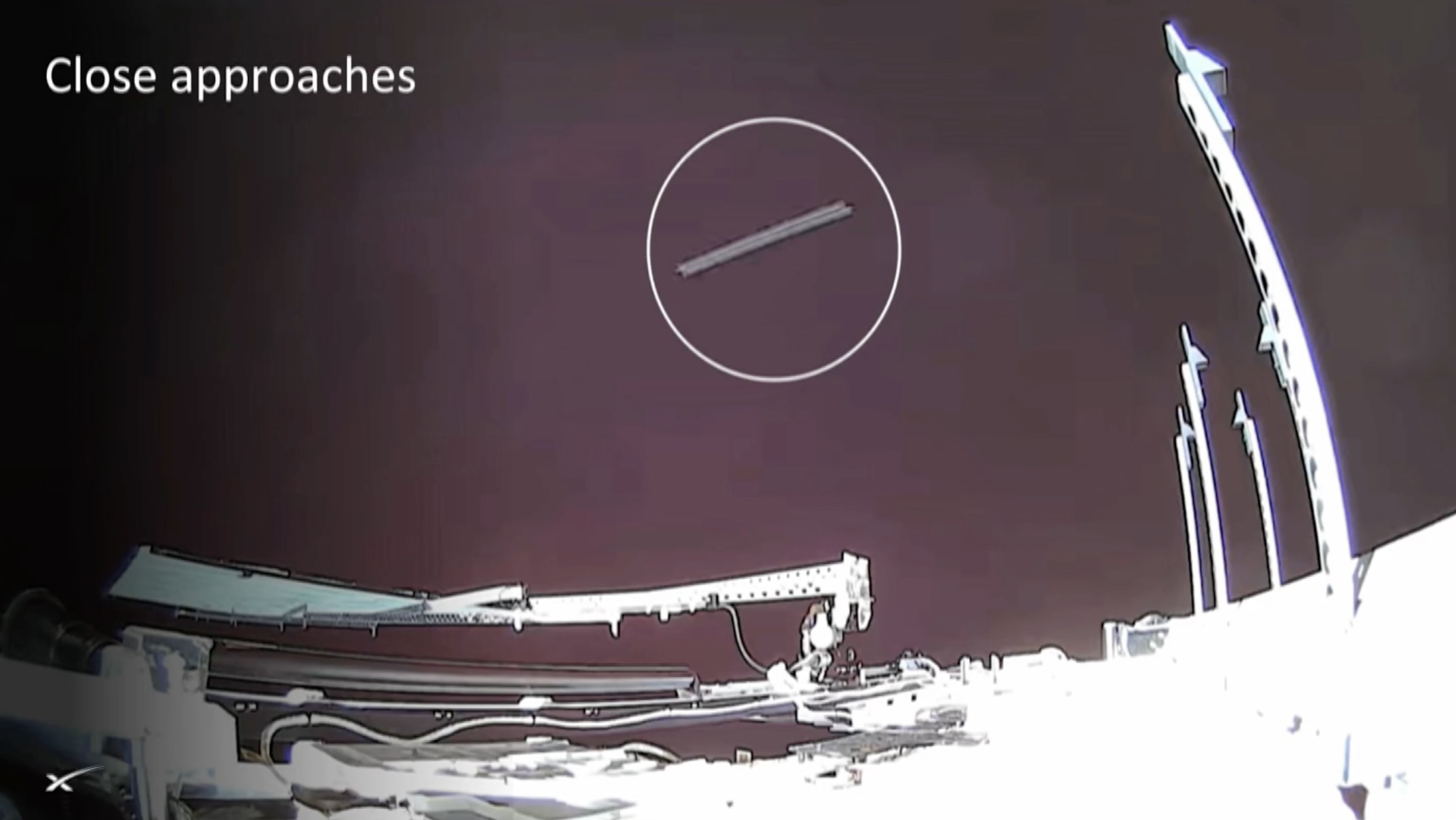
According to Nicolls, unannounced orbital maneuvers by international operators have resulted in alarming close approaches, or "conjunctions," bringing foreign spacecraft within tens to hundreds of meters of SpaceX’s Starlink fleet. While major Western operators maintain routine data-sharing protocols, a significant cooperative deficit—particularly concerning operations originating from China and Russia—threatens to trigger a catastrophic chain reaction of orbital collisions. The situation highlights an urgent, existential reality for the space economy: without legally or culturally mandated data-sharing norms, the law of large numbers dictates that a devastating orbital smashup is no longer a question of if, but when.
Detailed Chronology: The Escalating Crisis in Low-Earth Orbit
The modern era of commercial spaceflight is defined by rapid scale. For decades, the cosmos was the exclusive domain of heavily vetted, state-run space agencies that coordinated launches and trajectories through established diplomatic channels. Today, the democratization of low-Earth orbit has inverted that paradigm.
The Rise of the Megaconstellation
SpaceX’s Starlink currently operates over 11,000 satellites, commanding roughly two-thirds of all active spacecraft in LEO. Yet, Starlink is merely the vanguard. The company has already outlined blueprints for an even grander network known as Starmind, designed to host artificial intelligence computing infrastructure directly in orbit. Simultaneously, competitors are scaling up. Amazon is aggressively deploying its Kuiper/Leo network, while massive Chinese government-backed and commercial megaconstellations enter full-scale deployment phases.
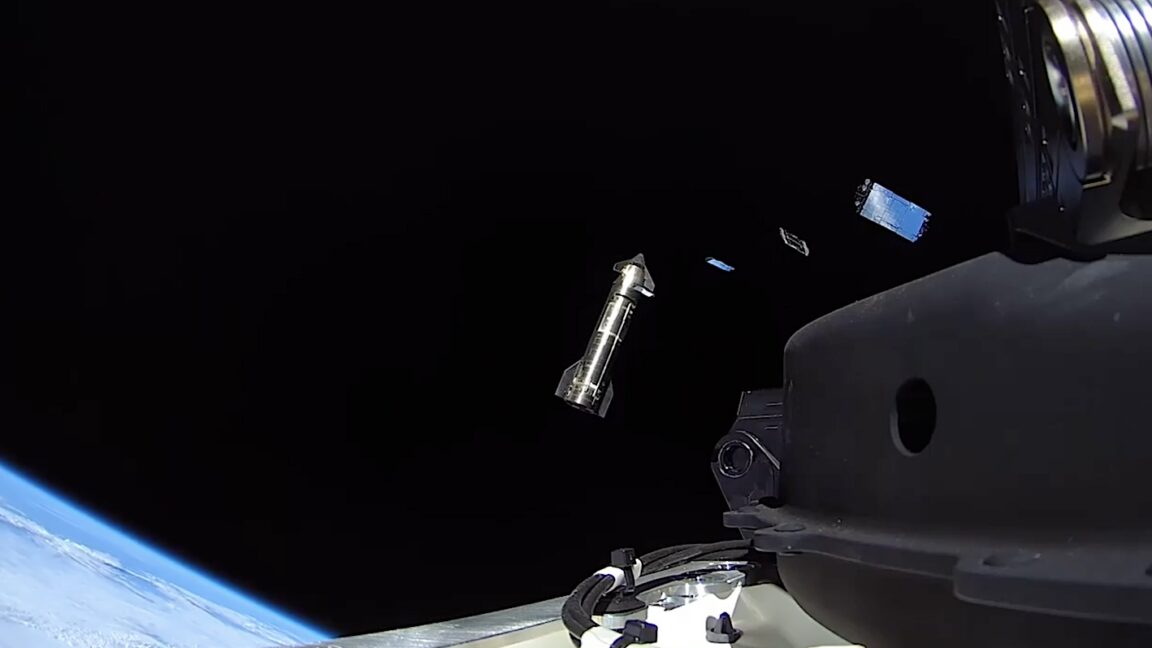
As thousands of new spacecraft flood the skies, the frequency of potential collision geometry has spiked. While the vastness of space implies that a collision on any given afternoon remains mathematically improbable, the sheer volume of assets ensures that probabilistic certainty shifts against operators over time.
"Too Close for Comfort"
During his presentation in Antalya, Nicolls revealed data demonstrating that Starlink satellites routinely execute roughly 1,000 collision-avoidance maneuvers daily to sidestep other active spacecraft and untracked orbital debris. More concerningly, over the preceding few months, Starlink systems were forced to actively steer clear of approximately 650 active satellites belonging to external operators.
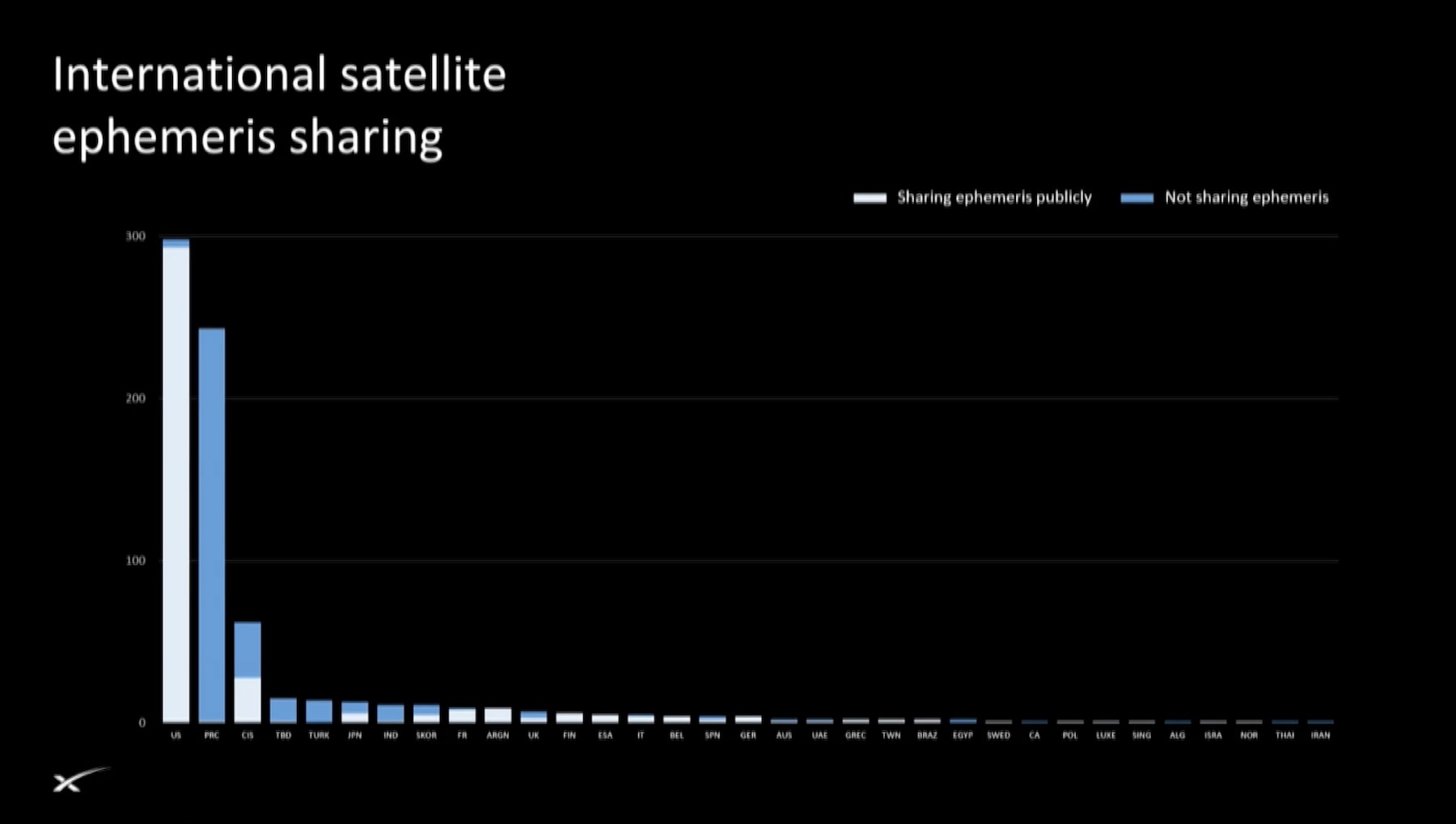
Of those 650 instances, only half involved operators who participate in reciprocal ephemeris sharing—the publishing of precise orbital trajectory data. The remainder occurred because foreign or uncooperative operators altered their spacecraft vectors without broadcasting their intentions.
The consequences have been terrifyingly intimate. Nicolls highlighted multiple instances where lack of communication led to conjunctions measured in mere tens or hundreds of meters—a distance that, at orbital velocities, leaves no room for human intervention and pushes automated avoidance systems to their absolute limits.
Supporting Context & Metrics: Navigating the Numbers
To comprehend the severity of the orbital bottleneck, one must examine the metrics governing modern space operations, the physical adaptations required to survive them, and the technical mechanisms designed to prevent disaster.
The Geography of LEO
SpaceX has aggressively restructured its operational footprint to minimize risk. The entire active Starlink constellation has been intentionally lowered to orbits beneath 500 kilometers (310 miles). This deliberate downward shift yields a triple advantage:
- It physically separates Starlink from heavily trafficked upper orbital corridors.
- It vastly accelerates the natural atmospheric reentry and burn-up timeline for any failed or defunct satellites, preventing long-term debris accumulation.
- It reduces signal latency for ground-based broadband customers.
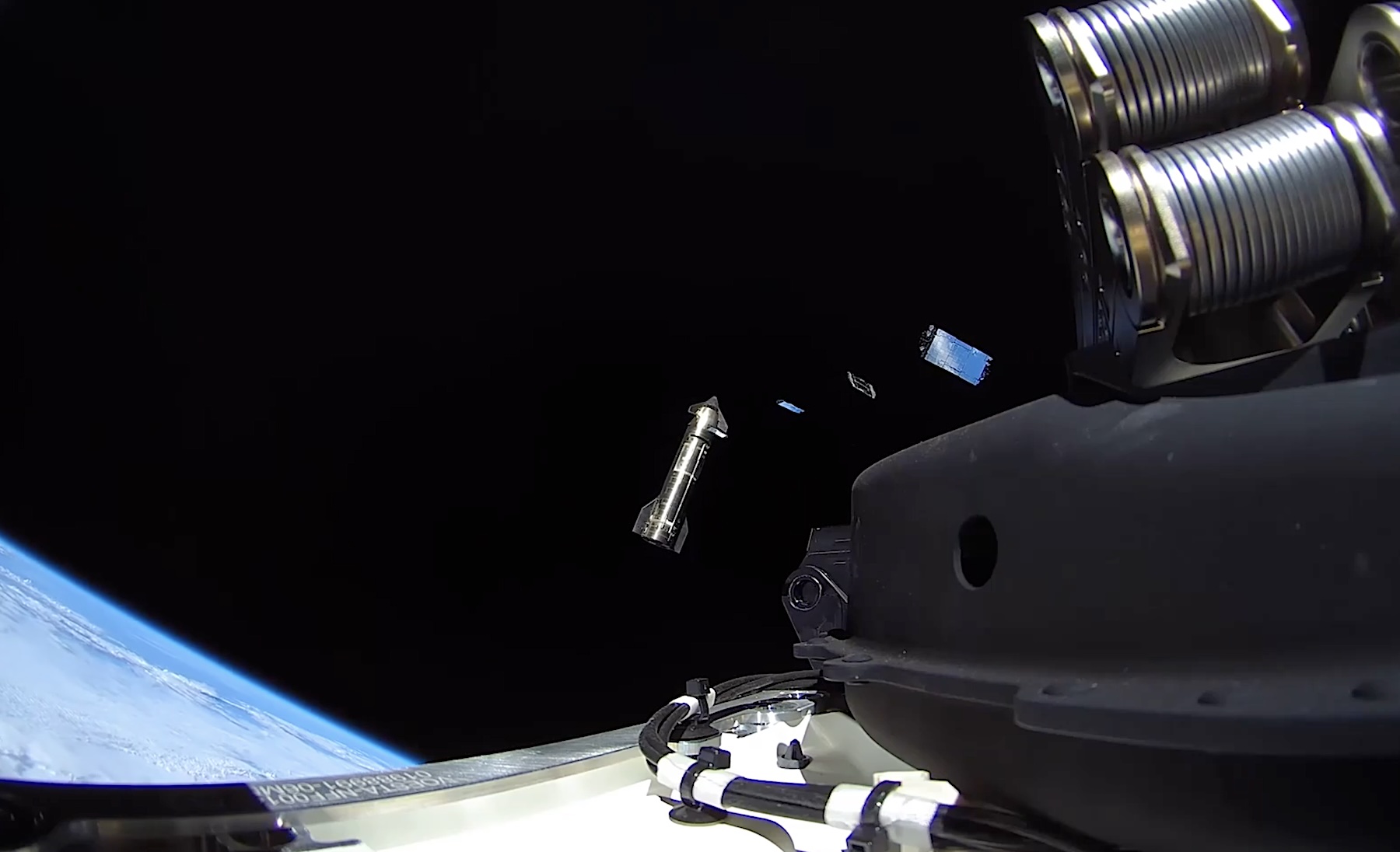
Furthermore, the newly introduced Starlink V3 satellites—first deployed via SpaceX’s heavy-lift Starship rocket—are designed to fly even lower, operating at an altitude of approximately 350 kilometers (217 miles).
Stargaze and Autonomous Defense
Because external data sharing is patchy, SpaceX has been forced to pioneer internal technological safety nets. Among them is "Stargaze," an onboard optical navigation camera system integrated into Starlink satellites. Stargaze enables spacecraft to autonomously scan their surroundings and detect non-cooperative objects. Nicolls noted that this system successfully tracks roughly 90 percent of maneuvering satellites that cross Starlink orbital planes.
When an impending close encounter is detected, Starlink’s autonomous flight software kicks in. The spacecraft execute automated course corrections or, when evasion paths are constrained, execute "ducking maneuvers"—orienting their physical profiles to present the smallest possible cross-section and mitigate the catastrophic kinetic energy of a potential impact.
Official Statements and Industry Perspectives
The debate over space traffic management exposes a deep philosophical split between Western commercial entities, which have largely embraced open data protocols, and geopolitical competitors who view trajectory data through a lens of strategic security.

The SpaceX and xAI Stance
Michael Nicolls was unequivocal during his address, stressing that orbital operations must pivot away from a culture of secrecy:
"Once you can track this debris, and if you can track it well, these are like obstacles on a road. If you can measure them, you can predict where they’re going to be, and you can avoid them. What you can’t avoid is other operators who maneuver without telling you where they’re going to go. We have many examples of this on Starlink, unfortunately."
Nicolls emphasized that ephemeris data—the mathematical tables detailing a satellite’s precise past and future positions—must become a baseline operational requirement across all space-faring nations:
"The minimum standard in low-Earth orbit needs to be that you know where your satellite is, and you know where it’s going. You need to be able to predict where your trajectory is, and that prediction needs to be reliable."
While acknowledging positive steps—such as functional data-sharing agreements established with China’s crewed space station program and select commercial Chinese operators—Nicolls pointed out that a vast majority of Chinese and Russian satellite operators maintain a strict blackout on ephemeris sharing. Charts presented during his talk underscored that non-disclosure remains heavily concentrated among these state actors, though sporadic opacity persists in pockets of Europe, Japan, and the United States.
Amazon’s Counter-Perspective
In stark contrast to opaque international operators, commercial competitors have found common ground on the necessity of safety cooperation. Rajeev Badyal, head of Amazon’s Leo satellite broadband initiative, addressed the issue of coordination with Ars Technica, noting that commercial rivalry stops where orbital safety begins. Amazon currently has nearly 400 satellites in orbit, with thousands more approved by regulators.
"Space safety is paramount to us as well," Badyal stated. "Every launch we do, we actually coordinate with SpaceX. We coordinate with others who have satellites. We let them know where we’re going to drop them off, how we’re going to orbit raise, etc. So we have regular meetings with companies like SpaceX to exchange data."
Badyal dismissed the notion that sharing trajectory data poses a commercial risk:
"For us, sharing ephemeris or sharing the information necessary for space safety is a non-issue. We’re big proponents of making sure that all of us operate in this domain in space in a coordinated fashion because the consequences of not doing so are significant for everybody, and there’s no reason not to."
Addressing the elephant in the room regarding uncooperative geopolitical actors, Badyal added:
"Obviously, SpaceX is the largest constellation out there. We work with them hand in hand. In terms of China and adversaries, that’s something I can’t comment on at the moment. At some point, we will have to coordinate, or it’ll end up being a negative thing for everybody, especially if they get to scale."
Future Outlook: Establishing Rules of the Road
As humanity looks toward a future characterized by multi-tens-of-thousands-satellite networks, orbital congestion represents one of the most critical regulatory and technological challenges of the 21st century.
The primary danger facing low-Earth orbit is the Kessler Syndrome—a theoretical scenario proposed by NASA scientist Donald Kessler in 1978, wherein the density of objects in LEO is high enough that collisions between objects could spawn a cascading chain reaction of debris. A single hyper-velocity impact between two massive operational satellites could instantly generate tens of thousands of untrackable, high-energy shrapnel fragments, rendering entire orbital shells completely unusable for generations and cutting off humanity’s access to weather monitoring, global communications, and Earth-observation science.
To avert this dystopian scenario, industry leaders are pushing for a transition from voluntary courtesy to mandatory international norms. Key developments on the horizon include:
- Universal Ephemeris Standards: Developing international API standards that allow automated, real-time machine-to-machine exchange of trajectory updates across all sovereign boundaries.
- Autonomous International Protocols: Expanding onboard AI detection systems—such as SpaceX’s Stargaze—to universally govern multi-operator reactions when human communication fails.
- Regulatory Enforcement: Pressure from national licensing bodies, such as the US Federal Communications Commission (FCC) and international telecommunication unions, to make orbital data transparency a legal prerequisite for spectrum allocation and launch licensing.
Ultimately, the message emerging from the International Astronautical Congress is clear. Space is vast, but low-Earth orbit is finite. If global operators—particularly emerging space powers in Asia and Europe—fail to bridge the trust gap and share their orbital roadmaps, the skies above Earth risk becoming a permanent monument to the tragedy of the commons.