Margaret Hamilton, a foundational architect of modern software engineering and the pioneering leader who spearheaded the development of the onboard flight software for NASA’s historic Apollo program, passed away last week at the age of 90. Her death marks the end of an era for computing history, closing the chapter on a life dedicated to stretching the boundaries of human technological capability.
Long before computer science was recognized as an academic discipline or a distinct engineering profession, Hamilton was busy inventing its core methodologies. She famously coined the term "software engineering" to elevate the status of programming to parity with traditional hardware engineering disciplines like aeronautical and mechanical engineering. Her technical foresight, dedication to absolute system reliability, and unyielding demand for rigorous testing ensured that humanity’s first steps on the lunar surface were not derailed by catastrophic computer malfunctions.
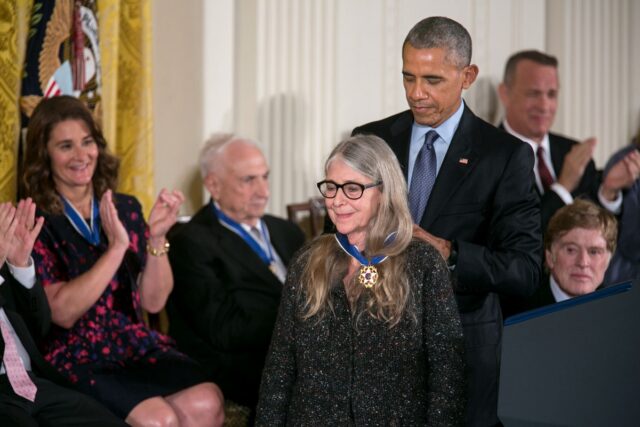
For her immense contributions to space exploration and computer science, Hamilton was awarded the Presidential Medal of Freedom by President Barack Obama in 2016. A year later, her enduring cultural legacy was cemented when she was immortalized as a LEGO minifigure alongside aerospace icons Mae Jemison and Sally Ride in the "Women of NASA" collection. Her passing invites a comprehensive retrospective on a career that redefined what machines—and the humans who program them—could achieve.
Detailed Chronology: From Chaos Theory to the Sea of Tranquility
Early Life and Academic Foundations
Born in Paoli, Indiana, in 1936, Hamilton’s intellectual trajectory was shaped by her family background; her father was a poet and her grandfather served as a headmaster. In 1958, she graduated from Earlham College with a Bachelor of Arts degree in mathematics and a minor in philosophy. That same year, she married James Cox Hamilton. Their initial life plan was straightforward: Hamilton would work temporarily to support her husband through law school, after which he would return the favor, enabling her to pursue a doctoral degree in mathematics.
Instead, her career path swerved toward the bleeding edge of computational science. Hamilton secured a position working under Edward Lorenz, the visionary MIT mathematician who was constructing pioneering mathematical models of global weather patterns. Using a set of differential equations to represent atmospheric variables such as temperature, pressure, and wind velocity, Lorenz was attempting to simulate weather dynamics on an LGP-30 computer.
Neither Lorenz nor Hamilton possessed formal programming backgrounds; computers were still exotic novelties at the time. Together, they taught themselves how to write and execute code. Hamilton’s early work on the LGP-30 laid the groundwork for Lorenz’s accidental discovery of chaos theory—specifically, the profound sensitivity of complex systems to initial conditions (popularly known as the "butterfly effect"). Colleagues later recalled Hamilton’s unconventional and ingenious debugging methods; rather than relying on tedious electronic diagnostics, she would roll out vast strips of paper tape down hallway floors, manually editing binary code hole-by-hole using a pencil and strips of Scotch tape.
The SAGE Project and the Pursuit of Reliability
In 1961, Hamilton transitioned to the SAGE (Semi-Automatic Ground Environment) project at MIT, writing mission-critical software for the prototype XD-1 computer to assist the United States Air Force in tracking and intercepting potential enemy aircraft. Her baptism by fire involved deciphering a notoriously opaque program that no previous engineer had been able to run—compounded by the fact that the original developer’s notes were scribbled entirely in Latin and Greek.
Hamilton successfully unraveled the code, noting with dry amusement that the program even output its results in classical languages. It was during her tenure on the SAGE project that Hamilton developed an obsessive, industry-shaping focus on software reliability and fault tolerance. Systems that could not fail under pressure became her signature domain.
Architecting the Apollo Guidance Computer
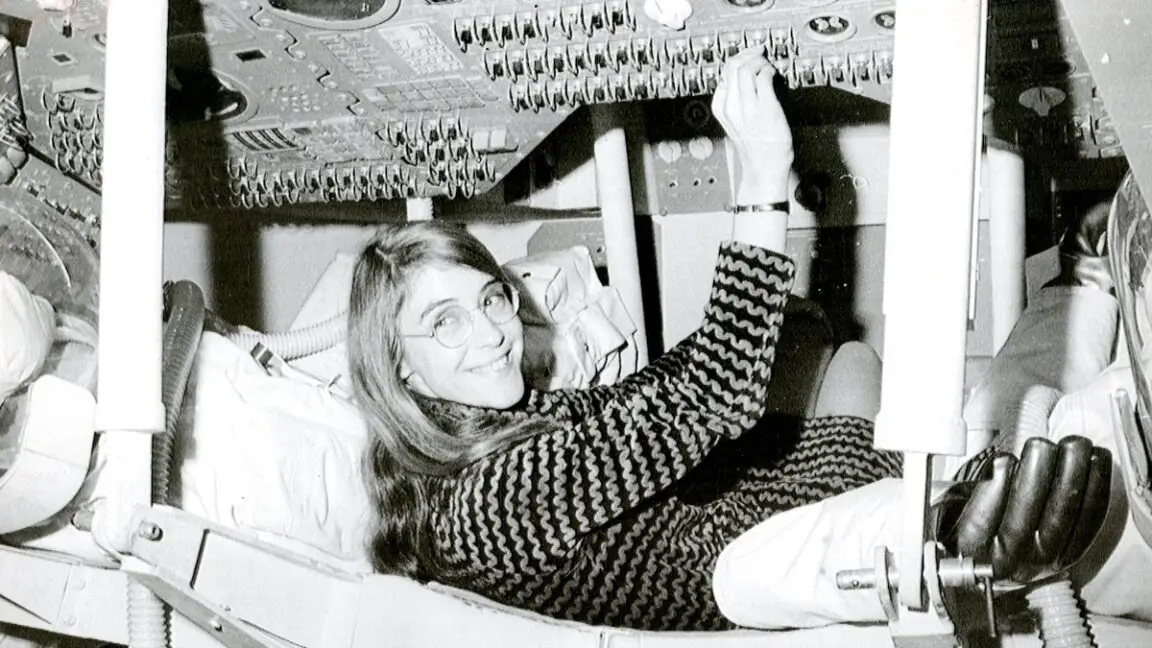
By 1965, Hamilton was preparing to finally enter graduate school when her husband spotted a newspaper advertisement seeking software developers for MIT’s Instrumentation Lab, which had been contracted to build the onboard guidance computer (AGC) software for NASA’s Apollo program. Hamilton was hired as the first programmer—and the first woman—on the project, setting the stage for her leadership across six lunar landing missions between 1969 and 1972.
The technological constraints under which Hamilton and her team operated were staggering by modern standards. Binary code for the AGC was physically stored via "rope memory"—copper wires woven intricately around magnetic ring cores by New England textile workers. A passing wire represented a binary "1," while a bypassing wire represented a "0." Because of her direct oversight of these interwoven magnetic cores, Hamilton earned the affectionate moniker "rope mother."
The "Lauren Bug" and Real-Time Priority Scheduling
Balancing motherhood and a high-stakes engineering career, Hamilton frequently brought her four-year-old daughter, Lauren, to the MIT lab during late nights and weekends. While pretending to be an astronaut navigating a simulator, young Lauren once triggered a system crash by typing "P01"—a pre-launch navigation sequence—in the middle of a simulated lunar mission.
Realizing that an astronaut could easily make a similar catastrophic keystroke under the immense stress of an actual spaceflight, Hamilton petitioned NASA management to install a software safeguard. Initially, agency leadership dismissed the risk as negligible. However, during the historic Apollo 8 mission to orbit the Moon, astronaut Jim Lovell accidentally committed the exact same input error, wiping out the spacecraft’s critical navigational data. Hamilton was urgently called in to manually recover the lost telemetry. Jokingly, the vulnerability was forever immortalized within her team as the "Lauren bug."
By 1968, Hamilton had risen to the role of assistant director in charge of the Command and Service Module software team. Anticipating that onboard computers might become overwhelmed by unexpected computational demands during critical mission phases, she championed a revolutionary architectural concept: asynchronous executive processing with priority scheduling.
Supporting Context & Metrics: Saving Apollo 11
The true genius of Hamilton’s defensive programming philosophy was brutally tested on July 20, 1969, during the historic Apollo 11 lunar descent.
As the Eagle lunar module plummeted toward the surface of the Moon, radar equipment malfunctioned, inundating the Apollo Guidance Computer with an overwhelming flood of spurious, low-priority data tasks. The computer’s memory capacity was pushed past its absolute breaking point, triggering flashing alarm lights that threatened to force Mission Control to abort humanity’s first lunar landing attempt.
+---------------------------------------------------------------+
|                 APOLLO 11 SYSTEM OVERLOAD EVENT               |
+---------------------------------------------------------------+
|  [Trigger]  Radar malfunction floods AGC with low-priority data |
|  [Result]   Computer memory exceeds 100% capacity             |
|  [Response] Hamilton's asynchronous priority scheduler engages|
|             -> Drops non-essential tasks (e.g., radar updates)|
|             -> Preserves thruster control & landing algorithms|
|  [Outcome]  Successful landing in the Sea of Tranquility      |
+---------------------------------------------------------------+
Had it not been for Hamilton’s fail-safe architecture, the computer would have crashed, likely resulting in disaster. Instead, her software immediately recognized the overload condition, automatically dumped non-essential background tasks, and reallocated 100% of its processing power toward the single most critical mission objective: safely landing the spacecraft.
In a 1971 retrospective letter detailing the event, Hamilton wrote:
"The computer (or rather the software in it) was smart enough to recognize that it was being asked to perform more tasks than it should be performing. It then sent out an alarm, which meant to the astronaut, ‘I’m overloaded with more tasks than I should be doing at this time and I’m going to keep only the more important tasks’… If the computer hadn’t recognized this problem and taken recovery action, I doubt if Apollo 11 would have been the successful Moon landing it was."
Official Statements and Tributes
The global scientific community and academic institutions have united in profound mourning and high praise following Hamilton’s passing.
"To say Margaret Hamilton was a pioneer—to say she was ahead of her time—would be a dramatic understatement. She was a software engineer at a time when that field was in its infancy, and she not only developed advanced code herself but also led a team in using that nascent technology to develop one of the most complex systems humanity had ever achieved,"stated Olivier de Weck, interim head of the MIT Department of Aeronautics and Astronautics."The Apollo program still stands as one of our greatest testaments to the power of collaboration, ingenuity, and engineering, and Hamilton was a fundamental contributor to that program’s success."
Cultural institutions have similarly sought to honor her immense reach. In 2015, the raw source code for the Apollo Guidance Computer was uploaded to GitHub, sparking viral fascination among modern developers. Four years later, in 2019, Google celebrated the 50th anniversary of the Moon landing by deploying over 100,000 adjustable mirrors at its Mojave Desert solar power plant to project a massive, glowing portrait of Hamilton illuminated entirely by reflected moonlight.
Future Outlook: A Legacy Carved in Code
Margaret Hamilton’s professional journey did not end with the conclusion of the Apollo era. In 1976, following the transition of the MIT Instrumentation Lab into the independent Draper Laboratory, she founded Higher Order Software (HOS), a company commercializing her academic research into error prevention and automated system reliability. Later, in 1985, she established Hamilton Technologies, where she served as CEO and spearheaded the development of the Universal Systems Language (USL). USL was designed to treat software creation from a preventative, mathematical standpoint, enforcing systemic reliability and defensive programming paradigms from the ground up.
As society steps deeper into an era defined by autonomous vehicles, artificial intelligence, and increasingly complex distributed networks, the foundational principles that Hamilton championed—fault tolerance, priority scheduling, and uncompromising system reliability—remain more vital than ever.
Margaret Hamilton is survived by her daughter, Lauren Hamilton; her son-in-law, Richard Selesnick; two grandsons; four great-grandchildren; and her siblings John, David, and Kathryn. Though she has left us, every line of robust, failure-resistant code executed across the modern digital world stands as a monument to her towering intellect, tireless rigor, and visionary spirit.