







By Shane Snider | Senior News Writer, Data Center Knowledge
Published: August 28, 2026
Executive Overview
President Donald Trump has signed a sweeping executive order declaring a national emergency over the United States bulk power system. The directive empowers the Department of Energy (DOE) to clamp down on foreign-produced electrical infrastructure components and enforce rigorous compliance conditions on equipment already humming inside the nation’s substations and generation plants.
While framed by the White House as a critical national security countermeasure against foreign sabotage, unauthorized access, and supply chain dependencies, the August 26, 2026, directive sends shockwaves through the commercial energy and digital infrastructure landscapes.
For data center operators and hyperscalers racing to secure staggering amounts of electricity for energy-hungry artificial intelligence (AI) factories, the timing could not be more precarious. The U.S. power supply chain is already buckling under historic constraints, with critical hardware like large power transformers, inverters, and switchgear facing multi-year lead times.
By injecting geopolitical risk assessments, software audits, and lifecycle vendor controls directly into the procurement equation, the new federal mandate threatens to exacerbate supply bottlenecks, inflate project costs, and alter timelines for bringing next-generation compute capacity online. With the DOE facing a 120-day deadline to formulate rules governing affected equipment, suppliers, and transactions, utilities and data center developers face an anxious window of regulatory ambiguity.
Detailed Chronology: The Road to the Bulk Power Emergency
The convergence of national security policy and power grid procurement did not happen overnight. It represents the culmination of escalating geopolitical tensions, surging domestic electricity demand, and vulnerabilities exposed by the rapid proliferation of advanced compute clusters.
The Run-Up: Sourcing Pressures and AI Loads
Throughout 2024 and 2025, the exponential rise of generative AI pushed data center power requirements past traditional thresholds, rapidly transforming data center developers into major players in regional energy markets. Utilities across North America found themselves scrambling to add generation capacity and upgrade high-voltage transmission lines.
However, this capital expenditure super-cycle collided with a strained manufacturing base. Specialized components—such as solid-state transformers, high-voltage circuit breakers, and digital control systems—experienced unprecedented lead times. Developers frequently cited equipment sourcing as the primary bottleneck delaying campus energizations, even when local generation capacity was technically available.
August 26, 2026: The Executive Order Takes Effect
President Trump signed the executive order, titled “Declaring a National Emergency to Secure the United States Bulk Power System,” formally establishing that foreign adversaries could exploit systemic vulnerabilities in the nation’s electric infrastructure.
The order targets foreign-produced bulk-power system electrical equipment and associated critical software. It applies a blanket prohibition on the future purchase or installation of high-risk components within facilities categorized as part of the bulk power system, while deliberately carving out local electrical distribution grids.
Crucially, the order extends its reach backward, targeting equipment already installed and operating across the country. It directs the Secretary of Energy to evaluate legacy infrastructure and impose operational conditions—or mandate replacements—based on national security, continuity of service, and supply chain visibility.
The 120-Day Implementation Window
Following the signing of the directive, the Department of Energy was handed a 120-day window to draft, review, and publish the implementing rules. This transition period leaves the industry in a state of suspended animation. Developers, utilities, and manufacturers are working with legal and regulatory counsel to anticipate how broadly the DOE will define "foreign-produced," which geopolitical actors will be restricted, and how legacy assets will be audited.
Supporting Context & Metrics: The Intersection of Grid Security and Data Center Expansion
To fully grasp the gravity of the executive order, industry observers must examine the structural realities of the U.S. power apparatus and its intersection with the data center sector.
Beyond the Metal: Software and Firmware Vulnerabilities
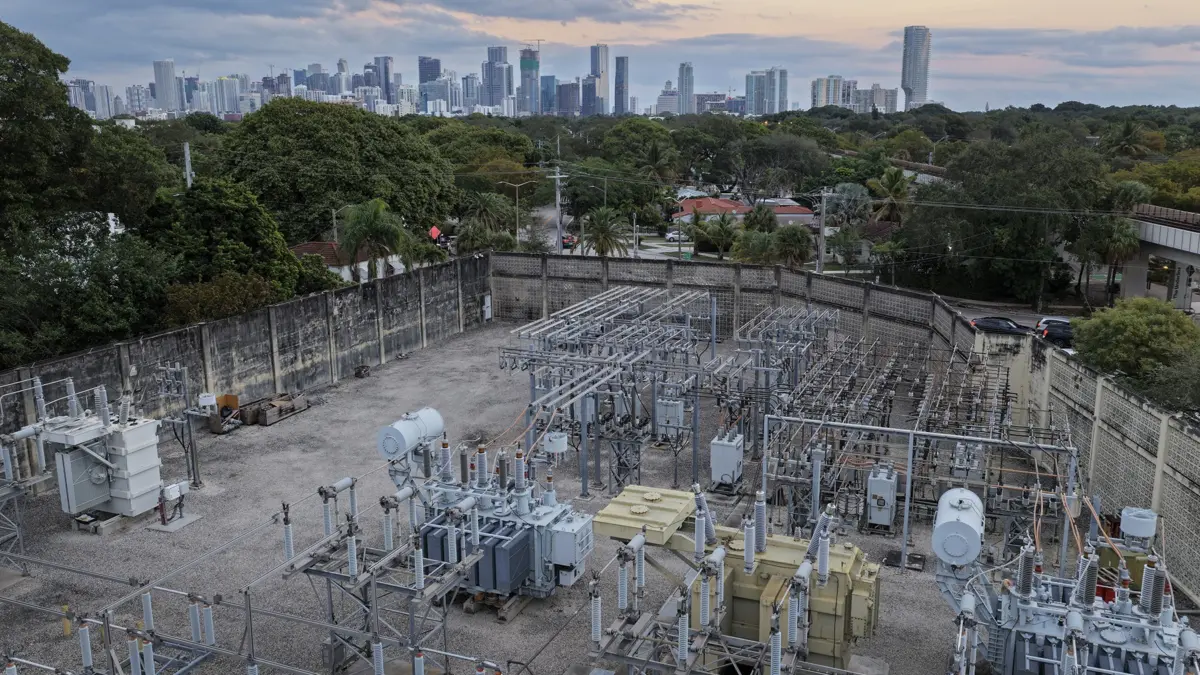
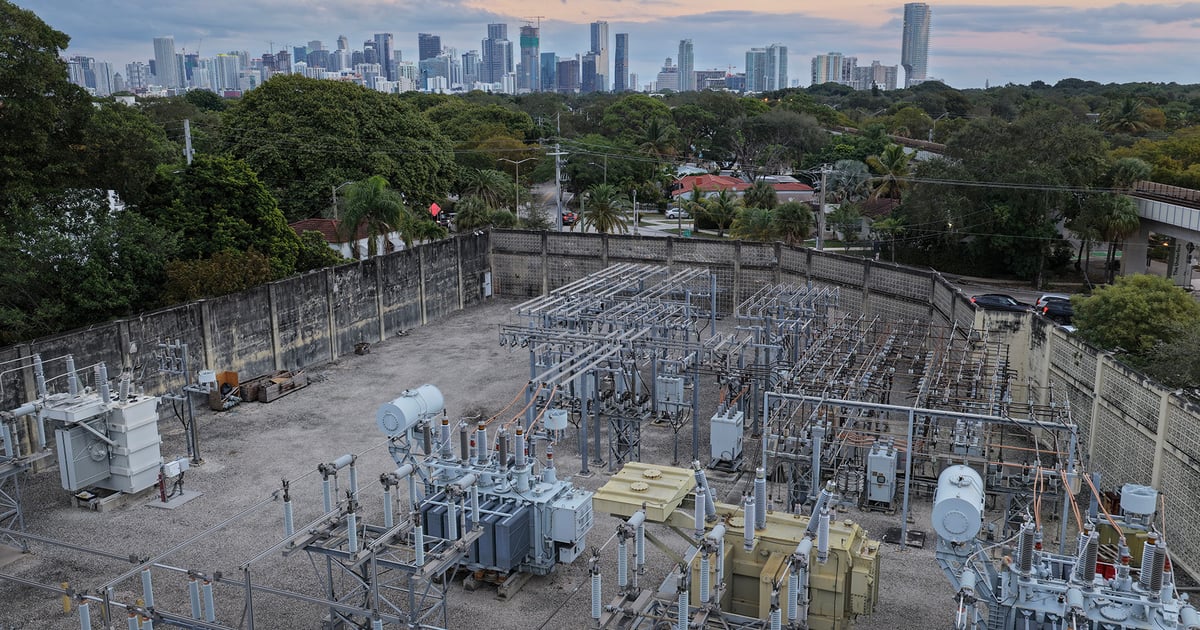
As industry experts point out, modern electrical infrastructure is no longer defined solely by heavy copper coils, steel cores, and high-voltage porcelain insulators. Today’s substations are sophisticated digital ecosystems reliant on Supervisory Control and Data Acquisition (SCADA) systems, firmware updates, and remote-monitoring capabilities.
Neil Osnato, founder of Persistence Analytics Group, emphasizes that the executive order targets vulnerabilities far deeper than physical geography.
"The risk is not limited to the metal sitting in a substation," Osnato notes. "The biggest practical change is that equipment origin, vendor control, software, remote access, and lifecycle dependencies can now become part of the reliability decision—not just the procurement decision."
Under the new paradigm, asset owners can no longer look merely at whether a transformer steps down voltage effectively or a turbine spins reliably. They must verify who engineered the software, who holds administrative access rights, and whether foreign entities maintain backdoor channels capable of disrupting domestic power flows.
However, tracing these multi-tiered dependencies presents a formidable hurdle. A simple country-of-origin label on a shipping container does not reveal whether sub-components, microchips, or underlying codebases originate from restricted jurisdictions.
Financial and Market Reactions
Wall Street analysts moved swiftly to assess the economic fallout. An August 27 research note from Jefferies financial analysts highlighted that the executive order hits an electricity equipment market already stretched to its limits.
According to Jefferies, the dual pressure of surging AI data center demand and new security mandates will likely compound lead times and push domestic equipment pricing upward. Furthermore, the directive introduces complex compliance liabilities for equipment already acquired or integrated prior to the order. Should the DOE require the accelerated retirement or retrofitting of flagged legacy hardware, the scramble for compliant replacements could severely strain domestic manufacturing capacities.
This regulatory stress test lands amid major commercial real estate and infrastructure transactions. The market has seen heavy capital deployment into power and thermal management, highlighted by deals such as Flex’s $4.4 billion acquisition of EPC Power to support 800V architectures, and SLB’s $4.1 billion buyout of Kelvion to bolster AI thermal solutions. Equipment reliability and supply chain resilience are no longer back-office logistics concerns; they are core valuation drivers for multi-billion-dollar investments.
Official Statements and Industry Response
Stakeholders across the regulatory, utility, and standards-setting ecosystems have offered measured responses to the White House directive, balancing national security imperatives with operational realities.
The White House Perspective
In its official fact sheet accompanying the executive order, the administration argued that rapid advancements in artificial intelligence, advanced manufacturing, and defense production have dangerously escalated U.S. reliance on foreign components.
"Continued reliance on foreign sources of bulk power equipment creates an unacceptable supply chain vulnerability," the White House stated. The administration framed the order as a proactive defense mechanism to shield critical civilian infrastructure from geopolitical coercion and cyber sabotage.
NERC and Reliability Organizations
The North American Electric Reliability Corporation (NERC), tasked with ensuring the security and reliability of the bulk power system, acknowledged the critical nature of supply chain security.
In a statement to Data Center Knowledge, a NERC spokesperson noted that the organization’s Electricity Information Sharing and Analysis Center (E-ISAC) actively disseminates daily intelligence regarding geopolitical and supply chain threats targeting the power sector. NERC is currently upgrading its formal supply chain risk management standards and confirmed it will collaborate closely with the DOE, the Federal Energy Regulatory Commission (FERC), and the Electricity Subsector Coordinating Council (ESCC) during the rule-making phase.
"NERC commends the Administration for the collaborative approach outlined in the executive order," the spokesperson affirmed, signaling a unified front between federal regulators and reliability watchdogs as implementation guidelines take shape.
Future Outlook: Navigating the 120-Day Horizon
As the Department of Energy races against its 120-day deadline to formulate operational rules, data center developers and utility executives are forced to rethink their long-term infrastructure planning.
Shifting Procurement Timelines
For hyperscalers and colocation providers, the primary challenge remains avoiding deployment stagnation. Traditionally, power procurement strategies focused on securing site interconnections and waiting out standard manufacturing queues. Moving forward, developers must integrate comprehensive supply chain audits into the earliest stages of site selection.
Neil Osnato stresses that proactive verification will be the defining factor between successful deployments and costly project cancellations.
"The answer should not be to weaken the verification standard," Osnato advises. "It should be to make the evidence standard clearer and earlier in the process so projects do not reach construction or energization before someone discovers that a critical equipment or supply chain assumption cannot be relied on."
He cautions that announced equipment availability from vendors is no longer synonymous with executable, reliable availability. Once an asset clears procurement scrutiny, operators must continuously monitor it for changes in ownership, software updates, and remote-access vulnerabilities.
Conclusion
President Trump’s bulk power emergency order marks a profound shift in how the United States treats energy infrastructure. By fusing national security vetting with electrical grid procurement, the administration has elevated supply chain provenance to a primary pillar of grid reliability.
For the data center industry, the mandate introduces a complex new compliance hurdle at a time when speed-to-market is everything. Over the next 120 days, as the DOE defines the boundaries of restricted equipment and software, developers and utilities must adapt their supply chains to ensure that the rapid expansion of AI infrastructure does not outpace the security of the power grid that sustains it.