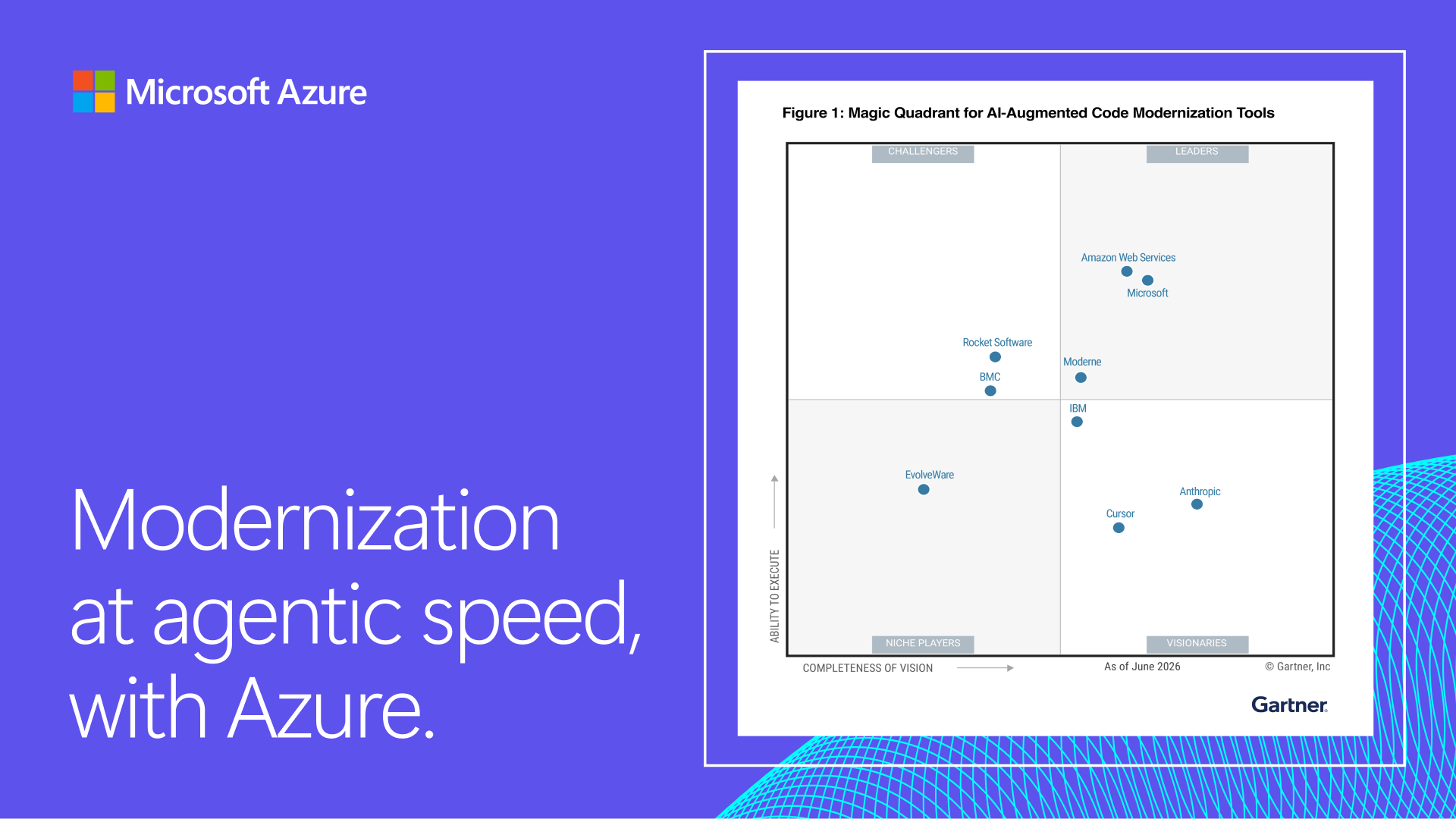
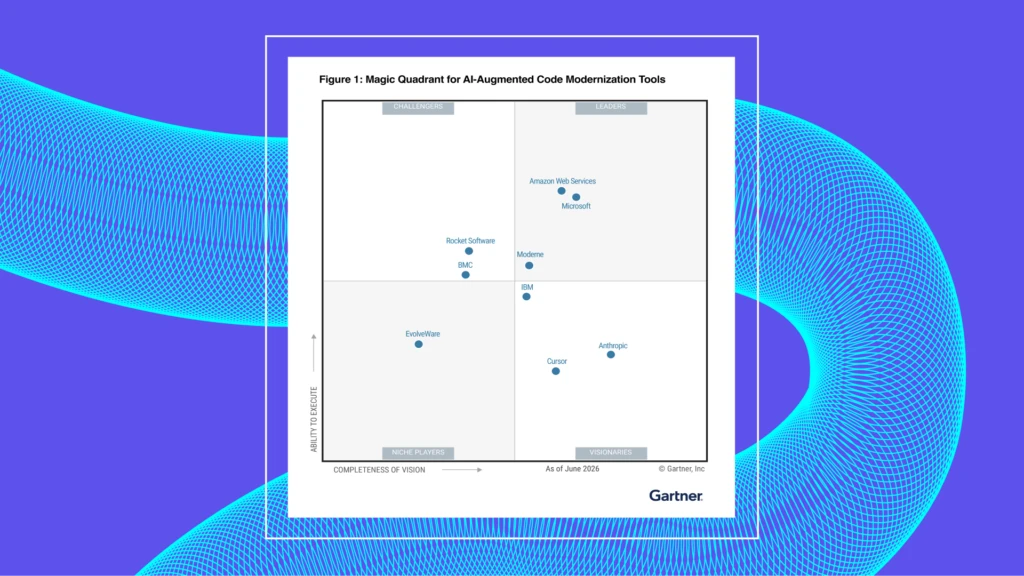
In a milestone validation of enterprise software evolution, Gartner, Inc. has named Microsoft a Leader in its inaugural 2026 Magic Quadrant™ for AI-Augmented Code Modernization Tools. Published on August 3, 2026, the landmark report evaluates an emerging market category born out of a critical enterprise necessity: transforming millions of legacy codebases into cloud-native, AI-ready architecture without incurring astronomical costs, operational disruptions, or multi-year project delays.
For decades, enterprise IT organizations have been constrained by technical debt. Mission-critical operations continue to rely on aging infrastructure, legacy .NET Framework installations, monolithic Java runtimes, and outdated dependencies. Historically, modernizing these systems required large consulting teams, extensive manual refactoring, and significant capital expenditure—frequently placing modernization projects in direct conflict with digital innovation budgets.
The advent of agentic artificial intelligence has fundamentally altered this enterprise calculus. By combining specialized AI agents, generative AI, and deterministic static code analysis, Microsoft’s modernized tooling ecosystem—built around Azure, GitHub Copilot, and the Modernize Command Line Interface (CLI)—has redefined application modernization. Rather than treating technical debt remediation as a prohibitive overhead cost, enterprise engineering teams are now utilizing AI-augmented modernization as the fastest path to embedding intelligent capabilities directly into core business software.
This market recognition comes as organizations increasingly realize that legacy systems are the primary bottleneck to generative AI integration. By transforming code refactoring from a multi-year ordeal into an automated, highly predictable process completed in days or weeks, Microsoft has positioned its Azure ecosystem at the epicenter of next-generation enterprise digital transformation.
Detailed Chronology: The Evolution of Enterprise Application Modernization
To understand the significance of Microsoft’s leadership recognition in 2026, it is necessary to examine the historical trajectory of legacy system maintenance over the past decade.
+-----------------------------------------------------------------------------------+
|                            EVOLUTION OF MODERNIZATION                             |
+-----------------------------------------------------------------------------------+
|  2010s: Manual Refactoring Era                                                   |
|  • High cost, manual line-by-line rewrites, multi-year timelines.                 |
|  • Modernization routinely deprioritized in favor of new features.               |
+-----------------------------------------------------------------------------------+
                                         │
                                         ▼
+-----------------------------------------------------------------------------------+
|  2021–2024: The Early Copilot Era                                                 |
|  • Generative AI introduced for inline code completion.                           |
|  • Effective for micro-tasks; unable to orchestrate macro architecture shifts.   |
+-----------------------------------------------------------------------------------+
                                         │
                                         ▼
+-----------------------------------------------------------------------------------+
|  2025–2026: The Agentic Modernization Era                                         |
|  • Autonomous AI agents combined with deterministic code analysis.               |
|  • Modernize CLI + GitHub Copilot automate end-to-end refactoring workflows.     |
|  • August 3, 2026: Gartner publishes inaugural Magic Quadrant validating sector.  |
+-----------------------------------------------------------------------------------+
The Manual Refactoring Era (2010s–2020)
Throughout the cloud boom of the 2010s, enterprise modernizations relied almost exclusively on manual intervention. IT leaders faced a difficult choice: execute high-risk "lift-and-shift" virtual machine migrations that preserved legacy code defects in cloud environments, or undertake complete manual application rewrites. The latter approach routinely suffered from schedule slip, cost overruns, and high error rates, as original application authors had often departed, leaving undocumented business logic trapped in legacy code.
The Emergence of Code Generation (2021–2024)
The launch of early generative AI assistants, spearheaded by tools like GitHub Copilot, brought automated code completion into mainstream developer environments. While these tools dramatically boosted individual developer productivity for writing new functions and unit tests, they lacked the architectural context required to orchestrate broad enterprise migrations. Fragmented code completions could not automatically update framework runtimes across hundreds of microservices, reconfigure security bindings, or generate Infrastructure-as-Code (IaC) scripts tailored to enterprise cloud landing zones.
The Pivot to Agentic Automation (2025–2026)
Recognizing that individual code suggestions were insufficient for enterprise-scale modernization, Microsoft pivoted toward an agentic architecture. By pairing deep deterministic static analysis—which precisely maps system dependencies, syntax trees, and control flows—with autonomous generative agents, Microsoft built an ecosystem capable of handling multi-file, multi-repository code transformations.
This developmental arc culminated in the integration of the Modernize CLI and GitHub Copilot Modernization Agent, establishing an end-to-end framework capable of running enterprise-wide assessment, planning, refactoring, validation, and Azure deployment. This technological milestone served as the foundation for Gartner’s evaluation in its August 3, 2026 Magic Quadrant report.
Supporting Context & Metrics: Deconstructing the Technical Architecture and Enterprise Impact
The operational framework of Microsoft’s AI-augmented code modernization solution operates across two interconnected tiers, balancing enterprise-level governance with integrated developer controls.
The Macro-Orchestration Layer (Modernize CLI): Designed for solutions architects and engineering leads, the Modernize CLI scans whole enterprise application portfolios. It deterministicly maps internal dependencies, assesses security vulnerabilities, identifies deprecated runtime calls, and generates structured, application-specific migration blueprints.
The Micro-Execution Layer (IDE-Integrated GitHub & Azure Copilot): Software developers receive these migration blueprints directly within their Integrated Development Environments (IDEs) such as Visual Studio and VS Code. The GitHub Copilot modernization agent automates runtime transitions (such as converting legacy Java runtimes or upgrading outdated .NET Framework apps), updates external service bindings to managed Azure resources, generates Infrastructure-as-Code scripts, and drafts updated unit test suites.
Crucially, Microsoft’s methodology enforces a Human-in-the-Loop model. Rather than operating as an unguided black box, every code change proposed by the AI agents remains transparent, inspectable, and subject to developer review and existing Continuous Integration/Continuous Deployment (CI/CD) automated testing pipelines.
Key Enterprise Performance Metrics
Data collected across global enterprise deployments demonstrates a substantial reduction in both time and financial expenditure during cloud migrations:
Metric Indicator
Historical Manual Baseline
AI-Augmented Benchmark
Operational Impact
Migration Time Requirements
Months to Quarters per App
Days to Weeks per App
Up to 70% reduction in total migration timelines
Developer Effort Allocated
High (100% manual refactoring)
Low to Medium (Review-focused)
50% overall effort reduction across engineering teams
Code Refactoring Throughput
~10,000 lines/month per team
500,000+ lines in weeks
Expedited modernization of critical systems
Developer Tooling Adoption
N/A (Tooling fragmentation)
1.4 Million+ Installs
High ecosystem adoption via Azure Java extensions
By shifting software engineers away from repetitive framework updating toward logic verification and architectural design, enterprises are rapidly clearing software backlog items that previously stagnated for years.
Official Statements & Industry Perspectives
The formal recognition by Gartner has elicited analysis from tech industry leaders, highlighting how agentic modernization is reshaping enterprise software strategies.
Dr. Richard Cai, Managing Director at SAP Labs China, emphasized the impact of deploying GitHub Copilot’s agentic capabilities within their enterprise engineering operations:
"GitHub Copilot’s modernization agent significantly saved time on our Java modernization effort from days down to mere hours at SAP Labs. It runs seamlessly at scale, significantly reducing manual complications for our developers. The modernization agent is now an essential pillar of our modernization effort."
In its official research report, Gartner analysts Prasanna Lakshmi Narasimha, Erin Khoo, Deacon D.K Wan, and Wei Jin outlined the strategic importance of adopting AI-augmented tooling over manual methods, noting:
"Software engineering leaders can meaningfully reduce the time, effort, and risk of modernization by using AI-powered tools rather than manual approaches."
Reflecting on the Gartner Leader positioning, Microsoft executives underscored that this industry validation marks a baseline for ongoing enterprise transformation rather than a final destination. Company leadership emphasized that every application modernization initiative undertaken today inherently serves as a foundation for future enterprise AI deployment. By enabling organizations to modernize operational backbones efficiently, Microsoft aims to ensure that core enterprise assets—rather than being discarded or isolated—serve as the underlying platform for upcoming AI capabilities.
Future Outlook: The Strategic Imperative for AI Readiness
As enterprise reliance on artificial intelligence deepens, the market for AI-augmented code modernization tools is projected to expand rapidly. Several key dynamics are set to define the software landscape over the coming years:
+-----------------------------------------------------------------------------------+
|                           FUTURE STRATEGIC ROADMAP                                |
+-----------------------------------------------------------------------------------+
|  1. Language & Legacy System Expansion                                            |
|     Extending agentic capabilities to legacy COBOL, C++, and mainframes.         |
|                                                                                   |
|  2. Real-Time Autonomous Remediation                                              |
|     Continuous monitoring agents auto-patching runtime vulnerabilities in CI/CD.  |
|                                                                                   |
|  3. The AI Readiness Divide                                                       |
|     Agile firms running modern cloud platforms vs. legacy-burdened competitors.  |
+-----------------------------------------------------------------------------------+
Expanding Language and Framework Coverage
While current modernization efforts prioritize widespread platforms such as Java and .NET runtime transitions to Azure, development roadmaps are rapidly expanding language coverage. Future iterations of agentic modernization tools are targeting deeper support for legacy COBOL, C++, older database procedure languages, and proprietary mainframe frameworks, extending cloud migration capabilities to deeply entrenched public sector and financial institutions.
Continuous, Autonomous Code Health
The traditional paradigm of treating software modernization as a discrete project conducted once per decade is being replaced by continuous maintenance. Modernization agents will increasingly operate as background utilities within enterprise repositories, dynamically refactoring code, updating dependencies, and resolving security vulnerabilities in real time as new framework versions are published.
The Widening "AI Readiness" Divide
The competitive landscape is splitting into two distinct categories:
AI-Ready Enterprises: Organizations utilizing agentic workflows to rapidly eliminate technical debt, migrating applications to resilient, cloud-native Azure environments where generative AI models can immediately query and interact with core business data.
Legacy-Constrained Organizations: Businesses delaying modernization due to legacy maintenance costs, finding themselves increasingly unable to integrate advanced AI agents into fragile, outdated application architectures.
As Gartner’s inaugural 2026 report demonstrates, AI-augmented code modernization has shifted from an experimental technique to an essential component of enterprise IT strategy. By leveraging agentic automation across Azure and GitHub Copilot, organizations are eliminating decades of technical debt—turning legacy system burdens into scalable foundations for future innovation.