Executive Overview
When the next catastrophic zero-day vulnerability drops, an organization’s operational team will influence how quickly it reacts, but the ultimate outcome is decided long before disclosure—it is hardcoded into the enterprise architecture. Over the decades, organizations have accumulated sprawling portfolios of security technologies. Some detect attacks in progress, while others isolate workloads. Yet, a crucial, high-impact subset—security gateways including firewalls, proxies, web application firewalls (WAFs), and API gateways—sits directly in the traffic path. Controlling these gateways determines what reaches core applications and what is filtered out at the perimeter.
While security gateways are never a substitute for rigorous, timely patching, they remain among the most powerful tools available for containing zero-day threats. In a crisis, these strategic controls buy application teams precious hours and days during the critical window following a disclosure. Rather than scrambling to push untested code into production within minutes, engineers can develop, test, and validate permanent fixes securely. Furthermore, gateways form a vital shield for legacy systems that cannot easily be patched—such as decades-old Windows XP or 7 instances embedded in industrial control systems (ICS), or aging financial sector applications that no operational leader dares to touch.
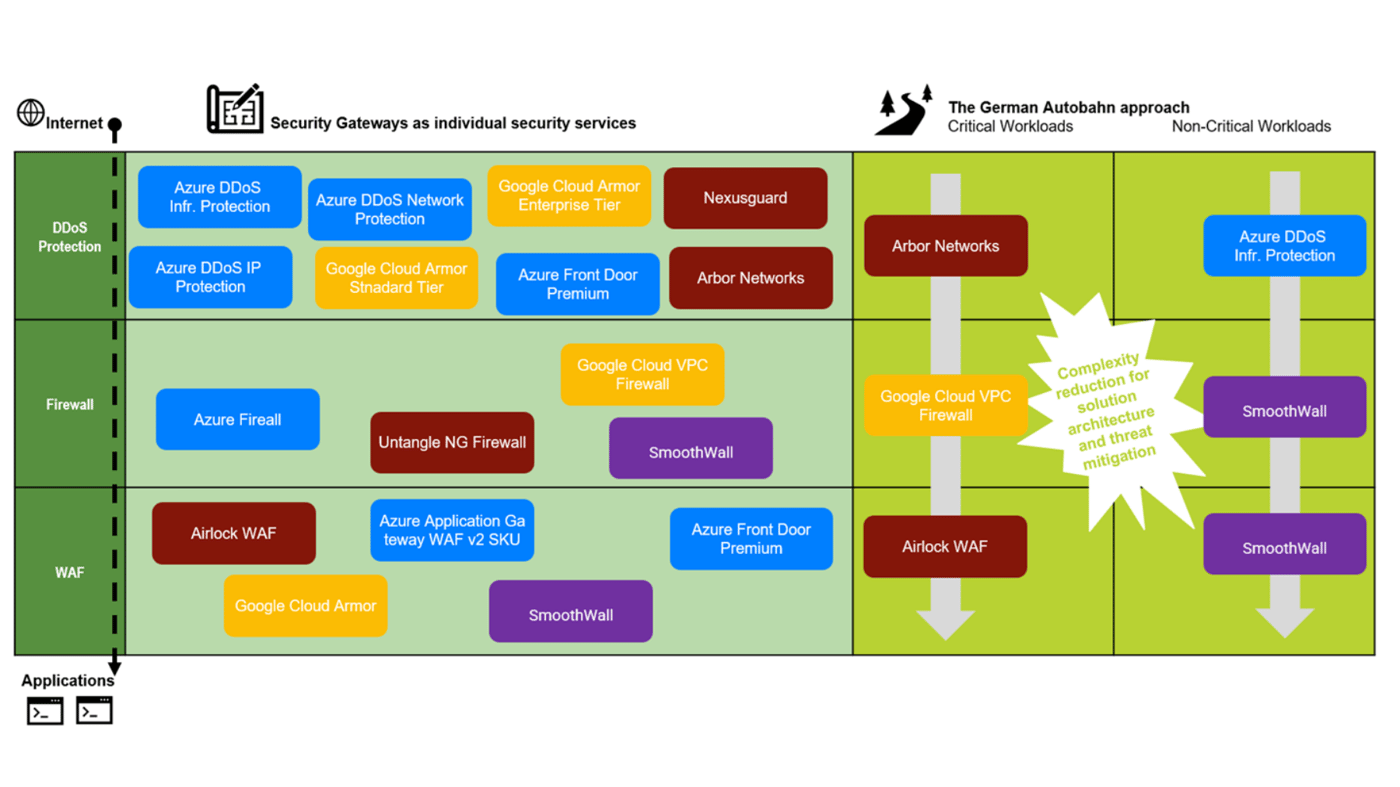
To survive an aggressive zero-day landscape, organizations must treat security gateways like the German Autobahn: predictable routes, clear signage, and an architecture engineered to move massive amounts of traffic safely and at scale.
Detailed Chronology: The Anatomy of a Zero-Day Crisis
The lifecycle of a zero-day exploit follows a predictable, high-pressure trajectory that exposes the fault lines in enterprise security architecture. Understanding how these events unfold reveals why architectural preparedness is superior to reactive firefighting.
Hour Zero: Disclosure and the Scramble
When a zero-day vulnerability (such as the infamous Log4Shell or a critical hypervisor flaw) is publicly disclosed, the clock immediately starts ticking. Threat actors begin scanning the global IP space within minutes, deploying automated scripts to probe for unpatched entry points. For organizations without a centralized architectural strategy, Hour Zero triggers immediate panic. Security teams flood communication channels, developers are pulled from feature delivery to audit codebases, and CISOs face intense executive scrutiny. Every team is left to figure out its own remediation path, resulting in disjointed triage.
The First 24 to 72 Hours: The Containment Gap
During the first few days, the primary objective is containment. Organizations lacking strategic gateways must identify every instance of the vulnerable component across hybrid cloud, on-premises, and multi-cloud environments. They must push out emergency patches—often without adequate staging or compatibility testing—leading to unintended system outages, regressions, and broken customer experiences.
Conversely, mature enterprises with centrally managed WAFs and API gateways can neutralize the threat within hours. By deploying targeted virtual patching rules (such as regex blocks for specific exploit payloads) at a strategic gateway, these organizations instantly shield hundreds of backend applications. The vulnerability may still exist in the underlying code, but the attack vector is blocked at the perimeter, buying engineering teams the runway needed to build proper, validated updates.

Post-Incident Stabilization and Debt
Once the immediate danger subsides, organizations enter the stabilization phase. Companies that relied on ad-hoc, decentralized responses are left with a patchwork of temporary fixes, forgotten configuration changes, and elevated technical debt. Meanwhile, organizations operating an "Autobahn" model review centralized logs, fine-tune their strategic gateway policies into permanent guardrails, and systematically update their baseline reference architectures to ensure the next event is handled with even greater velocity.
Supporting Context & Metrics: The Cost of Architectural Complexity
The debate over security gateway strategy is underpinned by hard operational realities, rising infrastructure costs, and the psychological burden placed on modern software engineering teams.
The Multi-Cloud Labyrinth
Reference architectures in textbooks often depict a deceptively tidy ecosystem: a single cloud provider, one perimeter firewall, and a uniform WAF. Reality, however, is far messier. Modern enterprises operate in a chaotic hybrid ecosystem. For instance:
- Google Cloud Platform (GCP): Typically utilizes Google Cloud Armor attached to external HTTP(S) load balancers to deliver WAF capabilities.
- Amazon Web Services (AWS): Frequently deploys AWS WAF on Application Load Balancers or Amazon CloudFront, combined with AWS Shield for managed DDoS protection.
- Microsoft Azure: Relies on Azure Front Door and Azure WAF to secure web properties.
When network engineering teams layer on traditional vendor appliances—such as F5 hardware, standalone proxies, and specialized DDoS mitigation services—the result is massive cognitive overload for application teams. Every additional gateway technology multiplies the complexity required to roll out consistent security baselines. When a zero-day strikes, this architectural sprawl turns into a combinatorial explosion of configuration consoles that security teams must update individually.
The Three Obstacles to "Autobahn" Speed
If the centralized gateway pattern is so effective, why haven’t all enterprises standardized on it? Industry analysis points to three persistent barriers:
- Cost and Operating Models: While software licenses represent a visible expense, the true bottleneck in large or heavily regulated enterprises is sustaining the operating model. Funding the specialized staff, integration pipelines, lifecycle management, and round-the-clock monitoring required to run gateways as strategic controls is challenging. Smaller organizations often suffer from lower risk awareness and tight budgets, making strategic cybersecurity investments a low priority.
- Misplaced Trust in Ad-Hoc Decisions: Organizations frequently assume that engineering teams will naturally make the right security decisions under pressure. While developers genuinely intend to follow best practices, strict project deadlines and executive pressure change behavior. Without mandatory, standardized patterns, individual teams make disparate architectural choices—such as spinning up cloud virtual machines with public IP addresses that bypass all organizational gateways. Attackers only need to find those few neglected weak points to breach the perimeter.
- Developer Burnout and Scope Creep: Modern developers should be focused on delivering business value and solving complex software challenges, not moonlighting as security architects. Forcing them to navigate a dense jungle of disparate gateways and misconfiguration traps guarantees inconsistent implementations and slow emergency responses.
Official Statements and Industry Perspectives
Security leaders and industry analysts increasingly view perimeter architecture not as a static line in the sand, but as an agile traffic management system.
"When a zero-day makes headlines, every organization will race to respond. The outcome, however, is set long before disclosure. Response speed is primarily an architectural property, not an operational one," notes senior IT security architect Klaus Haller.
According to enterprise risk governance boards, the traditional perimeter is dead, but the need for intelligent traffic governance has never been higher. CISOs across the financial, healthcare, and critical infrastructure sectors emphasize that decentralization without guardrails is an invitation for disaster.
Industry frameworks now advocate for treating gateways as programmable infrastructure. Rather than viewing a Web Application Firewall as a legacy "block-or-allow" appliance, forward-thinking enterprises integrate their gateways directly with continuous integration and continuous deployment (CI/CD) pipelines. This ensures that security policies evolve alongside application logic, bridging the historical divide between application development and security operations (SecOps).
Future Outlook: The Next Generation of Perimeter Defense
As enterprise architectures evolve toward edge computing, serverless functions, and artificial intelligence-driven applications, the role of the security gateway is undergoing a radical transformation.
AI-Driven Traffic Classification
Future security gateways will move beyond static signature matching and rudimentary regex rules. Leveraging lightweight machine learning models embedded directly at the edge, next-generation gateways will analyze traffic semantics in real time. This capability will enable organizations to automatically neutralize zero-day exploit patterns based on behavioral anomalies rather than waiting for formal vulnerability disclosures and vendor patches.
The Shift Toward Policy-as-Code
To eliminate the architectural complexity that slows down incident response, organizations are increasingly adopting Policy-as-Code frameworks. By defining security gateway rules in version-controlled repositories (such as GitOps workflows), security teams can push organization-wide emergency mitigations instantly across multi-cloud environments. This approach ensures that a rule update tested in a staging environment can be deployed to AWS, Azure, GCP, and on-premises gateways simultaneously with a single pull request.
Redefining Developer Guardrails
Looking ahead, the most successful enterprises will stop treating security as a gatekeeper function and start treating it as a frictionless developer platform. By providing pre-packaged, highly hardened reference architectures—the digital equivalent of the Autobahn’s well-marked lanes—organizations can empower developers to move fast without sacrificing safety.
Ultimately, surviving the next major zero-day requires stepping back from frantic operational firefighting and investing in the unglamorous work of architectural clarity. Organizations that streamline their traffic paths, unify their strategic gateways, and enforce consistent baseline controls will not only weather the next cyber crisis—they will drive through it at full speed.