By the Investigative Reporting Desk
Published: Special Infrastructure & Technology Report
Executive Overview
The rapid, relentless expansion of the artificial intelligence economy is colliding with an immovable object: the American backyard.
Across the United States, billions of dollars in planned data center investments are encountering fierce, organized, and increasingly effective local resistance. Rather than viewing these demonstrations as legitimate reflections of community anxiety, the tech and infrastructure sectors have historically dismissed the pushback as mere misinformation, stubborn NIMBYism ("Not In My Backyard"), or a superficial public relations hurdle to be cleared with slicker corporate talking points.
That fundamental miscalculation is now exacting a historic toll. In the first quarter alone, local opposition successfully delayed or blocked at least $130 billion in planned data center projects. This figure represents the highest single-quarter total on record, nearly matching the stalled capital volume of the entire preceding year.
As the demand for computational power skyrockets to fuel generative AI, large language models, and cloud infrastructure, a dangerous chasm has opened between national technological ambitions and local consent. This special report examines how the data center industry reached this critical juncture, the systemic failures in community engagement that fueled the crisis, and why industry leaders are waking up to the reality that public trust is no longer a soft PR metric—it is the ultimate critical path for modern infrastructure.
Detailed Chronology: From Quiet Neighbors to Front-Page Protests
For years, data centers were the ultimate municipal unicorns: quiet, unassuming neighbors that occupied industrial parks, generated negligible traffic, produced zero smoke or chemical runoff, and paid handsome property taxes that quietly fortified local school districts and funded emergency services.
However, the dawn of the Generative AI boom fundamentally altered the scale, density, and power requirements of these facilities.
The Escalation Timeline
- The Pre-AI Era (Pre-2022): Data centers were largely developed discretely. Municipalities welcomed them as high-tax, low-impact economic windfalls. Most projects cleared zoning boards with minimal public friction.
- The Generative AI Explosion (2023–2024): Following the widespread adoption of large-scale AI models, developers rushed to secure vast plots of land. Facility sizes ballooned from single-digit megawatts to massive campuses requiring hundreds of megawatts—or gigawatts—of power.
- The Information Vacuum (Late 2024): Developers accustomed to fast-track approvals began acquiring land quietly, often using shell companies and non-disclosure agreements (NDAs) with local landowners and officials to prevent land speculation.
- The Awakening and Backlash (2025–Q1 2026): Local communities woke up to massive, high-security facilities planned adjacent to residential neighborhoods, agricultural zones, and local watersheds without prior consultation. Town hall meetings transformed into contentious battlegrounds. By the first quarter of 2026, the cumulative total of stalled or canceled projects hit an unprecedented $130 billion watermark.
Industry insiders note that the backlash is rarely a rejection of economic development itself. Instead, it is a visceral, human reaction to rapid, unexplained transformation. When multi-billion-dollar corporations appear in a rural or suburban community only after major site-selection decisions have been finalized, residents naturally assume the worst.
Supporting Context & Metrics: The Grid, the Capital, and the Cost of Silence
To understand the friction between data center developers and local residents, one must examine the macro-economic and engineering realities driving the expansion—and the fears they ignite.
Power Demographics and Grid Realities
According to energy projections, data centers could account for anywhere between 9% and 17% of total U.S. electricity demand by 2030, a sharp escalation from roughly 4.5% today. For an average homeowner already grappling with fluctuating utility bills and aging grid infrastructure, hearing that a massive computer facility next door will consume as much power as a small city triggers immediate, rational anxiety.

Yet, industry experts point out a crucial part of the narrative that rarely reaches town hall meetings: data centers are frequently the primary financiers of the grid modernizations America desperately needs.
- The PJM Interconnection Precedent: Earlier this year, the regional grid operator PJM approved $11.8 billion in transmission upgrades—including a massive multi-billion-dollar backbone project in Virginia—largely because new load growth from heavy industrial and digital infrastructure demanded it.
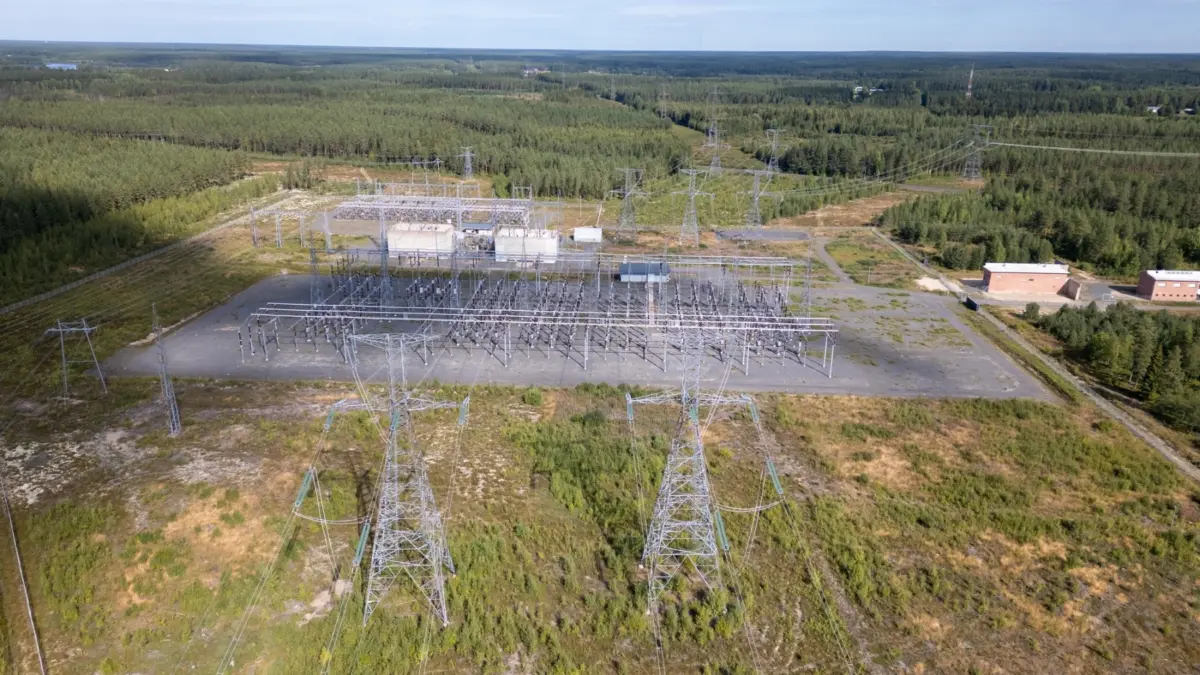
- Infrastructure Cost-Sharing: Far from free-riding on existing local power grids, major data center developments often fund new substations, high-voltage transmission lines, and green energy procurement contracts that ultimately strengthen overall grid reliability and insulate residential ratepayers from capital-improvement burdens.
When developers fail to communicate these complex economic realities clearly, early, and transparently, an information vacuum forms. In the absence of facts, fear fills the void, translating directly into zoning board delays, lawsuits, and political moratoriums.
Official Perspectives: Shifting the Paradigm on Community Trust
The realization that traditional public relations strategies are failing has prompted a wave of introspection among forward-thinking infrastructure developers.
Among them is Roshan Shah, co-founder and CEO of Decimal Digital Currency, which is currently spearheading Project Eagle Ridge, a high-stakes data center development in Monroeville, Ohio. Shah has become an outspoken advocate for radically reforming how technology companies interact with host communities.
"The protests are a signal, not noise," Shah notes. "They are evidence that the industry building the infrastructure for the AI economy has failed at one of its most basic responsibilities: earning trust from the communities in which it wants to operate."
Shah emphasizes that technical excellence and regulatory compliance are no longer enough to secure project approval.
- Technical Soundness vs. Credibility: A project can have flawless engineering, state-of-the-art closed-loop cooling systems, and fully funded environmental mitigations, but it will still fail if residents feel they are being talked down to, kept in the dark, or forced to absorb profound local change without understanding the direct benefits.
- The "Fingerprint" Principle: There is no one-size-fits-all playbook for community engagement. The economic and cultural anxieties of an agricultural farming community in the Midwest differ vastly from those of a suburban corridor or a coastal industrial hub. Generic corporate slide decks and glossy pamphlets do not answer deeply local questions about water tables, noise pollution, and visual impact.
Developers must abandon the traditional "announce and defend" model in favor of a "listen and integrate" framework. True community engagement means showing up before the first land option is signed, hosting open forums before permit applications are filed, and genuinely tailoring facility designs based on direct neighborhood feedback.
Future Outlook: The Road Ahead for AI Infrastructure
As the United States races to maintain its global leadership in artificial intelligence against fierce international competition, the stakes could not be higher. Every delayed month translates into billions of dollars in idle capital, postponed technological advancement, and a widening chasm between national digital aspirations and physical execution.
Industry analysts predict several structural shifts in how data center development will unfold over the remainder of the decade:
- Early-Stage Transparency as a Competitive Advantage: Companies that pioneer transparent site-selection processes—such as open-book energy impact assessments, early town-hall dialogues, and legally binding community benefit agreements (CBAs)—will outpace competitors bogged down in perpetual litigation.
- Co-Location with Clean Energy Sources: To alleviate grid-capacity fears, future data center pipelines will increasingly integrate directly with dedicated zero-carbon generation assets, including advanced nuclear (SMRs), localized solar-plus-storage arrays, and geothermal power.
- Redefining Municipal Partnerships: Local governments will demand greater upfront concessions, including investments in local broadband, educational tech grants, and infrastructure hardening, transforming data centers from passive corporate tenants into active civic partners.
Ultimately, the $130 billion bottleneck serves as a stark warning to the tech sector. Public trust cannot be purchased retroactively once shovels are in the ground and protest signs are already printed. For the AI revolution to successfully anchor itself in American soil, developers must learn a foundational lesson: local consent is not an administrative box to check, but the very foundation upon which the future must be built.