






By Shane Snider, Senior News Writer, Data Center Knowledge
August 28, 2026
Executive Overview
In a sweeping move set to reverberate across the American energy landscape and the booming artificial intelligence sector, President Donald Trump has declared a national emergency concerning the United States bulk power system. The executive order directs the Department of Energy (DOE) to restrict the acquisition, importation, and deployment of specific foreign-produced electrical infrastructure while establishing a strict regulatory framework for equipment already operating within the domestic grid.
For data center operators, hyperscalers, and utility providers racing against the clock to secure massive blocks of power for next-generation AI infrastructure, the order injects a profound new layer of regulatory friction into an already strained supply chain. Vital electrical components—including large power transformers, high-voltage inverters, digital controls, generators, and energy storage systems—were already plagued by multi-year lead times and complex sourcing vulnerabilities.
Now, with federal authorities tightening the screws on foreign manufacturing dependencies, software integrations, and remote-access capabilities, procurement teams face unprecedented hurdles. While the White House frames the action as an indispensable safeguard against foreign cyber sabotage, unauthorized access, and critical infrastructure disruption, industry analysts warn that the policy could exacerbate lead times, drive up domestic project costs, and alter timelines for bringing essential digital capacity online.
Detailed Chronology & Policy Mechanics
The administrative actions driving this sweeping regulatory shift began to crystallize in late August 2026, marking a decisive escalation in federal oversight over critical domestic utilities.
- August 26, 2026: President Trump issues an Executive Order declaring a national emergency to secure the United States bulk power system. The directive targets foreign-produced electrical equipment and associated digital capabilities, forbidding their installation if they present unacceptable national security risks. The order explicitly carves out exemptions for local electric distribution facilities, narrowing its focus squarely on the transmission-level backbone of the power grid.
- August 27, 2026: Wall Street equity research firm Jefferies publishes a comprehensive note evaluating the executive order’s immediate impact. Financial analysts warn that the mandate intersects with an electrical equipment market already severely stressed by the AI and data center buildout. The note highlights that the directive introduces new compliance hurdles not only for future procurement cycles but also for retrofits, maintenance, and replacement parts on existing infrastructure.
- The 120-Day Implementation Window: Under the terms of the presidential directive, the Department of Energy is given a strict 120-day timeline to draft, finalize, and publish the operational rules that will define covered equipment, targeted suppliers, and prohibited transactions. Until these guidelines are formally codified, utility companies and data center developers remain in a state of regulatory limbo.
Unlike traditional trade restrictions that focus purely on the country of origin, this executive order looks deeper into the lifecycle dependencies of grid infrastructure. According to Neil Osnato, founder of Persistence Analytics Group, the policy fundamentally alters how reliability decisions are made.
"The biggest practical change is that equipment origin, vendor control, software, remote access, and lifecycle dependencies can now become part of the reliability decision—not just the procurement decision," Osnato explains. Consequently, utilities can no longer evaluate a piece of equipment solely on its physical performance; they must continuously verify who manufactured it, who holds remote administrative control over its firmware, and whether its underlying software supply chain remains secure over decades of operation.
Supporting Context & Metrics: The AI Power Crunch
To understand the gravity of the new executive order, one must examine the acute pressures currently gripping the North American energy market. The exponential rise of generative artificial intelligence, high-performance computing clusters, and advanced manufacturing has triggered an unprecedented surge in electricity demand.
Grid operators across key regional transmission organizations—most notably PJM Interconnection—are grappling with shrinking capacity reserves, delayed plant retirements, and localized power shortfalls. To bridge the gap, federal and regional regulators have been forced to take extraordinary steps, such as extending the operational lifespans of legacy power plants (like the Eddystone generating station) and wrestling with the bottlenecks of building out new transmission corridors.
However, generation and transmission capacity represent only half the battle. Connecting a hyperscale data center campus to the grid requires an array of heavy electrical apparatuses:
- Step-Up and Step-Down Transformers: Often requiring lead times stretching from three to five years.
- Power Inverters and Switchgear: Essential for managing high-voltage alternating and direct current loads demanded by modern server farms.
- Digital Control Systems: Software-driven automation platforms that regulate grid stability, frequency response, and load balancing.
According to industry data cited in recent equity research, the executive order hits an equipment market that is already operating at maximum capacity. When a critical transformer or digital control module fails qualification standards or faces sudden replacement mandates due to foreign supply chain vulnerabilities, the ripple effects are immediate. Projects scheduled for energization can face sudden, multi-month—or even multi-year—delays, even if the underlying substation capacity has already been approved.
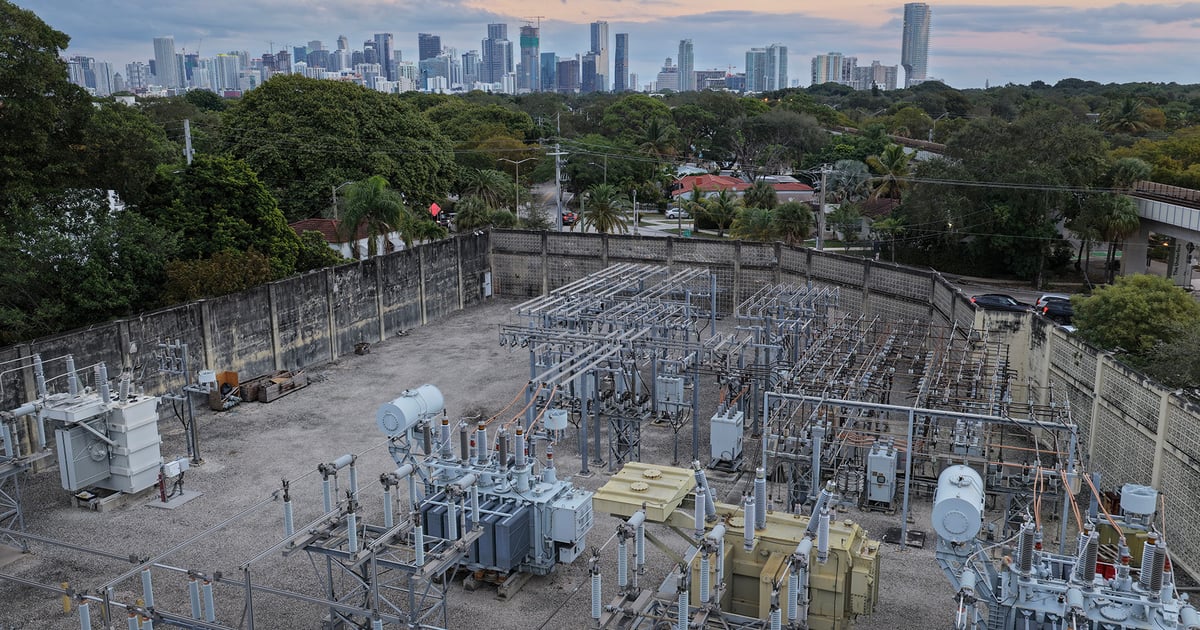
Furthermore, the scope of the order extends far beyond heavy metal sitting in a substation yard. It explicitly encompasses firmware, digital microcode, remote diagnostic interfaces, and maintenance update mechanisms. Because modern grid components rely heavily on interconnected software to optimize efficiency, tracing the provenance of every line of code poses a monumental engineering and administrative challenge.
Official Statements and Industry Response
The White House defends the aggressive posture by pointing to structural vulnerabilities in the nation’s critical infrastructure supply chain. A formal statement released alongside the executive order noted that the rapid acceleration of artificial intelligence, defense manufacturing, and advanced computing has heightened America’s reliance on foreign components for reliable power generation. Continued dependence on overseas suppliers, the administration argues, exposes the nation’s economic and national security backbone to unacceptable points of failure.
Reliability watchdogs have welcomed the collaborative framework established by the directive while emphasizing the complexity of implementation. The North American Electric Reliability Corporation (NERC), through its Electricity Information Sharing and Analysis Center (EISAC), continues to distribute daily threat intelligence regarding geopolitical and supply chain risks targeting the electric sector.
A NERC spokesperson issued a statement commending the administration for its collaborative approach:
"Supply chain security is a critical and rapidly evolving issue for grid reliability and security. NERC is enhancing its supply chain risk management standards and stands ready to work closely with the Department of Energy, the Federal Energy Regulatory Commission, the Electricity Subsector Coordinating Council, and our industry partners as the administration implements this executive order."
Nevertheless, industry experts stress that compliance cannot be treated as a mere checklist exercise. Neil Osnato cautions that relying on superficial indicators will leave utilities vulnerable:
"A country-of-origin label alone does not tell an operator whether the full dependency chain is safe. The answer should not be to weaken the verification standard. It should be to make the evidence standard clearer and earlier in the process so projects do not reach construction or energization before someone discovers that a critical equipment or supply chain assumption cannot be relied on."
Osnato summarizes the operational dilemma facing sector leaders with a blunt assessment: "Announced equipment availability is not the same as executable, reliable equipment availability. Once a component is approved, the pressing question becomes: What changed since it was approved?"
Future Outlook: Navigating the 120-Day Horizon
As the Department of Energy races to formulate its implementation rules over the next four months, stakeholders across the energy and tech sectors are bracing for transformation.
- Procurement Audits and Vendor Vetting: Data center developers and utility companies are already initiating deep audits of their tier-one and tier-two suppliers. Contracts signed years ago for pending campus energizations are being scrutinized for foreign software dependencies, offshore firmware development houses, and remote management loopholes.
- Downward Pressure on Timelines: With domestic manufacturing capacity for heavy transformers and high-voltage gear heavily booked out, any restriction on international sourcing could tighten supply bottlenecks. Project developers must factor regulatory approval windows directly into their master construction schedules, potentially pushing back AI deployment targets.
- Capital Expenditure Inflation: Analysts project that navigating compliance, investing in domestic or allied-nation alternatives, and accelerating replacement schedules for legacy equipment will drive up capital expenditures across the board. These costs will likely trickle down, influencing the economics of hyperscale cloud deployments and enterprise AI hosting.
Ultimately, the national emergency declaration bridges the worlds of national security and digital infrastructure development in a manner never seen before. For the data center industry, power availability is no longer just a function of megawatts and transmission lines—it has become inextricably bound to the geopolitical security of the global software and hardware supply chain. How the Department of Energy shapes its final rules in the coming months will dictate whether developers can successfully thread the needle between rapid AI expansion and strict grid sovereignty.