Executive Overview
In an era defined by shifting digital habits, messaging platforms have largely supplanted traditional public social media feeds as the primary communication hubs for younger demographics. Among these, WhatsApp—owned by parent company Meta—has experienced meteoric growth, becoming an indispensable tool for daily social interaction. However, this migration from public timelines to enclosed, private messaging environments has introduced complex challenges for families, particularly concerning how adolescents navigate digital spaces away from public scrutiny.
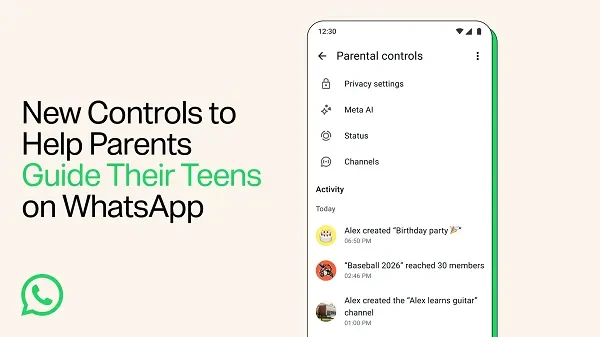
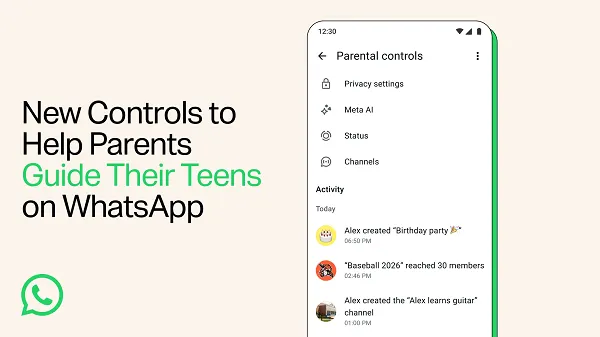
To bridge this oversight gap, WhatsApp has officially announced and deployed a comprehensive suite of parental control tools designed to empower parents and guardians. This strategic initiative gives families granular oversight regarding how teenagers interact with the app, who they connect with, and which in-app features they utilize. Crucially, these new controls strike a delicate balance between adolescent autonomy and parental safety by introducing oversight mechanisms without compromising the platform’s foundational end-to-end encryption.
The introduction of these features marks a pivotal evolution in platform governance. As regulatory pressure mounts globally regarding the mental health and online safety of minors, tech conglomerates are increasingly compelled to provide structural safety nets. WhatsApp’s new framework provides notifications for group activity, controls over broadcast channels and Status updates, management capabilities for integrated artificial intelligence (Meta AI), and strict PIN-protected privacy parameters. This article provides an in-depth analysis of these updates, examining their operational mechanics, broader industry context, privacy implications, and the future outlook for digital parenting.
Detailed Chronology: Understanding the New Parental Control Suite
The development and deployment of these new tools represent the culmination of months of engineering focused on balancing privacy with protective oversight. The feature set is designed to integrate seamlessly into existing family structures while offering distinct, tiered levels of monitoring.
1. Connection Oversight and Group Monitoring
One of the most pressing concerns for parents of digital natives is the breadth of their children’s social circles and the nature of the peer groups they join. WhatsApp’s newly implemented system directly addresses this by introducing comprehensive connection tracking.
- Group Membership Alerts: Parents will now receive real-time notifications when their teen joins a new group chat or exits an existing one. This provides immediate visibility into shifts in their child’s social dynamics.
- Abnormal Growth Monitoring: In addition to entry and exit notifications, the system flags groups that experience sudden, significant expansions in membership. This acts as an early warning system against potential spam rings, unverified community channels, or rapidly scaling peer groups that may harbor malicious actors or inappropriate content.
- Contact Visibility: Parents can oversee who their children are actively connecting with, ensuring a clear window into their daily digital interactions.
2. Granular Feature and Content Restrictions
Beyond basic contact management, teenagers engage with a multifaceted ecosystem within WhatsApp that extends far beyond standard one-on-one text messaging. The new control suite covers these advanced features extensively:
- Channels Management: WhatsApp Channels have become a popular way for public figures, organizations, and creators to broadcast updates. Parents can now configure whether and how their teen interacts with these broadcast features.
- Status Updates: The toolsets allow parents to manage privacy settings surrounding "Status"—WhatsApp’s equivalent of disappearing stories. Guardians can regulate whose status updates their teen is permitted to view, as well as who has permission to view the teen’s updates.
- Meta AI Integration: With the aggressive integration of artificial intelligence across Meta’s product ecosystem, managing children’s exposure to automated systems has become paramount. Parents can now monitor and manage their children’s utilization of Meta AI, applying safety controls that restrict the types of AI-generated content and responses shown to minors.
3. The PIN-Protected Safeguard Framework
A core challenge of parental controls is preventing tech-savvy teenagers from simply bypassing restrictions in the application’s settings menu. WhatsApp has engineered a robust mechanism to prevent unauthorized adjustments.
According to the platform’s specifications, parents can establish baseline privacy configurations tailored to their teen, such as restricting who can view their profile photo or add them to groups. Crucially, if a teen wishes to relax any of these pre-set privacy parameters, they cannot do so unilaterally. The app requires explicit approval from a parent or guardian via a secure, parent-set PIN. This ensures that safety boundaries remain intact even when adults are not physically looking over their children’s shoulders.
Supporting Context & Metrics: The Shift Toward Private Messaging
To fully grasp the significance of WhatsApp’s new parental controls, one must examine the broader sociological shifts currently transforming the digital landscape. Over the past half-decade, teen social media usage has undergone a structural transformation.
The Retreat from Public Timelines
Historically, platforms like Facebook, Instagram, and Twitter (now X) dominated youth culture through public-facing timelines, algorithmic feeds, and open profiles where content could be broadcast to a wide audience. However, mounting anxieties over "cancel culture," digital permanence, cyberbullying, and intrusive surveillance by future employers, college admissions officers, and parents have driven a mass migration toward private messaging apps.
Recent industry reports tracking social media and messaging app usage indicate that WhatsApp usage among teens has risen sharply across multiple global regions. Teens increasingly prefer enclosed spaces—such as encrypted group chats, direct messages, and closed communities—where they can communicate with trusted peers without their conversations being indexed by search engines or broadcast on public feeds.
The Double-Edged Sword of Privacy
While private messaging offers a welcome sanctuary from the pressures of public performance, it simultaneously creates a blind spot for concerned parents. On public platforms, parents could occasionally stumble across a public post or comment. In contrast, end-to-end encrypted messaging apps operate like digital fortresses.
This privacy architecture has long presented a dilemma for safety advocates. On one hand, end-to-end encryption is a vital cybersecurity tool that protects users from government overreach, data harvesting, and malicious hackers. On the other hand, it shields illicit activities—ranging from adolescent peer grooming to drug distribution and harassment—from external view.
By introducing parental controls that operate on the device and account level rather than by breaking encryption, WhatsApp has charted a middle path. It preserves the core cryptographic integrity of the app while giving parents the structural visibility they need to safeguard their children.
Official Statements and Privacy Implications
The announcement of these tools has sparked considerable discussion among cybersecurity experts, child advocacy groups, and privacy watchdogs. Balancing user privacy with minor safety is a contentious debate in the modern technology sector, making official messaging from Meta and WhatsApp critical to analyze.
Preserving End-to-End Encryption
A central pillar of WhatsApp’s public relations and technical architecture is its absolute commitment to end-to-end encryption. In its official release documentation, the company was careful to emphasize that the introduction of parental oversight tools does not undermine this foundational technology.
"Even with controls turned on, your teen’s personal messages and calls stay private and protected by end-to-end encryption. No one outside of the chat, not even WhatsApp, can see or hear them," WhatsApp stated in its official communication guidelines.
This distinction is vital. The parental controls do not grant adults the ability to read the raw text of their children’s private messages or listen to their voice calls. WhatsApp’s servers remain incapable of decrypting message contents. Instead, the parental oversight mechanism functions by monitoring metadata and account-level actions—such as group joins, feature permissions, and contact lists—and relaying those operational updates to the parent’s device or application interface.

Expert Analysis on the Scope and Limits
Industry analysts note that while these controls represent a major step forward, they are not a silver bullet for digital safety.
- The Human Element: Tech-savvy teenagers can still find workarounds, such as taking screenshots of encrypted conversations and sharing them outside the app, or utilizing secondary, unmonitored devices (often referred to as "burner" accounts or hidden profiles).
- The Trust Dynamic: Child psychologists emphasize that technical controls should ideally complement, rather than replace, open communication between parents and children regarding digital literacy, online etiquette, and the identification of predatory behaviors.
Nevertheless, digital safety advocates have largely welcomed the update. By shifting the power dynamic and requiring parental PIN authorization to loosen security settings, WhatsApp has provided families with a standardized baseline of digital boundaries that was previously difficult to enforce consistently.
Future Outlook: The Next Frontier in Digital Parenting
As artificial intelligence continues to mature and immersive communication technologies evolve, the digital landscape will present increasingly complex challenges for families. WhatsApp’s rollout of parental controls is unlikely to be a static, one-time update; rather, it serves as an indicator of broader industry trends.
Anticipating Future Regulatory Pressures
Governments worldwide are tightening the regulatory noose around technology companies regarding the protection of minors. Legislation such as the United Kingdom’s Online Safety Act and various state-level proposals in the United States are placing legal obligations on platforms to proactively protect young users from algorithmic harm, cyberbullying, and inappropriate exposure.
In this regulatory climate, features like WhatsApp’s new parental controls are defensive necessities. By offering customizable, robust oversight tools, Meta shields itself from accusations of negligence while preempting heavier-handed legislative mandates that could compromise cryptographic security altogether.
What Lies Ahead for WhatsApp and Meta
Looking forward, industry watchers anticipate several key developments in the realm of messaging app safety:
- AI-Driven Safety Filters: As Meta AI becomes more deeply embedded in daily workflows, expect future iterations of these parental controls to include more sophisticated, AI-driven content moderation filters that can flag emotional distress, self-harm language, or predatory grooming attempts client-side without violating encryption.
- Cross-Platform Family Centers: Meta is likely to unify these controls across its entire ecosystem—linking WhatsApp parental settings directly with Instagram and Facebook Family Centers to provide guardians with a centralized dashboard for all Meta-owned properties.
- Evolving Verification Standards: As age-verification technologies advance, messaging platforms may eventually integrate more rigorous cryptographic or biometric age-checking mechanisms to ensure that parental controls are automatically applied to accounts belonging to minors.
Conclusion
WhatsApp’s deployment of comprehensive parental control tools marks a mature acknowledgment of how modern teenagers communicate. By successfully threading the needle between robust end-to-end encryption and necessary parental visibility, the platform has established a new benchmark for private messaging safety. While technology alone cannot replace the foundational role of parental guidance, these new features provide families with the essential digital infrastructure required to navigate the complexities of the modern online world securely.