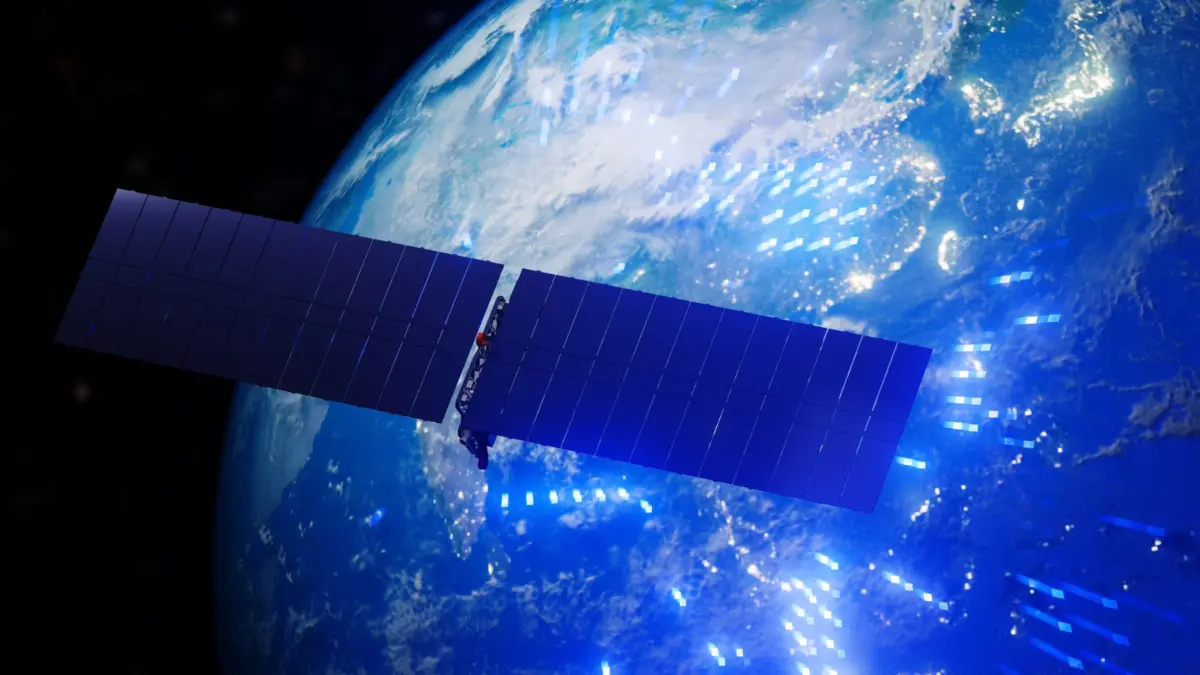
SANTA CLARA, Calif. — The concept of moving cloud computing, artificial intelligence clusters, and heavy workloads beyond Earth’s atmosphere is transitioning from the realm of science fiction into the crosshairs of aerospace engineering and enterprise architecture. However, as industry executives, technologists, and government officials made clear during a series of panels at the recent AI Infra Summit in Santa Clara, bridging the gap between the theoretical promise of orbital data centers and commercial viability will require overcoming monumental physical and financial barriers.
Held from September 15–17, the summit drew leading voices from satellite communications, space infrastructure, and defense sectors to dissect the feasibility of space-based compute. While visionaries see low Earth orbit (LEO) as the ultimate escape hatch from the terrestrial power grid crises and community pushback plaguing data center expansion on Earth, pragmatists argue that the industry must walk a disciplined path of incremental testing before chasing the dream of gigawatt-class space installations.
Executive Overview: The Next Frontier or a Distant Mirage?
The relentless surge of artificial intelligence has placed an unprecedented strain on global power grids, water supplies, and local real estate. As local communities increasingly push back against the noise, zoning requirements, and immense power consumption of terrestrial hyperscale data centers, innovators are looking up. Placing server farms in the vacuum of space offers theoretically limitless solar energy collection and uninhibited line-of-sight communication paths.
Yet, the enthusiasm must be tempered by stark realities. Launch costs remain high, thermal management in a vacuum is counterintuitive and difficult, and data transmission bandwidth has historically fallen short of modern enterprise demands. Furthermore, key institutional buyers—such as the United States military—remain cautious, demanding rigorous operational reliability and security assurances that current space prototypes cannot yet guarantee.
Despite these hurdles, industry consensus at the AI Infra Summit pointed toward an inevitability: orbital data centers will happen. The critical unknown is not if, but when and how the industry will scale through intermediate milestones to achieve commercial maturity.
Detailed Chronology: Insights from the AI Infra Summit
The dialogue surrounding orbital computing unfolded across multiple sessions at the Santa Clara convention center, highlighting the shifting perspectives of hardware providers, upstart launch companies, and defense strategists.
Day One: Grounding the Hype in Physics
Opening discussions framed the conversation around fundamental engineering constraints. Sumeet Singh, Chief Data and AI Officer at satellite communications giant Viasat, took center stage to outline the tripartite barrier to entry for space-based infrastructure: thermal management, bandwidth limitations, and launch economics.
Singh emphasized that in the vacuum of space, traditional convective cooling is impossible. Systems can only shed heat via thermal radiation, demanding massive radiator surfaces. “With size comes weight. Weight is a huge currency when you think about orbital data centers,” Singh explained during a panel on Thursday, September 17. He also underscored the economic chasm between current launch pricing and the rates required for profitability, noting that prices must plummet from today’s $2,500 to $3,000 per kilogram down to a targeted $200 to $500 per kilogram.
Day Two: Innovative Architecture and Power Solutions
Addressing these bottlenecks requires entirely new paradigms in aerospace design. Joe Yaffe, Chief Operating Officer and Chief Legal Officer of Cowboy Space Corp., discussed his company’s aggressive strategy to bypass current industry bottlenecks—chief among them, an over-reliance on a single dominant commercial launch provider.
Cowboy Space is actively developing proprietary launch vehicles that repurpose the rocket’s second stage directly into an orbital data center chassis. To solve the bandwidth dilemma, Yaffe stated that the company is fully committed to optical (laser-based) communications. “We’re believers that data transmission needs to take place optically, uplink and downlink, in order to move what will be increasingly larger amounts of data,” Yaffe noted.
Meanwhile, power delivery—traditionally solved via standard solar panels—is getting a high-tech overhaul. Camille Bergin, Chief Marketing Officer of Star Catcher, detailed her firm’s work on laser-based power-beaming technologies designed to supplement standard solar arrays. According to Bergin, this technique could potentially deliver up to tenfold the power density to orbiting systems, solving one of the most critical energy distribution problems in space.
Supporting Context & Metrics: The Economics of Orbit
To understand why orbital data centers are only now entering serious commercial discussions, one must analyze the confluence of surging AI workloads and the steep cost curves of space infrastructure.
The Cost-per-Kilogram Dilemma
At current launch rates of roughly $2,500 to $3,000 per kilogram, deploying a standard enterprise-grade server rack weighing several hundred kilograms becomes economically unfeasible for generic enterprise workloads. For space computing to make financial sense against Earth-based cloud services, launch providers must achieve a massive deflation in cost. Analysts point to reusable rocket systems and heavy-lift architectures as the primary vehicles to drive costs down toward the $200–$500/kg threshold cited by Viasat’s Singh.
Bandwidth and Thermal Metrics
- Thermal Dissipation: Without air molecules to conduct heat away from server chassis, systems rely entirely on radiation. Radiators scale with thermal output, adding dead weight that directly fights the economics of launch payloads.
- Optical Links vs. RF: Traditional radio frequency (RF) downlinks lack the capacity to stream the petabytes of data modern AI models generate and process. Free-space optical communication (lasercom) offers gigabits-to-terabits per second of throughput, though it remains vulnerable to atmospheric disturbances like cloud cover during ground station handoffs.
- Power Scaling: While a single Nvidia H100 GPU consumes roughly 700 watts, modern terrestrial data centers operate at multi-megawatt or gigawatt scales. Scaling orbital units from single-chip demonstrations to 100-kilowatt, and eventually megawatt-class nodes, requires revolutionary leaps in space-based power generation and distribution.
Official Statements and Institutional Perspectives
While private startups race to launch prototypes, institutional adopters are exercising a much higher degree of skepticism, prioritizing operational readiness over technological novelty.
The Military Viewpoint: Security, Latency, and Proof of Concepts
Deepak Sachdeva, Chief Information Officer of the United States Air Force, offered a sobering reality check regarding defense adoption. Speaking at the summit, Sachdeva asserted that the military is not yet prepared to integrate orbital compute into its core operations at scale.
“From a consumer-to-consumer level, I think it’s ready. But from an operational need, which is global in its nature, I think there is still some work to be done,” Sachdeva stated. His primary metrics for evaluation remain unyielding: operational effectiveness, near-real-time latency, absolute network resilience, and airtight cybersecurity. To bridge the gap between today’s early prototypes and mission-critical deployment, Sachdeva advocates for a methodical rollout of proof-of-concept initiatives rather than immediate, large-scale procurement.
The "Crawl, Walk, Run" Methodology
Echoing the need for measured progression, Star Catcher’s Camille Bergin cautioned against the hubris often found in deep-tech sectors. “There are a lot of people in this industry who have a tendency to just say, ‘This is the thing that we’re going to build, and it’ll just happen,’” Bergin remarked.
She emphasized that her company validated its technologies on terra firma before contemplating space demonstrations. The industry, she argues, must navigate clear intermediate stepping stones—moving from a 5% to 10% utilization prototype running on a single H100 GPU up to 100-kW or 500-kW installations—before targeting the megawatt and gigawatt tiers.
Crucially, Bergin noted that technological novelty alone is not a viable business model: “We can’t just design something in space because we think it’s cool and it’s the next frontier. There has to be a real need and a real business model.”
Future Outlook: Escaping Terrestrial Gridlock
Despite the convergence of structural, financial, and physical hurdles, industry leaders remain bullish on the long-term trajectory of space-based infrastructure.
Beyond escaping the immense cooling and power constraints of terrestrial data centers, orbital computing offers a compelling geopolitical and environmental value proposition. As public pushback against data center noise, high water consumption, and strain on local electrical grids intensifies across North America and Europe, space offers a pristine alternative free from NIMBYism (Not In My Back Yard).
Viasat’s Sumeet Singh summed up the prevailing sentiment among believers in the space economy: “This isn’t a question of if it would happen. I think this is more of a question of the step function. When would this happen?”
Key Milestones on the Road Ahead
As the industry looks toward milestones like StarCloud’s scheduled orbital deployment of Nvidia H100-equipped satellites, stakeholders are watching for three decisive indicators of market maturity:
- Incremental Scale Proofs: Successful deployment and long-term stability of 100-kW to 500-kW compute clusters in LEO.
- Launch Cost Compression: Continued innovation in reusable rocketry driving payload expenses down toward the sub-$500/kg mark.
- Validated Commercial Demand: Clear proof that enterprise and government customers are willing to pay a premium for compute services rendered outside Earth’s atmosphere.
The path from the conference rooms of Santa Clara to the vacuum of low Earth orbit is fraught with engineering challenges, but the momentum is undeniable. The Data Center Space Odyssey has officially begun.