Executive Overview
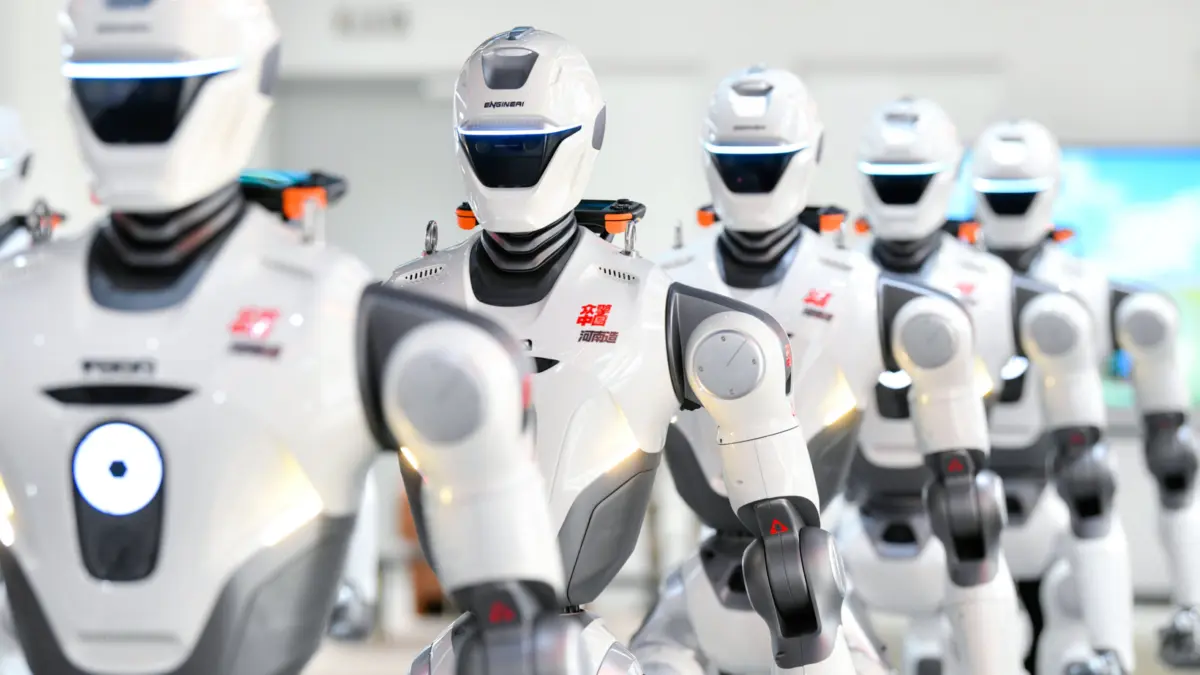
In an aggressive maneuver that signals a sweeping escalation in the geopolitical technology cold war, the Federal Communications Commission (FCC) issued a comprehensive, sweeping ban last week on foreign imports of advanced robotic systems. The directive covers an expansive spectrum of hardware, targeting humanoids, quadrupeds (four-legged inspection bots), and sophisticated wheeled units. Crafted under the stewardship of an increasingly partisan, Trump-aligned commission, the decree fundamentally shifts the battleground of technological protectionism. It moves the fight away from legacy hardware and firmly into the bleeding edge of artificial intelligence.
The federal government has officially justified this sweeping restriction through a dual-pronged lens of national security and industrial policy. First, regulators warn that foreign-made humanoid and quadruped systems are essentially mobile, omnipresent data-collection engines. Capable of mapping private homes, corporate offices, and sensitive government or industrial infrastructure, these machines present an unprecedented intelligence vulnerability. Second, the administration argues that nascent US robotics companies require immediate, aggressive government intervention and tariff-like shields to survive an impending flood of cheap Chinese manufacturing. Without these barriers, officials claim, a secure domestic supply chain cannot take root.
However, a deeper look reveals that this isn’t merely a rerun of past trade skirmishes over solar panels, electric vehicles, or commercial drones. Robotics is no longer an isolated mechanical discipline; it is the physical embodiment—the tangible cutting edge—of modern artificial intelligence. By throwing a regulatory wall around the robotics sector, the Trump administration is telegraphing an aggressive new posture: it is prepared to shield the entire domestic AI ecosystem, from cloud-based large language models down to the physical actuators and neural-net-driven limbs of autonomous humanoids.
Yet, this protectionist gamble contains a glaring paradox. While domestic manufacturers and security hawks celebrate the move, American robotics researchers, university laboratories, and AI developers are sounding the alarm. For years, these institutions have relied heavily on affordable, highly capable Chinese hardware—most notably from dominant market players like Unitree—to train neural networks and run foundational experiments.
With an immense price disparity separating American and Chinese hardware—where a quadruped from a US vendor can cost upwards of $250,000 compared to a $4,600 alternative from abroad—the FCC’s ruling risks choking the very academic and commercial pipelines it aims to protect. As US startups struggle to scale production, and foreign competitors gear up for historic multi-billion-dollar public valuations, this policy creates a high-stakes gamble: Will the FCC’s silicon straitjacket incubate a domestic champion, or will it starve American AI researchers of the physical tools they need to compete?
Detailed Chronology: The Road to the FCC’s Landmark Robotics Ban
To understand the sudden disruption rippling through the technology sector, it is essential to trace the legislative and geopolitical breadcrumbs that culminated in the FCC’s recent order.
- Late 2025 – Early 2026: Concerns over consumer Internet of Things (IoT) vulnerabilities hit mainstream consciousness. Cybersecurity researchers repeatedly demonstrate systemic flaws in connected home appliances. High-profile incidents—most notably a widely publicized security breach where a lone researcher remotely commandeered over 7,000 residential robot vacuum cleaners—demonstrate that connected consumer hardware can easily be turned into a distributed surveillance and control network.
- February 2026: Intelligence agencies and congressional committees quietly circulate threat assessments regarding foreign-manufactured autonomous systems. The reports highlight the dual-use nature of advanced humanoids and quadrupeds equipped with high-resolution LiDAR, depth cameras, and continuous audio-visual recording capabilities.
- Spring 2026: AI and robotics converge rapidly. Major AI labs pivot heavily toward embodied AI, recognizing that large language models and vision-language-action (VLA) models require physical robotic containers to interact meaningfully with the real world. Concurrently, Chinese robotics pioneer Unitree dominates the global export market, shipping thousands of affordable quadrupeds and humanoid prototypes to Western universities and research institutions.
- July 2026: The Trump administration signals an even broader protectionist posture toward artificial intelligence. Reports emerge that the White House is actively considering an outright ban on open-source Chinese AI models—such as Kimi—which routinely rival models from OpenAI and Anthropic at a fraction of the cost.
- Late July 2026: Google DeepMind drops a major release, showcasing a cutting-edge VLA model capable of controlling robotic humanoids to perform delicate, real-world tasks like tying trash bags. The milestone underscores that robotic dexterity is finally crossing the threshold from science fiction to commercial viability.
- Last Week: The FCC drops its bombshell ruling. Citing national security and supply chain integrity, the commission issues a sweeping ban on foreign-manufactured advanced robots. In the wake of the announcement, financial markets react instantly. Unitree announces plans to move forward with an initial public offering (IPO) targeting a staggering $6 billion valuation, setting the first global public benchmark for humanoid robotics.
Supporting Context & Metrics: The Economics of the Robotics Gap
The divergence between the American and Chinese robotics sectors is not merely a matter of political rhetoric; it is starkly defined by hard numbers, capital flows, and supply chain realities.
The Price-to-Capability Disparity
At the heart of the researcher backlash against the FCC’s ban is an insurmountable cost barrier. Consider the disparity in the quadruped market:
- Unitree (China): Offers advanced four-legged inspection and research robots starting at approximately $4,600.
- Boston Dynamics (United States): Offers comparable, highly engineered quadruped systems (such as Spot) that can run up to $278,000.
This staggering price gap repeats itself across humanoid categories. According to internal market intelligence data compiled by the Association for Advancing Automation (A3), 90% of recent robotics research papers published by US universities relied directly on hardware produced by Unitree. American academic and private labs have built entire experimental fleets around these affordable imports, using them to train machine learning models in complex, everyday tasks ranging from folding laundry to flipping waffles.
[Price Comparison: Quadruped Robotics]
Unitree (China):     $4,600   [■]
Boston Dynamics:    $278,000  [■■■■■■■■■■■■■■■■■■■■■■■■■■■■■■■■■■■■■■■■]
Valuation and Market Maturity
The global market positioning of these companies highlights a profound industrial imbalance:
- Unitree’s IPO: The Chinese frontrunner is targeting a near $6 billion valuation in its upcoming public offering.
- US Startups: While American companies like Figure and 1X are making remarkable technological strides, their commercial scaling lags significantly. Figure’s humanoids are not yet shipping at commercial scale, and 1X’s systems are not yet deployed in domestic consumer environments.
Furthermore, blocking Chinese open-source models and affordable hardware carries a heavy direct economic penalty. Economic analyses, such as estimates from MIT Sloan regarding the broader AI ecosystem, suggest that restricting access to cost-effective foreign AI innovations could easily block businesses from realizing an estimated $25 billion in annual cost savings.
Official Statements and Industry Perspectives
The FCC’s ruling has exposed a deep ideological and strategic rift within the broader technology sector, dividing security hawks and commercial manufacturers from academic researchers and automation trade groups.
The Pro-Ban Perspective: Securing the Domestic Perimeter
Supporters of the ban argue that the cybersecurity risks are too acute to ignore. Pointing to documented vulnerabilities—such as the infamous incident where an amateur hacker remotely hijacked thousands of consumer vacuum cleaners—national security advocates insist that foreign-made robots represent a Trojan horse inside Western critical infrastructure.
Gavin Kenneally, CEO of Ghost Robotics—a domestic manufacturer specializing in four-legged inspection robots—strongly endorsed the FCC’s action. In an email statement, Kenneally emphasized the reality of the threat landscape:
"If today’s announcement encourages stronger cybersecurity and a more level competitive environment, that’s good for customers and good for the robotics industry."
From this viewpoint, short-term economic friction and higher research costs are a necessary price to pay to ensure that foreign intelligence services cannot map domestic military bases, corporate data centers, or private homes via networked robotic sensors.
The Critical Perspective: Choking Academic Innovation
Conversely, representatives of the broader automation industry argue that the FCC has misdiagnosed the problem, penalizing researchers rather than solving the foundational competitive gap.
Aaron Prather, Director of Market Intelligence for the Association for Advancing Automation (A3), highlighted the immediate logistical nightmare the ruling creates for domestic developers:
"The ruling creates a challenge for US humanoid researchers. Chinese models offer the best price-to-capability ratio available."
Prather notes that by cutting off access to the dominant tools used in academic labs, the FCC risks throwing sand in the gears of American AI research. Without access to affordable, robust hardware platforms, university teams and early-stage startups will struggle to iterate at the speed required to keep pace with global rivals.
Future Outlook: The Strategic Frontier of Embodied AI
As the dust settles on the FCC’s controversial directive, the long-term implications for the technology landscape are profound. The numerous carve-outs and regulatory ambiguities written into the order make its immediate, practical enforcement difficult to forecast with absolute precision. However, its symbolic and strategic message is unmistakable.
The United States government no longer views humanoid robotics and autonomous systems as novel science projects or mechanical parlor tricks. Once famous primarily for viral videos of robots awkwardly tumbling over on conference stages, humanoid robotics has graduated to the front lines of the great power competition.
By treating robotics as a direct extension of the sovereign artificial intelligence stack, the Trump administration has drawn a hard line in the sand. Whether this protectionist wall will successfully incubate a generation of resilient, secure American robotics giants—or whether it will inadvertently strand US researchers behind an expensive, self-imposed technological blockade—remains the defining question for the future of autonomous systems. What is certain is that the race to build the physical body of artificial intelligence has officially entered a high-stakes, geopolitical phase.