As the global digital infrastructure pivots aggressively toward high-density computing and artificial intelligence (AI) workloads, executive attention is overwhelmingly consumed by macroeconomic variables: securing multi-megawatt power purchase agreements, engineering advanced liquid and air-cooling architectures, and maintaining uptime across mission-critical equipment. Yet, nested within the architecture of thousands of enterprise and colocation data centers lies a microscopic, decades-old physical hazard that threatens the heart of modern IT hardware: zinc whiskers.
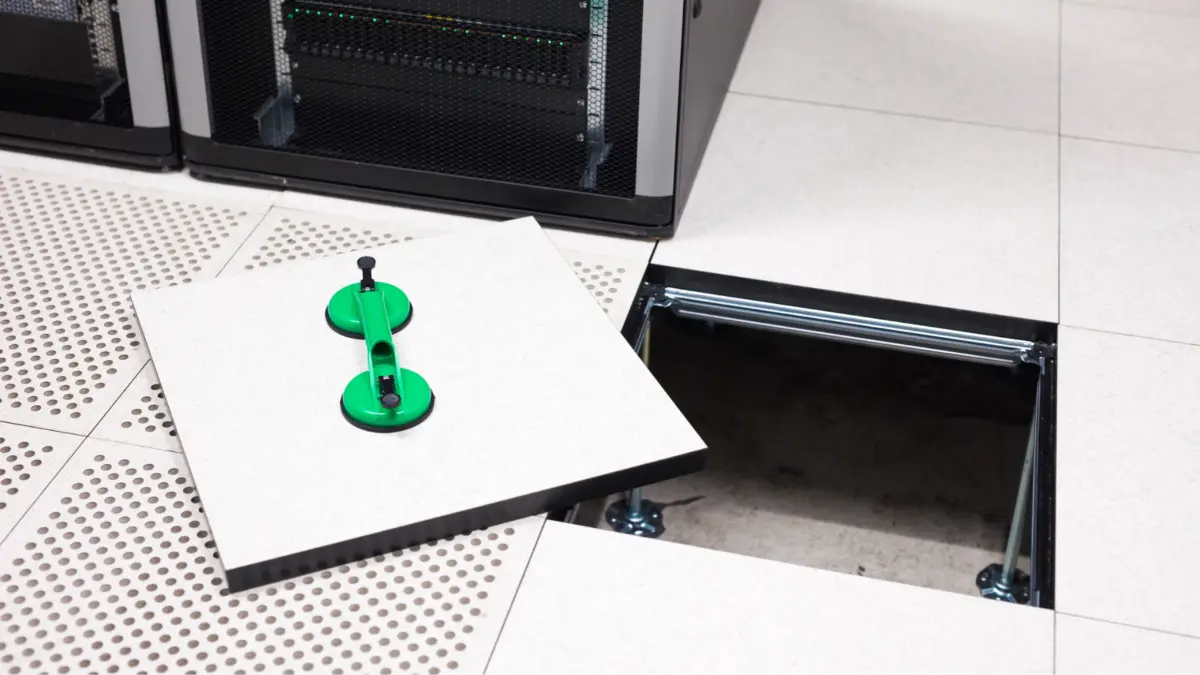
These electrically conductive, crystalline metallic filaments grow spontaneously from electroplated zinc surfaces—most notoriously found on the underside of legacy raised-floor tiles, cable trays, pedestals, and stringers. When disturbed by routine facility maintenance, vibrations, or the sheer velocity of modern airflow, these micro-filaments detach, become airborne, and are swept into sensitive server chassis and GPU clusters. Once inside, they bridge microscopic gaps on circuit boards, inducing sudden short circuits, catastrophic signal degradation, and unexplainable hardware failures.
While the phenomenon of zinc whisker growth is well-documented in materials science and aerospace engineering, its convergence with modern AI deployments represents a critical operational blind spot. Today’s high-performance computing (HPC) nodes and dense GPU arrays draw significantly more air through subfloor plenums than legacy enterprise servers. This intensified airflow acts as an aerodynamic delivery system, weaponizing dormant legacy infrastructure and turning passive contaminants into active threats.
For data center operators navigating mixed-vintage facilities or retrofitting older spaces for AI workloads, managing zinc whiskers is no longer a passive housekeeping concern—it is a critical imperative for hardware reliability, risk mitigation, and capital protection.
Detailed Chronology: The Evolution and Re-Emergence of Zinc Whiskers
To understand why zinc whiskers represent an escalating risk for modern data centers, it is necessary to examine how this phenomenon developed alongside the evolution of the data center industry itself.
The Mid-to-Late 20th Century: The Genesis of Electroplated Zinc
The widespread use of electroplated zinc began decades prior to the modern cloud era as an economical, highly effective method for preventing rust and corrosion on structural steel components, fasteners, and floor tiles. For standard commercial applications, electroplated zinc coatings provided exceptional durability.
However, under specific microscopic and mechanical conditions—including internal compressive stresses within the zinc coating, ambient humidity fluctuations, and thermal cycling—atoms migrate over time, forming hair-like single-crystal metal filaments. These filaments can grow up to several millimeters in length while remaining microscopic in diameter (often just a few microns wide).
The Late 1990s to Early 2000s: The First Wave of Data Center Awareness
As enterprise data centers expanded rapidly during the dot-com boom, operators began noticing mysterious, unexplainable hardware crashes. Servers would fail diagnostics, motherboards would short out without signs of thermal runaway, and troubleshooting would yield no definitive root cause.
Forensic investigations by hardware manufacturers and failure-analysis laboratories eventually identified the culprit: microscopic zinc whiskers shedding from the underside of raised-access floor panels. During this era, data center operators rushed to implement mitigation strategies, replacing vulnerable tiles or painting them with specialized encapsulants. As modern construction standards shifted away from reactive electroplated zinc toward alternate coatings and hot-dip galvanization processes, the industry largely relegated zinc whiskers to the category of a legacy problem.
The 2010s: The Era of Mixed-Vintage Infrastructure
As the cloud computing boom matured, new greenfield hyperscale data centers were built with advanced materials, but a massive footprint of enterprise, colocation, and tier-2 facilities continued to operate within older, retrofitted buildings. These mixed-vintage environments often combined modern IT gear with decades-old raised-floor infrastructure, stringers, and cable management trays. While the threat did not disappear, it remained largely dormant—managed through standard operational hygiene and periodic cleaning protocols.
The Present Day: The AI-Driven Acceleration
The rapid deployment of artificial intelligence and machine learning (ML) clusters has completely rewritten the operational physics of the data center. High-density GPU architectures require immense volumes of cooling air forced through subfloor plenums at unprecedented velocities.
This dramatic increase in airflow has transformed legacy facilities, breathing new life into dormant risk factors. Whisker migration is no longer a slow, localized phenomenon; high-velocity air currents can dislodge, lift, and transport these microscopic conductors across entire server rows, directly into the intake fans of million-dollar AI server nodes.
Supporting Context & Metrics: The Physics of Contamination
To effectively combat zinc whiskers, facility managers must understand the physical mechanics of their growth, distribution, and electrical impact.
The Anatomy and Electrical Properties of a Whisker
A zinc whisker is not a flake or a dust particle; it is a single-crystal metallic filament.
Dimensions: Typically measuring between 1 and 5 microns in diameter, whiskers can grow anywhere from a fraction of a millimeter to several millimeters in length.
Conductivity: Being pure metallic zinc, they are highly electrically conductive.
Failure Mechanism: When a whisker is ingested by a power supply unit (PSU), fan assembly, or motherboard, its physical length is often sufficient to bridge the gap between adjacent circuit traces, component pins, or solder joints.
The consequences vary depending on the voltage and current involved:
The Fusing Current Threshold: If a low-voltage circuit encounters a whisker, the current passing through the filament may instantly vaporize it (acting like a micro-fuse), causing a transient glitch, reboot, or a "ghost" error code that disappears upon rebooting.
Hard Failures and Arcing: In higher-voltage environments (such as within power distribution units, busways, or server PSUs), a whisker can initiate an electrical arc, potentially triggering catastrophic component damage, tripping upstream breakers, or sparking localized electrical fires.
The Aerodynamics of High-Density Computing
Traditional data centers operated at power densities of 3 to 5 kilowatts (kW) per rack. Modern AI clusters, by contrast, frequently demand 30 kW, 50 kW, or even 100+ kW per rack.
To dissipate the intense thermal loads generated by densely packed GPUs, cooling systems must circulate vast quantities of air. This creates high static pressure and rapid airflow within the subfloor plenum.
Particle Suspension: Research in cleanroom and contamination control demonstrates that the velocity required to lift and suspend microscopic particles scales exponentially with turbulence. As air velocity increases in legacy plenums, settled zinc whiskers that remained undisturbed for years are swept into the airflow stream.
Target Concentration: Because modern AI server chassis feature dense arrays of high-RPM internal fans, they act as powerful vacuum systems, actively drawing airborne contaminants from the room environment and subfloor directly onto sensitive electronics.
Official Statements & Industry Perspectives
Industry leaders and operational experts emphasize that managing environmental hygiene in high-density facilities requires a paradigm shift. Contamination control can no longer be treated as a routine janitorial task; it is an engineering discipline essential to enterprise risk management.
Jeff Becker, CEO of Pegasus Building Services—a leading facility services organization supporting mission-critical environments across the Southwestern United States—highlights the hidden dangers that legacy infrastructure poses to modern operations:
"As data centers evolve to support higher-density computing and AI infrastructure, attention naturally goes to power, cooling, and equipment reliability. A less visible issue also deserves attention in that discussion: zinc whiskers. The risk isn’t new, but the operating conditions inside today’s facilities—especially increases in airflow—make it worth revisiting."
Becker stresses that facility modifications can inadvertently exacerbate the problem if personnel are not properly trained in contamination dynamics:
"Routine facility work can increase exposure. Moving floor tiles, running new cabling, reconfiguring equipment, or conducting nearby construction can disturb accumulated whiskers and release them into the environment."
Furthermore, industry engineers warn against the uncritical application of standard cleaning methodologies. Aggressive mechanical intervention can dramatically worsen a contamination event:
"Conventional cleaning practices may be counterproductive. Vacuuming without HEPA filtration can aerosolize whiskers and release them back into the environment through the equipment’s exhaust. Sweeping, brushing, or other aggressive mechanical cleaning can disturb susceptible surfaces and shed additional whiskers. Even moving floor tiles can spread contamination."
Instead, facility management must transition to specialized remediation protocols that emphasize containment, source identification via high-intensity oblique lighting, and precision extraction using verified HEPA-filtration equipment.
Future Outlook: Operational Best Practices for the AI Era
As the data center industry scales to meet insatiable computing demands, mitigating the threat of zinc whiskers requires a proactive, multi-layered operational strategy. Operators can no longer afford to wait for hardware failures to diagnose underlying environmental vulnerabilities.
1. Comprehensive Infrastructure Audits
Facility operators managing spaces older than a decade—or facilities built with mixed-vintage materials—must conduct systematic audits of all zinc-coated infrastructure. This includes:
Inspecting the undersides of raised-floor tiles for early signs of whisker nucleation.
Evaluating cable trays, ladder racks, pedestals, stringers, and electrical enclosures.
Utilizing high-intensity oblique lighting techniques to reveal reflective crystalline growth before maintenance activities commence.
2. Modernizing Cleaning and Maintenance Protocols
Standard janitorial contracts are entirely inadequate for mission-critical IT spaces housing high-density AI clusters. Facilities must enforce strict contamination control protocols:
HEPA Filtration Exclusively: Prohibit standard shop vacuums and unfiltered sweeping tools that aerosolize micro-particles and exhaust them back into the data hall.
Controlled Access and Containment: Isolate work zones during floor tile removal or cable pulling. Implement negative-air containment units and protect adjacent equipment air intakes to prevent the cross-migration of contaminants.
Active Remediation vs. Superficial Cleaning: If components are actively generating whiskers, cleaning alone provides only temporary relief. Source remediation—such as replacing vulnerable floor panels with non-whiskering composite or powder-coated alternatives—is essential.
3. Integrating Contamination Control into AI Deployment Strategies
Capital expenditure models for AI infrastructure must account for environmental risk management. When investing millions of dollars into dense GPU clusters, the marginal cost of comprehensive subfloor remediation, professional cleaning, and ongoing environmental monitoring is negligible compared to the cost of catastrophic hardware failure or prolonged downtime.
4. Rigorous Documentation and Accountability
Data center management teams should maintain detailed logs tracking:
Areas where zinc whisker contamination has been identified.
Specific remediation steps taken (e.g., tile replacement, encapsulation, or specialized precision cleaning).
Post-remediation verification audits to ensure long-term stability.
Conclusion
The resurgence of zinc whiskers in the era of high-density AI infrastructure serves as a potent reminder that technological progress does not render legacy physics obsolete; rather, it amplifies it. By recognizing that tomorrow’s computing reliability depends heavily on the condition of yesterday’s infrastructure, forward-thinking data center operators can safeguard their investments, protect mission-critical uptime, and maintain a resilient operational posture in an increasingly demanding digital landscape.