Executive Overview
For over a decade, the core mission of DevOps has remained remarkably consistent: bridge the gap between development and operations teams to ship reliable software faster. Armed with automation scripts, continuous integration and continuous delivery (CI/CD) pipelines, infrastructure as code (IaC), and telemetry instrumentation, engineering organizations successfully accelerated deployment velocities and scaled cloud-native workloads to unprecedented levels.
Yet, the foundational mechanics of software engineering are undergoing a profound structural evolution. We have officially crossed the threshold from traditional, rule-based automation into an era defined by AI-Native DevOps.
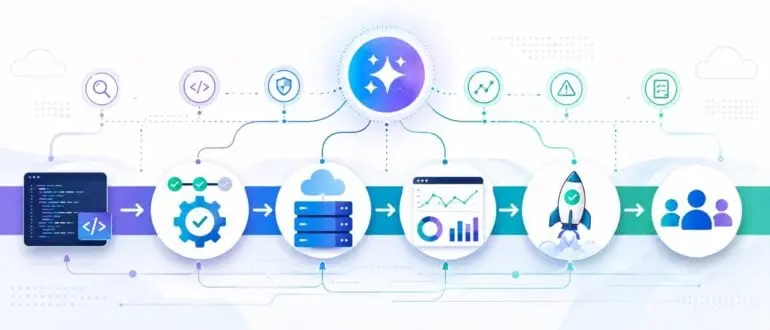
Artificial intelligence is no longer restricted to rudimentary code-completion assistants sitting inside an Integrated Development Environment (IDE). Today, machine learning models, predictive heuristics, and autonomous software agents are being woven directly into the lifecycle of software delivery. From architecting deployment pipelines and mitigating runtime incidents to conducting root-cause analysis and managing sprawling cloud infrastructure, AI is reshaping the entire discipline.
This transformation transcends a mere productivity boost. Traditional automation operates strictly within the boundaries of predefined programmatic rules—if a condition is met, execute a specified script. AI-Native DevOps systems, by contrast, ingest complex contextual signals, recognize historical anomalies, generate predictive recommendations, and, in constrained scenarios, execute autonomous operational interventions.
As engineering organizations race to adopt this paradigm, the definition of software delivery automation is being rewritten. This report provides an investigative look at how artificial intelligence is permeating every layer of the DevOps lifecycle, the operational prerequisites required to harness it safely, and what this paradigm shift means for the future of engineering talent.
Detailed Chronology of the Shift: From Static Automation to Autonomous Systems
To understand how AI-Native DevOps emerged, it is helpful to examine the evolutionary milestones that brought the software engineering industry to this juncture.
Phase 1: The Rule-Based Automation Era (Early 2010s – Early 2020s)
The maturation of DevOps displaced manual server provisioning and ad-hoc deployments with codified pipelines. Tools like Jenkins, GitLab CI, Terraform, and Kubernetes allowed teams to define infrastructure and delivery processes as code. However, these systems possessed zero cognitive awareness. Every failure required an engineer to write custom exception handling or manual retry logic. If a test suite failed or a deployment crashed, the pipeline stopped, waiting for human intervention to interpret logs and diagnose the root cause.
Phase 2: The Copilot Revolution (2021 – 2023)
The introduction of generative pre-trained transformers and large language models (LLMs) marked the first major disruption. Developers began utilizing coding assistants to boilerplate functions, translate legacy scripts, and write unit tests. While these tools dramatically accelerated individual developer output, their impact on operations and system architecture remained largely peripheral. They were isolated utilities operating at the fringe of the deployment pipeline rather than integrated components of the infrastructure itself.
Phase 3: The AI-Native DevOps Paradigm (Present Day)
We are currently living through the integration of AI directly into the operational core of software delivery. AI models are no longer passive advisors; they are embedded processors sitting natively within CI/CD engines, observability collectors, and security scanners. They do not merely execute deterministic logic; they evaluate risk probabilities, synthesize cross-service telemetry, and autonomously coordinate remediation paths under strict human supervision.
How Artificial Intelligence is Transforming the Software Delivery Lifecycle
The infiltration of machine intelligence touches virtually every traditional operational silo. The following sections break down how specific segments of the engineering lifecycle are being revolutionized.
1. Continuous Integration: Moving from Binary Checks to Risk Intelligence
Historically, a continuous integration (CI) pipeline acted as a rigid gatekeeper: code is committed, builds are executed, unit and integration tests are run, and if all metrics pass, the artifact is approved. Every code change, regardless of scope or author, was treated with uniform scrutiny.
AI-Native CI transforms this binary validation process into a risk-weighted intelligence engine. Modern systems analyze historical build failures, code churn rates, architectural dependency trees, and developer commit histories. When a new pull request is opened, the AI can predict the statistical likelihood that the change will introduce a regression. Rather than treating all code changes equally, the system flags high-risk pull requests for intensive peer review while fast-tracking low-risk updates, optimizing both review bandwidth and pipeline throughput.
2. Intelligent Deployments: Context-Aware Release Management
Deploying software to production has always carried inherent risk. Traditional continuous delivery models rely on rigid environmental gates, canary analysis thresholds, and manual sign-offs.
AI-powered deployment platforms synthesize a vastly broader spectrum of telemetry signals before allowing a release to proceed. These systems evaluate historical release failure rates, cross-service dependencies, real-time infrastructure health metrics, and active incident trends. If an anomalous pattern is detected in a downstream microservice, the AI can automatically pause a rollout, recommend targeted rollbacks, or advise engineers on mitigation strategies before minor anomalies cascade into catastrophic outages.
3. Incident Management and Root-Cause Analysis (RCA)
When a mission-critical service fails, engineering teams traditionally lose valuable minutes—and sometimes hours—navigating a fragmented landscape of log aggregators, performance monitoring dashboards, and static runbooks.
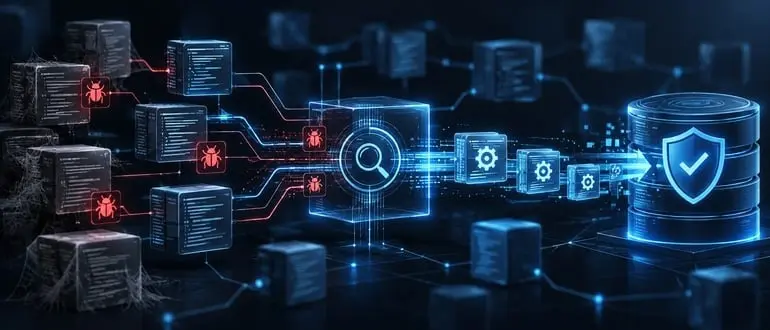
AI dramatically accelerates incident response by acting as a real-time correlation engine. By ingesting streams of telemetry data, error logs, trace metrics, and documentation repositories simultaneously, modern AI-driven incident management tools synthesize disparate clues and generate a ranked shortlist of probable root causes. While human engineers retain the ultimate responsibility for executing remediation, the cognitive load of investigative triage is drastically reduced, shortening Mean Time to Resolution (MTTR).
4. Observability and Alert Noise Reduction
Modern cloud-native applications generate tidal waves of telemetry data. As architectures scale into thousands of distributed microservices, traditional monitoring tools flood operations teams with redundant alerts and false positives, leading to "alert fatigue."
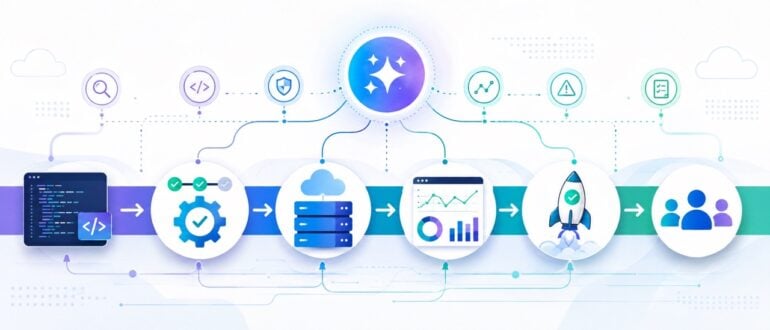
AI-driven observability platforms apply unsupervised learning algorithms to baseline normal system behavior, isolate genuine anomalies, and filter out operational noise. By automatically correlating events occurring across entirely separate services, these tools present on-call engineers with high-fidelity insights rather than an overwhelming stream of disconnected alerts.
5. Infrastructure Management and AI-Driven IaC
Infrastructure as Code (IaC) solved the problem of configuration drift and manual server provisioning, but maintaining complex Terraform or OpenTofu scripts remains a constant maintenance burden.
New AI-powered infrastructure assistants help engineers identify security misconfigurations, spot compliance gaps, and automatically generate modular code templates that align with enterprise architecture standards. While human operators continue to review and apply these configurations via pull requests, the initial authoring and validation cycles are completed with unprecedented speed and accuracy.
6. The Rise of Autonomous Operations Agents
Perhaps the most dramatic frontier in AI-Native DevOps is the emergence of specialized software agents. Unlike passive chat interfaces that only respond to direct prompts, these agents are capable of executing closed-loop operational workflows within strictly bounded parameters.
For instance, if an anomaly causes an unexpected performance degradation, an operations agent can automatically gather diagnostic metrics, query historical incident databases for matching patterns, assemble a preliminary remediation script, and present the package to an on-call engineer for a final approval click. This represents a monumental leap beyond traditional automation, which required engineers to program every single contingency branch in advance.
Supporting Context & Operational Prerequisites
Despite the immense promise of AI-Native DevOps, organizations cannot simply install machine learning plugins and expect immediate operational excellence. Successful deployment requires foundational maturity across three critical pillars: trust, data quality, and security.
1. Trust, Governance, and Explainability
Production environments are unforgiving. Engineering organizations require absolute accountability and explainability. If an AI system recommends a configuration change or flags a security vulnerability, operators must understand the underlying rationale—the "why"—before granting execution authority. Consequently, rigorous approval pathways, immutable audit trails, and strict privilege boundaries are mandatory prerequisites before any AI system is permitted to influence live infrastructure.
2. Data Hygiene and Hygiene of Operational Artifacts
Artificial intelligence models are fundamentally constrained by the quality of the data they ingest. Flaky test suites, incomplete incident documentation, mislabeled metrics, and outdated runbooks will severely degrade the accuracy of AI-driven recommendations. Organizations seeking to leverage AI-Native DevOps must first institutionalize rigorous internal hygiene, improving documentation quality, tightening observability standards, and standardizing incident reporting.
3. Security Architecture and Least-Privilege Access
AI tools require deep, read-and-write integrations across code repositories, CI/CD pipelines, cloud environments, and monitoring systems. Without strict identity and access management (IAM) frameworks, integrating these powerful systems introduces massive security vulnerabilities. Security must be embedded into the AI integration lifecycle from day one, rather than treated as an afterthought.
Official Statements and Industry Perspectives
Industry analysts and engineering leaders widely agree that AI-Native DevOps represents an irreversible evolution rather than a temporary industry fad.
"We are moving away from an era where engineers spend their days writing repetitive automation scripts and hunting down log files manually," notes Dr. Elena Vance, Principal Cloud Architect at Enterprise Systems Group. "AI is taking over the mechanical cognitive load of software delivery. However, this does not spell the end for human engineers. Instead, it elevates their role from execution agents to system supervisors and architects of operational guardrails."
Furthermore, software reliability engineering (SRE) executives emphasize that human judgment remains irreplaceable in chaotic, high-stakes production environments.
"Production is inherently chaotic, and business requirements change on a dime," remarks Marcus Chen, VP of Platform Engineering at Global Cloud Logistics. "No machine learning model can fully substitute for decades of hands-on engineering intuition when a critical system fails at 3:00 AM. The winning teams are not the ones trying to replace human operators with AI, but those building symbiotic partnerships where AI amplifies human expertise."
Future Outlook: The Next Frontier of Software Delivery
As we look toward the horizon, the trajectory of AI-Native DevOps points toward increasingly autonomous, self-healing software ecosystems.
In the coming years, we can expect to see:
- Self-Healing Architectures: Systems that autonomously detect code regressions in staging environments, generate localized patches using generative AI, run validation suites, and deploy fixes with zero human intervention for non-critical services.
- Natural Language Operations (NL-Ops): Platform engineering teams interacting with complex Kubernetes clusters and multi-cloud environments entirely through conversational interfaces backed by specialized, domain-trained language models.
- Predictive Compliance and Governance: AI systems that continuously audit cloud configurations against shifting regulatory frameworks (such as GDPR, HIPAA, and SOC2) in real-time, automatically remediating drift before external audits occur.
Ultimately, the competitive advantage in software delivery will not belong to the organizations that accumulate the highest number of AI tools. Rather, it will belong to the enterprises that successfully forge a harmonious partnership between artificial intelligence, rigorous engineering discipline, robust guardrails, and seasoned human oversight. As software ecosystems continue to scale in complexity, mastering this balance will define the elite DevOps teams of the future.