Executive Overview
The video game industry’s relentless wave of restructuring and workforce reductions continues to claim victims in unexpected places, even among studios backed by heavy financial support. That’s No Moon—a high-profile independent development studio launched by industry veterans from giants like Infinity Ward and Naughty Dog—has reportedly laid off 14 members of its development team.
The layoffs, which began coming to light via public professional networking posts, strike at a critical juncture for the developer. The studio is currently deep into production on its flagship in-development project, Crossfire, a title that aims to breathe new life into the traditional cover-based shooter genre. Backed initially by a staggering $100 million investment from South Korean publisher Smilegate, That’s No Moon positioned itself in 2021 as a dream destination for AAA talent seeking creative freedom coupled with massive financial backing.
However, the reality of contemporary AAA game development—marked by soaring budgets, extended development cycles, and shifting corporate priorities—has once again caught up with a premier studio. The loss of 14 employees, confirmed independently across multiple roles, highlights the persistent fragility of the games sector. Even teams born out of elite pedigree and insulated by significant initial capital are not immune to the pressures forcing contractions across the global interactive entertainment landscape.
As the studio presses forward with Crossfire, questions loom regarding the project’s development health, timeline, and the broader financial strategies of its primary backer, Smilegate. This report breaks down the timeline of the layoffs, examines the studio’s origins and its high-profile partnership, contextualizes these cuts within wider industry trends, and explores what the future holds for That’s No Moon.
Detailed Chronology: How the Layoffs Unfolded
The contraction at That’s No Moon did not break through a formal press release or a corporate town hall announcement; instead, it emerged organically, as is increasingly common in modern games journalism, through the digital footprints of affected workers sharing their sudden transitions on LinkedIn.
The wave of notifications began late last week and rapidly accelerated. The initial posts painted a stark picture of abrupt career interruptions at the studio.
An associate environment artist at That’s No Moon was among the first to break the news to the professional community. Writing on LinkedIn, they shared: "Unfortunately, with my first job in the games industry, I have been hit with layoffs at That’s No Moon." For a newcomer stepping into the AAA sector, the experience underscores the precarious nature of early employment in an industry prone to boom-and-bust cycles.
Shortly after, a procedural technical artist at the studio followed suit, explicitly noting that they had been impacted by "unexpected layoffs." The sudden nature of the cuts suggests that the workforce reduction was not part of a long-lead, phased restructuring plan communicated well in advance to the staff, but rather an immediate tactical adjustment.
Confirmation of the specific scale of the layoffs soon followed. A senior environment concept artist revealed that they were "one of the fourteen affected" by the reductions. This precise headcount was independently corroborated and echoed by a producer on the team, who quantified the damage to the studio’s human capital.
Despite the abruptness and sting of the cuts, departing staff members took to social media to express deep appreciation for their time at the company and the quality of the talent surrounding them. The studio’s producer shared a poignant reflection on their tenure:
"I’m incredibly grateful for the people I worked with at TNM. The folks there are some of the most talented, driven, and persistent people I’ve ever had the pleasure of working alongside. I learned a lot, grew a lot, and got to do work I genuinely cared about."
These sentiments paint a picture of a tight-knit, passionate development core suddenly hollowed out by 14 positions. While 14 layoffs may appear modest compared to the hundreds of job losses seen at major publishers like Sony, Microsoft, and Electronic Arts over the past two years, the loss of 14 specialized artists, technical personnel, and production staff at a mid-sized, independent studio represents a meaningful percentage of its total operational capacity—particularly when specialized AAA workflows depend heavily on tight, cross-functional collaboration.
Supporting Context & Metrics: Origins, Investment, and the Crossfire Ambition
To fully understand the weight of these layoffs, one must look back at the pedigree and immense promise with which That’s No Moon entered the industry.
Founded in mid-2021, the studio was conceptualized as a powerhouse collective. Its leadership and founding team comprised industry veterans who cut their teeth on some of the most successful, critically acclaimed, and technically demanding franchises in modern gaming history, including Call of Duty: Modern Warfare (Infinity Ward) and The Last of Us / Uncharted (Naughty Dog). Their stated ambition was to blend cinematic storytelling with blockbuster gameplay mechanics, creating narrative-driven entertainment experiences that could rival Hollywood.
This grand vision caught the eye of South Korean gaming juggernaut Smilegate. Best known globally for its massively popular tactical shooter Crossfire—one of the highest-grossing video game franchises in history—Smilegate stepped up with a massive $100 million strategic investment to launch That’s No Moon. This cash injection was designed to give the studio the runway, financial security, and operational independence needed to build its inaugural intellectual property from the ground up without immediate publisher interference.
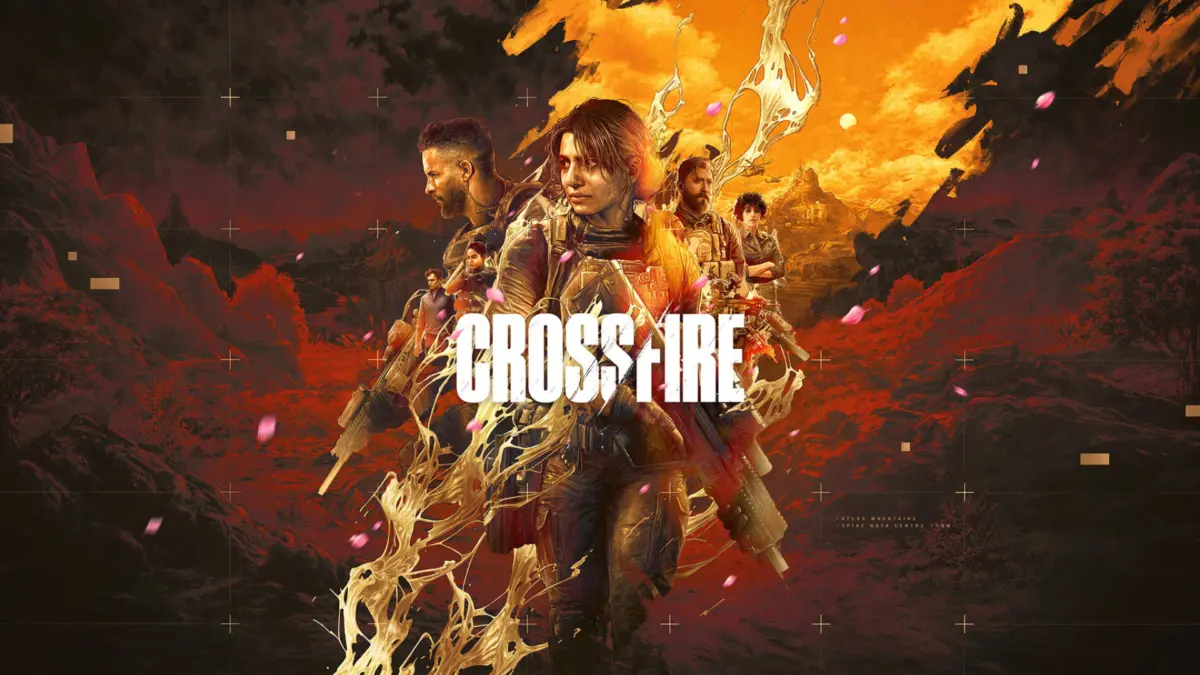
For years, the studio operated largely in stealth mode, quietly building its team, refining its tech stack, and conceptualizing its debut game. The veil of secrecy was finally lifted in June of this year during the Summer Game Fest showcase, where That’s No Moon officially revealed its project simply titled Crossfire.
.png?disable=upscale&width=1200&height=630&fit=crop)
The reveal brought the studio back into the industry spotlight. Press outlets, including Game Developer, were invited behind the scenes to learn more about the project and its design philosophy. Rather than resting on the laurels of the existing Crossfire intellectual property—which has traditionally dominated PC markets as a fast-paced multiplayer tactical shooter—That’s No Moon’s iteration aims to evolve the cover-based shooter subgenre. The team showcased modern traversal mechanics, cinematic narrative framing, and refined combat loops designed to drag a legacy shooter brand into the modern AAA era.
However, building a next-generation AAA shooter requires astronomical financial and human resources. As development cycles extend past five or six years, even a $100 million war chest can experience severe strain, especially when inflation, rising labor costs, and shifting macroeconomic realities put pressure on financial backers to tighten their belts.
Broader Financial Climate: Smilegate’s Portfolio Adjustments
The troubles at That’s No Moon do not exist in a vacuum; they must be viewed through the lens of Smilegate’s broader corporate restructuring and investment strategy over the past 24 months.
Smilegate, while immensely profitable through its live-service operations in Asia, has experienced notable turbulence in its Western development footprint. In early 2024, the publisher made the difficult decision to shut down Smilegate Barcelona, a studio it had established to expand its footprint in Western Europe and contribute to high-end console development. The closure of the Barcelona division served as an early warning sign that Smilegate was recalibrating its global expenditures, prioritizing core live-service revenue streams over expensive, unproven, single-player or narrative-heavy console ventures.
At the same time, Smilegate has continued to shuffle its capital into other high-profile partnerships. Toward the end of 2024, the publisher announced a major strategic investment agreement to become a key partner in Absurd Ventures, the new transmedia entertainment enterprise founded by Rockstar Games co-founder Dan Houser.
This juxtaposition tells a clear story: Smilegate is actively pruning and redirecting its capital. While the publisher remains committed to high-profile creative talent—evidenced by its ties to Dan Houser and its initial faith in That’s No Moon’s Naughty Dog and Infinity Ward alumni—it is clearly adopting a much tighter grip on purse strings. The financial oversight governing external and internal studio projects has grown exponentially stricter.
When a primary backer adjusts its risk tolerance or demands tighter operational efficiencies, subsidiary and partnered studios often feel the squeeze first. In this light, the 14 layoffs at That’s No Moon may be the direct result of budget adjustments, milestone renegotiations, or scope reductions mandated to keep the development of Crossfire aligned with Smilegate’s revised financial expectations.
Official Statements and Industry Response
As of the time of this writing, That’s No Moon has maintained an official public silence regarding the specifics of the restructuring. Game Developer and other industry outlets have reached out to studio leadership for official clarification concerning the exact number of layoffs, the departments affected, and the current development status of Crossfire.
Thus far, leadership has not issued a formal corporate statement, leaving the professional network posts of affected employees as the primary source of information. This lack of immediate corporate communication is a familiar pain point in contemporary game industry journalism, where workers often bear the burden of breaking news regarding their own job losses while corporate entities deliberate on PR messaging.
The silence has done little to soothe mounting anxieties within the broader development community. Industry peers, labor advocates, and independent developers have taken to social media to amplify the posts of the 14 laid-off workers, sharing portfolios, advocating for open roles across other studios, and criticizing the cyclical instability of the games business.
The incident has reignited ongoing conversations about job security, unionization, and the unsustainable nature of AAA development budgets. When elite developers with decades of experience at top-tier studios like Naughty Dog and Infinity Ward find themselves impacted by sudden layoffs shortly after a major project reveal, it serves as a stark reminder that individual talent and pedigree are no longer a shield against corporate downsizing.
Future Outlook: What Lies Ahead for That’s No Moon and Crossfire?
The immediate future for That’s No Moon is defined by a delicate balancing act. On one hand, the studio must absorb the psychological and operational blow of losing 14 key team members. Reallocating workloads, adjusting production schedules, and maintaining team morale after a reduction in force are monumental tasks for any studio director or producer.
On the other hand, the development of Crossfire must march forward. Having successfully built public momentum during Summer Game Fest and generated positive buzz among industry critics regarding its evolution of the cover-based shooter, the studio faces immense pressure to deliver a product that justifies both its substantial budget and the faith of its publisher.
For Smilegate, the success of Crossfire remains a crucial piece of its long-term strategy to crack the Western AAA console and PC market. However, the publisher’s concurrent pullback in Barcelona and strategic diversification into ventures like Dan Houser’s Absurd Ventures suggest that patience may have its limits.
If That’s No Moon can successfully navigate these post-layoff waters, streamline its production pipeline, and keep Crossfire on track for a successful launch, the studio may yet fulfill its founding promise of redefining cinematic action games. However, if macroeconomic pressures, rising development costs, and tightening publisher budgets continue to squeeze the studio, these 14 layoffs may unfortunately serve as the opening chapter of a much more difficult story.
As the industry waits for an official response from That’s No Moon, the international development community watches closely, hoping that the affected artists, programmers, and producers quickly find safe harbor in a turbulent job market.